

Abortion: Our Bodies, Their Lies, and the Truths We Use to
Jessica Valenti
 English
 ไทย
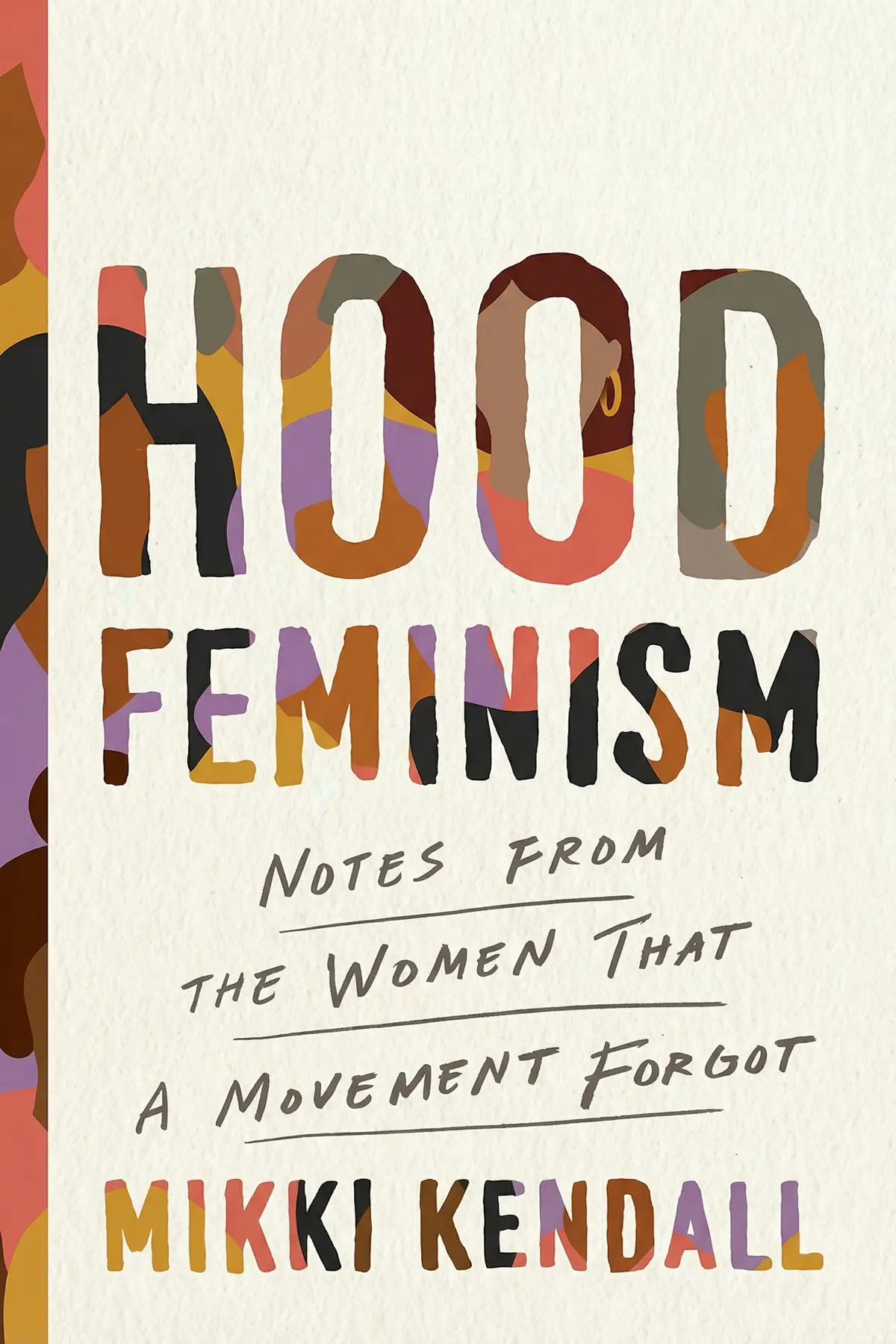
Shows how mainstream feminism has overlooked poor women and women of color. It also explains why issues like hunger, school policing, maternal health and voting rights belong at the center of any fight for women.
55 sec
If you care about women’s rights, the most useful change may be in which women you picture when you say the word. In Hood Feminism, author and activist Mikki Kendall argues that the movement has mostly served women with money and white skin, while poor women and women of color carried much of its weight. Her own grandmother, born in 1924, kept all four daughters in school and never called herself a feminist, yet women like her took on the housework when white women went out to earn.
Kendall’s case is that feminism only speaks for women when it starts from survival: enough food, safe housing, protection for girls, health care, fair policing and the vote. Then it has to act. Follow her argument and you gain a sharper eye for who is missing from any conversation about women, and a handful of questions to test the causes, policies and leaders that claim to speak for them.
1 min 30 sec
An actress used one of the world’s biggest stages to call for equal pay, then asked for support from groups still waiting on their own rights. The moment reveals a habit that runs through the whole movement.
1 min 32 sec
A tax meant to make families healthier can leave some of them worse off, and a home purchase that helps one woman can push another out. Kendall explains how good intentions miss the people who are struggling.
1 min 32 sec
A word older women use to keep girls safe can end up excusing the very harm it warns about. Schools, meant to be a refuge, add risks of their own.
1 min 38 sec
A three-year-old’s burned scalp and a high school weight loss that drew compliments point to problems feminism discusses often, yet rarely recognizes in girls of color.
1 min 43 sec
A gun at the door when only women were home changed how Kendall thinks about parenting. Her abortion story then exposed a gap among the very campaigners who asked her to speak.
1 min 44 sec
Reporting an abuser is supposed to end the danger. For many women, Kendall shows, it opens new ones, and some cases never get the attention they need at all.
1 min 26 sec
Seeing more women in power can feel like progress for every woman. Kendall names leaders who used feminism’s gains against other women, and explains why voting alone may not fix it.
1 min 33 sec
Calling yourself an ally costs nothing, and that is the problem. Kendall makes a case for an emotion most people are taught to hide, and for a harder role than supporter.
1 min 08 sec
Hood Feminism asks a movement to measure itself by the women with the least. Kendall’s grandmother never claimed the label, yet her priorities were schooling for her daughters and staying safe in a hostile world, and those are the kinds of concerns Kendall wants feminism to take up. Seen from a house with a gun at the door or an empty kitchen, the familiar causes shrink and new ones come into view: soda taxes, police in schools, missing indigenous women, closed polling stations.
The book’s demand reaches ordinary choices. Before you back a policy, leader or campaign in the name of women, ask which women pay for it. When a girl is called fast or praised for getting thin, look past the label to what may be hurting her. When a friend reports abuse, think about the rent and the months that follow. And when racism comes up at a family meal, say something.
Women like Kendall’s grandmother kept other women’s homes running so those women could go out to work. Her argument is that feminism owes them more than thanks: it owes them a place at the center of the cause.
Feminism promises to speak for women, but Mikki Kendall argues that it has mostly spoken for women who are white and comfortable. Poor women and women of color have carried much of the movement's weight, from the housework they took on to the support they gave, while seeing few of their own problems on its agenda. Kendall, an author, activist and veteran, writes from her own life: hunger while studying with a child to feed, a lye relaxer at age three, an eating disorder nobody noticed, a gun in the family home, an abortion that saved her life. She sets those experiences beside figures on hunger, sexual abuse, maternal deaths, missing women and voter suppression. The result is a case for widening feminism to cover survival: food, housing, schools, health care, policing and the vote. Readers get a clearer view of which women familiar causes miss, why some well-meant policies backfire, and what it means to act as an accomplice instead of calling yourself an ally.
Readers who care about women's rights and want to know which women the movement keeps leaving out.
Teachers, mentors and managers who work with girls and women of color and want to understand what they face.
Supporters of social causes ready to move from sympathy to action.
Mikki Kendall is an author, activist, cultural critic and veteran who writes about news events, how the media portrays people, food politics and the history of feminism. She has lived and worked in Chicago and began blogging in 2003 under the name Karnythia. In August 2013 she launched the hashtag #solidarityisforwhitewomen, which set off a worldwide debate about racism and representation within feminism. Her writing has appeared in the Guardian, the Washington Post and Time, and she also wrote the graphic novel Amazons, Abolitionists, and Activists.

Listeners find this work to be essential reading for women of every race, commending its sharp prose and thoroughly researched material. The content is described as revelatory and stimulating, with one listener highlighting the detailed examination of intersectional topics. They value the writer's candidness and find the book accessible. The work receives varied feedback on its substance, with some finding it challenging while others remark that it can stray off-topic at times.
This book should be on every syllabus in the country because it fundamentally redefines what we consider 'feminist' work. Kendall argues with such incisive prose that it’s hard to look away from the ways mainstream movements have ignored basic survival needs like housing and food security. Frankly, her bluntness is refreshing in a genre that often feels too academic or detached from reality. I found the sections on gun violence and hunger particularly eye-opening, illustrating how these aren't just 'social issues' but core feminist concerns. Some might find her tone provocative, but that's exactly why it works so well. It forces you to confront your own privilege and ask who your feminism is actually for. If you are breathing, you should probably be reading this. It’s well-researched and incredibly easy to understand for anyone willing to listen.
Show moreWow. This book is a visceral punch to the gut that demands you pay attention to the women living on the margins of society. Mikki Kendall’s writing is sharp, unapologetic, and deeply well-researched, providing a much-needed correction to the 'girl boss' feminism that dominates the media. She manages to take complex topics like maternal health and the housing crisis and make them accessible without stripping away their gravity. Not gonna lie, I had to take breaks between chapters because the truths she presents are so heavy and undeniable. It's a must-read for anyone who thinks they are an ally but hasn't yet considered how poverty is a gendered issue. The way she interweaves theory with lived experience makes the entire argument feel incredibly urgent. Seriously, just buy a copy and give it to everyone you know.
Show moreMikki Kendall doesn't pull any punches in her exploration of what feminism actually means for women of color in the modern era. Her writing is incisive and blunt, cutting through the fluff of typical social justice rhetoric to reveal the hard truths about our society. I was particularly struck by the discussion on the fetishization of 'fierceness' and how it actually harms Black women. Personally, I think this should be required reading for anyone claiming to be part of the movement. She takes an in-depth look at how access to a living wage and medical care are foundational to equality. The book is easy to understand, even when dealing with heavy systemic analysis and statistics. It's rare to find a work that is this provocative while remaining so grounded in reality. Truly a stunning achievement.
Show moreIf you think you know everything there is to know about intersectionality, think again. This collection of essays goes so much deeper than the surface-level definitions we usually see on social media. Kendall explores the intersection of race, class, and gender with a level of honesty that is both rare and refreshing. The chapter on the housing crisis was particularly enlightening for me, as I had never explicitly framed it as a feminist issue before. Not gonna lie, the book is quite packed with information, so it’s not exactly a light weekend read. However, the incisive prose makes even the most difficult concepts feel digestible and urgent. It’s an eye-opening journey through the parts of the female experience that the mainstream media often chooses to ignore. Highly recommend for any serious reader.
Show morePicked this up because I wanted to broaden my understanding of the movement beyond just white, middle-class concerns, and it delivered in every way. The author’s voice is so distinct and powerful that I felt like I was having a conversation with someone who refused to let me off the hook. She masterfully connects the dots between poverty, gun violence, and the failures of modern feminism to protect Black women. In my experience, most books on this topic are either too dry or too vague, but Kendall finds the perfect middle ground. The discussion on how 'survival' is the most basic feminist issue of all is something that will stick with me for a long time. It’s a must-read for anyone who actually cares about making the world a safer place for every woman. Five stars for the raw honesty alone.
Show moreAs a teacher, the chapter on education really hit home for me and changed how I view the barriers my students face daily. Kendall does a fantastic job of connecting the dots between systemic neglect and the feminist struggle, making it clear that intersectionality isn't just a buzzword. To be fair, some of the essays felt a bit less focused than others, occasionally veering into territory that felt slightly off-topic from the central thesis. However, the emotional weight of her personal anecdotes kept me grounded in the material throughout the whole experience. It’s a thought-provoking collection that challenges the idea that feminism is only about the glass ceiling. Instead, she refocuses the lens on the floor where so many women are still struggling just to stand up. It’s not a fast read, but it is a necessary one.
Show moreFinally got around to reading this after seeing it everywhere on my feed, and I can say it definitely lives up to the hype for the most part. The author’s ability to link gun violence and hunger to the feminist movement is brilliant and long overdue. Gotta say, her perspective on how 'mainstream' feminism centers white women while ignoring the basic needs of Black women is an essential critique. I did notice that the pacing felt a bit uneven in the middle sections, with a few chapters feeling like they were retreading the same ground. Regardless, the incisive nature of her prose kept me engaged even when the structure felt a little loose. It’s an eye-opening look at how we define 'safety' and 'equality' in very narrow terms. This book will definitely make you rethink your own activism.
Show moreThe truth is that many of us like to call ourselves feminists without ever considering if our activism includes the most vulnerable among us. This book acts as a mirror, reflecting the ways in which we have failed to prioritize the survival of all women. Kendall’s focus on 'basic needs' as a feminist issue is a total game-changer for how I think about social justice. While I agree with the criticism that the book can be a bit unfocused at points, the overall impact remains incredibly strong. Her insights on how the movement centers those who already have their needs met are absolutely biting. I found the section on allies and accomplices to be one of the most useful things I’ve read all year. It’s uncomfortable, sure, but growth usually is.
Show moreLook, I found the section comparing Bernie Sanders supporters and Trump supporters a bit distracting from the main thesis of the book. It felt a little dated compared to the more evergreen discussions on things like maternal health and education. That being said, the vast majority of this book is an absolute masterclass in intersectional thought. Kendall’s blunt tone is exactly what is needed to shake people out of their complacency regarding racial equity. The information is well-researched and presented in a way that feels both personal and academic. I appreciated how she didn't shy away from the 'unpopular' opinions that challenge standard feminist narratives. Even with its minor flaws, it remains a thought-provoking and essential piece of literature.
Show moreTo be fair, I went into this expecting a more cohesive systemic analysis, but it felt more like a series of loosely connected blog posts at times. While the author raises vital points about race and socioeconomic status, I’m not entirely convinced the editing did her logic justice in every chapter. Some of the arguments felt repetitive, especially if you already have a basic grasp of what intersectionality entails. Look, the core message about including the 'women a movement forgot' is essential, but the execution occasionally felt a bit unpolished. I also found the specific criticisms of political supporters a bit distracting from the broader, more universal points she was making. It’s a decent introductory text for someone brand new to these concepts, but seasoned readers might find it lacking new depth. I appreciate the honesty, but the structure just didn't quite land for me.
Show moreMikki Kendall argues that mainstream feminism has mostly served privileged white women and overlooked poor women and women of color. She wants the movement to treat survival issues as feminist issues: hunger, housing, the safety of girls, health care, policing and voting rights. Feminism, in her view, speaks for women only when it speaks for all of them, and that means supporters must act instead of simply declaring themselves allies.
Kendall sees ally as a label people use to show support without doing anything. An accomplice acts, challenging white supremacy wherever it appears and standing up for marginalized communities even without a personal stake. She warns against saviorism, where privileged people take over and drown out those affected. Her simplest step is to challenge racist remarks when you hear them, including from family and friends.
Carceral feminism relies on police and courts to answer gendered violence. Kendall argues it often fails women of color. A jailed abuser may leave his victim without income, women who fight back can be prosecuted, as CeCe McDonald was after stabbing her attacker in self-defense, and missing Black and indigenous women get little attention. She calls for communities of women to support one another across race.
It suits readers who care about women’s rights and want to see which women the movement leaves out, along with teachers, mentors and managers who work with girls and women of color. Kendall covers poverty, colorism, eating disorders, school policing, reproductive health and voter suppression, drawing on her own life and on figures such as the far higher risk of dying in pregnancy that Black women face in the US.
Jessica Valenti



Johny Pitts


bell hooks


Fay Bound Alberti

Daniel Goleman

AUDIO SUMMARY AVAILABLE
Get the key ideas from Hood Feminism by Mikki Kendall, plus 5,000+ more nonfiction titles.









