
Going Infinite: The Rise and Fall of a New Tycoon
Michael Lewis
 English
 ไทย
Michael Lewis follows a small team of Wall Street insiders who discovered how high-frequency traders used speed to profit from other investors' orders, measured the cost, and built a new stock exchange designed to remove that edge.
1 min 02 sec
Most people who buy a share still imagine a broker and a shouting trading floor, and assume the price on the screen is the price they will get. In Flash Boys, Michael Lewis argues that this picture is long out of date, and that the gap between the screen and the real market had become a business worth, by one team’s estimate, nearly $160 million a day. The team was led by Brad Katsuyama, a trader at the Royal Bank of Canada who noticed in 2007 that the market moved against him the instant he pressed a key.
Lewis’s case is that speed and secrecy let high-frequency traders, helped by banks and exchanges, skim from other people’s orders, and that a few insiders proved the skim could be measured and designed away. Their story turns the plumbing of modern finance into something you can explain to a friend: who sees an order first, who pays for that look, and what a fair market has to refuse.
1 min 49 sec
A company spent about $300 million tunneling through mountains to save traders four thousandths of a second. The price buyers paid for that sliver of time hints at something far bigger hiding inside every ordinary stock order.
1 min 42 sec
A trader at a Canadian bank kept watching shares disappear the moment he tried to buy them. His own technicians blamed him. A visit to a hedge fund in Stamford changed what he thought he was fighting.
1 min 59 sec
Orders sent to one exchange filled perfectly; split across several, they kept coming up short. Solving that puzzle took a telecom expert’s maps of New Jersey cable and a deliberate decision to slow things down.
2 min 11 sec
A saving of $29,000 on one large Citigroup trade looked trivial. Multiplied across a single day of American trading, it pointed to a sum that some of the biggest investors in the world had never been told about.
1 min 58 sec
To build an exchange fast traders could not exploit, a small team hunted for every trick hidden in the rulebook. Their most important invention fits inside a box you could carry under one arm.
1 min 52 sec
The new exchange opened to far more trading than its own staff expected, yet the largest banks kept their distance. One famous Wall Street name changed the picture in a matter of minutes.
2 min 07 sec
Within a week of publication, investigators were looking into fast trading, and the head of the market regulator insisted the markets were not rigged. Several critics went after the book itself, and their objections deserve a hearing.
1 min 05 sec
Flash Boys reads as a detective story about a fee nobody was ever shown. A few thousandths of a second, bought with a straight cable through Pennsylvania mountains or a server beside an exchange, were enough to see other people’s orders and get in front of them. The people who caught it worked inside the system: a trader from a polite Canadian bank and a telecom expert who once did not know what a millisecond was. Their real skill was refusing to accept user error as the explanation.
What the book supports reaches past Wall Street. When someone pays heavily for an edge, follow the money to see what it buys. When a result looks wrong, repeat it in front of the doubters and change one thing at a time until the cause shows. When a middleman holds your savings, ask where your orders travel and who collects along the way.
The team’s own answer was almost comically physical: 38 miles of glass wound into a box, so that being fastest stopped paying.
Anyone who buys a share today trusts that the price on the screen is real. In 2007, a trader at the Royal Bank of Canada named Brad Katsuyama found that it was not: the moment he tried to buy, the shares on offer vanished and the price moved against him. Michael Lewis tells how Katsuyama and a team of technologists traced the problem to high-frequency traders who paid for tiny speed advantages, through fiber-optic lines and servers placed beside exchanges, and used them to get ahead of other people's orders. Lewis argues that speed split the market into those who pay to see it as it really is and those who never do. In his account, rules, bank-run dark pools and payments for order flow kept that arrangement in place. His heroes measured the cost, briefed hundreds of large investors and in 2013 opened IEX, an exchange built around a deliberate delay that takes away the reward for being fastest. Readers get a clear picture of how modern stock trading works, a story about insiders who chose to fix a flaw instead of exploiting it, and the main objections critics raised to Lewis's claim that the market is rigged.
Investors and savers who want to know what happens to a stock order after they press buy.
Professionals in finance or technology curious how milliseconds and fiber cables turned into profit.
Founders and team leads looking for a case of insiders who measured a hidden problem and built a fix.
Michael Lewis was born in New Orleans in 1960, studied art history at Princeton and attended the London School of Economics. In the 1980s he sold bonds at Salomon Brothers, the job behind his first book, Liar's Poker, published in 1989. His later books include Moneyball, The Blind Side, The Big Short, The Undoing Project and Going Infinite, and Moneyball, The Blind Side and The Big Short all became films. His work has won two Los Angeles Times Book Prizes, and several titles have topped the New York Times bestseller list. He was a contributing editor at Vanity Fair from 2009 to 2026, mostly covering business, finance and economics.
Michael Lewis

Michael Lewis

Listeners find this work to be a compelling narrative that tells a powerful story, featuring superb writing that simplifies intricate financial maneuvers. Additionally, the material is meticulously documented and packed with thorough breakdowns, creating a revelatory investigation that maintains the audience's interest throughout. They value how the author translates a dense subject into an approachable format, making it a required listen for anyone intrigued by the matter.
Wow. Michael Lewis has this incredible knack for taking dry, institutional corruption and turning it into a pulse-pounding thriller that feels like a heist movie. Before reading this, I had no idea that a 'hierarchy of speed' existed where elite firms use micro-slices of a second to front-run ordinary investors. The story of Brad Katsuyama and his quest to build IEX is truly inspiring. Lewis manages to explain complex technical concepts, like dark pools and the physical laying of fiber-optic cables, without ever making the reader feel like they are sitting through a lecture. It’s an eye-opening exposé that makes you realize the 'democratic' market is often a rigged game. Every person with a retirement account needs to understand how these digital piranhas are nibbling away at their returns. It’s a fast-paced, deeply researched, and ultimately essential piece of modern financial journalism.
Show morePicked this up because the concept of a 'speed race' in finance sounded like science fiction, but it turns out to be our actual reality. The way Lewis explains how these firms jump ahead of orders to scalp pennies is nothing short of brilliant. I was particularly struck by the description of the 'ghost world' operating in milliseconds between a broker's click and the actual trade execution. It’s a wild west out there. The book moves with the same velocity as the traders it describes, keeping you hooked from the first page to the last. While the subject of dark pools and predatory algorithms could be mind-numbing, the author keeps the focus on the people involved. It is a rare book that makes you both smarter and angrier with every chapter. If you want to know where your money really goes, read this immediately.
Show moreIs the stock market actually a democratic system, or just a sophisticated way for the tech-savvy to skin the average investor? Lewis argues it's the latter with devastating clarity and a mountain of evidence. I was fascinated by the way he illustrates how the big banks actually profit from their own customers' disadvantage by selling access to dark pools. It’s a scandalous revelation that should have led to more reform than it actually did. The characters are vibrant, the pacing is excellent, and the writing is accessible without being patronizing to the reader. You don't need a degree in finance to understand how the game is played after reading this. It’s a rare achievement to take something as abstract as latency arbitrage and make it feel like a personal affront. This is Lewis at his best, uncovering the hidden gears of a corrupt machine.
Show moreFinally got around to reading this and it's a terrifying look behind the curtain of modern finance that everyone with a 401k should digest. Lewis proves once again that he is the reigning king of financial storytelling by making the hunt for a few microseconds of speed feel like a life-or-death struggle. The way he details the shift from human floor traders to black-box algorithms is both fascinating and deeply unsettling. I was particularly engrossed by the legal drama surrounding Sergey Aleynikov and the absurdity of the charges brought against him. This book isn't just about stocks; it’s about how greed can warp technology into something that serves only a tiny elite. It’s a fast, engaging, and brilliant piece of work that changed the way I look at the ticker symbols on the news. Absolutely a must-read for the modern era.
Show moreAfter hearing so much about the controversy surrounding high-frequency trading, I finally dove into this book to see what the fuss was about. Lewis is a master of the narrative, using characters like Sergey Aleynikov and Ronan Ryan to humanize the cold, hard world of algorithms. The level of detail regarding the construction of the ultra-fast cable from Chicago to New Jersey was fascinating. I’ll admit that some of the technical explanations felt a bit repetitive towards the end, as if the author was trying to stretch the material to fit a full-length book. However, the core message is undeniable and frightening. The financial system has evolved into a zero-sum game where the house always wins by utilizing technological advantages that the public can't access. It’s a gripping read, though I would have appreciated a bit more balance regarding the potential benefits of HFT liquidity.
Show moreAs someone who isn't a math whiz, I appreciated how clearly the author explains the mechanics of how these automated systems operate across different exchanges. The truth is that Wall Street has always been about finding loopholes, and this is just the latest iteration of that age-old greed. Lewis does an excellent job of breaking down the technical barriers that usually keep outsiders from understanding the stock market. I found the backstory of the Canadian 'Boy Scout' Brad Katsuyama to be the most compelling part of the narrative. It’s a classic tale of someone realizing the system is broken and actually trying to fix it from the inside. My only gripe is that the middle sections felt slightly padded with peripheral stories that didn't add much to the main plot. Still, it’s a vital read for anyone interested in how technology has fundamentally altered our economy.
Show moreThe chapter on the fiber-optic cable alone is worth the price of admission, revealing the absurd lengths firms go to for a microsecond advantage. It's a staggering look at human ingenuity subverted for the sake of extracting tiny bits of value from every single transaction. Michael Lewis continues his streak of making the most boring subjects on earth—like exchange infrastructure—seem like a high-stakes spy thriller. I loved following the IEX team as they decoded why their trades were constantly being front-run by invisible forces. The book is incredibly well-researched and filled with those 'aha' moments that make you rethink how the world works. My only criticism is that the ending feels a little abrupt and perhaps overly optimistic about the future of fair trading. Regardless, it is an eye-opening work that shines a much-needed light into the shadows of the American financial system.
Show moreTo be fair, while the storytelling here is top-notch, the book feels more like a prosecutor’s closing argument than a balanced piece of investigative journalism. Lewis is brilliant at finding heroes and villains, but I suspect the reality of the market is far more nuanced than he suggests. He paints the HFT guys as literal parasites while treating Katsuyama like a flawless white knight. The writing style is undeniably engaging and he makes the math accessible for the layperson. Nevertheless, I felt a bit manipulated by the heavy-handed emotional cues and the selective framing of the facts. It’s a great story, but you should probably read a few counter-arguments to get the full picture. If you enjoy a fast-paced David vs. Goliath narrative, you will love it, just take the 'rigged' rhetoric with a grain of salt. It's informative but distinctly one-sided.
Show moreLook, I enjoy a good 'David vs. Goliath' story as much as anyone, but the portrayal of Brad Katsuyama as a 'white knight' felt a bit heavy-handed for a non-fiction work. While the information regarding HFT is definitely eye-opening, I couldn't shake the feeling that I was only getting one side of a very complex debate. The book is undeniably a page-turner, and Lewis’s prose is as sharp as ever. He has a gift for metaphors that make high-level concepts click instantly. However, the repetitive nature of the 'the market is rigged' mantra started to grate on me after the fourth or fifth chapter. It’s an interesting read for sure, but it lacks the objective rigor I was hoping for. It’s more of a gripping character study than a definitive history of modern trading. Good, but definitely flawed in its execution.
Show moreNot what I expected given the immense hype surrounding this title. While the central premise regarding the unfairness of speed is interesting, the narrative drags significantly by the midpoint of the book. I felt that Lewis spent far too much time on the backstories of minor players and the logistics of laying cable, which could have been summarized in a single chapter. Frankly, it felt like the author had about fifty pages of actual insight and then fluffed the rest with repetitive anecdotes to meet a page count. The constant vilification of high-frequency trading also felt a bit simplistic and lacked the depth I usually expect from Lewis. It’s written well enough to keep you turning pages, but I left the experience feeling like I’d read a long marketing brochure for IEX rather than a serious piece of financial analysis. A disappointing outing for such a talented writer.
Show moreIt follows Brad Katsuyama, a trader at the Royal Bank of Canada, who noticed in 2007 that shares on his screen vanished whenever he tried to buy. With a small team he traced the problem to high-frequency traders who used speed advantages to get ahead of other orders. Lewis argues the market had become rigged for insiders, and the story builds to the team launching IEX, an exchange designed to remove that edge.
In the book, front-running means a fast trader spotting a large order as it travels to several exchanges and racing ahead to the other venues before it arrives. Ronan Ryan’s maps showed orders from lower Manhattan reaching BATS in Weehawken first, about 2 milliseconds away, while Nasdaq in Carteret took about 4. That gap was enough for traders waiting at BATS to act first and move the price before the rest of the order landed.
Thor was a tool built by Katsuyama’s team, with programmer Allen Zhang adding delays so that every part of an order reached each exchange at the same moment. That removed the head start fast traders relied on. Using it on a purchase of 10 million Citigroup shares saved $29,000, less than 0.1 percent, which the team estimated would add up to nearly $160 million a day across the whole market.
IEX holds every incoming order for 350 microseconds, a pause created by about 38 miles of fiber coiled inside a box the size of a shoe box, so no trader can see an order and beat it to other exchanges. It also bans paying to place computers closer and buying special data feeds, offers no rebates, charges one flat fee to both sides, allows just three order types and keeps its owners from trading on it.
Lewis says it is. In the week the book appeared, the Justice Department, the FBI, the SEC and others announced or confirmed inquiries, though some said theirs predated it. SEC chair Mary Jo White told Congress the markets were not rigged, and Michael Bloomberg agreed. Felix Salmon argued retail investors often benefit, and Scott Locklin noted Lewis never spoke with an active high-frequency trader. Lewis later pointed to fines against BATS, UBS and Barclays.


William J. Bernstein




Yanis Varoufakis


Andrew Ross Sorkin

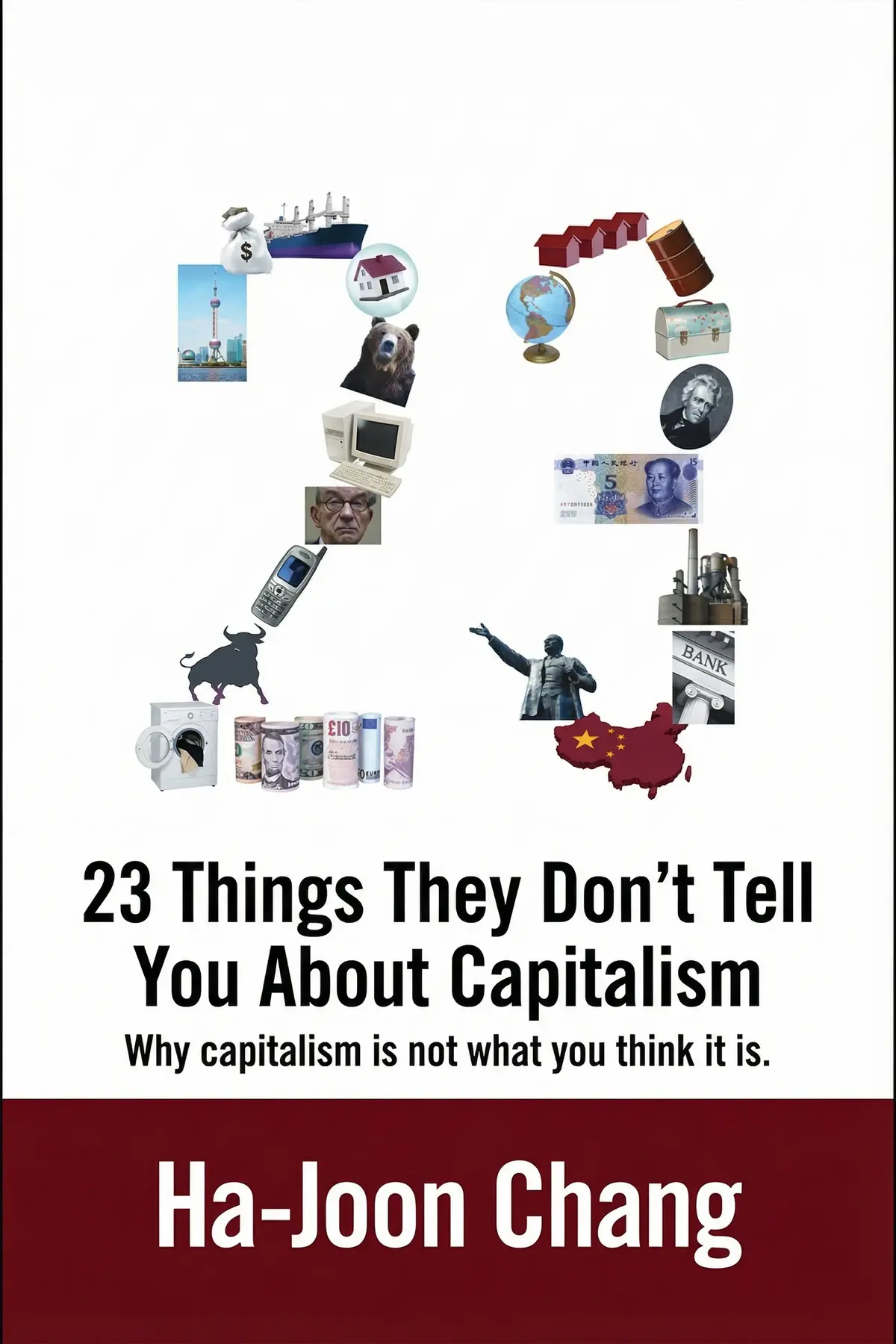
Ha-Joon Chang
AUDIO SUMMARY AVAILABLE
Get the key ideas from Flash Boys by Michael Lewis, plus 5,000+ more nonfiction titles.









