
Flash Boys: A Wall Street Revolt
Michael Lewis
 English
 ไทย
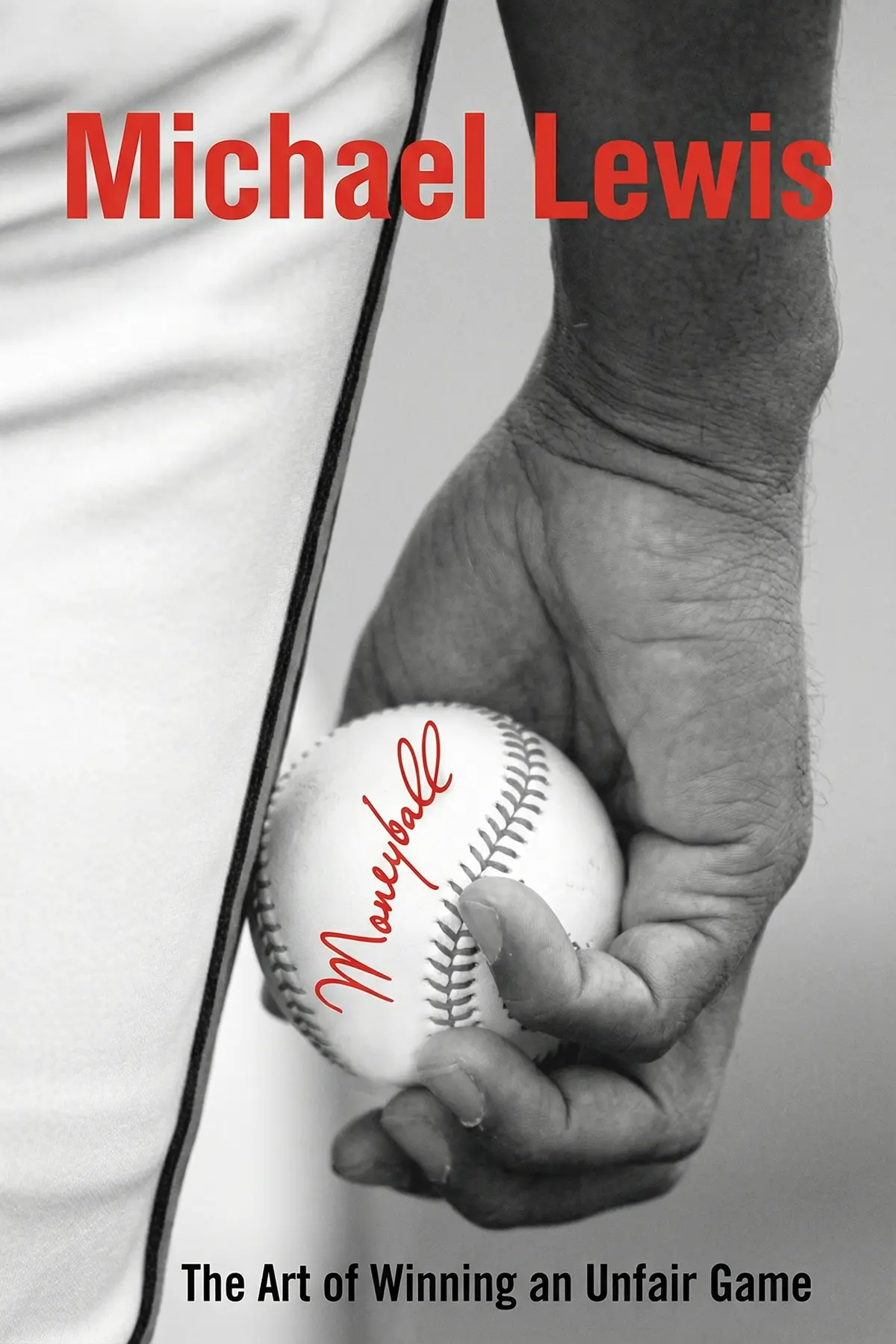
Shows how the Oakland Athletics, with one of baseball's smallest budgets, won by measuring what really produces results and buying the talent everyone else misjudged. The lesson applies to anyone who hires, invests or builds a team.
1 min 05 sec
If you hire people, invest or choose a team, you probably trust your eyes more than the evidence. In Moneyball, Michael Lewis follows the Oakland Athletics through their 2002 season to show what happens when a club stops doing that. Oakland spent about $40 million on players while the Yankees spent around $140 million. The A’s still kept winning, because general manager Billy Beane bought the skills the rest of baseball was pricing badly.
The whole story proves one claim. When an industry judges talent by habit and appearance, whoever measures what really wins can buy it cheaply, until the others copy. Along the way you meet a night watchman who rewrote baseball’s statistics, a catcher with a ruined elbow whom nobody wanted and a draft run like a laboratory test. What carries over to an office is a sharper way to read people, a way to defend an evidence-based call and a sense of how long such an advantage lasts.
2 min 11 sec
Scouts saw a teenager with every physical gift and stopped looking any further. What his career actually produced shows why first impressions of talent mislead, and why experienced judges feel so sure of themselves.
2 min 20 sec
A man guarding a food factory at night spotted something baseball’s experts had missed for a century. His readers were few and the insiders ignored him, but one general manager in Oakland read him closely.
2 min 08 sec
A catcher who could no longer throw and a pitcher whose knuckles scraped the dirt were written off by nearly every club. One team saw in them exactly what it was looking for.
2 min 12 sec
Oakland lost three key players in one winter and set out to replace their production with numbers, not stars. Its answer to that hole, and to the market’s love of one flashy statistic, works for anyone rebuilding a team.
2 min 13 sec
Beane ran his 2002 draft like a laboratory test and picked a catcher the scouts mocked. Years later the scorecard looked mixed, which raises a harder question about how any decision should be judged.
2 min 16 sec
Winning should have silenced the critics. Instead the scouts raged, commentators called Beane names and a rich rival owner came calling. The same success that proved the method also began to wear it away.
1 min 27 sec
Moneyball looks like a baseball story, but a wider point sits inside it. Athletes have every at-bat recorded in public, and Lewis points out that if even they can be badly mispriced, then almost anyone can. Most jobs are measured far more crudely. Economists Richard Thaler and Cass Sunstein carry this into hiring. Job interviews predict performance poorly, they note, while height and good looks still go along with career success. By that reckoning, the scouts who fell for the teenage Billy Beane sit in a great many offices.
What the book adds up to is a discipline. Value hides wherever people judge by sight, by custom or by the last thing they saw. It goes cheap to anyone patient enough to count what actually wins. Before your next hire, promotion or investment, write down the result you expect to see. Then hold your first impression up against the record. When a call goes wrong, check the reasoning before blaming yourself or the luck. When your method works, assume others will soon copy it.
The image to keep is Jeremy Brown in the minor leagues. For once he tried to run past first base, tripped and scrambled back to the bag. Only then did he learn he had hit a home run. The value was there all along. He just could not see it from where he stood.
When the 2002 baseball season opened, the New York Yankees were paying about $140 million for players and the Oakland Athletics about $40 million. Yet Oakland kept winning more games than clubs with far deeper pockets. Michael Lewis followed the team through that season to find out how. His answer is a market that had misjudged talent for generations. Scouts trusted bodies, faces and old statistics such as batting average. Outsiders like Bill James showed that walks, on-base percentage and runs created told a truer story. General manager Billy Beane and his assistant Paul DePodesta used that knowledge to buy overlooked players cheaply, to sell the qualities rivals overpaid for and to replace departing stars piece by piece. The book tells the stories behind the method, from a catcher with a damaged elbow who became a first baseman to a record 20-game winning streak. It also covers the fierce resistance the method met and the speed with which rival clubs copied it. Its lessons reach any field where people are hired, promoted or valued on first impressions.
Managers and founders who hire on gut feeling and want a sharper way to judge people.
Analysts and data teams trying to win support for evidence over tradition inside a skeptical organization.
Sports fans curious how a low-budget club outplayed baseball's richest teams.
Michael Lewis was born in New Orleans in 1960 and studied art history at Princeton before attending the London School of Economics. In the 1980s he sold bonds at Salomon Brothers, and that job gave him his first book, Liar's Poker, in 1989. He went on to write The Blind Side, The Big Short, Flash Boys, The Undoing Project and Going Infinite. Several of his books have reached number one on the New York Times bestseller list, and they have earned two Los Angeles Times Book Prizes. He spent 2009 to 2026 as a Vanity Fair contributing editor, covering mostly business, finance and economics.
Michael Lewis
Michael Lewis

Listeners find this title to be a marvelous and captivating listen, full of statistical analysis and quality data-driven insights. Additionally, they like how it explores both business and baseball, with one listener highlighting that it offers behind-the-scenes insight. The content also includes fantastic baseball stories throughout and is written with a sense of excitement that makes it well worth the price.
Michael Lewis has an incredible ability to turn dry spreadsheet data into a narrative that feels like a high-stakes heist movie. Before reading this, I thought baseball was just about home runs and scouts with "good eyes," but Lewis reveals the hidden math of the game. He dives into how the Oakland Athletics exploited market inefficiencies by valuing on-base percentage over flashy physical traits. Truth be told, the insights into Billy Beane's psychology—especially his fear of failure based on his own stunted career—add a poignant layer to the cold statistics. It’s a masterclass in how an underdog can dismantle a rigged system through pure intellectual rigor. If you have any interest in how modern businesses can disrupt established industries using data-driven insights, this is essential reading. The writing is sharp, witty, and deeply engaging from cover to cover.
Show moreWow, this reads more like a thriller than a non-fiction book about sports metrics and front-office management. Michael Lewis manages to make the act of drafting a college player feel like a life-or-death gamble. I was particularly struck by how the book challenges our assumptions about what "talent" actually looks like. It turns out that being "too fat" or having a "weird delivery" doesn't matter if you can actually get on base. Personally, I found the chapters on the 20-game winning streak incredibly exciting even though I already knew the outcome of the season. The book is well worth the price for the business lessons alone, specifically regarding how to identify value where others see flaws. It is a wonderful and engaging read that proves stats can be just as exciting as a walk-off home run.
Show moreFinally got around to this after years of hearing the term "Moneyball" thrown around in every business meeting I’ve ever attended. It’s easy to see why this became a cultural touchstone because the core concept of challenging institutional dogma is universal. Lewis captures the Oakland A's struggle against the "unfair game" of baseball finance with such clarity and wit. I was particularly interested in how the Boston Red Sox and John Henry eventually adopted these same principles to break their curse. The book is filled with data-driven insights that are as applicable to a boardroom as they are to a dugout. Gotta say, even the minor characters like Jeremy Brown are rendered with such vivid detail that they jump off the page. It’s a fantastic look at how to win when you're outgunned and outspent by the competition.
Show morePicked this up for the baseball but stayed for the incredible lesson in market inefficiency and contrarian thinking. Michael Lewis is the only author who could make a trade deadline negotiation feel as intense as a Game 7 World Series matchup. The way he describes Beane manipulating other GMs to get the players he wants is pure entertainment. This book is an amazing resource for anyone in management, proving that you don’t need the biggest budget to win if you have the best information. I loved every page of this, from the background on Bill James to the dramatic 20-game win streak that silenced the critics. It’s a brilliant, exciting, and deeply insightful look at how to win an unfair game. Even if you hate math, the stories of these undervalued players will win you over.
Show moreEver wonder how a team with a tiny budget competes against the Goliath payrolls of the New York Yankees? Moneyball explains exactly how the Oakland A's pulled it off by embracing the "heresy" of Bill James and his statistical revolution. The book offers a fascinating behind-the-scenes look at the front office during the 2002 season. I loved the focus on "misfit" players like Scott Hatteberg, who were discarded by the rest of the league but became central to Beane’s strategy. While some of the scouting scenes get a bit repetitive, the overall excitement of seeing a theory proven right on the field is infectious. It’s not just a sports book; it’s a brilliant study in decision-making under pressure. Frankly, it makes you realize how often we value the wrong things in life just because of tradition.
Show moreAs a casual fan, I didn’t think I’d care much about "sabermetrics" or complex batting percentages. However, Michael Lewis creates such a compelling portrait of Billy Beane that you can't help but get swept up in the drama. The book highlights the tension between the "old school" scouts who rely on gut feelings and the new breed of math nerds using computers to find value. I found the segments on Beane’s own failed playing career particularly moving, as it explains why he was so eager to burn the traditional scouting model to the ground. Sometimes the technical descriptions of OPS and slugging can slow things down, but the human stories keep the momentum going. It's a solid, informative read that provides amazing baseball stories and a real sense of excitement. Definitely worth the price for the behind-the-scenes access.
Show moreThe chapter on Scott Hatteberg’s transition from a catcher with a dead arm to a first baseman is worth the price of admission alone. It perfectly encapsulates Beane’s philosophy: find a specific skill that is undervalued and exploit it relentlessly. This book is a wonderful blend of sports history and economic theory, though it never feels dry or academic. My only real gripe is that it occasionally ignores the role of the A's star pitchers like Zito and Mulder, focusing almost exclusively on the hitters to fit the narrative. Nevertheless, it provides incredible behind-the-scenes access to a revolution that changed the sports world forever. It’s a must-read for anyone who loves an underdog story where the hero wins using his brain instead of his wallet. Lewis proves that being a "smart alec college boy" can actually pay off in the big leagues.
Show moreFrankly, I expected more of a traditional biography on Billy Beane, but what I got was something much more innovative and thought-provoking. The book is really about an idea—the idea that the world is full of "expert" opinions that are actually based on nothing but tradition and inertia. Lewis uses the 2002 A's season to show how dangerous it is to ignore data in favor of "the eye test." I especially enjoyed the scenes where Beane interacts with his scouts; the clash of cultures is both hilarious and frustrating. The writing style is punchy and moves at a fast pace, making it hard to put down. It really changed the way I look at professional sports and how we measure success in any field. If you like stories about people shaking up an established system, this is for you.
Show moreLook, the story is legendary, but the writing is surprisingly dense and leans heavily into technical non-fiction territory. I was hoping for more of a human-interest story about the players, but instead, it felt like I was auditing a statistics course at times. While it’s fascinating to see how Billy Beane challenged the curmudgeons of the MLB, the argument for walks and on-base percentage becomes quite repetitive after the first hundred pages. To be fair, Lewis is a gifted writer, and his character sketches of Bill James and Paul DePodesta are sharp. However, if you aren't already a baseball nerd or a data enthusiast, you might find yourself skimming the middle sections. It’s a good book with interesting data-driven insights, just not the life-changing experience I anticipated after seeing the film. It feels a bit dated now that every team uses these tactics.
Show moreNot what I expected given the hype of the movie, which focused much more on the emotional bond between the characters. The book is far more analytical and spends a great deal of time on the history of statistical analysis in baseball. While I appreciate the depth, I think the narrative gets bogged down in the minutiae of the amateur draft and repetitive arguments about why bunting is bad. Truth is, I found some of the sections on the "math nerds" to be a bit dry compared to the actual game action. However, the insight into how the Oakland front office operated under financial pressure is still quite valuable for any business student. It’s a 3-star read for me—historically important and well-written, but it definitely feels more like a technical manual than a narrative at points.
Show moreLewis argues that baseball insiders judged players by outdated, subjective wisdom and by flawed statistics such as batting average and runs batted in. The Oakland Athletics, with one of the smallest payrolls in the sport, took advantage of that error. They bought players whose real contribution to winning, often visible in walks and on-base percentage, far exceeded their salaries. They also sold the qualities other teams overpaid for.
Bill James noticed that official records had long treated walks as neutral, so batting average missed part of what a hitter contributes. He promoted on-base percentage instead. Oakland’s front office prized it, and Paul DePodesta’s study of run scoring put one point of on-base percentage at roughly three points of slugging. That made patient hitters who drew walks cheap relative to their value, and Oakland bought them.
In the regular season, yes. Oakland won 102 games in 2001 and 103 in 2002, the most in baseball, despite losing three key players. It also set an American League record with 20 straight wins. The A’s then lost their playoff series to Minnesota in five games, which Lewis puts down to chance in short series. Critics add that the 2002 draft largely disappointed and that pitchers found by ordinary scouting carried much of the load.
Lewis points out that if athletes measured so publicly and precisely can be mispriced, people in jobs with cruder statistics surely are too. Thaler and Sunstein note that interviews predict job performance poorly, while height and looks still go with career success. The practical lessons are to check a person’s record before trusting their appearance, to look for strengths your market underpays and to avoid deals made under pressure. Grade decisions by their process too.
It suits managers, founders and recruiters who make calls about people and want a check on gut feeling. Analysts trying to bring evidence into a traditional organization will recognize the fights Beane had with his scouts. Sports fans get a lively account of a low-budget club, its odd and overlooked players and the 2002 season that changed how teams are run.




Joseph A. Maciariello

Jonathan Eig


Deborah Gruenfeld

Mike Michalowicz

AUDIO SUMMARY AVAILABLE
Get the key ideas from Moneyball by Michael Lewis, plus 5,000+ more nonfiction titles.









