
Flash Boys: A Wall Street Revolt
Michael Lewis
 English
 ไทย
Shows how a gifted young trader built the FTX crypto empire and why it emptied within days: a company with no roles, no finance chief and blurred money between two linked firms.
1 min 01 sec
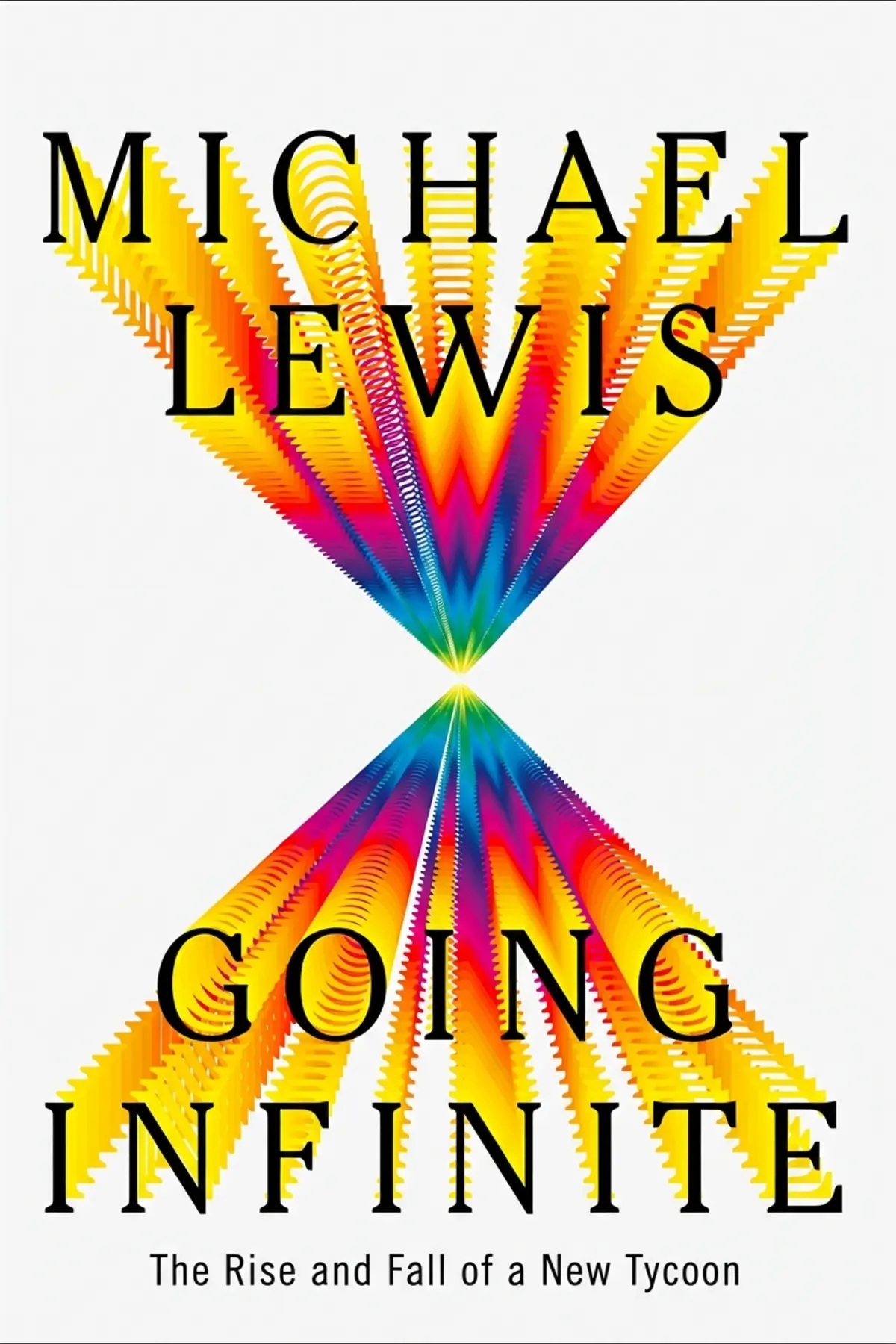
If you work for, invest in or build a fast-growing company, the danger you are least likely to see is the missing structure under the success. In Going Infinite, Michael Lewis tells how Sam Bankman-Fried turned a talent for games and odds into a cryptocurrency empire, and how that empire emptied within days in late 2022.
Lewis paints a man brilliantly suited to making money in markets and badly suited to running the company that money built. The same mind that loved shifting rules and bold solo bets ignored the dull machinery of a business: no org chart, no finance chief and no clear line between his trading firm and his customers’ exchange. When hard questions came, nobody could say whose money was where.
Lewis finished the book before Bankman-Fried’s criminal trial began, so this is a portrait of chaos, not a verdict. It leaves you with a sharper eye for leaders and companies whose growth runs ahead of their controls.
1 min 32 sec
Friends and family struggled to describe him, and he rehearsed facial expressions to put people at ease. The same traits that set him apart also hinted at what he would one day ignore.
1 min 51 sec
A firm paid him $600,000 a year and offered a million-dollar bonus, yet it was not enough. A philosophy about giving gave him a reason to chase far more.
1 min 43 sec
A company earning a billion dollars a year had no job titles, no finance chief and a secret at the top. From the outside, the move to the Bahamas looked like victory.
1 min 51 sec
Two news reports raised one awkward question about two linked companies. Within days, hundreds of millions were leaving each day, and billions turned out to be somewhere nobody could explain.
1 min 06 sec
Lewis’s title carries the irony. Bankman-Fried acted as if his money and his options had no limit, and over a few days in late 2022 he found the edge of both. Crypto made the fall fast, yet the story is really about a person whose gifts were real. He loved games with changing rules and read markets better than most, and his indifference to ordinary structure made those gifts dangerous at scale.
The book ends before the trial, so it offers no verdict. It does leave a picture worth keeping: a resort office in the Bahamas, no org chart on the wall, no finance chief, a leader playing a video game while someone tries to tell him something, and separate pots of money that nobody could tell apart.
When you join, fund or build a fast-growing company, look for the dull things first. Ask who reports to whom, who owns the numbers, and where the business ends and the founder’s private bets begin. If no one can answer, the success rests on nothing but confidence, and confidence can leave at $200 million a day.
Sam Bankman-Fried looked like the new face of finance. He was a former Wall Street trader who believed in earning money to give it away, and he ran a crypto exchange that took in a billion dollars in a single year. Then, in late 2022, it all came apart in a matter of days. Michael Lewis follows him from a childhood spent questioning every convention, through math camp and the trading firm Jane Street Capital, to the founding of Alameda Research and FTX in Hong Kong and their move to the Bahamas. Along the way he shows a company with no org chart, no chief financial officer and a secret relationship linking the heads of its two firms. Readers get the arc of the collapse, from two news reports to a run on the exchange and billions in missing or tangled funds. They also get a clear lesson about what happens when a brilliant mind for markets is put in charge of a business that needs structure.
Founders and operators scaling fast who want to see what missing controls really cost.
Managers and team leads who work alongside brilliant but hard-to-read colleagues.
Readers curious about crypto and the FTX collapse who want the human story behind the headlines.
Michael Lewis was born in New Orleans in 1960, studied art history at Princeton and attended the London School of Economics. He sold bonds at Salomon Brothers in the 1980s, which led to his first book, Liar's Poker. His later books include Moneyball, The Blind Side, The Big Short, Flash Boys and The Undoing Project. He has won two Los Angeles Times Book Prizes, had several number one New York Times bestsellers and wrote about business and finance for Vanity Fair.
Michael Lewis
Michael Lewis

Listeners find the work enlightening and thoroughly researched, appreciating the author's skill in clarifying intricate occurrences. Furthermore, they call it a captivating experience with superb prose, and one listener points out that it offers a distinct perspective on the situation. The narrative is also gripping, with one review noting the classic Michael Lewis style. On the other hand, the tempo draws varied opinions; one listener calls it a fast-paced deep dive, whereas another feels it is hurried. Likewise, the portrayal of individuals and the level of compassion split audiences, as some find the figures intriguing while others mention a deficiency in empathy.
Michael Lewis remains the undisputed king of making dry financial concepts feel like a high-stakes thriller. In this book, he masterfully explains how SBF went from a Jane Street trader to the head of a massive empire, all while wearing cargo shorts and ignoring social cues. The scene where Sam is playing League of Legends during a Zoom call with Sequoia Capital is just classic—it perfectly captures the sheer absurdity of the era. The writing is insightful and provides a unique view of the inner workings of FTX that no other reporter could have gotten. I finished this in two sittings. It's a fast-paced deep dive into a world of effective altruism and high-frequency trading that most of us will never see. Highly recommended for fans of The Big Short.
Show moreEver wonder how a bunch of MIT kids managed to gamble away billions while living in a Bahamian penthouse? This book answers that question with the kind of sharp detail and wit only Lewis can provide. The author’s access to Bankman-Fried is truly unparalleled, having shadowed him for months before the house of cards finally fell. Personally, I found the deep dive into the philosophy of Effective Altruism to be the most compelling part of the narrative. It explains the 'why' behind the madness. Lewis doesn't just give us a dry timeline; he paints a vivid picture of a subculture that thought they could save the world by breaking every rule of traditional finance. It’s an excellent, well-researched piece of journalism that reads like a novel. I couldn't put it down.
Show moreAs someone who followed the FTX collapse through news snippets, this book provided the cohesive narrative I was missing. It is a fascinating read that delves into the psychology of a man who claims to have never felt pleasure—a literal case of anhedonia. Lewis captures the chaotic energy of the FTX offices perfectly. You see the red flags popping up everywhere, yet you understand why so many smart people were drawn into Sam's orbit. To be fair, crypto is still a bit of a mystery to me, but Lewis simplifies the complex trading strategies of Alameda Research enough for a layman to follow. The storytelling is engaging from start to finish. It’s a brilliant character study of an accidental tycoon who lost it all.
Show moreThis book offers a window into a world so detached from reality that it feels like science fiction. Michael Lewis has a knack for finding these weird, outlier personalities and making them feel human. SBF is perhaps his most complicated subject yet. The book does a great job of showing how the lack of corporate controls and proper accounting wasn't just a mistake, but a fundamental part of how they operated. Some might say Lewis was too sympathetic, but I think he was just trying to understand the 'weirdness' of the situation. The details about his childhood and his time at Jane Street really helped flesh out the man behind the Jew-fro. It’s a masterful explanation of a disaster that seemed inevitable in hindsight.
Show moreFinally got around to reading Lewis’s take on the crypto winter, and the truth is, I’m conflicted. On one hand, the writing is propulsive and he manages to humanize a character that the media has spent months demonizing. On the other hand, the pacing feels a bit rushed toward the end, especially once the bankruptcy lawyers like John Ray enter the scene. Lewis clearly spent so much time in the 'before' that the 'after' feels like an afterthought. You get a sense that Sam is less of a villain and more of a socially-stunted genius who simply didn't care about the rules. It’s a fascinating look at the hubris of the effective altruism crowd, but I was left wanting a bit more accountability for the lost customer funds. Still, for a deep dive into how SBF’s brain works—or doesn’t—it’s an essential read.
Show moreThe chapter on Jane Street alone is worth the price of admission for finance nerds. Lewis deconstructs the world of high-frequency trading with his trademark clarity, showing exactly how Sam learned to view the world as a series of expected value calculations. It is insightful and well-researched, though I did notice a slight lack of empathy for the actual people who lost their life savings in the collapse. The book focuses heavily on the 'inner circle' and their bizarre dynamics. To be fair, the character development is top-notch; you really feel like you’re in that penthouse in the Bahamas watching the chaos unfold. It's a classic Michael Lewis style book, even if the ending feels a little unfinished because the trial was still ongoing. A solid four stars.
Show moreNot what I expected from the man who wrote The Big Short. While the prose is undeniably solid, Lewis seems to have been duped by SBF’s 'clueless nerd' routine. Throughout the book, he overlooks major red flags and accepts Sam’s version of events far too easily. He portrays the $8 billion in missing funds as a 'comedy of errors' rather than intentional fraud. Frankly, it’s a bit frustrating to read. However, the background info on the rise of Alameda and the competitive world of crypto exchanges is genuinely interesting. It’s an okay book if you want a character portrait, but don’t expect a forensic accounting of the crimes. The storytelling is there, but the perspective feels skewed and lacks the objective distance needed for such a massive scandal.
Show moreTo be fair, the storytelling is as sharp as ever, but the subjects are just fundamentally unlikable. I’ve always admired how Lewis can make anyone seem like a hero, from baseball scouts to hedge fund managers. Here, he tries to do the same with Sam Bankman-Fried, but the guy just comes across as a bland, empathy-free robot. It’s hard to root for someone who plays video games during a pitch for hundreds of millions of dollars. The book is well-researched, sure, but it feels like the author got a little too close to the subject. Instead of an objective critique of a massive financial fraud, we get a character study of a guy who thinks he’s too smart for the law. Personally, I struggled to stay engaged with the 'crypto bro' lifestyle. It's an okay book, but definitely not my favorite Lewis work.
Show moreLook, if you want a forensic audit of where the eight billion dollars went, you won't find it here. What you will find is a weirdly defensive account of a guy who broke the law but convinced Michael Lewis he was just 'bad at record-keeping.' The book is readable because Lewis is a master, but the 'so what' is missing. I kept waiting for a moment of self-reflection from the author about how he might have been used to spin a narrative. It never comes. The characters, especially Caroline Ellison, feel one-dimensional and are often treated with a strange amount of disdain compared to the 'fallen golden boy.' It’s a fascinating look at the rise of FTX, but as a post-mortem of a fraud, it falls short. It's an okay read for the history, but take it with a huge grain of salt.
Show moreTotal disappointment from a seasoned journalist who seemingly got played by his own subject. I expected a forensic takedown of the FTX collapse, but instead, this feels like a defensive hagiography. Lewis spent months shadowing SBF and appears to have lost all objectivity in the process. He treats a $8 billion fraud like a 'comedy of errors' rather than a deliberate theft of customer money. The way he portrays Caroline Ellison as a jilted, incompetent ex-lover is particularly gross and feels like he’s just parroting Sam’s talking points. Look, Lewis is a great writer, but his refusal to engage with the actual victims of this scam is baffling. If you want the truth about what happened at FTX, you should probably wait for the trial transcripts or literally any other book. This one is a stain on a previously great reputation.
Show moreIt follows Sam Bankman-Fried from his childhood and math camp through the trading firm Jane Street Capital to founding Alameda Research and the crypto exchange FTX. Lewis portrays a man well suited to making a fortune in markets but unfit to run the company he built, with no org chart, no chief financial officer and blurred lines between his two firms, until it all collapsed in late 2022.
Late in 2022, reports from Bloomberg and CoinDesk questioned the ties between FTX and Alameda Research, noting that over a third of Alameda’s roughly $14.6 billion in assets seemed to be FTX’s own FTT token. Customers rushed out at about $200 million a day, FTT fell from $22 to $7, and Bankman-Fried could not cover $5 billion in withdrawals, so he filed for bankruptcy.
Lewis shows Bankman-Fried’s teenage interest in utilitarianism merging on Wall Street with effective altruism, the idea of earning a great deal of money in order to give it to the causes that do the most good. That gave his life a purpose and a reason to keep chasing bigger fortunes, which helps explain why a $600,000 salary at Jane Street did not feel like enough.
The story shows what happens when growth outruns basic controls. FTX had no job titles, no clear reporting lines, no finance chief and a hidden relationship between the heads of two linked firms. When doubt arrived, nobody could say whose money was where. Leaders can take the practical point: define roles, make someone accountable for the money and keep conflicts of interest visible.
No. Lewis wrote the book before the criminal trial began, so it does not describe the case or its outcome. Instead it focuses on the confusion inside his companies before the bankruptcy, the run on the exchange, the investigations opened by the United States and the Bahamas, and the early accounting that suggested billions had moved, been hidden or gone missing.

Barack Obama


Masaji Ishikawa

Ben Macintyre


James Shapiro


Ben Macintyre

AUDIO SUMMARY AVAILABLE
Get the key ideas from Going Infinite by Michael Lewis, plus 5,000+ more nonfiction titles.









