

13 min 16 sec
Available in: English
Excellent Daughters: The Secret Lives of Young Women Who Are Transforming the Arab World
A close look at the young Arab women who live under strict rules of modesty and family honor, and at how they are winning room to study, work and choose, without giving up their faith.
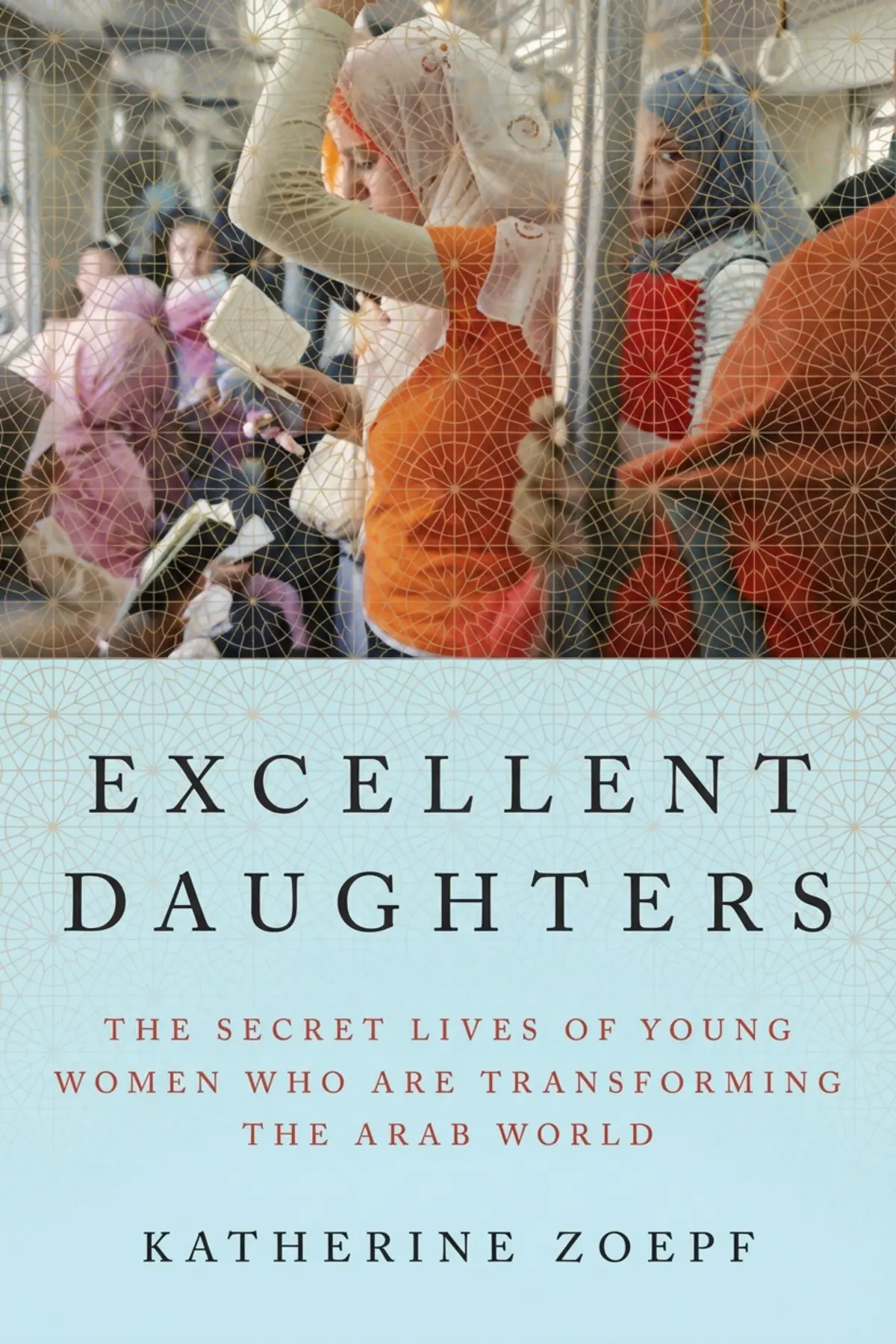
Table of Content
1. Introduction
1 min 01 sec
News images of the Arab world tend to show women as either hidden or harmed. They rarely show women making choices. In Excellent Daughters, journalist Katherine Zoepf, who spent three years living in Syria and Lebanon, starts from a different picture: thousands of young Arab women now work as flight attendants, and for many of them takeoff means leaving a controlling family behind, quite literally.
Zoepf argues that this generation does not want to become Western. These women want to keep Islam and the traditions they are proud of, and to add the individual freedom of modern life. Their progress is real. It is often won by turning the culture’s own rules about shame and faith to their advantage, and it is still fragile, as honor killings and the aftermath of the Arab Spring make painfully clear.
Follow her reporting and you will be able to explain what these women are up against, the clever routes some have found out, and why their gains can still be taken away.
2. The rule that makes women answer for men's desire
1 min 38 sec
Two strangers feel an instant pull toward each other. In much of the Arab world, only one of them is held responsible for it, and that single belief shapes how girls dress, move and live from puberty on.
3. Marriage promises freedom but punishes the smallest slip
1 min 22 sec
For a young woman kept out of sight, the wedding day looks like the start of real life. Yet the door can close before she reaches it, sometimes over something as small as a glimpse of her hair.
4. What one girl's murder reveals about family honor
1 min 40 sec
A 17-year-old was attacked by a family friend, and then her own family turned on her. The court’s verdict in her brother’s case shows how deeply one idea of honor is written into law.
5. Turn the language of shame into a job
1 min 35 sec
Saudi Arabia keeps men and women so far apart that strangers avoid sharing an elevator. That strict separation gave a group of women the argument they needed to win paid work outside the home.
6. Rising faith can open the road to university
1 min 35 sec
Religious fundamentalism is growing across the Arab world, which sounds like bad news for women. Yet in Syria’s Qur’an schools, girls now outnumber boys, and some of them are reading the old verses in a new light.
7. See how more women choose careers over marriage
1 min 41 sec
Women now outnumber men at many Arab universities, and some are flying away from home for work. The price can be steep, from a lost marriage to rejection by their own families.
8. The uprising that left women worse off
1 min 36 sec
An online video by a young woman helped bring Egyptians into the streets, and women marched beside men. What happened to many of those women after the new rulers took over is hard to hear.
9. Conclusion
1 min 08 sec
Think back to the flight attendant at takeoff. She has not left her faith or her culture on the ground. She has left the part of it that held her responsible for every man’s glance and her family’s good name. That is the life Zoepf’s excellent daughters are reaching for: their own tradition, with room to breathe inside it.
The book shows how uneven that progress is. Saudi women won jobs by speaking the language of shame. Syrian girls gained a path to university and a voice in religious debate through the Qur’an. Yet a brother walked free after killing his sister, and women who protested in Egypt were subjected to virginity tests.
Two habits follow from Zoepf’s reporting. When you see a veil, a separate shop or a crowded Qur’an class, ask what door it might open before you decide it only closes one. And when you hear about reform, pay attention to the men, because their expectations of women are where Zoepf believes the real change has to begin.
The plane is in the air. Whether it lands somewhere freer depends on who is willing to help it along.
About this book
What is this book about?
In much of the Arab world, a young woman is held responsible for what men might feel when they see her. She is expected to cover up, stay out of sight and guard a reputation that decides whether she can marry. In the worst cases, it decides whether she lives. Katherine Zoepf, a journalist who lived in Syria and Lebanon, describes this world from the point of view of the women inside it, and shows what they are doing to change it. Saudi women have turned the idea of shame into jobs in shopping malls. Syrian girls are filling Qur'an schools and using that learning to reach universities and question accepted readings of Islam. Others are leaving home to work abroad or in flight crews, even when it costs them a marriage. Zoepf does not hide the dark side: honor killings that go unpunished, and an Arab Spring that left many women worse off than before. Her central point is that these women do not want to copy the West. They want their own tradition, with freedom inside it. Readers get a clear picture of what these women face and the ways some of them are getting out.
Book Information
Who it's for
Looking past the headlines
Readers who know the Arab world mainly from headlines and want the view of the women living there.
Students wanting concrete cases
Students of the Middle East, religion or gender who want concrete cases, from Saudi malls to Syrian Qur'an schools.
Working with Arabs
People who work with Arab colleagues or students and want to understand the pressures they carry.
About the Author
Katherine Zoepf
Katherine Zoepf is a journalist from Cincinnati who studied at Princeton University and the London School of Economics. From 2004 to 2007 she lived in Syria and Lebanon, reporting as a stringer for The New York Times, and in 2008 she worked in the paper's Baghdad bureau. Her writing has also appeared in The New Yorker, The New York Times Magazine and The Chronicle of Higher Education, and she has been a fellow at New America since 2010.
Ratings & Reviews
Ratings at a glance
What people think
Listeners find this book to be a fantastic listen that offers illuminating glimpses into the lives of women in the Arab world. The prose is skillfully composed, and listeners admire the author’s commitment as a high-quality journalist. They value the work's cultural viewpoint, as one listener remarked that it serves as a bridge to understanding Arab culture and history. The narrative style earns praise, including one review that highlights its detailed description of Muslim women's lives. Pacing receives mixed responses, however, because one listener felt there was too much focus on honor killing.
Top reviews
Cameron
Ever wonder what life is actually like behind the headlines about the Middle East? This book is a stunning bridge to understanding a culture that is often oversimplified by Western media. Zoepf doesn't just observe; she connects. Her storytelling is vivid, especially when she describes the intense female friendships that sustain these women. I found the sections on Saudi Arabia particularly eye-opening because they challenged my assumptions about what 'freedom' means to different people. Some of these women are highly educated yet choose to operate within traditional family structures. It’s a complex, beautiful, and sometimes heartbreaking read. The author’s dedication to being an 'ear witness' shines through every page. If you want to hear these women speak for themselves without an external filter, buy this book. It is a wonderful, humanizing achievement.
Show moreRungtip
Truth is, I didn't expect to feel such a deep connection to these stories. Katherine Zoepf has done an amazing job of humanizing a group of people often treated as political pawns. These aren't just 'oppressed women'; they are individuals with dreams, jokes, and a fierce sense of family. I loved the focus on education and the desire for professional roles. It’s eye-opening to see how much they value their female-only spaces, which is something we’ve largely lost in the West. The sense of family reverence is a beautiful counterpoint to the restrictions they face. The book is well-researched and clearly comes from a place of deep respect. It’s one of those rare books that actually makes you think differently about the world. A truly excellent piece of reporting.
Show moreKatya
This book serves as an essential mirror for Western readers who think they have the Muslim world figured out. Zoepf shows us that 'progress' isn't a straight line and it doesn't always look like Westernization. Some of the smartest women she interviewed were also the most traditional. That paradox is the heart of the book. The storytelling is detailed and compassionate, making you care about the fate of every girl she meets. I appreciated the author’s honesty about her own experiences living in Syria before the war. It adds a layer of poignancy to the chapters on Damascus. This isn't just a book about politics; it’s a book about the soul of a generation. Absolutely engrossing and highly recommended for any book club.
Show moreNiphon
Picked this up after seeing it on a few 'must-read' lists and I was pleasantly surprised by the accessibility of the prose. The book functions as a series of snapshots across different countries like Lebanon, Syria, and the UAE. One of the most interesting aspects was seeing how differently 'modesty' is interpreted in Beirut versus Riyadh. The author has a real talent for breaking through cultural barriers. I felt like I was sitting in those living rooms with her, drinking tea and listening to secrets. My only gripe is that some chapters felt a bit like a compilation of old news articles rather than a cohesive narrative. Still, the insight into the workplace challenges faced by these 'excellent daughters' is invaluable. It’s a very readable and engaging account of a world in flux.
Show moreChamnong
As someone who enjoys deep-dive journalism, I found Zoepf’s approach incredibly refreshing. She avoids the trap of being patronizing by simply letting the women talk. The result is a nuanced portrait of a generation trying to balance tradition with modern aspirations. I was particularly struck by the stories of young women migrating to the UAE for work, something that was unheard of just a few decades ago. It shows that change, while slow, is happening in the economic sphere even if social norms lag behind. The writing is well-crafted and the pacing mostly keeps you hooked. Personally, I think this serves as an excellent companion piece to Geraldine Brooks’s work. It might not be the most academic text, but it’s a brilliant introduction to the personal factors shaping the future of the Arab world.
Show moreWorawit
The chapter on Beirut was a fascinating contrast to the sections on Saudi Arabia, highlighting the bizarre pressures women face regarding beauty and 'restoring' their reputations. Zoepf captures the contradictions of the region perfectly. You have women undergoing surgery to appear as virgins while simultaneously flirting in bars. It’s complicated and messy. I appreciated how the author touched on her own upbringing in a religious fundamentalist household, as it gave her a unique empathy for her subjects. She doesn't judge the girls who choose to submit to arranged marriages; she just tries to understand why. While the book is intermittently slow, the cultural perspective is top-notch. It’s an important read for anyone trying to look past the veil and see the intelligent, funny, and resilient women underneath.
Show moreJob
Finally got around to reading this and it's quite the eye-opener for anyone interested in global women's issues. The book is very readable and moves quickly through different geographic locations. I especially liked the focus on the Arab Spring in Egypt and how young women navigated that chaotic time. Zoepf is a talented writer who knows how to pick out the telling detail that makes a scene pop. My only minor complaint is that I wanted more analysis of the political systems that keep these structures in place. She focuses almost entirely on the personal and social, which is great for empathy but sometimes leaves the 'why' a bit thin. Regardless, it is an engaging and informative look at a demographic that is too often silenced.
Show moreArt
Katherine Zoepf writes with the clinical precision of a seasoned reporter, but I struggled with the framing of this collection. While the subtitle promises a look at women 'transforming' the Arab world, the actual content often depicts a more static reality. To be fair, the individual stories of young women in Riyadh and Damascus are deeply moving and provide a rare window into their private spheres. I appreciated the lack of Western condescension here. However, many of the subjects seem to be rationalizing their lack of mobility rather than dismantling it. It felt like watching people find comfort in a gilded cage. Frankly, the progress described feels incremental at best, making the title feel a bit like a misnomer. It is a solid, informative read for those new to the subject, but don't expect a manifesto on a feminist revolution.
Show moreHunter
Not what I expected in terms of pacing, to be honest. While the first half of the book was engrossing, the middle sections felt like they bogged down in too much focus on honor killings. Don't get me wrong, it's an important topic, but it became quite repetitive and extremely heavy to the point where I had to put the book down for a few days. The author is clearly a great reporter, but the structure of the book felt a bit disjointed, like a series of essays that didn't quite mesh into a single argument. I did learn a lot about the legal status of women in different Arab countries, which was valuable. However, the title's promise of 'transformation' never quite materialized for me. It’s an okay read, just a bit uneven.
Show moreSomsak
Look, I wanted to like this more, but the title is a total misdirection. Calling these women 'transforming' when so many are simply finding ways to accept extreme limitations felt dishonest to me. The chapter on honor killings in Syria was absolutely gut-wrenching and hard to get through, but it didn't show a society on the brink of change—it showed a society trapped in a cycle of violence. It seems like because they can now get an education or paint the walls of their rooms, we are supposed to ignore that they are still locked inside. To me, this felt more like a step backwards. The men in these stories seem to take no responsibility for the strictures they enforce. It’s full of information, sure, but the overall message left me feeling more frustrated than inspired. Not what I was hoping for.
Show moreQuestions about this book
What is Excellent Daughters by Katherine Zoepf about?
It follows young Arab women who grow up under strict rules of modesty and family honor, and shows how many are pushing for education, careers and independence. Zoepf covers the hijab, the fear of becoming unmarriageable, honor killings, Saudi segregation, Qur’an schools and the Arab Spring. Her central point is that these women want their own tradition with freedom inside it, not a copy of Western life.
How did Saudi women get jobs in lingerie shops?
Lingerie stores in Saudi Arabia were once staffed by men. Women persuaded government officials that it was improper for male clerks to picture female customers in the lingerie they sold, an argument built on the shared idea of shame. Only women could then work in those shops. It looked like more segregation, but Zoepf sees it as valuable progress, because it gave women paid work outside the home.
Does Excellent Daughters see religion as a barrier for Arab women?
Not only as a barrier. Zoepf notes that religious belief and fundamentalism are rising, yet in Syria more girls than boys now attend schools that teach Qur’an memorization. That education can help women reach university and a career. Some women also use their training to question dominant readings of Islam and to show how its key passages can support freedom and equal rights.
What happened to women during the Arab Spring according to Zoepf?
Women stood side by side with men in the protests; in Egypt, a video by Asmaa Mahfouz helped spark them. After the new regime took power, many female protesters were arrested and forced into virginity tests, which an Egyptian general told CNN were meant to stop women from accusing men of assault. Samira Ibrahim Mohamed described her own forced examination. Within months, women were treated worse than before.
What is the key takeaway of Excellent Daughters?
Many young Arab women live hidden lives under the control of families and husbands, and some pay with their lives for their family’s idea of honor. Yet more are studying, working and choosing for themselves, sometimes by using their culture’s own rules to win space. Zoepf believes lasting change depends on men’s expectations shifting and on support from around the world.
Readers also enjoyed

Afropean: Notes From Black Europe
Johny Pitts


All About Love: New Visions
bell hooks


A Biography of Loneliness: The History of an Emotion
Fay Bound Alberti

A Force for Good: The Dalai Lama's Vision for Our World
Daniel Goleman


A Room of One’s Own
Virginia Woolf

Abolish Rent: How Tenants Can End the Housing Crisis
Tracy Rosenthal
AUDIO SUMMARY AVAILABLE
Listen to Excellent Daughters in 15 minutes
Get the key ideas from Excellent Daughters by Katherine Zoepf, plus 5,000+ more nonfiction titles.
- 5,000+ titles
- Listen as much as you want
- 7-day free trial
- Cancel anytime









