
Subliminal: How Your Unconscious Mind Rules Your Behavior
Leonard Mlodinow
 English
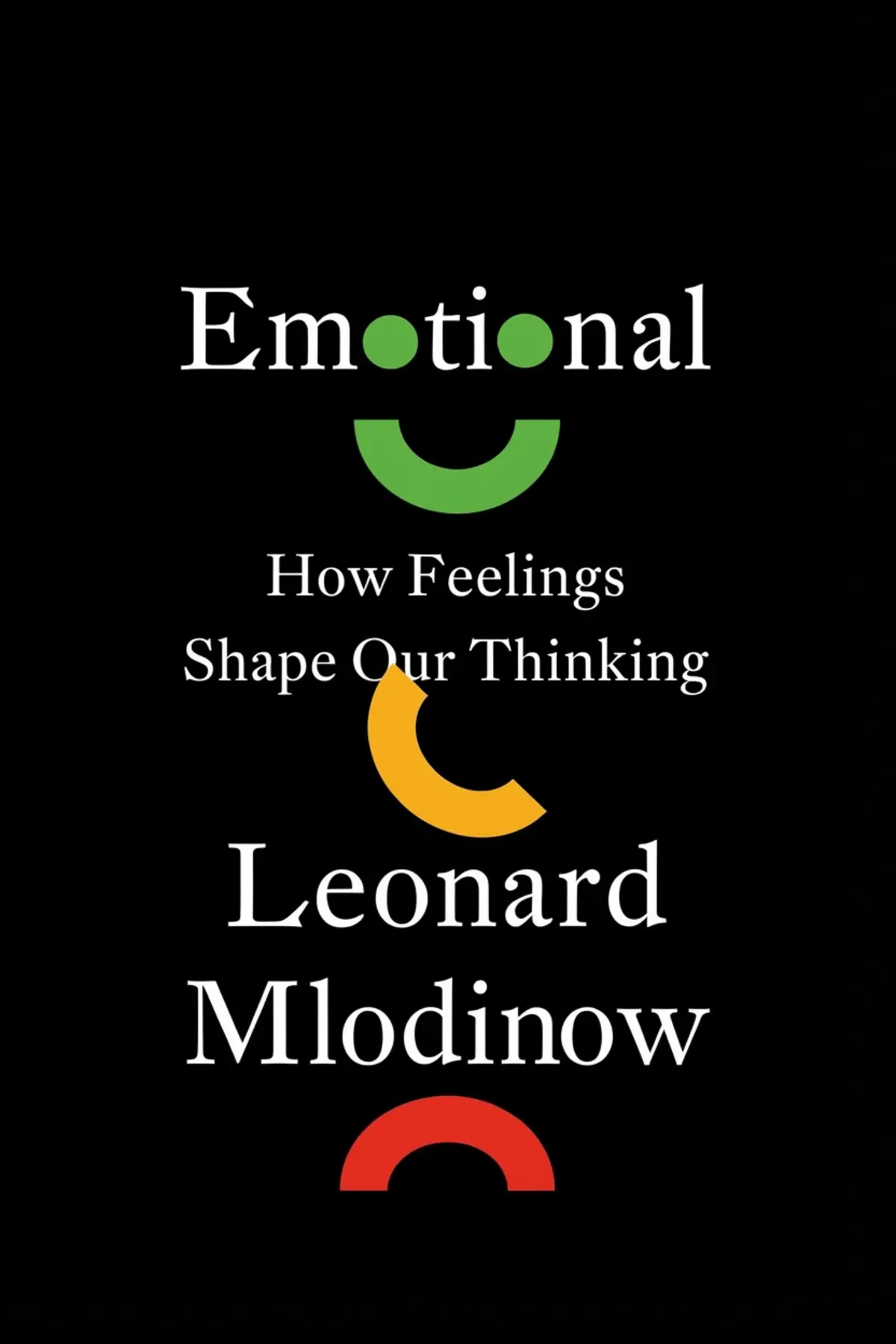
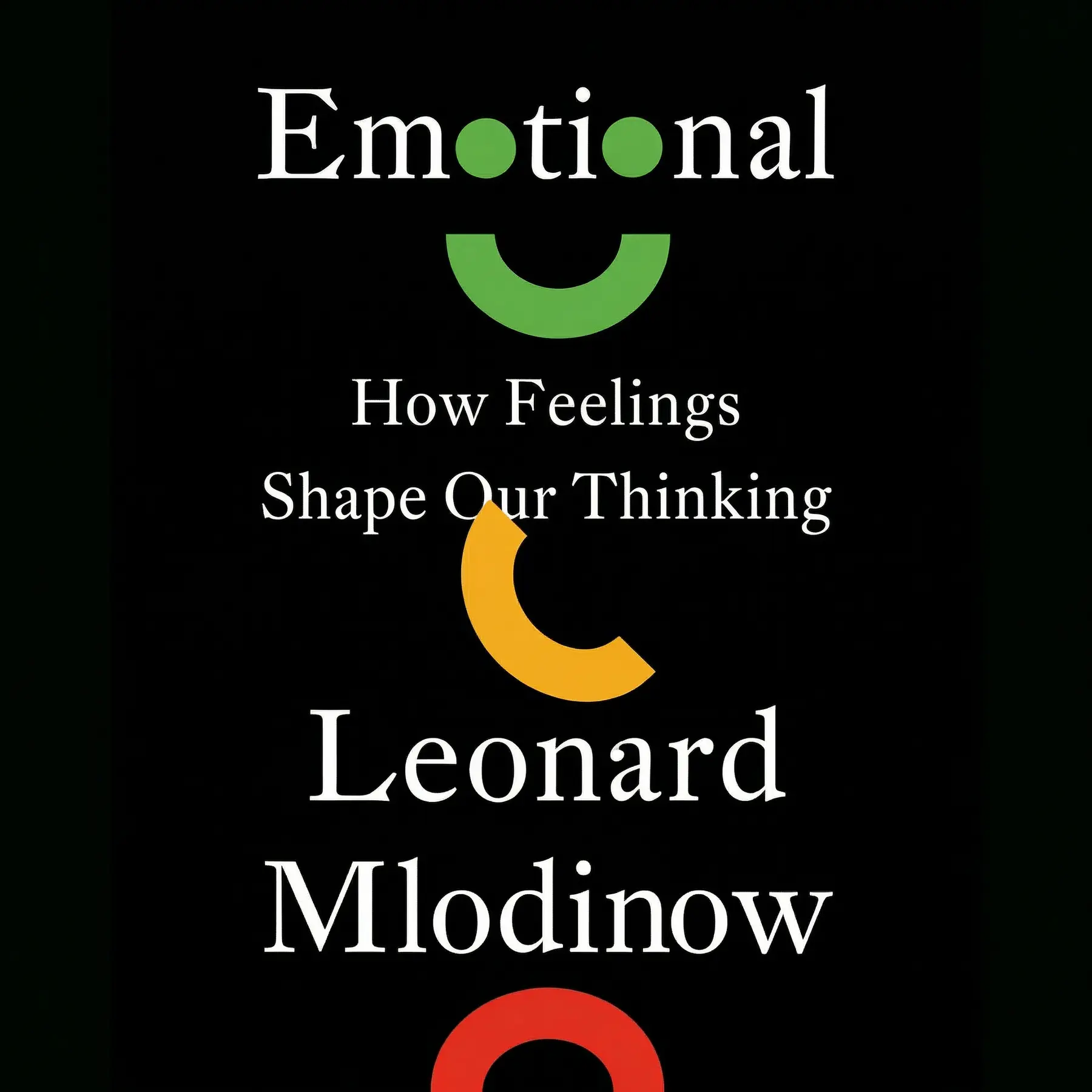
Mlodinow shows that feelings are part of clear thinking, not its enemy. He explains how hunger, sleep, genes and other people shape your emotions, and how to steer them toward better decisions.
1 min 01 sec
If your moods seem to arrive from nowhere and wreck your best plans, the problem may not be too much emotion but too little understanding of it. In Emotional, physicist and science writer Leonard Mlodinow argues that feelings are not the enemy of clear thinking. They are an ancient survival system built for a world of lions behind trees and unknown mushrooms. Today that same system runs in offices, traffic jams and social media feeds.
Brain scans, he explains, show instinct, emotion and logic tangled together far more tightly than the old picture of reason ruling over animal urges allowed. His case is that once you see what drives your feelings, from an empty stomach to the company you keep, you can steer them instead of being steered. Along the way come a Soviet officer who prevented a nuclear war, hungry parole officers, an underdog boxer and a handful of habits for calmer, sharper decisions.
2 min 04 sec
One officer’s unease was all that stood between a false alarm and a nuclear war. His story challenges a belief about reason and emotion that Western thinkers have held since ancient Greece.
2 min 11 sec
A batch of transplanted gut bacteria changed the personalities of laboratory mice. The same body-to-mind link shows up in courtrooms, where a decision can depend on how close it is to lunch.
2 min 03 sec
An obscure boxer, grieving his mother, outlasted the heavily favored champion. Mlodinow traces that kind of persistence to two brain networks, and to habits anyone can change this week.
2 min 15 sec
Some people explode in a slow queue while others barely notice. Genes explain part of the difference, but an experiment with rat mothers shows how much the surroundings decide which genes actually speak.
1 min 53 sec
Television producers add recorded laughter for a reason, and a secret experiment on a social network showed the same effect at enormous scale. Your bad week may not have started with you.
2 min 03 sec
Stressed traders who kept their feelings locked away were less successful than colleagues who did the opposite. Three plain techniques explain the gap, and one of them runs against what most people assume.
1 min 14 sec
What Mlodinow offers in the end is a truce between thinking and feeling. The fear that once sent our ancestors leaping away from a cobra, and the anger that helped them fight off a rival, still run in us. In modern life, though, constant anxiety can keep a person from leaving the house, and punching an enemy ends with an assault charge. His answer is closer attention. Emotions are messages from a system that kept our species alive, and they deserve to be understood rather than ignored.
That attention can be practical. Check your body’s state before judging anything important, and eat or rest first if you can. Count sleep and exercise as part of your determination. Notice which moods you are absorbing from people and screens. When a hard feeling arrives, name it, look for what is truly good in the situation and share it with someone you trust.
Nobody gets this perfect, Mlodinow admits, but with effort and persistence emotional lives can improve. Petrov listened to an uneasy feeling, and the world went on. Your own feelings usually carry smaller news, but it is still worth hearing.
Most of us were taught to distrust our feelings. The usual picture is a rational mind trying to keep animal urges under control, with emotion as the thing that spoils good judgment. Physicist and science writer Leonard Mlodinow argues that this picture is out of date. Emotions evolved to keep our ancestors alive, and modern brain science shows them tightly woven together with instinct and logic. Mlodinow follows that idea from a Soviet officer whose reluctance helped avert a nuclear war to parole officers who grew stricter as the day wore on and they became tired and hungry. He shows how the body's baseline state colors every judgment. Determination grows with sleep and exercise. Temperament can be partly rewired, and moods spread from person to person and through social media feeds. The book ends with three practical tools for managing feelings: acceptance, reappraisal and expression. These are backed by research on stressed bank traders and by the link between emotional intelligence and success. Readers learn why their moods sometimes hijack their decisions and get concrete habits for working with emotions instead of fighting them.
Professionals whose stress, hunger or fatigue keeps spilling into their decisions at work.
Managers and team leads who want to understand how moods spread through a group.
Anyone with a short temper or slow-fading worries who wonders whether temperament can change.
Leonard Mlodinow was born in Chicago and holds a PhD in theoretical physics from the University of California, Berkeley. His physics research includes the large N expansion and the quantum theory of light inside dielectrics. He has taught at Caltech and written for Star Trek: The Next Generation. Five of his books for general readers have been New York Times best sellers. Subliminal won the 2013 PEN/E. O. Wilson award for literary science writing, and he co-wrote The Grand Design with Stephen Hawking.
Leonard Mlodinow
Stephen Hawking
Listeners find the work highly accessible and value its deep perspectives on our feelings. They describe the content as thought-provoking, with one listener highlighting how the author offers specific tools for personal introspection.
Wow, I didn't expect a science book to make me look at my own outbursts so differently. Mlodinow provides these amazing resources for self-reflection, especially the emotional questionnaires at the back that help you map out your own tendencies toward anxiety or joy. The Paul Dirac story was particularly touching, showing how even the most 'robotic' logical minds are deeply shaped by emotional connection. I’ve been trying to use his strategy of 'reappraisal' to handle work stress, and it’s actually working. Instead of seeing anxiety as a failure, I’m learning to see it as my body’s way of preparing me for a challenge. It is rare to find a book that balances hard neuroscience with such deep, human empathy. If you want a better understanding of why you feel the way you do, this is essential reading. It is easily one of the most insightful books I have picked up this year.
Show moreEver wonder why you feel so differently about a decision before and after lunch? This book explains exactly why that happens through the lens of 'core affect.' Mlodinow has a way of making you realize that your 'self' is actually a collection of interacting systems that are constantly negotiating with each other. I loved the blend of personal memoir and high-level science. The stories about his mother in the nursing home during COVID were heartbreaking and brought a real-world weight to the theories he was discussing. The book is packed with great insights that actually feel applicable to daily life. It’s not just about how the brain works; it’s about how to live a more balanced life by acknowledging your feelings instead of fighting them. Personally, I found the questionnaires to be a fun and useful way to end the book.
Show morePicked this up because I’ve always been a fan of Mlodinow’s ability to turn complex physics into something digestible, and he does the same here for neuroscience. The book is incredibly readable, moving quickly through the latest findings of affective neuroscience without getting bogged down in too much jargon. I particularly loved the story of Stanislav Petrov, the Soviet officer who basically saved the world because he listened to his gut instead of just following a rigid computer protocol. It really drives home the point that our 'rational' minds aren't always the best tools for the job. While some of the narrative detours felt a bit long, the overarching theme that emotions are integrated with logic is handled beautifully. This isn't just a science book; it’s a manual for understanding how our internal sensors guide our every move. Frankly, it changed how I view my own decision-making process.
Show moreFinally got around to reading this and I’m struck by how much we underestimate our gut feelings. Mlodinow explains that we don't just have one brain, but almost a 'second brain' in our gut that communicates constantly with our head. The examples of how hunger affects parole decisions or how fatigue impacts doctor prescriptions were eye-opening and honestly a bit terrifying. It shows that we are never truly 'rational' in the way we think we are. The book is very readable and avoids the dry tone of most science texts. I appreciated how he broke down the five properties of emotion, though I wish he had spent more time on the 'scalability' aspect. Overall, it’s a great resource for anyone interested in why humans are so unpredictable. It offers great insights into the hidden forces that drive our society.
Show moreAs someone who has always tried to suppress my emotions in favor of logic, this book was a bit of a paradigm shift for me. Mlodinow argues that without emotion, we actually can’t make decisions at all because we’d have no way to weight one option over another. The narrative style makes it very accessible, and I liked how he tied in his own family's history with the Holocaust to show how different emotional temperaments develop. The section on 'social emotions' like shame and guilt was especially fascinating. My only minor gripe is that he occasionally overplays the role of emotion to the point of ignoring basic cognitive reflexes. Still, the self-reflection tools provided are top-notch. It’s a highly insightful look at the brain-body connection. It’s definitely worth a read if you’re looking to improve your emotional intelligence.
Show moreThis is popular science in that classic American narrative style where every concept is anchored by a compelling human story. Mlodinow is a master of this format. He successfully argues that emotions are not obstacles to rational thought, but rather essential components of it. I found the discussion on the 'connectome' and how we can now map the circuits of determination and fear to be absolutely riveting. The book is very readable, though I think he could have addressed the replication crisis more directly given how many studies he cites. Despite that, the insights into how our bodies' internal sensors influence our 'core affect' are invaluable. It’s a great book for self-reflection and understanding the people around you. Got to say, the writing is top-tier for this genre.
Show moreLook, the market is absolutely flooded with neuroscience books right now, but Mlodinow manages to offer plenty of fresh material in 'Emotional.' He moves beyond the brain to include the entire body, showing how our physical state dictates our mental clarity. The distinction he makes between a reflex and an emotional response is one of the clearest I've read. While I think he gives a bit too much weight to intuition in some of his historical examples, the overall science is presented in a way that is both engaging and easy to follow. The resources for self-reflection at the end are a great touch that you don't often see in these kinds of books. It’s an insightful read that challenges the idea that being 'emotional' is a weakness. In my experience, this is one of his better solo works.
Show moreThe chapter on the 'triune brain' was a necessary reality check for anyone still clinging to the old lizard-brain-versus-rationality model. Mlodinow does a solid job explaining how our brains actually evolved as integrated systems rather than layers added like a cake. However, I felt the book suffered slightly from the 'law of the instrument'—because Mlodinow is so focused on emotions, he tends to see them behind every single human action, even when logic or pure luck might be more plausible explanations. Truth is, I found the anecdote about his father avoiding a truck during the war a bit unconvincing from a scientific standpoint. Is it an emotional sensor system or just a random coincidence? Without addressing the replication crisis in social science, some of these studies he cites feel a bit shaky. It’s an insightful read for a general audience, but more skeptical readers might find the evangelical tone a bit much.
Show moreMlodinow definitely feels more comfortable here than in some of his previous philosophical ventures, yet the book still feels a bit 'evangelical' regarding emotions. He spends a lot of time attacking the old 'lizard brain' theory, which is fine, but he doesn't always provide a concrete replacement that feels scientifically grounded. Some of the material about fruit flies having emotions was interesting, but it felt a bit speculative. The storytelling is engaging, but at times I felt like I was reading a collection of anecdotes rather than a cohesive scientific argument. To be honest, I found the strategies for managing emotions—acceptance, reappraisal, and expression—to be a bit derivative of Stoic philosophy without much new added. It’s a decent introductory text for those new to neuroscience, but it might feel like retread territory for seasoned readers. It's a fine book, just not a groundbreaking one.
Show moreTo be fair, Mlodinow is a gifted writer, but I found his arguments about 'core affect' and his father’s wartime intuition to be a bit of a stretch for a book that claims to be based on hard science. He dismisses the 'triune brain' theory effectively, but then replaces it with a narrative that feels almost mystical at times. The book uses that classic American style where every chapter starts with a story about real people, but eventually, there is just too much storytelling and not enough data for my taste. I wanted more about the actual neurobiology and less about his personal family history. Also, he mentions several social science studies that have famously failed to replicate, yet he presents them as settled facts. It’s a readable book, but it lacks the scientific rigor I expected from a theoretical physicist. Not gonna lie, I was disappointed by the confirmation bias throughout.
Show moreMlodinow argues that emotions are not the enemy of reason. They evolved to help us survive, and modern brain science shows instinct, emotion and logic working as one tangled system. Our feelings are shaped by the body’s state, by genes and environment, and by the people around us. Once we understand those influences, we can manage emotions and use them in our decisions.
Core affect is the body’s ongoing, mostly unconscious reading of how we are doing, from negative to positive, based on our physical state and situation. Hunger or tiredness lowers it, which makes our emotions and interpretations gloomier. Mlodinow points to research showing parole officers granted parole far more often early in the day than later, when they were hungry and tired, even though they gave logical reasons for their rulings.
Mlodinow describes three tools. Acceptance focuses on your response and lets go of what you cannot control. Reappraisal looks for genuine positives, such as a missed boring meeting when you are stuck in traffic. Expression means talking or writing about feelings with someone you trust, which weakens them. A 2010 study found traders who identified their emotions did better than those who suppressed them.
Partly, according to Mlodinow. Genes matter, but environment shapes how they are expressed, as a rat study showed: pups of anxious mothers grew up anxious, and pups of calm mothers grew up mellower. Adult brains change more slowly than young ones, but they can change with effort. Sonja Lyubomirsky suggests time with others, deliberate kindness, living in the moment and regular exercise.
It suits people who feel their moods undermine their work or relationships, and readers curious about the science behind feelings. Professionals get practical habits, such as eating and resting before big decisions and building determination through sleep and exercise. Team leads gain insight into how emotions spread through groups and social media, and why emotional intelligence and charisma are linked to success.



Steven C. Hayes


Deborah Gruenfeld


Anthony Pratkanis



AUDIO SUMMARY AVAILABLE
Get the key ideas from Emotional by Leonard Mlodinow, plus 5,000+ more nonfiction titles.









