

Ali: A Life
Jonathan Eig
 English
Shows how a simple daily walk, done with attention instead of speed, can calm your mind, sort out your feelings, sharpen your senses and help you think more creatively, and how to make the habit last.
58 sec
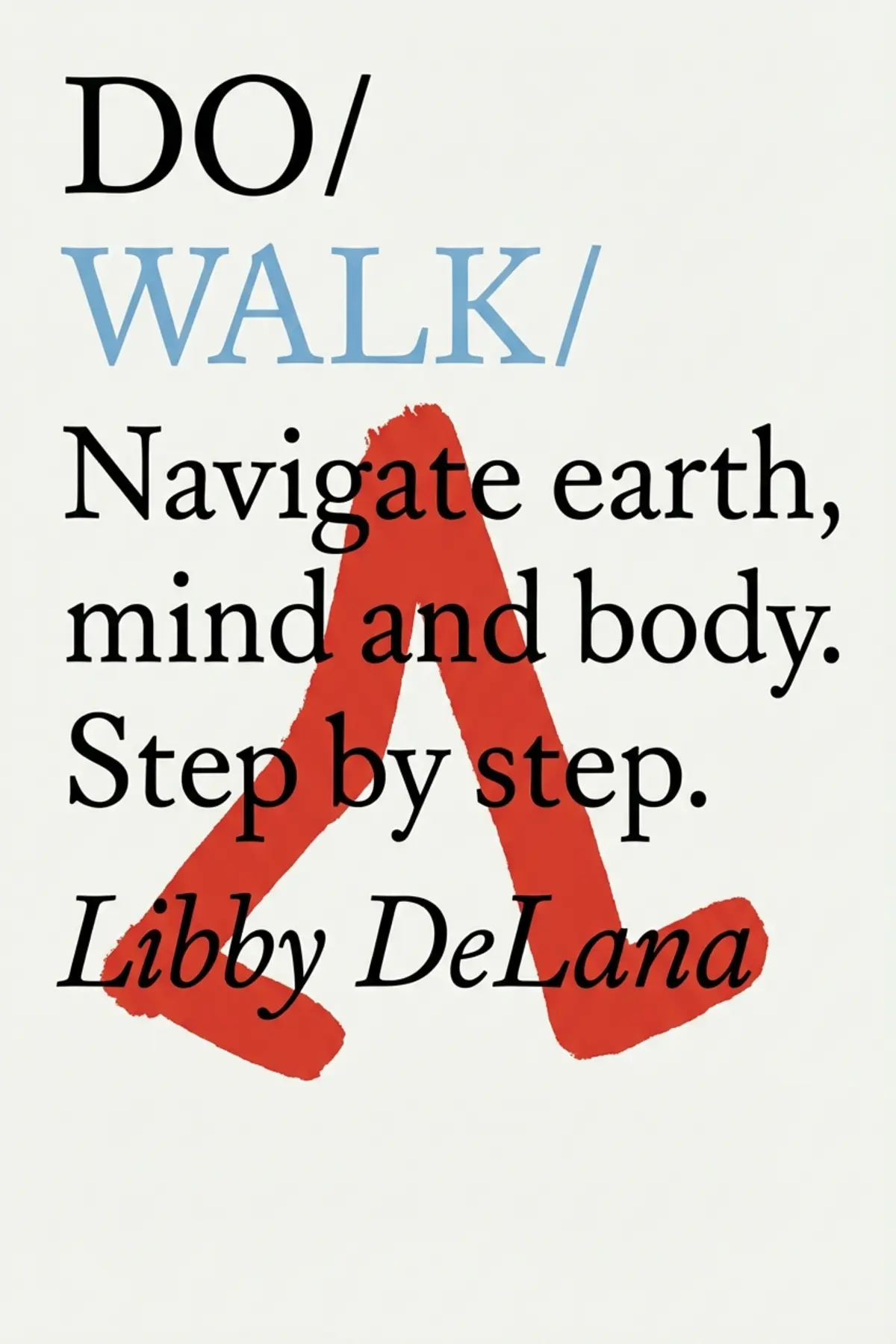
Most busy people start the day already behind, reaching for a phone before their feet touch the floor. In Do Walk, Libby DeLana makes the case for a different first move: step outside and walk, because a walk gets its value from attention, not from speed or distance. She has walked the same 8.2 mile loop, leaving at five in the morning, every day for years.
Her argument is simple and demanding at once. A daily walk taken with intention becomes a ritual that steadies the body, wakes the senses, untangles emotions and makes room for new ideas. Showing up matters more than how far you go.
Her practice breaks down into pieces you can use: setting up the habit so it survives cold, dark mornings, reading your mood in your stride, using each of your senses, and turning a stuck meeting into a walk that may produce better ideas than any conference table.
1 min 45 sec
Doing the same walk, at the same hour, every day sounds like a recipe for boredom. One woman’s dawn routine, and a coyote in the dark, suggest that repetition is exactly what lets the mind finally rest.
1 min 48 sec
Plenty of people buy good shoes, walk three times and stop. DeLana’s fixes are small and practical, and one of them involves your toothbrush. Another asks you to change how you see yourself.
1 min 53 sec
Stress tends to show up in the body long before we put a name to it. DeLana argues your stride is already reporting on your state of mind, and that a cold rain can leave you clearer.
1 min 47 sec
Most of us move through the day half aware, eyes forward, mind elsewhere. DeLana goes through sight, smell, sound, touch and even taste, and shows why a badly fitting sock can be useful.
1 min 36 sec
Being stuck at a desk on the same problem for an hour is familiar to almost everyone. A Stanford study and a few famous thinkers point to a cheap fix that also changes how teams talk.
1 min 53 sec
A single tree can change how a street feels. DeLana explains why nature deepens every benefit of a walk, why the dark hours have their own appeal, and why even a short, slow walk counts.
57 sec
What DeLana describes is a way of greeting the day more than an exercise plan. Nobody needs to match her 8.2 miles. What counts is that she keeps leaving the house at five, through cold and rain, and pays attention once she is out there. The barn, the river and the coyote’s shadow are ordinary things that a person rushing from bed to screen would never see. Her walk works because it gives her the time to notice them.
Her practice starts small. Put your shoes where you cannot ignore them and decide on one route you will walk tomorrow. When a problem or a feeling will not loosen at your desk, carry it outside and let your stride do some of the work, alone or with a colleague beside you. On the hard days, walk less and still count it.
Somewhere along the way you may find you have become someone who walks. Her own two-word instruction is all the motto it needs: do walk.
Many people start the day already rushed: phone first, then the commute, then the desk. Libby DeLana offers a different first step. For years she has walked the same 8.2 mile loop every morning from five o'clock, past a barn and a river, in cold, rain and darkness. She argues that what matters on a walk is attention, not pace or distance. Do Walk turns her practice into something anyone can use. DeLana explains how to set up a walking habit that survives bad weather and tired mornings, how the way you walk shows how you feel, and how to use sight, smell, sound, touch and taste to stay present. She cites a Stanford study linking walking to a large rise in creativity and suggests walking meetings, and she describes the calming effect of time near trees and green space. Readers get a practice that needs almost no equipment, with concrete ways to begin: a fixed route, shoes left where you cannot miss them, and permission to walk less on hard days and still count it.
Desk workers whose mornings start with a screen and who want a calmer, clearer way into the day.
Team leads and creative professionals looking for a simple way to get unstuck, including walking meetings.
People handling stress or low mood who want a gentle daily practice that needs no gym.
Libby DeLana spent fifteen years as design director at MullenLowe before co-founding the marketing agency Mechanica. She created and co-hosts This Morning Walk with Alex Elle, and Do Walk came out in 2021. In her late fifties she began working as a fashion model, and she is a brand ambassador for Hoka and Fjallraven. Her second book, Cold Joy, looks at how cold-water plunges affect body and mind. BBC Radio 4's The Chain, NPR and Cup of Jo have covered her work.

Listeners find this work highly inspirational; one listener notes it provides heartfelt insights into living well, while another characterizes it as a soul daily adventure. This is a quick read that includes remarkable photography, with one listener mentioning that there is wisdom on every page. They value its simplicity and elegance, while another listener remarks on how it bridges the connection to nature.
This book is essentially a masterclass in slow living and intentionality. While some might dismiss it as a collection of simple thoughts, I found the message of a 'soul daily adventure' to be incredibly profound in its minimalism. The stunning photography alone justifies the purchase, but the wisdom tucked between the images is what keeps me coming back. Frankly, it isn't about the distance or the gear, but about the radical act of showing up for yourself every single morning. Libby’s ten-year streak is mind-blowing to contemplate. It prompted me to reconsider how I engage with the natural world right outside my front door. It’s a quick read, yet the resonance of her 'one foot in front of the other' philosophy lingers long after you close the cover. If you need a gentle nudge to reconnect with your own rhythm, this is it.
Show moreThe chapter on the morning ritual really shifted my perspective on how to start the day. I’ve always been someone who hits snooze until the last possible second, but reading about Libby’s 5 AM excursions made me crave that quiet connection with nature. This isn't just a book about exercise; it’s a soul daily adventure that emphasizes the beauty of the mundane. The photography is incredible and captures the atmospheric quality of early light so well. Personally, I found the brevity of the essays to be a strength rather than a weakness. You can dip in and out whenever you need a boost of motivation. It’s a gorgeous, simple, and deeply moving tribute to a practice that anyone can start today. It truly convinced me that walking is a form of prayer.
Show moreWow, what a refreshing perspective on such a fundamental part of being human. I’ve recently started following the author on Instagram, and her daily photos are just as inspiring as the ones in this book. There is a certain kind of wisdom that comes from doing the same thing every day for a decade, and that shines through here. The truth is, we spend so much time rushing that we forget how to actually see the world around us. This book is a reminder to slow down and notice the changing seasons. It’s simple, it’s beautiful, and it provides heartfelt insights into what it means to live a meaningful life. I finished it in one sitting and immediately went for a walk. Mission accomplished!
Show moreAs a devotee of Julia Cameron's Morning Pages, I found the parallels here to be striking and welcome. Just as Morning Pages clear the mental cobwebs, Libby’s approach to walking acts as a physical clearing of the spirit. The book is light on 'how-to'—don't expect a detailed guide on what kind of shoes to wear or specific training regimens—and heavy on the 'why.' It functions more as an invitation to a lifestyle shift. Some of the sections felt a little redundant, repeating the same core sentiments about presence, but the sincerity is undeniable. In my experience, sometimes we need to hear the same simple truth several times before it finally clicks. It’s a beautiful little volume that looks great on a coffee table and provides a much-needed emotional reset.
Show morePicked up this copy on a whim because I’ve been feeling stagnant lately. What I found was a heartfelt meditation on the power of movement. The author doesn't lecture; she shares her own journey with a humility that makes her ten-year commitment feel attainable rather than intimidating. Look, it’s not a complex narrative with a traditional plot, but that’s the point. It mirrors the act of walking itself: steady, rhythmic, and uncomplicated. I appreciated the specific mentions of being present to the world, as it encouraged me to put my phone away during my own evening strolls. While it’s a very short read, the wisdom on every page offers a different perspective on how to live well. It’s definitely more of an inspirational gift book than a dense piece of literature, but it served its purpose perfectly for me.
Show moreAfter years of high-intensity workouts, my body was craving something different, and this book arrived at the perfect time. It’s a quiet, reflective piece of writing that celebrates the 'why' of walking. I loved the author’s commitment to the practice regardless of the weather or the circumstances. It reminded me that we often overcomplicate our wellness routines when the most effective tool is right under our feet. My only real gripe is that the tone can feel a bit elitist at times, assuming everyone has the safety and time to wander freely. Still, the core message of being present to yourself and others is something I really connected with. It’s a gentle, beautiful book that I’ve already recommended to a few friends in my hiking group.
Show moreFinally got around to finishing this over the weekend and I’m already planning my next route. It’s a very simple read, but don't let the simplicity fool you into thinking there's no depth. There is a quiet power in the way DeLana describes her daily practice. I particularly enjoyed the sections on how walking connects us to nature, as I often find myself stuck behind a desk for ten hours a day. To be fair, if you’re looking for a technical manual on gear or specific walking routes, you’ll be disappointed. This is much more about the emotional and spiritual side of the habit. The layout is clean and the photos are breathtaking. It’s the kind of book you keep nearby for those days when you feel like you’ve lost your way.
Show moreTruth is, I didn't think I needed instructions on how to put one foot in front of the other. However, this book isn't about the mechanics of walking; it's about the discipline of the soul. It reads very much like a collection of meditations or a series of letters to a friend. Some of the advice is a bit basic—yes, we know walking is good for us—but the way she frames it as a non-negotiable part of her identity is fascinating. I appreciated the visual aspects of the book just as much as the text. It’s a short, punchy read that serves as a great companion to anyone trying to build a new habit. It’s definitely skewed toward a certain lifestyle, but the underlying encouragement to just *go* is universal and deeply motivating.
Show moreNot exactly a deep dive into the science of kinesiology, which is what I was originally hoping for. To be fair, the author is very clear that this is a personal manifesto rather than a technical manual. However, it does feel a bit like a long-form blog post that has been padded out to fit a book format. I enjoyed the aesthetic and the beautiful photos, but the repetitive nature of the prose started to grate on me by the halfway mark. I also struggled with the lack of perspective regarding accessibility. Not everyone has the privilege to wander for two hours at 5 AM, especially in marginalized communities or for those with physical disabilities. It’s a sweet, inspiring read for a specific demographic, but it lacks the inclusive depth I was looking for in a modern wellness book.
Show moreEver wonder if a simple habit can be stretched into a full book? This title explores that limit. I’ll admit the photography is lovely and the general sentiment is very sweet, but I found the content to be quite repetitive. It feels like the same three ideas are being rephrased in every chapter. I was looking for more personal insights or perhaps some deeper research into the benefits of walking, but it mostly stays on the surface with anecdotal reflections. That said, it is a very quick read and might be perfect for someone who just needs a light nudge to get off the couch. It’s more of an 'art book' with some text than a comprehensive guide. It’s nice, but I’m not sure it needed to be a physical book instead of a magazine article.
Show moreDeLana argues that a daily walk taken with intention, not speed or distance, can calm the mind, wake the senses, help sort out emotions and spark ideas. She builds the case on her own routine of walking the same 8.2 mile route at 5:00 a.m. every day, and on research linking walking to creativity, lower stress and better mood.
Begin with a clear reason, such as health, recharging or working through a problem, and set a small, achievable goal. Commit to walking every day for a few weeks. Lay out your clothes the night before, warm cold feet with slippers or heated socks, and leave your walking shoes somewhere obvious, even next to your toothbrush. Tracking walks or bringing a partner adds motivation.
DeLana cites a Stanford study finding that walking can boost creativity by as much as 60 percent. Her explanation is that while the body handles the movement, the mind is free to wander and connect ideas. She also notes that thinkers such as Steve Jobs, Virginia Woolf and Albert Einstein used walking, and suggests walking meetings to help teams drop weak ideas and find better ones.
DeLana treats the daily walk as an act of self-care, where the intention to show up matters more than distance. On difficult days you can shorten the walk or slow down and still keep the benefits she describes. She suggests praising yourself for going out, and she finds that even when you feel exhausted, a walk tends to restore energy.
It suits people who want a simple, low-cost practice for stress, focus and well-being: office workers who start the day on a screen, team leads looking for better ways to think together, and anyone who feels overwhelmed. It needs almost no equipment, only shoes that fit well and clothes suited to the weather, plus a willingness to go out regularly.
Jonathan Eig

Eckhart Tolle


Pico Iyer
Daniel Siegel
Ram Dass

Billie Jean King
AUDIO SUMMARY AVAILABLE
Get the key ideas from Do Walk by Libby DeLana, plus 5,000+ more nonfiction titles.









