
14 min 38 sec
Available in: English
All In: An Autobiography
How a working-class girl from Long Beach turned a number one tennis ranking into a campaign for equal pay, a women's tour and a public coming out that took decades.
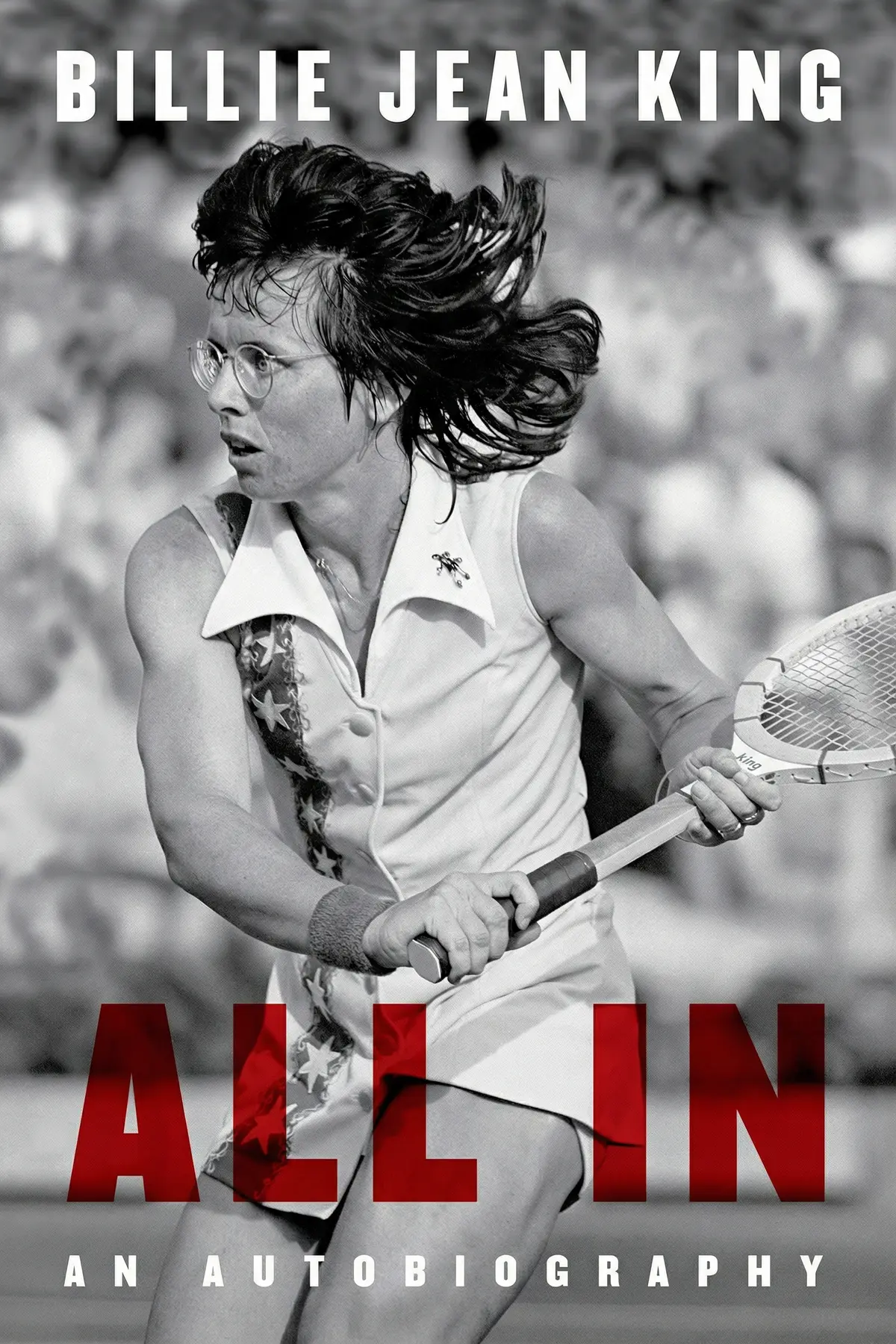
Table of Content
1. Introduction
50 sec
Plenty of people are told that the rules are simply the rules. Billie Jean King’s life shows how someone inside a rigged system can rewrite them. In All In, her autobiography, the tennis champion recalls deciding at ten that she would be the best player in the world, and deciding soon after to use that rank as a platform for equal rights.
That pairing runs through everything that follows. Winning gave her a voice, and the voice helped take women’s tennis from trophies and gift vouchers to the top of sports earnings. The book is also frank about the fight she kept losing for decades, the one to say openly whom she loved. Along the way it offers lessons on rebuilding skills after a plateau, finding allies, outwitting hostile rules and staying steady when the whole world is watching.
2. Turn your first closed door into fuel
1 min 40 sec
A ten-year-old announced she would be the best in the world, then walked into a ballpark that showed her where girls were not welcome. What she did with that discovery set the pattern for her whole career.
3. See whom a rigged system really protects
1 min 46 sec
In the 1950s a Wimbledon champion went home with a trophy and a small shop voucher, and wanting more was considered vulgar. A teenager in the stands began to notice who that arrangement actually served.
4. Rebuild your skills when progress stalls
1 min 44 sec
Against her great rival she had won once and lost nine times. Three punishing months on the other side of the world changed that record, but only after making her worse for a while.
5. Beat hostile rules with allies and fine print
1 min 50 sec
Officials threatened to ban any woman who joined a breakaway tour. Nine players signed anyway, protected by a contract worth almost nothing and a magazine founder who had read the rulebook more closely than anyone.
6. Find calm before the biggest moment
1 min 52 sec
Minutes before the most watched match of her life, King walked out of the locker room and went somewhere no coach would recommend. Where she went, and why it worked, says a lot about pressure.
7. Find courage in public while fear stays private
1 min 53 sec
The woman who took on the tennis establishment stood beside her husband on national television and denied the truth about herself. Her reasons, and the slow steps that followed, are the most human part of her story.
8. Spend your standing to change lives and laws
1 min 53 sec
A frightened teenager approached her after a press conference in Russia and said he was afraid to stay. What she did in the next few hours shows what a platform is really for.
9. Conclusion
1 min 10 sec
King’s autobiography is the story of a child who made two promises at once: to be the best, and to use being the best for something larger. She kept both. The ranking she won in 1967 became the voice behind the Original Nine, the Virginia Slims Tour and the Women’s Tennis Association she helped found in 1973, across a career of 129 titles. Yet the same book admits that the woman who beat Bobby Riggs before a national audience needed decades to say openly whom she loved.
That honesty is what makes her example usable. If you are good at something, treat your standing as something to spend on people who have less of it. When the rules are stacked against you, look for allies like Gladys Heldman and for gaps like a one-dollar contract. When the pressure peaks, remember who the result is for, the way King found her calm among her tourmates upstairs at the Astrodome.
A girl who lost her first match 6-0, 6-0 went home and hit balls against a backyard wall. Decades later, the US Open grounds carry her name.
About this book
What is this book about?
Billie Jean King decided at ten that she would be the best tennis player in the world. Within a few years she had added a second goal: to use that rank to fight for equal rights. All In is her account of how she pursued both, in a sport where champions were paid in trophies and women were offered a fraction of what men earned. King tells how she rebuilt her game in Australia to overtake her rival Margaret Court, how nine players backed by Gladys Heldman and a one-dollar contract launched the Virginia Slims Tour, and how she beat Bobby Riggs in the Houston Astrodome. She is just as open about what she struggled with off the court: an affair that became a lawsuit, years of public denial, and the slow steps toward living openly with Ilana Kloss. Readers get a vivid story of how one athlete helped move women's tennis from almost no pay to the top of sports earnings. They also get usable lessons on improving after a plateau, finding allies, outwitting unfair rules and staying steady under pressure.
Book Information
Who it's for
Young professionals wanting change
Young professionals who are good at their work and want to use that standing to change unfair rules.
Building coalitions for change
Team leads and organizers building coalitions against entrenched systems.
Curious about tennis pay
Sports fans curious about how women's tennis went from trophies to top earnings.
About the Author
Billie Jean King
Billie Jean King was born in California in 1943 and learned tennis on public courts in Southern California. She won 39 Grand Slam titles: 12 in singles, 16 in women's doubles and 11 in mixed doubles. In 1973 she beat Bobby Riggs in the Battle of the Sexes match. She started the Women's Tennis Association, set up the Women's Sports Foundation and co-founded the Billie Jean King Leadership Initiative. She entered the International Tennis Hall of Fame in 1987 and received the Presidential Medal of Freedom in 2009.
Ratings & Reviews
Ratings at a glance
What people think
Listeners find this autobiography to be an accessible and skillfully composed read, with one listener noting it was written with acclaimed sports writer Johnette Howard. They value the transparency of the text, as one review highlights King’s sincerity regarding her private life, including her affair with Marilyn Barnett. Listeners describe King as a truly remarkable woman and an outstanding role model, while the book functions as a premier biography that delivers meaningful insights into women's sports equality.
Top reviews
Chan
Wow. This isn’t just a sports memoir; it’s a blueprint for social change. Billie Jean King doesn't just recount her matches; she dissects the systemic sexism that defined the 1970s tennis circuit. I was particularly moved by her candor regarding her struggle with an eating disorder and the immense pressure of the 'Battle of the Sexes' match. She makes it clear that her victory over Bobby Riggs wasn't about personal ego—it was about protecting the future of women’s sports. The prose, written with Johnette Howard, feels conversational yet urgent. While some might find the detailed accounts of early tennis business ventures a bit dense, I found them essential to understanding how we got to where we are today. She’s a true role model who reminds us that being an activist isn't always a choice; sometimes, life demands it of you. Every young athlete should read this.
Show moreAim
Billie Jean King has always been a hero of mine, but 'All In' humanizes her in ways I never expected. She is unflinchingly honest about her 'demons,' including her journey toward self-acceptance and the societal condemnation she faced regarding her sexuality. The way she describes the internal conflict of being married to Larry King while realizing her true self is handled with such grace and lack of self-pity. Frankly, it’s one of the most courageous autobiographies I’ve read in years. She doesn't shy away from her poor judgments or the times she lied to protect her career, which only makes her eventual advocacy more powerful. The sections on the formation of the WTA and the fight for Title IX are riveting. It’s a thick book, but for those of us who care about social justice and sports history, every page is a treasure.
Show moreSakura
Listening to the audiobook felt like sitting in a room with Billie Jean herself for eighteen hours. Her voice has this surprisingly youthful, almost meek quality at times that contrasts sharply with the warrior we see on the court. It was heartwarming and deeply personal. She talks about her binge-eating and soul depletion with such vulnerability that you can't help but root for her through every setback. I loved hearing about her support for the Civil Rights movement and how she integrated those lessons into the fight for gender equality. She makes a great point that women's rights must include all women, emphasizing her support for the intersex and transgender communities. This isn't just a book about trophies; it’s a book about the cost of being a pioneer. It’s emotional, historical, and deeply satisfying.
Show moreLeah
Ever wonder what it takes to actually change the world? King’s story is a masterclass in persistence and courage. This autobiography is a sprawling, beautiful, and sometimes painful look at a life lived entirely 'all in.' I was struck by the description of her childhood realization that professional sports were a 'men only' club and how that fueled her entire career. The way she handles the topic of her sexuality and the lawsuit from Marilyn Barnett is incredibly brave. She admits her flaws and her mistakes without making excuses, which is rare for someone of her stature. From the 'Battle of the Sexes' to her work with the Women’s Sports Foundation, her impact is staggering. This book is a heavy lift at its size, but BJK’s spirit shines through every single sentence. Truly a remarkable woman.
Show moreGame
Finally got around to this, and it’s a stunningly candid look at a woman who refused to stay in the box society built for her. King is a legend for a reason, and this book proves she’s just as much of a champion off the court as she was on it. The stories about the early days of the Virginia Slims circuit and the 'Original 9' were fascinating. It’s infuriating to read about the lack of funding and the 'tennis bum' labels she had to endure. Personally, I found the sections on her residential treatment for binge-eating to be the most moving parts of the book; it shows a level of self-reflection you don't often see in sports bios. She’s a great role model not because she’s perfect, but because she’s honest about her imperfections. A must-read for any history buff or tennis fan.
Show moreAria
Picked this up knowing the legend, but I wasn't prepared for how much ground this book covers. At nearly 500 pages, it is a massive undertaking that occasionally feels like it could have benefited from tighter editing in the first half. However, the emotional payoff is worth it. King is incredibly frank about her personal life, especially her secret relationship with Marilyn Barnett and the devastating fallout of being outed. It’s heartbreaking to realize the level of loneliness she endured just to maintain her career and the sponsorships that kept women's tennis afloat. To be fair, the later chapters lean heavily into political commentary, which might feel disconnected to those looking for a pure sports biography. Still, her voice is so sincere that you can't help but stay engaged. It’s an essential history of the fight for equal prize money and LGBTQ+ visibility.
Show moreOm
As someone who doesn't even follow tennis closely, I found this account of the 1970s social climate absolutely gripping. King captures the 'Me Too' movement before it had a name, documenting the constant sabotage and injustice female athletes faced. The chapter on the Bobby Riggs match was a highlight—I didn't realize how much was truly at stake for the entire women's movement at the time. My only real gripe is that the book feels slightly repetitive when discussing her various business ventures and committee meetings. Look, I get that those details are part of her legacy, but they do slow the momentum. Regardless, her transition from a girl who realized the 'American Dream' didn't apply to her to a woman who redefined that dream for others is a story everyone should know. It’s an inspiring, if slightly long, read.
Show moreBook
After hearing so much about the 'Battle of the Sexes,' reading the full context from Billie Jean's perspective was eye-opening. The match with Riggs was ridiculous in hindsight, but the pervasive sexism of the era made it a do-or-die moment for women’s tennis. King’s description of the pressure is palpable. I also appreciated the focus on her life after the court—her activism, her struggles with depression, and her eventual happiness with her partner, Ilana Kloss. To be fair, there are moments where the prose feels a bit too much like a list of accomplishments, and the detail on tennis politics can be exhausting. However, her frankness about the gender pay gap and the fight for equal prize money is still so relevant today. It’s a well-written, sincere memoir that serves as a vital bridge between generations of athletes.
Show moreAhmed
To be fair, I have mixed feelings about the pacing here. As a historical document, it’s invaluable, providing a first-hand look at the amateur establishment versus the professional shift. But as a narrative, it’s a bit of a slog. There is an overwhelming amount of detail regarding match results and travel itineraries that eventually blurred together for me. I kept comparing it to Andre Agassi's 'Open' in my head; where his book felt like a tight, propulsive thriller, this felt more like an exhaustive archive. I also struggled with the writing style, which felt a bit plain for such a dynamic life. That said, her honesty about her mistakes and her multiple simultaneous affairs makes her feel human rather than a distant icon. It's a solid 3-star read that I respect more than I actually enjoyed.
Show moreSoontorn
The truth is, while the history is undeniably important, the writing itself felt a bit dry and overly long. I appreciate the honesty King brings to her life story, but the narrative often gets bogged down in trivial details that don't add much to the overall message. For instance, the first 100 pages could have been condensed significantly. I also found the shift into heavy political commentary toward the end to be a bit jarring compared to the earlier autobiographical tone. Not gonna lie, I found myself skimming some of the play-by-play match descriptions. I value the insight into the lack of support for female athletes and her struggles with her identity, but I wish the editors had pushed for a more concise structure. It’s an important book for the shelf, but maybe not a page-turner for the casual reader.
Show moreQuestions about this book
What is All In by Billie Jean King about?
It is King’s autobiography, tracing her path from a free lesson on a public court in Long Beach to number one in the world. Her central theme is using that ranking as a platform for equality: leading the Original Nine and the Virginia Slims Tour, beating Bobby Riggs in 1973, and campaigning for equal pay. She also describes her long, difficult road to coming out publicly.
How did the Virginia Slims Tour start?
Once the Open Era was announced in December 1967, the prize money gap between men and women was often as wide as eight to one. Nine players, including King and Rosie Casals, risked suspension to play their own events. Gladys Heldman, founder of World Tennis magazine, won sponsorship from Philip Morris and got around the threatened bans by signing each player to a one-dollar contract, which the rules allowed.
Why did Billie Jean King play Bobby Riggs?
Riggs, a 55-year-old former champion, staged the match to claim that women’s liberation was bogus. King had refused him for months, but after Margaret Court accepted and lost, King felt she had to play. At the Houston Astrodome she beat him in three straight sets of a best-of-five match, so that nobody could doubt the result.
When did Billie Jean King come out?
Gradually. A 1978 lawsuit by her former partner Marilyn Barnett outed her, but she publicly denied being gay, fearing lost sponsors and being barred from working with children. She divorced Larry King in 1987, told her parents during treatment for an eating disorder, spoke publicly in a 2006 HBO documentary and married Ilana Kloss in 2018.
What lessons from All In can I apply?
King’s life suggests treating success as something to spend on others, reading hostile rules closely for a way through, as the one-dollar contract did, and accepting a period of getting worse when you rebuild a skill, as she did in Australia. Before a high-pressure moment, she found calm by remembering the people the result was for.
Readers also enjoyed
Ali: A Life
Jonathan Eig

A Life Decoded: My Genome: My Life
J. Craig Venter


A Long Way Gone: Memoirs of a Boy Soldier
Ishmael Beah

All Creatures Great and Small
James Herriot


A Promised Land
Barack Obama


A River in Darkness: One Man’s Escape from North Korea
Masaji Ishikawa
AUDIO SUMMARY AVAILABLE
Listen to All In in 15 minutes
Get the key ideas from All In by Billie Jean King, plus 5,000+ more nonfiction titles.
- 5,000+ titles
- Listen as much as you want
- 7-day free trial
- Cancel anytime









