

Abortion: Our Bodies, Their Lies, and the Truths We Use to
Jessica Valenti
 English
 ไทย
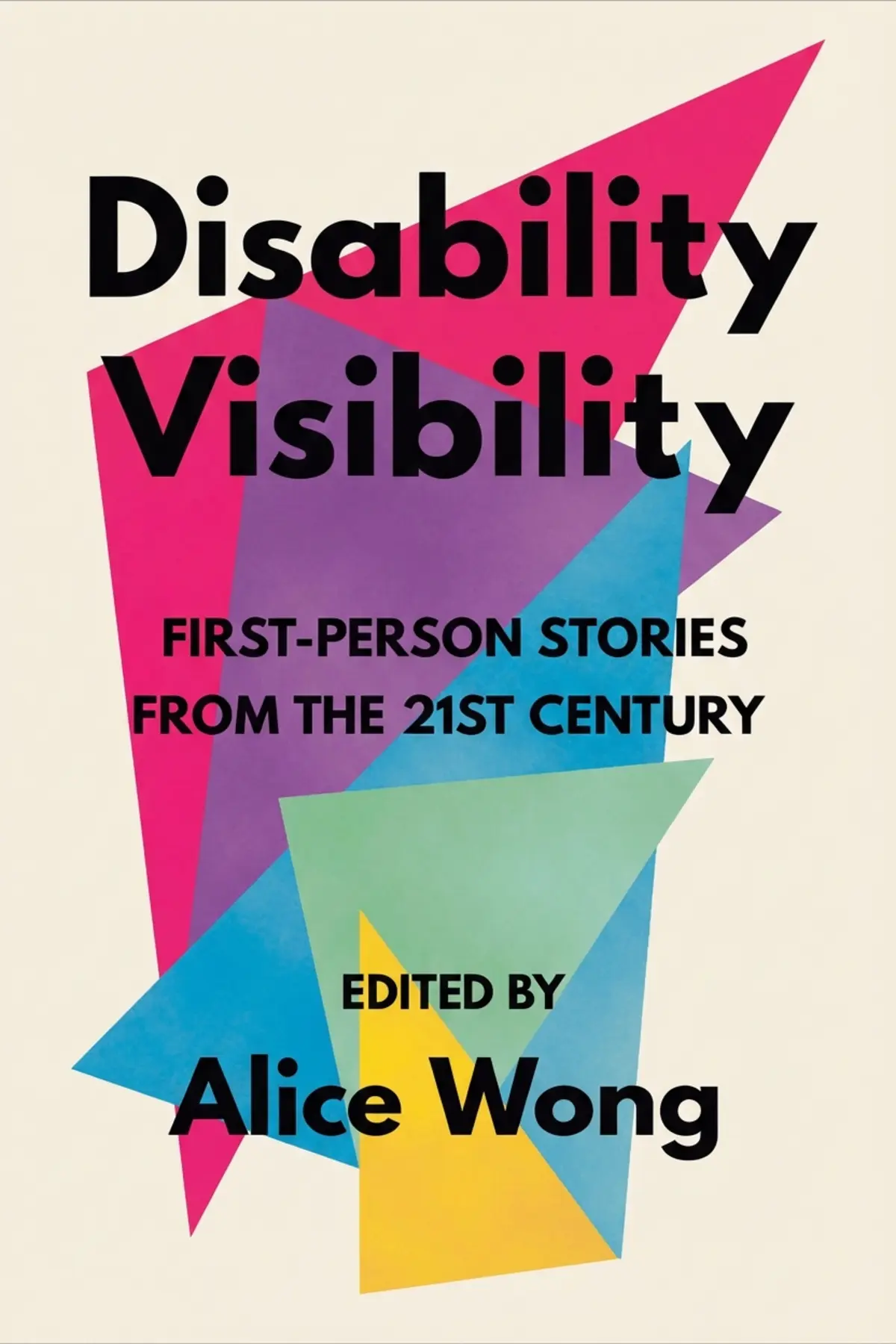
First-person stories of disabled people, gathered by activist Alice Wong, show that pity, poor systems and inaccessible spaces make disability hard, and what changes when disabled people tell their own stories on their own terms.
1 min 03 sec
If disability reaches you mostly through films about tragic heroes, you carry a narrow and often wrong picture of millions of lives. Disability Visibility, edited by activist Alice Wong, replaces it with first-person stories, and its opening fact is blunt: in a 2019 survey of the publishing industry, only 11 percent of respondents said they had a disability. Most people deciding which stories get told have never lived them.
Wong’s collection argues that much of what makes disability hard lies outside the body, in the assumptions, systems and spaces built around disabled people. When disabled people tell their own stories, that begins to change. Here an astronomer listens to exploding stars, a lawyer debates a philosopher whose views put lives like hers in doubt, and two survivors of an abusive institution build a family. Each story moves the question from what is wrong with a person to what the world around them could do differently.
1 min 36 sec
A survey of the publishing world found that only 11 percent of the people making books have a disability. Wong’s response to that gap began with 140 recorded voices and ended up reaching presidential campaigns.
1 min 34 sec
Strangers kept telling one lawyer she was brave just for going outside. When a famous philosopher argued that some lives like hers were worth less, she accepted his invitation to debate him in person.
1 min 40 sec
A grandmother’s prayers, years of reiki and rituals, and a constant promise of recovery. Two people found that the hope meant to help them was keeping them from living, and they chose another way.
1 min 34 sec
A writer could produce 12,000 words in a single manic night, then could not leave her bed. Her decade of highs and lows challenges the comfortable idea that suffering is what fuels great art.
1 min 40 sec
An astronomer lost her sight and seemed to lose her career with it. What she built next gave her whole field new information, while one lawyer’s two-hour commute shows what still stands in the way.
1 min 49 sec
Disability runs through the numbers on police killings and prisons, yet movements fighting those injustices often leave it unnamed. A deaf veteran’s death and a Cherokee woman’s hospital forms show what that silence costs.
1 min 30 sec
Ricardo Thornton spent his youth in an institution later closed for abuse. The life he built afterward was one nobody there could have imagined, and he insists there was nothing special about him.
1 min 39 sec
In one theater, the nondisabled visitors are the ones who feel out of place. The book argues that spaces like it, and the care networks behind them, power a whole movement that most people never see.
1 min 08 sec
What links a debate at Princeton, a jeweled colostomy bag and a deaf veteran shot in the dark is where the problem sits. Again and again in Wong’s collection, the hard part of disability lies around the person: in a stranger’s pity, a family’s hunt for a miracle, a two-hour paratransit ride, a form with the wrong boxes, an institution that decides everything. When disabled people tell these stories themselves, the question shifts from fixing someone to fixing what surrounds them.
Notice who is telling the disability stories you hear, and whose voices are missing. Treat pity as a guess that needs evidence, the point Johnson pressed on Singer. And try the interdependence the book recommends: think about which tasks are hard for the people around you and offer help, then practice asking for help yourself. It builds more honest friendships, and it teaches people they can count on you.
Díaz-Merced did not get her sight back. She got a new instrument, and with it she heard what the graphs could not show.
Most people learn about disability from films and news made by others, and the picture is narrow: a tragedy, a brave exception or a body waiting for a cure. Alice Wong, founder of the Disability Visibility Project, spent her career collecting the stories that picture leaves out, and this anthology brings them together. The people in it include lawyers, astronomers, designers, writers, activists and survivors of institutions. Harriet McBryde Johnson debates a philosopher whose theory would let parents end the lives of infants with severe cognitive impairments. After losing her sight, Wanda Díaz-Merced turns star data into sound. Ricardo Thornton leaves an abusive institution and builds a family. Other stories connect disability to police violence, Indigenous health care and the endless search for a cure. All of these stories make one argument: much of what makes disability hard comes from the assumptions, systems and spaces around disabled people. Readers come to see disabled lives more fully and to notice pity and erasure more quickly. They also get a practical habit to start with: building care networks where everyone gives help and asks for it.
Managers and team leads who want workplaces where disabled colleagues can contribute fully.
Readers whose picture of disability comes mostly from films and news, and who want to hear from disabled people directly.
Activists and organizers who want their movements to include everyone they claim to fight for.
Alice Wong (1974 to 2025) was an activist, writer, media maker and consultant based in San Francisco. She founded the Disability Visibility Project, an online community for disability media and culture that also ran an oral history effort with StoryCorps, and she coproduced the Disability Visibility podcast. In 2013, President Barack Obama appointed her to the National Council on Disability, and in 2024 she was named a MacArthur Fellow.
Listeners find this work both intriguing and enlightening, featuring a superb compilation of first-hand accounts from individuals across the disability spectrum. It is considered an impactful and practical resource, with one listener observing how the narrative reveals the world through each contributor’s unique perspective. They value its significance in fostering disability awareness, and one review notes how it challenges able-bodied people to truly grasp these issues. The book also receives praise for its smooth flow and readability, while one listener described it as a masterfully curated collection of short pieces.
Picked this up on a whim after seeing it on so many 'must-read' lists, and it truly lived up to the hype. This book doesn’t just ask for your attention; it demands that you rethink every preconceived notion you have about the human body and modern society. I was particularly struck by the raw honesty in the essay about the isolation of being Deaf in prison, which was a harrowing look at systemic neglect. The sheer variety of voices here creates a tapestry that proves disability is absolutely not a monolith. While some pieces are short and punchy, others dive deep into complex political arguments like the anti-abortion bill debate. It is a masterfully curated collection that provides a window into worlds most able-bodied people never even consider. I feel like I've gained a lifetime of perspective in just a few hundred pages.
Show moreFinally got around to finishing this, and I’m already planning on buying three more copies for my family members. Alice Wong has done something incredible here by centering voices that are usually pushed to the absolute margins of our culture. I loved how the book moved beyond just 'inspiration porn' and tackled the messy, gritty reality of living in an ableist world. The essay on the NYC paratransit service was a real eye-opener for me regarding the daily logistical hurdles people face. Not gonna lie, some of the anger in these pages is intense, but it is entirely justified and necessary for the reader to sit with. This isn't a book meant to make you feel comfortable; it’s meant to make you see. Every page offers a new way of looking at the world through the eyes of someone else. It's powerful, essential, and brilliantly paced.
Show moreWow, what a punch to the gut this was. This collection is a perfect example of why we need more disabled editors like Alice Wong in the publishing world. She has curated a group of writers who are unapologetically themselves, sharing stories about everything from indigenous experiences to the terrifying reality of eugenics. I found the 'Connecting' section particularly moving because it highlighted the community these individuals have cultivated for themselves. It really challenges the idea that being disabled is a solitary or tragic experience. Instead, it shows a vibrant, political, and diverse movement. Each essay is a short burst of insight that lingers in your mind long after you've closed the book. If you want to understand what disability visibility actually means in 2024, start here. It is an absolute must-read for everyone.
Show moreEver wonder why certain voices are consistently left out of the mainstream conversation? This book answers that by giving the microphone to those who have been silenced for too long. Personally, I found the diversity of identities—POC, queer, trans, and various religions—to be the book's greatest strength. It shows that disability doesn't exist in a vacuum. The writing is vulnerable and bold, refusing to sugarcoat the struggles of navigating a world built for the able-bodied. I loved the essay on parenting with a disability because it addressed such a specific, human experience that we rarely see in media. Alice Wong has put together something that feels like a manifesto for a new generation. It’s enlightening, frustrating, and beautiful all at once. I cannot recommend this enough to anyone who values human rights and storytelling.
Show moreAfter hearing so much about this anthology, I was excited to see the heavy focus on intersectionality, specifically how race and gender identity overlap with disability. The truth is, the American healthcare system is an abomination, and several authors articulate that nightmare with surgical precision. I particularly enjoyed the debate-style essay regarding disability advocates and abortion; it was clear, articulate, and challenged my own thinking. My only real gripe is that I wished there was more representation of mental illness and invisible disabilities, as those felt a bit glossed over in favor of physical conditions. Still, the writing style is generally accessible and the pacing is quick enough to keep you engaged throughout. It’s a stellar introduction to disability justice for anyone who wants to move past surface-level awareness. These stories are bold, honest, and deeply needed right now.
Show moreTo be fair, I didn't think I would get through a 300-page essay collection this quickly, but the variety of perspectives kept me hooked. Each author brings a unique flavor to the table, and while some are more polished than others, they all feel incredibly authentic. I especially appreciated the sections on activism and the political nature of just existing in a body that society deems 'unproductive.' There were moments where the writing felt a bit cringy or overly academic, but the stronger essays more than made up for it. The piece on the isolation of being Deaf in prison is something I will never forget; it was truly powerful. I left this book feeling more self-aware of my own internalised ableism. It’s a great resource for anyone looking to broaden their worldview. Definitely worth your time.
Show moreIn my experience, anthologies can be hit or miss, but this one is mostly a hit. The essays serve as sharp, clear glimpses into the vast spectrum of the disabled experience in America. I was fascinated by the discussions on identity and whether a disability is an intrinsic part of who someone is or just a hurdle they face. Some authors were incredibly articulate and persuasive, particularly when discussing the treatment of indigenous people. However, I did agree with some other reviewers that the organization of the book felt a bit loose. I would have preferred sections based on topics like 'Work' or 'Healthcare' to really tie the narratives together. Despite that, the individual stories are so compelling that I found myself highlighting passages on almost every page. It’s a useful, eye-opening read.
Show moreLook, I really wanted to love this entire collection, but the flow felt incredibly disjointed to me. While I appreciated the essays on their own as glimpses into a vast world, the four sections—Being, Becoming, Doing, and Connecting—felt somewhat arbitrary and didn't help tie the themes together. Some of the writing was brilliant, like Jessica Slice’s piece on parenting with a disability, which was incredibly vulnerable and self-aware. However, other entries felt like unedited, chaotic ramblings that lacked a clear point or a call to action. I was expecting more specific discussions on things like navigating the healthcare system or the nuances of invisible illness. To be fair, it’s a necessary book for the shelf, but it’s a bit of a mixed bag in terms of quality. I would recommend picking and choosing certain essays rather than reading it straight through.
Show moreThe truth is that I have very complicated feelings about this book. On one hand, I think it’s wonderful that this collection exists and provides such a platform for disabled writers. On the other hand, I struggled with the writing quality in several of the essays, which felt a bit like incoherent ramblings. I wanted more 'debate style' essays like the one about the anti-abortion bill, which offered a really clear and logical argument. Instead, a lot of the book felt like it was just shouting at the reader without giving them a way to connect. I didn't feel like I learned much about the actual implications of different disabilities, as many authors didn't even specify what their conditions were. It's an important book for visibility, but as a literary work, it felt a bit unfinished and in need of tighter editing.
Show moreFrankly, I found the execution of this anthology to be quite disappointing despite the vital importance of the subject matter. I was expecting a collection of essays that would help me understand the daily lived experience of disability, but much of the writing in the first half felt like undirected, inarticulate anger. It felt more like a series of blog posts or journal entries than a cohesive, edited book. At times, the tone was so condescending and patronising that it actually discouraged me from wanting to engage further. There was so much focus on being 'loud and proud' that the actual storytelling got lost in the shuffle. Why weren't there more essays on the specifics of relating to friends and partners, or the struggle of dealing with doctors? It felt like the book was trying to be too many things at once and ended up lacking a clear focus.
Show moreIt is an anthology of first-person stories from disabled people, edited by activist Alice Wong. Its argument is that much of what makes disability hard comes from outside the body: pity, stereotypes, underfunded systems and inaccessible spaces. Through a lawyer, an astronomer, a designer, a writer and others, it shows how disabled people tell their own stories, push back on erasure and build communities of care.
The book presents the constant pressure to find a cure as potentially harmful. June Eric-Udorie, born with incurable nystagmus, grew up ashamed when prayers did not restore her sight. Liz Moore tried many treatments for fibromyalgia before accepting their body. Both found that acceptance let them live more freely, and Eric-Udorie stopped apologizing for her disability.
The book reports that 60 to 80 percent of people killed by police are Deaf or disabled, with Black people heavily overrepresented because of structural racism. It criticizes the Movement for Black Lives for barely acknowledging disability in its 2016 manifesto, using the case of Darnell T. Wicker, a deaf Black veteran shot by police seconds after a warning he could not hear.
The book’s own advice is to build a care network. It rejects the idea that everyone should be fully self-sufficient and argues that we all depend on each other. Think about which tasks are hard for the people around you and offer help, then practice asking for help yourself. You can also check who shaped the disability stories you consume, and whether events you plan are truly accessible.
Alice Wong (1974 to 2025) was a San Francisco activist, writer, media maker and consultant. She founded the Disability Visibility Project, which also collected oral histories with StoryCorps, and she coproduced the Disability Visibility podcast. President Barack Obama appointed her to the National Council on Disability in 2013, and she was named a MacArthur Fellow in 2024.
Jessica Valenti


Johny Pitts


bell hooks

Fay Bound Alberti

Daniel Goleman

AUDIO SUMMARY AVAILABLE
Get the key ideas from Disability Visibility by Alice Wong, plus 5,000+ more nonfiction titles.









