
14 min 37 sec
Available in: English
 ไทย
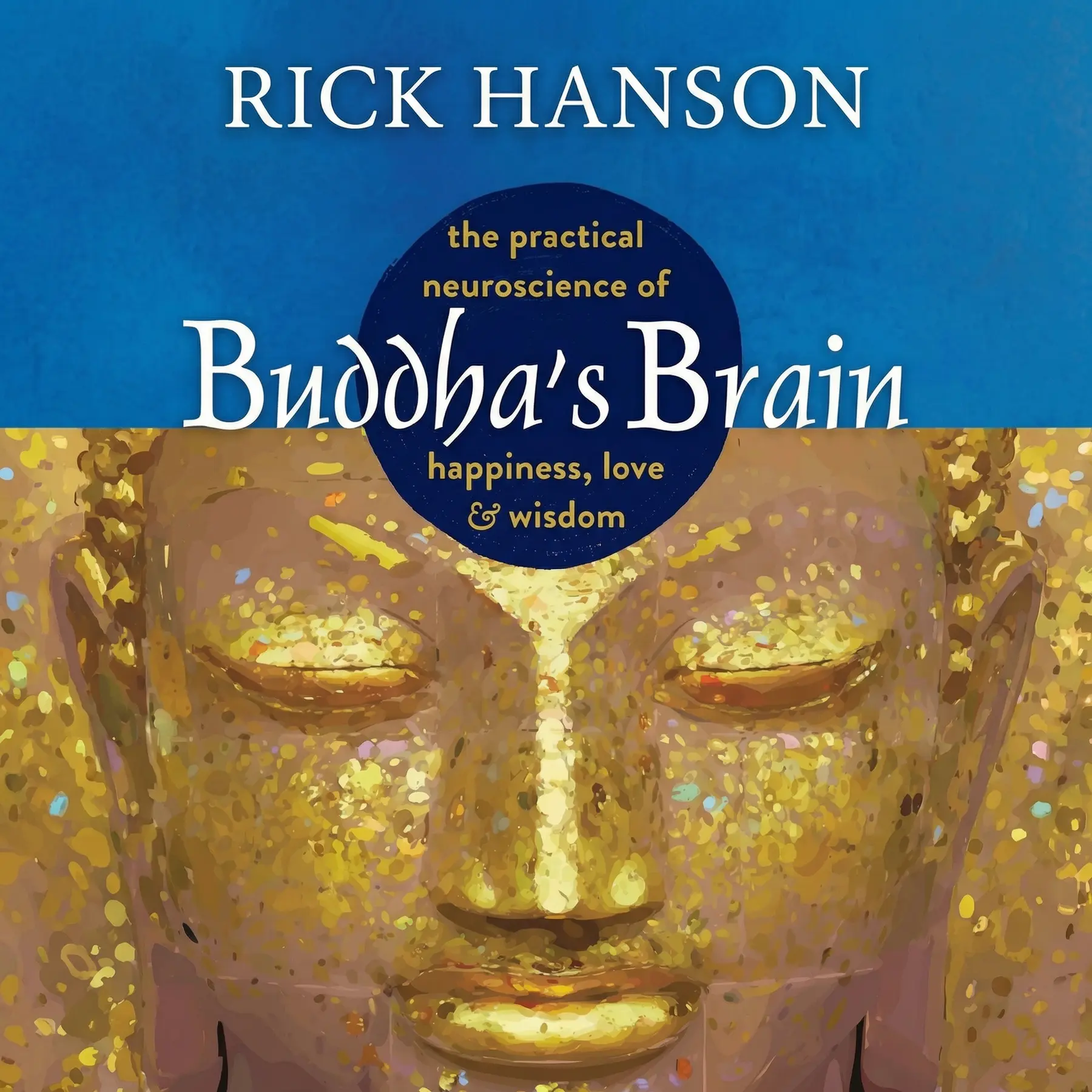
EnglishไทยBuddha’s Brain: The Practical Neuroscience of Happiness, Love, and Wisdom
By Rick Hanson
Rick Hanson shows how the mind physically reshapes the brain. He explains why evolution left us prone to suffering, and how mindfulness, composure and empathy can retrain it toward calm, clearer judgment and warmer relationships.
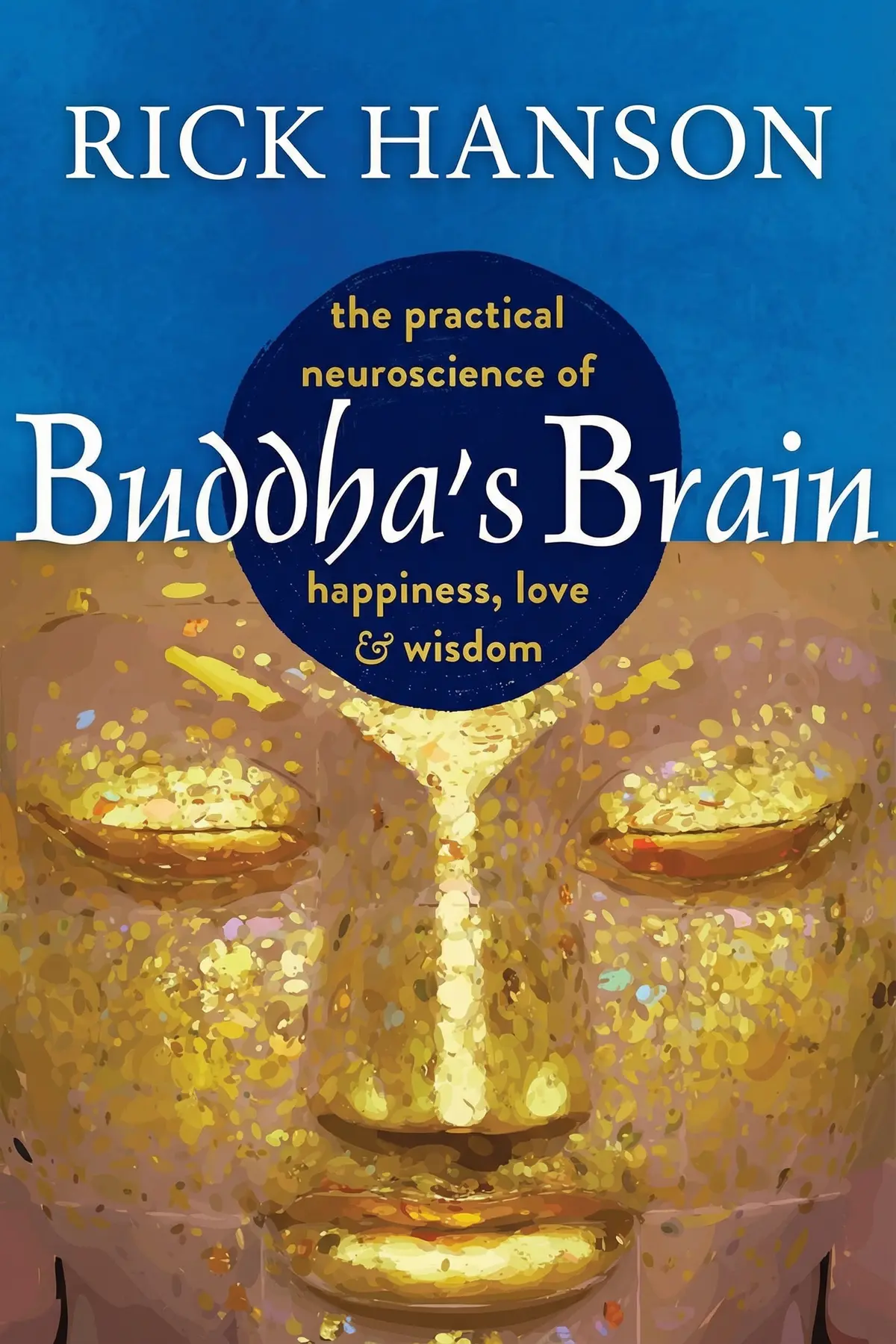
Table of Content
1. Introduction
1 min 07 sec
If small setbacks ruin your day and old worries keep replaying long after the problem has passed, Rick Hanson has a hopeful finding for you: how you use your mind changes the physical structure of your brain. In Buddha’s Brain, the psychologist and longtime meditation teacher brings neuroscience and Buddhist practice together. He argues that happiness, love and wisdom are partly skills the brain can be trained to hold.
His case runs like this. Evolution shaped our brains to protect us from danger, and that leaves us prone to suffering. But mental habits repeated often enough, such as mindfulness, composure and empathy, can rewire that same brain toward calm and connection. The proof ranges from London taxi drivers with enlarged memory centers to a stubbed toe and a mantra shared by monks and death-row inmates. By the end you will have a clear map of where much of your distress comes from. You will also have a few small practices for this week: a breath, a sentence to tell yourself, and an image of a tree in the wind.
2. Rewire your brain with what you repeat
1 min 44 sec
A city’s taxi drivers carry a visible trace of their work inside their skulls. Their story suggests that your everyday moods may be far less fixed than they feel, and that you may be shaping them already.
3. Stop bad news from sticking harder than praise
1 min 27 sec
One harsh comment can outlast a dozen compliments in your memory. The reason goes back to ancestors deciding between snakes and banana trees, and it still steers what you chase and what you run from.
4. Stop throwing the second dart at yourself
1 min 27 sec
A stubbed toe hurts for a minute, yet the anger that follows can last all afternoon. Hanson separates the pain life hands you from the pain you make, and shows which one you can actually control.
5. Calm your body with three habits of mind
1 min 43 sec
The same nervous system that floods you with adrenaline has a built-in way to slow everything down. Hanson describes three mental habits that reach it, and one of them works like a circuit breaker for craving.
6. Sharper judgment from focused attention
1 min 28 sec
Studies on the brains of experienced meditators linked this state to high-frequency gamma waves. Hanson connects that finding to something every busy person lacks: the clarity to see what actually matters in a crowded week.
7. Hold your sense of self more lightly
1 min 33 sec
Monks and prisoners awaiting execution have found peace through the same four-word mantra. Hanson explains what it means, when you still need a strong sense of self, and a small trick with pronouns that helps.
8. Make room for the love you're built for
1 min 23 sec
The human brain has tripled in size over three million years, and a surprising share of that growth went somewhere other than problem solving. Hanson argues that caring for others sits at the center of human survival.
9. Turn criticism into closeness with empathy
1 min 39 sec
Most deep emotional wounds happen at an age when the brain’s decision center is barely in charge. Hanson shows how adults can undo the wariness those years left, and how to stay steady while someone shouts.
10. Conclusion
1 min 06 sec
Buddha’s Brain rests on a hopeful piece of biology. The organ that evolution tuned to remember snakes and sound the alarm can be reshaped, slowly, by what you keep doing with your attention. A taxi driver’s memory center grows with every route learned. In Hanson’s account, calm, wisdom and warmth grow the same way, through ordinary moments repeated until they become wiring.
That makes the practice small enough to begin today. Bring mindfulness into routine moments: follow your breath on the way to work, or at lunch picture the wheat in your bread growing in a field and being threshed long before it reached your plate. When something hurts, separate the first dart from the second, and decline to throw the second. When a conversation turns harsh, let empathy and the image of a rooted tree keep you steady enough to listen.
None of this asks you to escape pain, which Hanson treats as part of being alive. It asks you to stop adding to it. Every minute spent this way also goes into building the brain you will wake up with tomorrow.
About this book
What is this book about?
Many people feel stuck with their moods. A small setback spoils the day, worries replay for hours, and old hurts make it hard to trust anyone. Psychologist Rick Hanson argues that none of this is fixed. Your thoughts and feelings fire networks of neurons, and what fires together often enough wires together. So the way you use your mind changes your brain. Hanson joins neuroscience with Buddhist practice. He explains why evolution tuned the brain to remember threats and sound the alarm, and how we turn a single painful event into hours of self-made suffering. He introduces the image of the second dart. Then he offers practices that work on the body as well as the mood: mindfulness that calms the nervous system, wholesome intentions, composure that breaks the link between pleasure and endless craving, and meditation that sharpens judgment and loosens an overgrown sense of self. The book ends on love, which Hanson treats as built into our biology. Readers learn why empathy is the base of compassion, how it cools conflict, and why it can help adults who were hurt early in life connect deeply again.
Book Information
Who it's for
Professionals who replay setbacks
Stressed professionals whose small setbacks turn into whole days of worry and replayed conversations.
Beginners curious about meditation
Curious beginners who want to know what meditation and mindfulness do inside the brain.
Finding closeness hard
People who find closeness hard after early hurts and want to grow more patient and empathic.
About the Author
Rick Hanson
Rick Hanson is a psychologist and a Senior Fellow of the Greater Good Science Center at the University of California, Berkeley. He has meditated since 1974 and has taught at meditation centers around the world. His seven books, including Hardwiring Happiness and Neurodharma, have appeared in 33 languages and sold over a million copies in English. He founded the Wellspring Institute for Neuroscience and Contemplative Wisdom, co-hosts the Being Well podcast, and has lectured at NASA, Google, Oxford and Harvard.
Ratings & Reviews
Ratings at a glance
What people think
Listeners describe this work as transformative and eye-opening, valuing the way it explains intricate ideas through a scientific lens. Furthermore, the material is accessible and free of technical language, with listeners finding great worth in the actionable advice and structured exercises provided. They also point to how it fosters mental tranquility via calming methods such as meditation, noting how effectively it connects neuroscientific insights with Buddhist traditions.
Top reviews
Duang
Pick this up if you're tired of vague spiritual advice that doesn't actually tell you how to change your habits. Dr. Rick Hanson provides a roadmap for rewiring your neural pathways through intentional, mindful practice. Personally, I found the 'negativity bias' concept to be a total revelation for my mental health. He explains that our brains are like Velcro for bad experiences but Teflon for the good ones, which explains so much about my own anxiety. The book is remarkably easy to comprehend without drowning the reader in jargon, despite being grounded in real biology. It offers practical suggestions for meditation that feel realistic for a busy professional. By the time I reached the final chapter, I felt I had gained a new sense of peace and a better understanding of my own brain's evolution.
Show moreHenry
Finally got around to reading this after seeing it everywhere, and I'm genuinely impressed by how it demystifies meditation. This isn't just fluffy positive thinking; it’s a manual for emotional regulation based on how our neurons actually fire. The way the author explains that 'the mind is what the brain does' helped me stop blaming myself for my intrusive thoughts. I took so many notes on the sections regarding empathy and closeness, especially the imagery of being a tree in the wind. These practical tools have already helped me become more grounded during stressful meetings at work. It’s rare to find a book that is both enlightening and life-changing without feeling like it's preaching at you. This is essential reading for anyone interested in the intersection of science and spirituality.
Show moreIvan
Wow. This book transformed how I view my own mental habits by showing me the physical structures behind my repetitive thoughts. I especially loved the practical 'meditation' tips scattered throughout the chapters because they made the complex science feel applicable to real life. It’s enlightening to see how things like compassion and kindness actually change the physical makeup of the brain over time. The authors do a great job of explaining the evolutionary reasons for our suffering, like how being alert to danger was once a survival strategy. This perspective allowed me to be more compassionate toward myself and less reactive to my own negative emotions. It’s a quick read but contains a wealth of information that requires some reflection to fully absorb. Truly a life-changing perspective on the mind-body connection.
Show moreHiroshi
I've been practicing mindfulness for years, but this book finally explained the 'why' behind the practices in a way that makes sense. Dr. Hanson provides a precise description of empathy as a kind of mindfulness focused on someone else’s inner world. The book is full of practical tools to assist in developing closeness with others and increasing your overall peace of mind. I particularly valued the nutritional supplement suggestions at the end, which was an unexpected but helpful addition for brain health. The writing is clear, jargon-free, and filled with a warmth that makes the scientific concepts feel very personal. Honestly, it’s one of the most useful books on my shelf for understanding the intersection of the heart and the head. It has invigorated my daily practice and changed my outlook for the better.
Show moreAnna
Ever wonder why your brain clings to a single insult while ignoring a dozen compliments? Hanson’s explanation of the 'negativity bias'—the idea that our ancestors needed to be hyper-vigilant to survive—really resonated with my experience. This book does a fantastic job of bridging the gap between ancient Buddhist practices and modern neuroscience. I particularly enjoyed the chapter on equanimity, which describes it as a perfect, unshakable balance of the mind. The writing style is generally accessible, though it occasionally dips into a 'new age' tone that might put off more cynical readers. Still, the practical guided meditations are easy to follow and actually work to calm the nervous system. It’s a solid resource for anyone wanting to understand why their mind behaves the way it does.
Show moreMattanee
As someone who has struggled with social anxiety for years, the section on blending assertiveness with compassion was a total game-changer. Hanson manages to bridge the gap between ancient philosophy and modern neuroscience without making it feel forced or overly complex. The book is structured well, moving from the causes of suffering to the cultivation of happiness and love. I found the 'second dart' analogy particularly helpful for understanding how we often multiply our own pain through our reactions. While some of the textbook-style descriptions of brain regions were a bit slow, the overall impact was very positive. It provides a sense of distance and objectivity that makes daily stressors feel much more manageable. I highly recommend taking it slow and writing notes as you go.
Show moreKet
Gotta say, the chapter on 'equanimity' provided one of the best descriptions of the Buddhist path to freedom I have ever encountered. The book explains that the mind is what the brain does, which is a helpful framework for understanding our internal states. I appreciated how the authors weave science with advice, offering visualizations that actually feel applicable to modern life. The focus on 'taking in the good' to counter our natural negativity bias is a simple but powerful tool. Some might find the tone a bit too 'self-help,' but the underlying neurology provides a level of credibility that most similar books lack. It’s a very practical guide that doesn't promise a perfect life, but rather a more conscious way of living. Definitely a book I will return to for the meditations.
Show moreTan
The truth is, I found the first few chapters on neurology to be quite tedious, almost like reading a biology textbook. While I appreciated the scientific grounding, the dry terminology made it hard to stay engaged during the middle sections. Most of the advice eventually veers into standard self-help territory, which was a bit of a letdown given the academic buildup. To be fair, the 'exercises' offered are helpful tips for using the information, but they feel more like common sense than groundbreaking science. If you are looking for a rigorous, peer-reviewed academic study, you might find this a little too simplistic. However, the insights into how we process suffering are still worth a read if you can push through the slower parts. I would recommend the physical book over the audio version to help you keep track of the dense vocabulary.
Show moreAudrey
Look, if you are planning to get this, definitely buy the physical copy rather than the audiobook version. I tried listening to it during my commute and found the science-heavy terminology so dry that I actually started drifting off. The content itself is hit or miss; the neurology in the beginning is interesting but presented in a rather tedious textbook fashion. However, the second half of the book offers some decent self-help techniques that are grounded in Buddhist philosophy. I liked the idea of the self being a 'collection of representations' rather than a solid entity. It’s a fine book for beginners, but those well-versed in either neuroscience or Buddhism might find it a bit repetitive. It's a decent bridge between the two fields, even if the bridge feels a bit shaky at times.
Show moreNoo
Not what I expected based on the title, as the book leans heavily into a 'power of positive thinking' vibe that feels a bit superficial. I was hoping for a rigorous academic exploration of neurology, but large sections felt more like a standard self-help guide. Frankly, the scientific evidence presented felt a bit over-simplistic and speculative at times. I struggled with the 'striving' for happiness mentioned in the book, which seems to contradict the core Buddhist principle of non-attachment. While the author is clearly knowledgeable, the presentation felt dry and I actually fell asleep while trying to get through the chapter on the self. There are better books out there that bridge science and mindfulness without the pop-psychology feel. It might work for some, but it just didn't click for me.
Show moreQuestions about this book
What is the main idea of Buddha's Brain by Rick Hanson?
Hanson argues that mind and brain shape each other. Experiences fire neurons together, and repeated firing builds lasting connections, a principle known as Hebb’s Rule. Evolution tuned the brain to spot danger, which leaves us prone to suffering. But practices such as mindfulness, composure, a lighter sense of self and empathy can rewire it toward happiness, wisdom and love.
What is the second dart in Buddha's Brain?
The first dart is a painful event you cannot avoid, such as stubbing your toe. The second dart is your reaction to it, such as rage and the urge to blame whoever moved the chair. Hanson says the second dart causes most suffering, partly because it keeps the body’s alarm system running. You cannot always stop the first dart, but you can learn to notice the second and refuse to throw it.
How does meditation change the brain according to Hanson?
Hanson says meditation increases gray matter in the regions that control attention and activates the parasympathetic nervous system, which slows the heart and brings calm. Studies of experienced meditators linked deep focus, which he calls singleness of mind, to high-frequency gamma waves associated with clear awareness. He reads this as evidence that meditation can build insight and wisdom over time.
How can I apply Buddha's Brain in daily life?
Start small. Focus on your breathing during routine tasks, or reflect on where your food came from at mealtime. When something hurts, separate the event from your reaction to it. Repeat a wholesome intention such as telling yourself you are strong. Practice dropping pronouns, noticing that thoughts are arising rather than that you are thinking. And in an argument, picture yourself as a rooted tree while harsh words pass like wind.
Who should read Buddha's Brain?
It suits people who feel ruled by worry, cravings or old hurts and want practical tools grounded in brain science. Professionals under steady stress get calming practices they can use during the day. Meditation beginners get an explanation of what the practice does physically. And anyone struggling with trust or conflict gets Hanson’s case that empathy can rebuild close relationships.

Readers also enjoyed

Aflame: Learning from Silence
Pico Iyer


A Liberated Mind: How to Pivot Toward What Matters
Steven C. Hayes


Acting with Power: Why We Are More Powerful Than We Believe
Deborah Gruenfeld


Age of Propaganda: The Everyday Use and Abuse of Persuasion
Anthony Pratkanis


AUDIO SUMMARY AVAILABLE
Listen to Buddha’s Brain in 15 minutes
Get the key ideas from Buddha’s Brain by Rick Hanson, plus 5,000+ more nonfiction titles.
- 5,000+ titles
- Listen as much as you want
- 7-day free trial
- Cancel anytime









