
14 min 26 sec
Available in: English
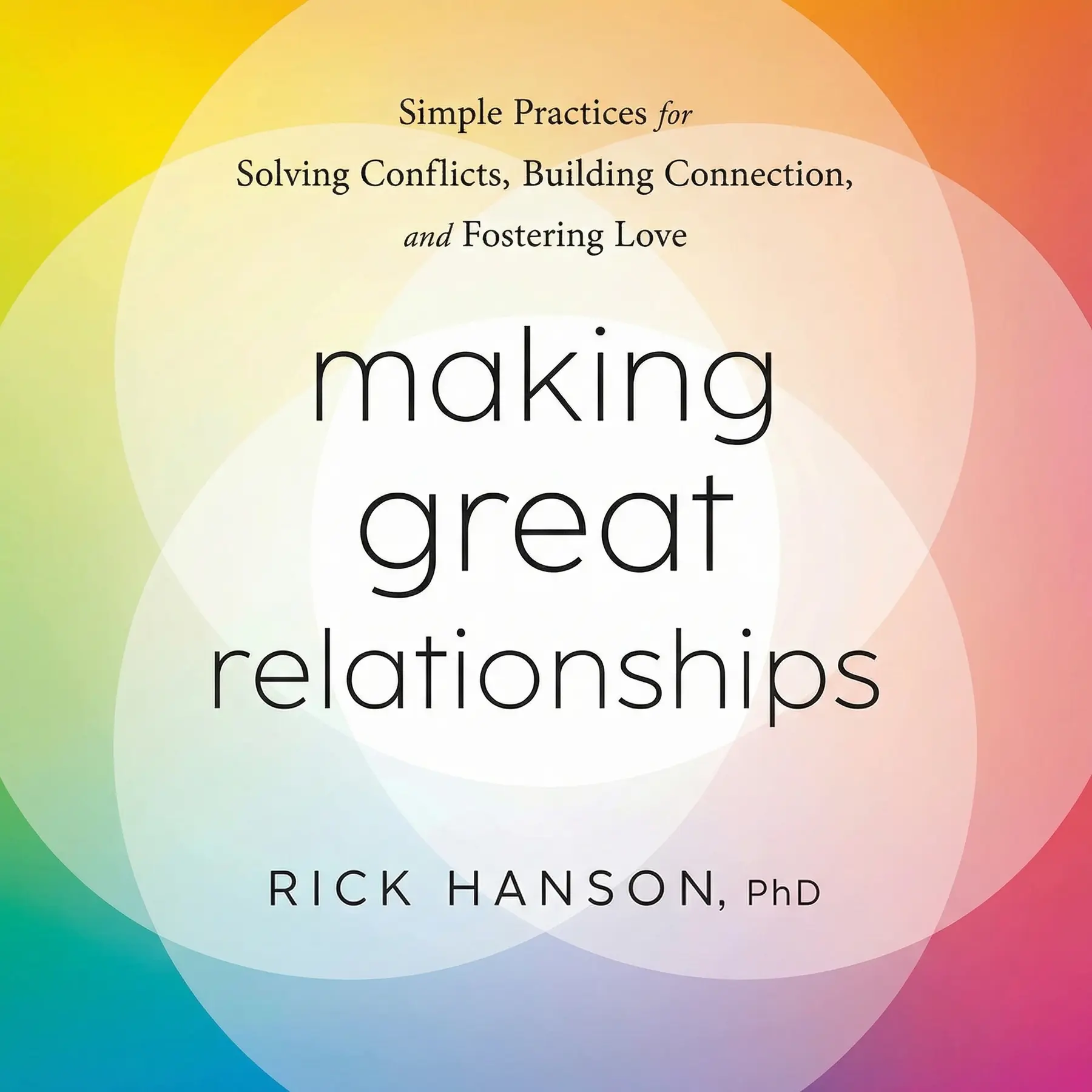
Making Great Relationships: Simple Practices for Solving Conflicts, Building Connection, and Fostering Love
By Rick Hanson
Shows how to improve any relationship by working on the half you control: meeting your own needs, forgiving yourself, practicing empathy, staying steady in conflict, using anger wisely and asking clearly for what you want.
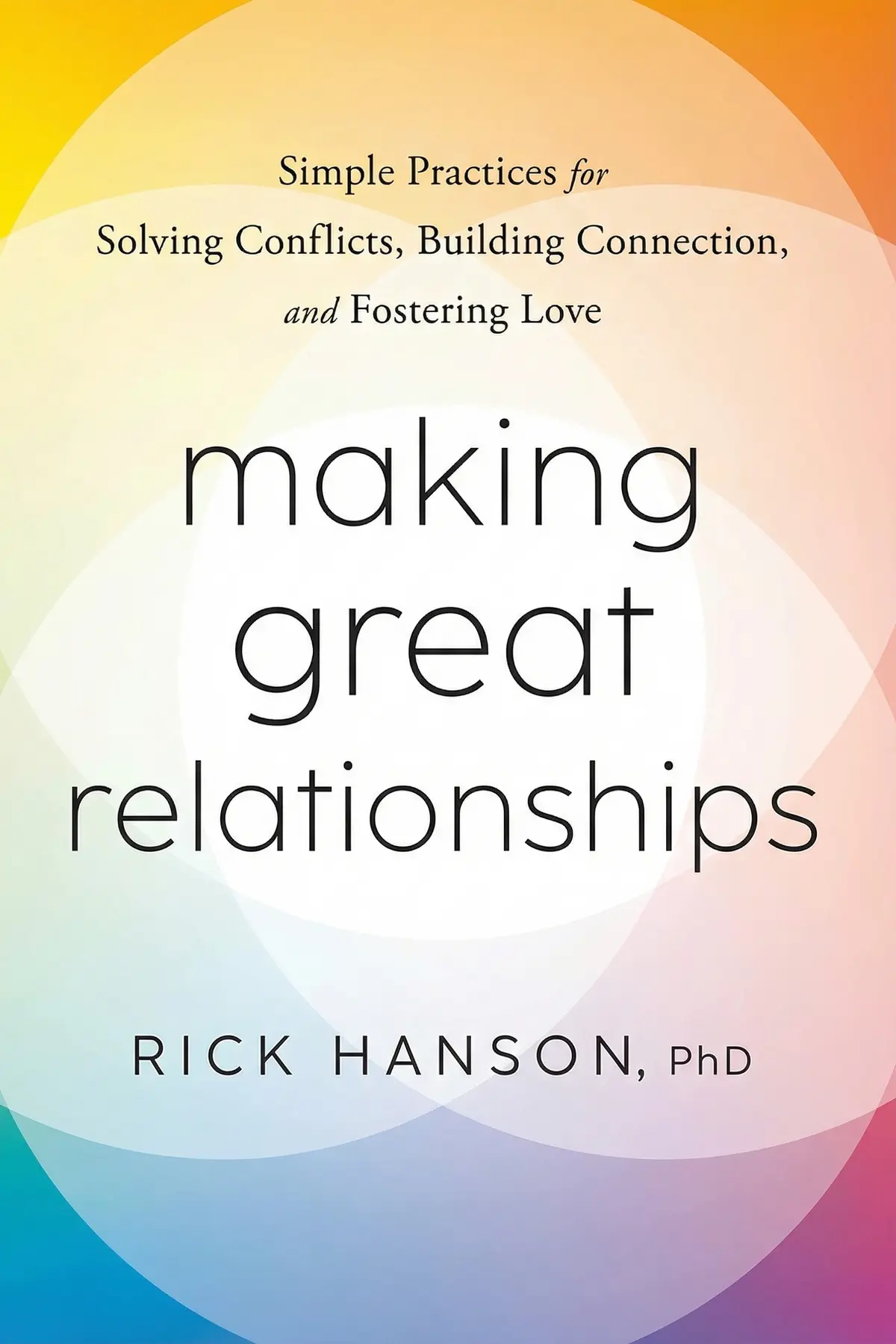
Table of Content
1. Introduction
1 min 06 sec
If the people closest to you keep letting you down, or one coworker seems impossible, the usual instinct is to wait for them to change. In Making Great Relationships, psychologist Rick Hanson suggests that trying to change others can be close to impossible, because you can’t control how another person acts. What you can change is how you relate to them, and that starts with how you treat yourself.
Hanson, a Senior Fellow at the Greater Good Science Center at the University of California, Berkeley, treats good relationships as a skill, not as luck. Strong ones can be kept strong, and struggling ones can be repaired with simple techniques. His throughline is plain: work on your own side of every connection, from your inner needs to the words you choose, and the whole relationship shifts.
What follows is a set of small practices: a prompt to finish on paper, a slow breath before you answer, three questions for your anger, and a handful of sentences to use the next time a talk turns tense.
2. Fill your own cup before asking others to
1 min 43 sec
Most complaints about partners and friends come down to needs that go unmet. Hanson suggests an unexpected first move, and it begins with a blank sheet of paper and two short words.
3. Forgive yourself as easily as you forgive friends
1 min 31 sec
You forgive your friends’ mistakes almost without thinking. Turning that same mercy on yourself is far harder, and Hanson offers a two-sentence exercise that separates honest ownership from shame that never ends.
4. Read people better and make kindness your default
1 min 55 sec
Many fights between people who care about each other start with a simple misreading. Hanson explains where to look when someone is hard to read, and how to stay kind to people who make it difficult.
5. Stay steady when an argument starts to boil
1 min 52 sec
Some people freeze when a fight flares up, others explode. Hanson’s fix starts below the neck, with your lungs and the soles of your feet, before it ever reaches the words you say.
6. Turn anger into a message you can use
1 min 47 sec
Anger tends to get blamed for wrecking conversations. Hanson sees it as a messenger carrying useful news, with one catch: you can only hear what it says once the heat has passed.
7. Questions and support that bring people closer
1 min 37 sec
A single well-chosen question can deepen a friendship or cool a heated fight. Hanson also shows how to accept fair criticism and then end the conversation on something as ordinary as dinner.
8. Ask for exactly what you want, then celebrate
1 min 40 sec
Even people who love you cannot guess what you need, and vague requests rarely get answered. Hanson shows how to phrase a request someone can act on, and why rushing to the next problem undoes progress.
9. Conclusion
1 min 15 sec
Hanson’s book rests on a modest promise. You cannot rewrite the people in your life, and trying usually ends in frustration. You can change your own style of relating, and he argues that doing so improves your mental and emotional well-being while encouraging the people around you to do the same. Each practice is small, a sentence on paper, a slow breath, a request made specific, yet every one of them points at the half of the relationship you actually hold.
That changes how the stuck relationships look. The irritating coworker or the friend you drifted from is not a fixed problem; it is a pattern you are part of, and patterns can move.
If you take one practice into this week, make it the I need page: write the need, dig down to the feeling beneath it and find one way to meet part of it yourself. When the next tense conversation comes, feel your feet on the floor and match your out-breath to your in-breath before you answer. And after a talk goes well, resist the pull toward the next complaint. Notice what changed, and let it count.
Relationships improve from the inside out, one honest sentence at a time.
About this book
What is this book about?
Relationships with partners, family, friends and colleagues can bring the deepest joy in life, and also the most frustration. Most people take the good ones for granted and treat the hard ones, a draining coworker or a friendship gone cold, as problems that will never change. Psychologist Rick Hanson disagrees. He treats relating to others as a skill, and he starts from a simple fact: you cannot control anyone else, but you can control how you relate to them. That work begins with yourself. Hanson shows how to name your deeper needs and meet some of them on your own, how to forgive your own mistakes, and how to steady your body with slow breathing when tension rises. He then turns outward, to empathy, everyday kindness and kindness with limits toward difficult people. The second half is a practical tool kit for hard moments: grounding yourself in an argument, reading anger as a message, asking questions that cool a fight, owning fair criticism without dwelling on it and turning vague complaints into specific requests. Readers get small exercises and ready sentences they can use in their next tense conversation.
Book Information
Who it's for
Stuck in repeat arguments
Partners, friends and family members stuck in the same arguments who want tools they can use without waiting for the other person.
Professionals with difficult coworkers
Professionals dealing with a difficult coworker who want to stay calm, kind and firm.
Hard on themselves
People who are hard on themselves and suspect that this spills into their relationships.
About the Author
Rick Hanson
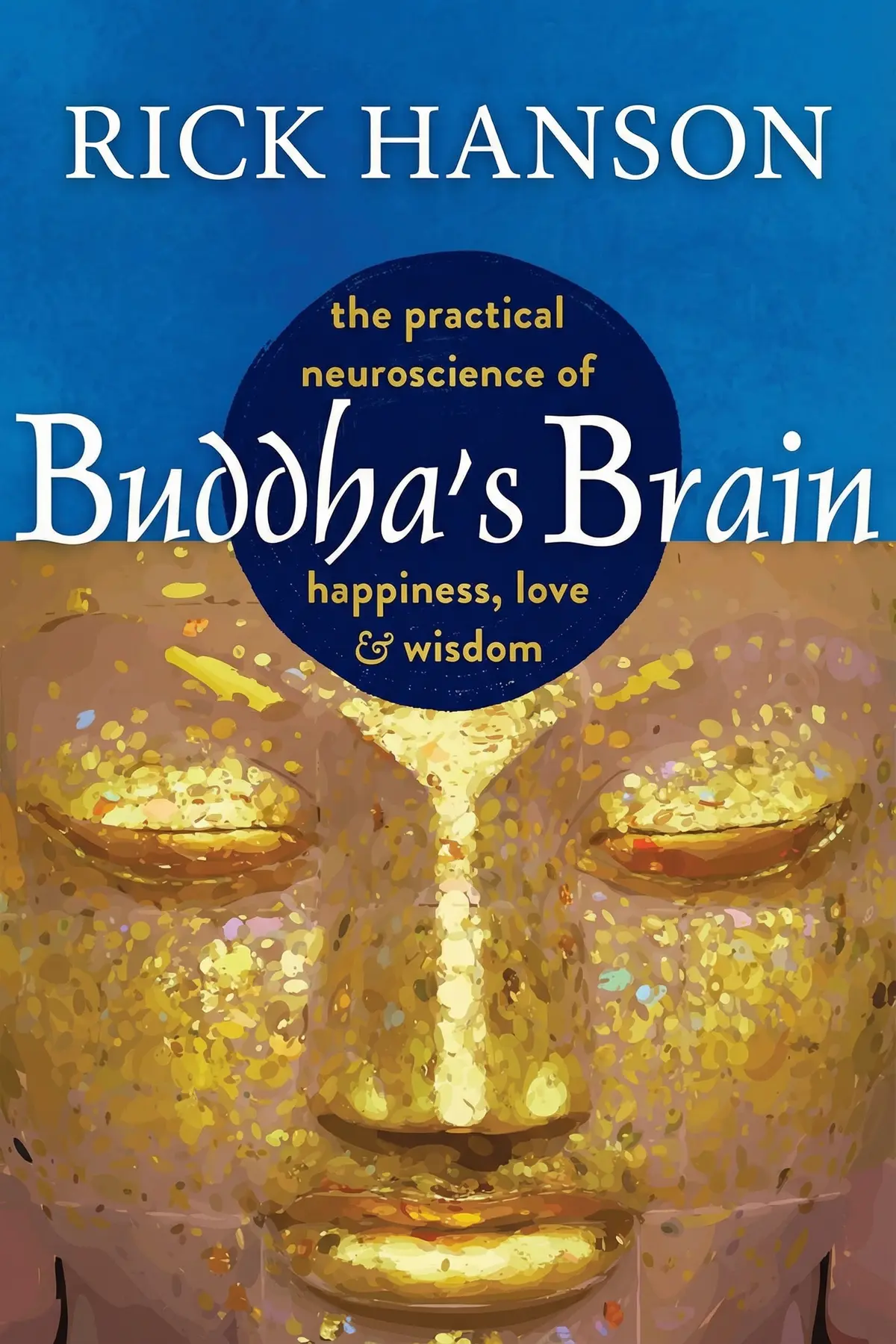
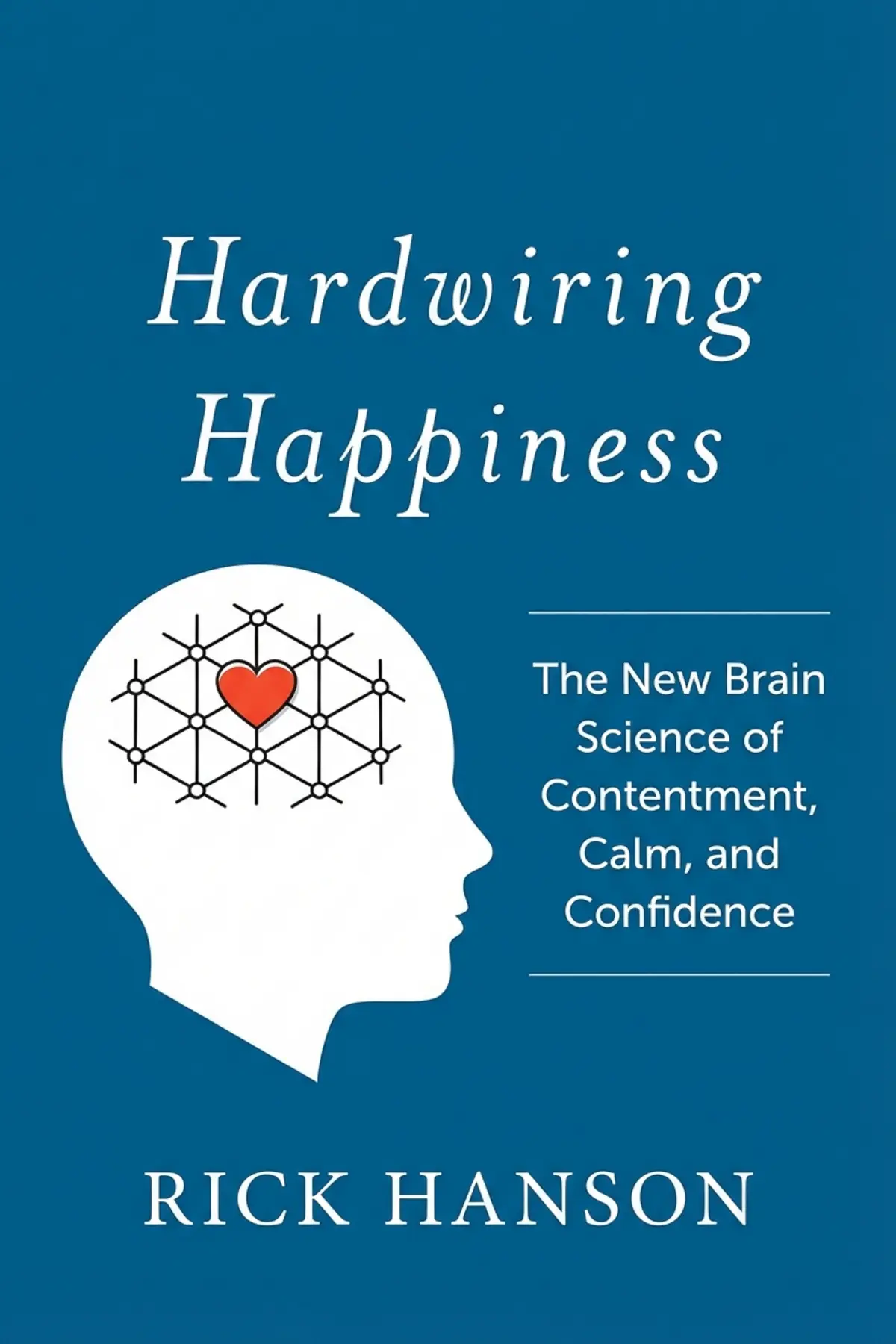
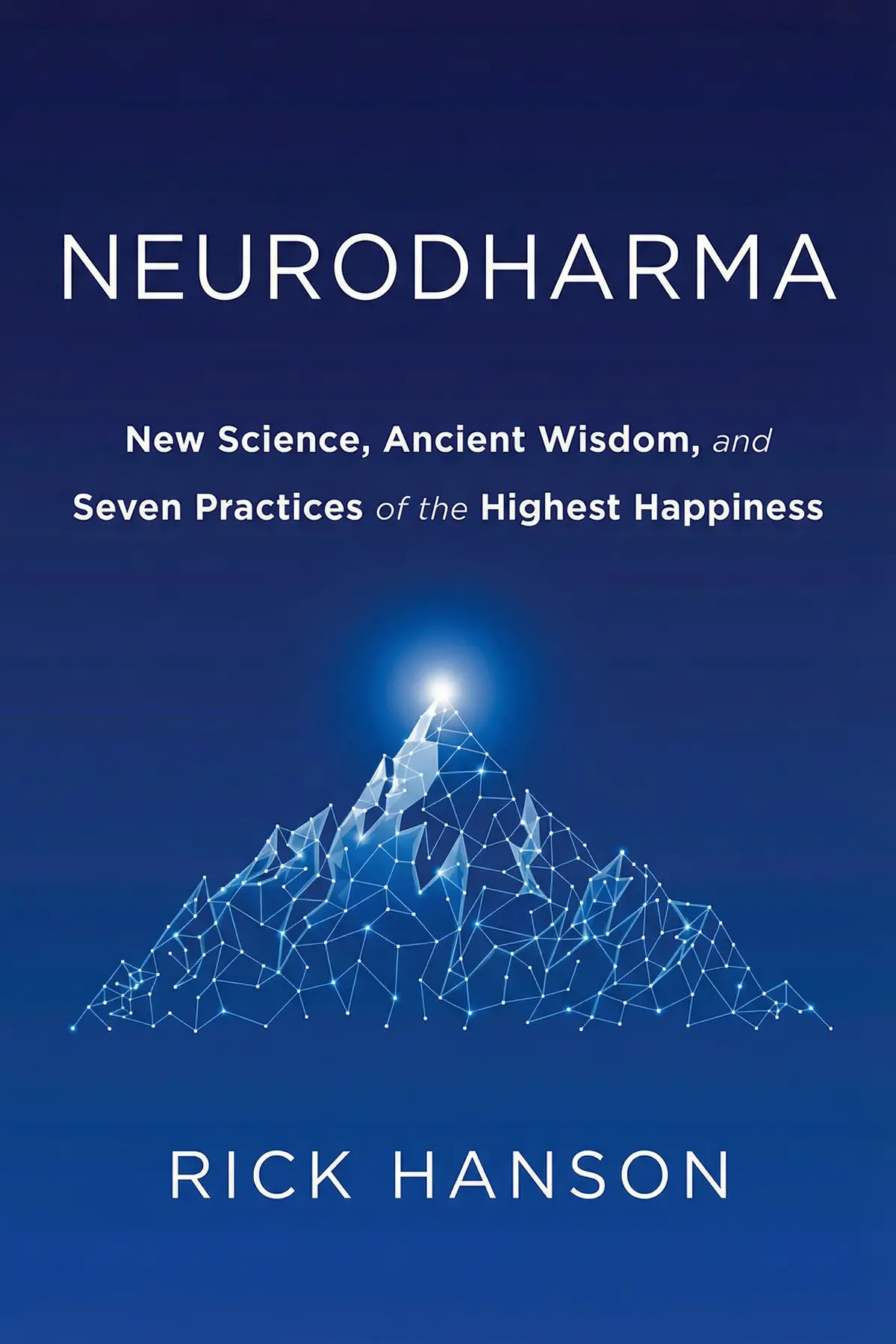
Rick Hanson, Ph.D., is a psychologist and a Senior Fellow at the Greater Good Science Center at the University of California, Berkeley. His seven books, including Buddha's Brain, Hardwiring Happiness and Neurodharma, have appeared in 33 languages and sold over a million copies in English. He has meditated since 1974, teaches at meditation centers worldwide, founded the Wellspring Institute for Neuroscience and Contemplative Wisdom and the Global Compassion Coalition, co-hosts the Being Well podcast and has lectured at NASA, Google, Oxford and Harvard.
Ratings & Reviews
Ratings at a glance
What people think
Listeners appreciate the high-quality advice provided in the book, with one individual specifically noting the integration of neuroscience and Buddhist teachings. Additionally, the material receives praise for its focus on strengthening bonds; several listeners point out the actionable methods for improving interactions, while one observer clarifies that the guidance applies to more than just romantic partnerships.
Top reviews
Joshua
This book is essentially a toolbox for the heart, providing fifty distinct strategies to navigate the messy landscape of human connection. I found the section on 'Befriending Yourself' particularly moving because it challenges the notion that we can fix external relationships without addressing our internal monologue first. Dr. Hanson’s tone is incredibly soothing, yet he manages to weave in hard neuroscience and Buddhist principles without making the text feel dense or academic. Each chapter is brief enough to consume with your morning coffee, which makes the massive task of self-improvement feel surprisingly manageable. Truth be told, I have started highlighting so many passages that my copy is starting to look like a neon art project. It’s rare to find a guide that is this compassionate and clinically grounded at the same time.
Show moreDavid
After hearing Rick Hanson on a podcast, I decided to grab this because I liked his calm, neuroscientific take on human connection. The book exceeded my expectations by offering a perfect blend of 'the scientific and the poetic' that feels both authoritative and deeply kind. I particularly appreciated the 'how' sections at the end of each lesson because they bridge the gap between abstract theory and daily application. Not gonna lie, I usually struggle with books that have fifty different points, but these are organized so logically that it never feels cluttered. The focus on 'Standing Up for Yourself' was a personal highlight, teaching me that boundaries are actually a form of kindness. This is a must-read for anyone who feels like their relationships are a source of stress rather than support.
Show moreGrace
Wow, what a refreshing way to structure a self-help book! Instead of long, rambling chapters, Dr. Hanson gives us short, punchy lessons that focus on 'being with others' in a way that feels authentic and dignified. The way he integrates brain science to explain why we react the way we do during disagreements is fascinating and helps lower the shame we often feel. I’ve started implementing the 'Warm the Heart' practices with my spouse, and the shift in our communication was almost immediate. It’s not just about romantic ties either; I’ve used these tips with my coworkers and even noticed a difference in my own patience level. This book is a gentle masterclass in how to exist in the world with more grace and less friction.
Show moreLena
Pick this up if you want actionable advice rather than vague platitudes about 'just loving more.' Dr. Hanson uses his decades of experience as a psychologist to deliver a roadmap for connection that is both realistic and inspiring. I loved the seven ways of being—steadiness, lovingness, fullness, wholeness, and the rest—as a framework for personal growth. The writing is frank and instructive, yet it never feels like he is talking down to the reader. It is clear he has a 'warm heart' himself, which shines through in every sentence and makes the advice easier to swallow. I’m currently a few weeks into the 'one lesson a day' challenge, and the incremental changes in my mindset are undeniable. This book is a treasure for anyone looking to live a more harmonious life.
Show moreKru
Not what I expected in the best possible way. I thought this would be a book about dating, but it’s actually a comprehensive guide to being a better human being in every context. Whether you are dealing with a difficult boss, a prickly teenager, or your own inner critic, there is something in these fifty lessons for you. The chapter on 'opening your heart when you see someone you don't like' was particularly challenging and transformative for me. Dr. Hanson’s humility is evident throughout the text as he shares examples from his own life, which makes the advice feel much more relatable. I’ve recommended this to several of my colleagues already because the communication tips are so universally applicable. It’s a rare book that manages to be both deeply spiritual and practically useful.
Show moreTippawan
Ever wonder why some people just seem to navigate social situations with such ease and kindness? This book reveals those secrets by breaking down the 'how' of healthy relating into bite-sized, digestible pieces. I’ve read a lot of psychology books as a teacher, and this is easily one of the most impressive and usable volumes I’ve encountered. Dr. Hanson’s 'how' sections are brilliant because they provide concrete steps that take the guesswork out of emotional intelligence. The emphasis on 'steadiness' and 'wholeness' provides a great anchor for those of us who tend to be people-pleasers or easily swayed by others' moods. It’s a dignified, clear-headed guide that feels like having a session with a very wise, very patient therapist. I'm so grateful for the clarity this book has brought to my daily interactions.
Show moreMalee
Finally got around to finishing this, and while I’ve read dozens of titles in this genre, Hanson’s approach feels uniquely grounded in reality. The structure is brilliant; he breaks the book into fifty small bites, which prevents the reader from feeling overwhelmed by the psychological heavy lifting required. Personally, I found the 'Speak Wisely' section to be the most beneficial because it offers actual phrases and scripts to use during difficult confrontations. My only minor gripe is that some of the earlier chapters on mindfulness felt a bit like a retread of his previous works. However, the specific focus on interpersonal dynamics makes this a worthy addition to any self-help shelf. To be fair, even the familiar parts serve as necessary reminders in our hectic lives.
Show morePatcharaporn
As someone who tends to get defensive in arguments, the 'Speak Wisely' section was a game-changer for me. Hanson doesn't just tell you to be better; he explains the mental mechanics of why we fail and how to rewire those pathways. I appreciated that he starts with the relationship with oneself, which is a foundational step that many other relationship gurus tend to skip. Look, some of the 50 ideas are definitely stronger than others, and a few felt like filler to reach a round number. But the chapters on 'handling criticism' and 'noticing the needs of others' are worth the price of admission alone. It’s a practical, encouraging guide that I’ll likely keep on my nightstand for quick reference when things get tense.
Show moreRungrat
Truth is, I wasn't expecting much from another relationship guide, but the way Dr. Hanson blends Buddhist wisdom with brain science is masterful. He takes complex concepts like 'allness' and 'timelessness' and makes them feel accessible to the average person. The book is divided into very logical sections, making it easy to jump to the specific area you are struggling with, like 'Be at Peace with Others.' While I found the section on 'Loving the World' a bit too broad for my immediate needs, the interpersonal advice is top-notch. It’s a very grounding read that reminds us that we have the power to change our internal state. My only criticism is that the tone can occasionally feel a bit too repetitive in its gentleness. Overall, it’s a very solid four-star read that I would recommend to friends.
Show morePraepimon
Frankly, if you have already spent years studying mindfulness or basic psychology, you might find this a bit elementary. Many of the concepts—like being kind to yourself or listening actively—are things most of us have heard a thousand times before. I was hoping for something more revolutionary, perhaps a deeper dive into complex neurobiological responses during conflict. Instead, it feels more like a collection of gentle reminders than a rigorous scientific exploration. The chapters are very short, which is great for busy people but left me wanting more depth in several areas. It’s a solid introductory text for a beginner, but seasoned self-help readers might feel like they are paying for a repackaged version of the 'same old' advice. It isn't a bad book, just a very basic one.
Show moreQuestions about this book
What is the main idea of Making Great Relationships by Rick Hanson?
Hanson argues that you cannot control other people, but you can control how you relate to them, and that this changes the relationship. The work starts with yourself: meeting some of your own deeper needs and forgiving your own mistakes. It then moves outward to empathy and kindness, steady handling of conflict and anger, and clear, specific words that help others understand what you need.
How does Rick Hanson suggest handling anger in a relationship?
He treats anger as a tool with a message. After an angry episode, ask what it feels like in your body, such as clenched teeth or tight muscles, what it is trying to tell you, and what softer feelings like hurt or jealousy it may be hiding. Then commit to feeling anger without acting from it: wait for a calmer moment and take breaks when talks heat up.
What breathing technique does Making Great Relationships recommend?
Hanson recommends inhaling for the longest stretch you can manage and then matching it with an exhale of equal length. He explains that slowing the breath activates the parasympathetic nervous system, the network of nerves linked to ease and relaxation. It will not solve a problem, but it helps you see it in proportion. Use it before responding when a critical parent or a silent partner sets you off.
How can I ask my partner for what I need without starting a fight?
Hanson recommends being specific and looking forward. Replace a vague demand for a fair share of the chores with a request that they do the laundry without being asked. Replace a general wish for more affection with asking to hold hands while watching television. When raising a problem, start with going forward instead of listing past wrongs, and celebrate each small improvement.
Who should read Making Great Relationships?
It suits anyone whose relationships with a partner, family, friends or colleagues feel strained, and who wants practical steps they can take alone. It is especially useful for people who dread conflict or explode during it, people who struggle to stay kind to difficult relatives or coworkers, and people whose harsh self-criticism shapes how they treat others.
Featured in

Readers also enjoyed








AUDIO SUMMARY AVAILABLE
Listen to Making Great Relationships in 15 minutes
Get the key ideas from Making Great Relationships by Rick Hanson, plus 5,000+ more nonfiction titles.
- 5,000+ titles
- Listen as much as you want
- 7-day free trial
- Cancel anytime









