

15 min 59 sec
Available in: English
Brit(ish): On Race, Identity and Belonging
By Afua Hirsch
Shows why a friendly question about where someone is from can signal they do not belong, and traces the old stories about race, immigration and empire that still decide who counts as British.
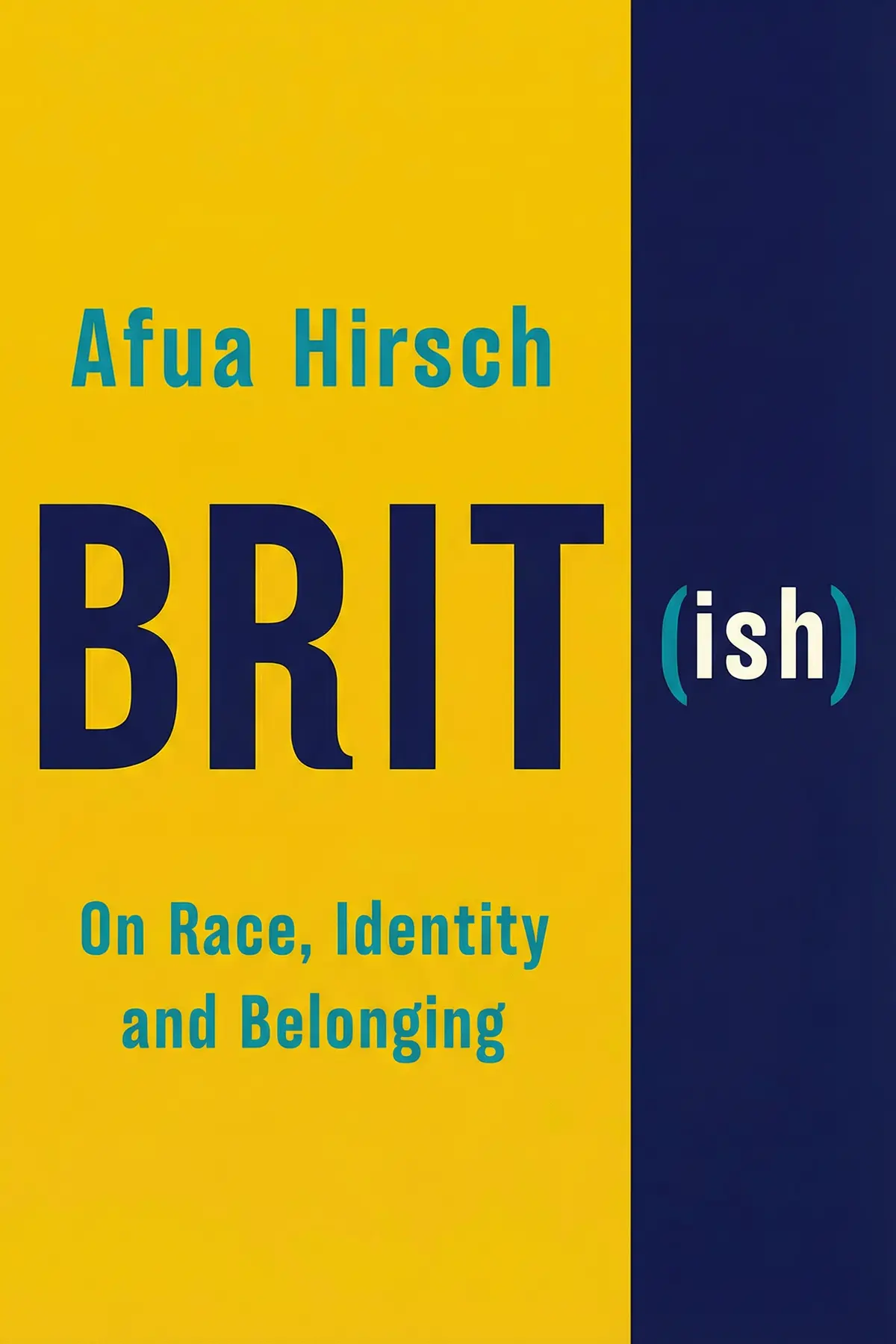
Table of Content
1. Introduction
1 min 04 sec
Asking a new colleague where they are from feels like harmless small talk. In Brit(ish), writer, broadcaster and former barrister Afua Hirsch shows how that friendly question can tell a British-born woman she does not belong. Her father, who is white, comes from a German-Jewish background, while her mother, who is Black, has Ghanaian roots, and her brown skin keeps the question coming.
Her argument is that Britain’s comfortable story about itself, a tolerant country that has moved beyond race, hides a long and living history of exclusion. The cost falls on people who cannot find themselves in their own nation’s story. She builds the case from her own life and from the record: centuries of fights over immigration, old stereotypes still at work, and a slave trade Britain prefers to remember only for ending it. By the end, a casual question about origins sounds very different, and so does any national story that leaves people out.
2. Hear what Where are you from really asks
1 min 38 sec
A taxi driver’s rude remark after the Brexit vote shocked many liberal Britons. Hirsch noticed something awkward: the people most shocked were often the ones asking her a gentler version of the same thing.
3. See Britain's long cycle of arrivals and backlash
2 min 05 sec
Complaints about foreigners taking jobs sound like a recent reaction to recent numbers. Hirsch finds a queen voicing the same worry more than four centuries ago, and a pattern both main parties keep repeating.
4. See what color blindness really hides
2 min 02 sec
Saying you are color blind sounds like the fairest position anyone could take. Hirsch argues it carries two hidden beliefs, and her privileged childhood in one of London’s prettiest suburbs shows how both fail.
5. Trace today's beauty standards to their roots
2 min 15 sec
A teenage girl calling her own body disgusting in a diary sounds like an ordinary adolescent struggle. Hirsch connects it to ideas written down by European scholars centuries ago, and to a billion-dollar industry today.
6. Spot the stereotypes that follow Black professionals
1 min 56 sec
Hirsch has been a barrister, a broadcaster and a reporter, and has still been mistaken for the cleaner. One evening a famous columnist mistook her for someone far grander, which turned out to be just as revealing.
7. Stop treating two identities as a forced choice
1 min 52 sec
Feeling like an outsider at home, Hirsch moved to her mother’s homeland expecting to fit in at last. What happened in a Ghanaian market and on a dark beach changed how she understood both countries.
8. Put the missing people back into history
1 min 53 sec
Britain celebrates the year it abolished the slave trade as a moment of national virtue. Hirsch looks at what happened before and after that date, and at the Black campaigners the celebrations leave out.
9. Conclusion
1 min 14 sec
Brit(ish) ends where it began, with a question about origins, now heard properly. Hirsch’s life works as a test case for Britain’s favorite claim about itself. She had grown up with Wimbledon, private school and Oxford, a childhood full of material advantages. Still, she ended up in a Ghanaian market, unable to say her own name correctly, looking for a home she already had.
Her case is that a country cannot fix what it refuses to see. Calling yourself color blind, or treating racism as history, keeps the problem out of view while hate crimes jump after a referendum and Black children are nearly twice as likely as white children to grow up poor. Admitting the problem exists comes first.
For a listener, that becomes a few small habits. Before asking where someone is from, ask whether you would put the same question to a white colleague. Notice whose looks your workplace calls professional. And when your country tells its story, look for the Equianos who were left out. People belong to a nation more easily once they can find themselves in its story.
About this book
What is this book about?
Afua Hirsch is a British citizen whose parents are British, and she grew up in Wimbledon and attended Oxford University. Yet strangers keep asking where she is really from. Her brown skin, she argues, is enough to make many white Britons doubt she belongs. Brit(ish) takes that everyday question apart. Hirsch shows that the tolerant, color-blind Britain described by mainstream politicians and media sits on top of centuries of arguments about immigrants, stereotypes about Black bodies and Black criminality that date back to slavery, and a national memory that celebrates abolishing the slave trade while forgetting how much Britain profited from it. She weaves this record together with her own story: schoolyard taunts, being mistaken for a waitress or for Michelle Obama, and a move to Ghana that taught her she was British after all. Readers get a clear account of how racism works in a society that believes it has moved on, and a sharper ear for the assumptions hidden in polite conversation. The book also makes a case that matters well beyond Britain: people need to see themselves in their country's story before they can feel they belong to it.
Book Information
Who it's for
Colleagues in mixed workplaces
Professionals in mixed workplaces who want to understand what everyday questions about origins can signal.
Caught between two countries
Children of immigrants who feel caught between two countries and neither.
Curious about British identity
Readers outside Britain curious how Brexit, empire and race shaped British identity.
About the Author
Afua Hirsch
Afua Hirsch, born in 1981, is a British writer and broadcaster who has also worked as a barrister. She wrote for The Guardian and served as Sky News's Social Affairs and Education Editor from 2014 to 2017. She received a Jerwood Award while writing Brit(ish), which was published in 2018 and became a Sunday Times bestseller. In 2024 the Royal Society of Literature made her a Fellow.
Ratings & Reviews
Ratings at a glance
What people think
Listeners find that while perspectives differ regarding the author’s focus on her own advantaged background, most value the book as a vital and thorough investigation into British identity and "polite" racism. Additionally, listeners appreciate the gripping mix of personal narrative and historical study regarding the British Empire’s impact. They also point out the text’s relevance and approachable style, with one listener stating that it "makes very good points about race in Britain" that are typically ignored in general conversations.
Top reviews
Oat
Afua Hirsch has delivered a piercing critique of Britishness that feels long overdue. She dismantles the myth of a post-racial society with a forensic precision that only a trained barrister could manage. I was particularly struck by her exploration of the 'polite' racism that permeates middle-class life, proving that silence isn't neutrality. While some might find her focus on her own upbringing in Wimbledon a bit much, it serves as a necessary anchor for the broader historical analysis. She isn't just venting; she is connecting the dots between the profits of the slave trade and the modern-day identity crisis. This is a dense, challenging read that refuses to let the reader off the hook. It is the kind of book that makes you look at every 'Where are you from?' question through a completely different lens.
Show moreNam
Wow, this book really pulls back the curtain on the 'polite' racism we often ignore in middle-class circles. It’s a gut punch of a read that forces you to acknowledge how deeply the roots of Empire still choke our modern institutions. I loved the way Hirsch weaves her time in Senegal and Ghana into the narrative to show how identity isn't just about where you live, but how you’re perceived. The title is absolute genius—it perfectly captures that sense of being 'sort of' British but never quite enough for the gatekeepers of national identity. It’s a heavy book, but the prose is so engaging that I flew through it in a weekend. Everyone who thinks Britain is 'over' racism needs to read this immediately.
Show moreVipawan
As someone who grew up in the UK, I found Hirsch's forensic analysis of our national identity crisis both uncomfortable and essential. She doesn't just talk about race; she talks about the psychology of a nation that has forgotten its own history. The way she contrasts her upbringing in Wimbledon with her husband’s life in Tottenham provides a sharp look at how class and race intersect in London. It’s not an easy read, especially when she’s calling out the 'well-meaning' liberals who claim to be color-blind. The truth is, we’ve built our identity on a lie of exceptionalism that ignores the four centuries of exploitation that funded it. This book is a necessary first step toward a more honest conversation about our past and our future.
Show moreThanakorn
Ever wonder why Britain struggles so much with its colonial legacy? Hirsch provides the answers in this brilliant, sprawling look at the cracks in our national facade. She highlights how we congratulate ourselves for ending the slave trade while ignoring the centuries we spent profiting from it. The writing is sharp and the research is meticulous, reflecting her background as a barrister and a journalist. I found the section on 'black hair' and the pressure to conform to white standards of beauty to be particularly moving. It’s a book that demands your full attention and rewards it with a much deeper understanding of the Brexit-era social divide. Essential reading for anyone trying to make sense of modern Britain.
Show moreApichat
After hearing Hirsch speak on a podcast, I knew I had to read the full text of Brit(ish). It did not disappoint. The way she deconstructs the idea of 'whiteness' as a default setting in British culture is nothing short of masterful. She challenges the reader to move beyond the superficial 'celebration' of diversity and actually look at the structural inequalities that remain. I found her writing style to be incredibly compelling—it's got that perfect mix of intellectual rigor and emotional resonance. This isn't just a book about race; it's a book about the soul of a nation that is currently at war with its own identity. A total must-read for anyone interested in the legacy of the Empire.
Show moreThawee
Picked this up after seeing it on so many 'must-read' lists, and I can see why it’s sparking such debate. The writing is incredibly accessible for such a heavy topic, mixing personal anecdotes with a deep dive into the legacy of the British Empire. Hirsch is frank about her own privilege, which I found refreshing, even if it occasionally felt like she was over-explaining her background. The sections on hair and the performative nature of 'not seeing race' were eye-opening and deeply relatable. However, I did find myself comparing it to Akala’s Natives, which felt slightly more punchy in its delivery of class dynamics. Still, this is a vital contribution to the current conversation about what it actually means to be British today.
Show moreOrawan
Finally got around to this, and the chapter on the 'Question'—where are you from—really hit home for me. Hirsch does a fantastic job of explaining why that seemingly innocent inquiry can feel like a microaggression when it’s asked of the same people over and over. Her analysis of the BAME label was also particularly enlightening, showing how it often masks more problems than it solves by grouping vastly different experiences together. My only real complaint is that the middle sections felt a little repetitive, hitting the same notes about her childhood a few too many times. But look, the historical context she provides about the British Isles before the Anglo-Saxons is worth the price of the book alone.
Show moreSatit
The blend of personal memoir and rigorous research makes this more than just another political manifesto. Hirsch uses her own life as a case study for the broader issues of belonging and 'otherness' in a country that prides itself on multiculturalism. I appreciated her honesty about trying to find a home in Africa and realizing that her Britishness was more ingrained than she thought. It’s a vulnerable piece of writing that manages to be both academic and deeply human at the same time. I did feel that the methodology of her interviews was a bit vague, making some of her broader sociological claims feel more anecdotal than scientific. Nevertheless, the points she makes about the education system’s failure to teach colonial history are undeniably powerful.
Show moreJan
In my experience, this book works better as a history text than as a memoir. The chapters where Hirsch dives into the actual archives of the British Empire are fascinating and well-reasoned, shedding light on things I never learned in school. However, the personal sections often felt somewhat disconnected from the reality of most non-white Brits who didn't attend Oxford or grow up in wealthy suburbs. There is a lot of focus on the 'micro' level of polite snobbery, which is valid, but I missed a more sustained look at systemic economic struggle for the working class. It's a solid four stars for the research and the timeliness, but the tone can feel a bit narrow at times.
Show moreLevi
While I appreciate the historical deep-dive into the slave trade, I struggled to connect with the author's specific perspective. Hirsch writes with obvious intelligence and her research is undeniably thorough, yet the memoir aspects felt a bit self-indulgent at times. Her shock at being treated as an 'other' in Ghana, despite her very British, Oxford-educated upbringing, seemed slightly naive for a journalist of her caliber. I wanted more of the intersectional analysis involving gender and working-class experiences, which felt sidelined in favor of her personal journey. It’s an important book, don’t get me wrong, but it lacks the raw energy of Reni Eddo-Lodge’s work. I’d recommend it for the history, but the constant focus on her own elite privilege makes it a frustrating read.
Show moreQuestions about this book
What is Brit(ish) by Afua Hirsch about?
Hirsch examines why she, a British-born woman with a white father and a Ghanaian-heritage mother, is constantly asked where she is from. She argues that Britain’s self-image as a tolerant, color-blind country hides a long history of anti-immigrant backlash, stereotypes rooted in slavery and a selective memory of the slave trade. Mixing memoir with history, she shows how these forces leave many people of color feeling they do not belong.
Why is asking where are you from a problem, according to Hirsch?
Hirsch accepts that most people who ask are curious and well-meaning. Her point is that the question shares an assumption with the taxi driver who asked if she was going home soon after the Brexit vote: that brown skin marks someone as foreign. Asked again and again of British-born people, it tells them their nationality is in doubt because they are not white.
What does Hirsch say about Britain and the slave trade?
She argues that celebrating the 1807 abolition of the slave trade is misplaced pride. Loopholes let British businesses keep profiting, and the economy still ran on slave-grown cotton and sugar. Britain had been Europe’s leading supplier of enslaved people, with British ships carrying 40 percent of the 12 million Africans taken. The usual story also focuses on William Wilberforce and forgets Black abolitionists such as Olaudah Equiano and the Sons of Africa.
Why did Afua Hirsch move to Ghana?
By her twenties she no longer felt British and hoped to find belonging in her mother’s homeland. Instead, Ghanaians saw her as white and foreign. She spoke no Twi and could not pronounce her own name properly, and after a robbery at knifepoint she felt seen as a rich outsider. She returned to Britain realizing she was British, and that British and Ghanaian identities need not exclude each other.
How can I apply the ideas in Brit(ish)?
Hirsch’s account suggests a few habits. Notice when curiosity about someone’s origins assumes they are not from here. Question claims to be color blind, since they treat racial identity as something to erase. Check whose appearance your workplace calls professional, and who you assume is staff at an event. And look at the history your institutions tell, asking which contributors have been left out.
Readers also enjoyed

A Biography of Loneliness: The History of an Emotion
Fay Bound Alberti

A Force for Good: The Dalai Lama's Vision for Our World
Daniel Goleman


A Room of One’s Own
Virginia Woolf

Abolish Rent: How Tenants Can End the Housing Crisis
Tracy Rosenthal

Abortion: Our Bodies, Their Lies, and the Truths We Use to
Jessica Valenti



Afropean: Notes From Black Europe
Johny Pitts
AUDIO SUMMARY AVAILABLE
Listen to Brit(ish) in 15 minutes
Get the key ideas from Brit(ish) by Afua Hirsch, plus 5,000+ more nonfiction titles.
- 5,000+ titles
- Listen as much as you want
- 7-day free trial
- Cancel anytime









