
14 min 04 sec
Available in: English
 ไทย
EnglishไทยBoundaries: When to Say Yes, How to Say No to Take Control of Your Life
Shows how to tell your own responsibilities from other people's, say no without guilt, and set limits that strengthen family, marriage, friendship and work relationships instead of damaging them.
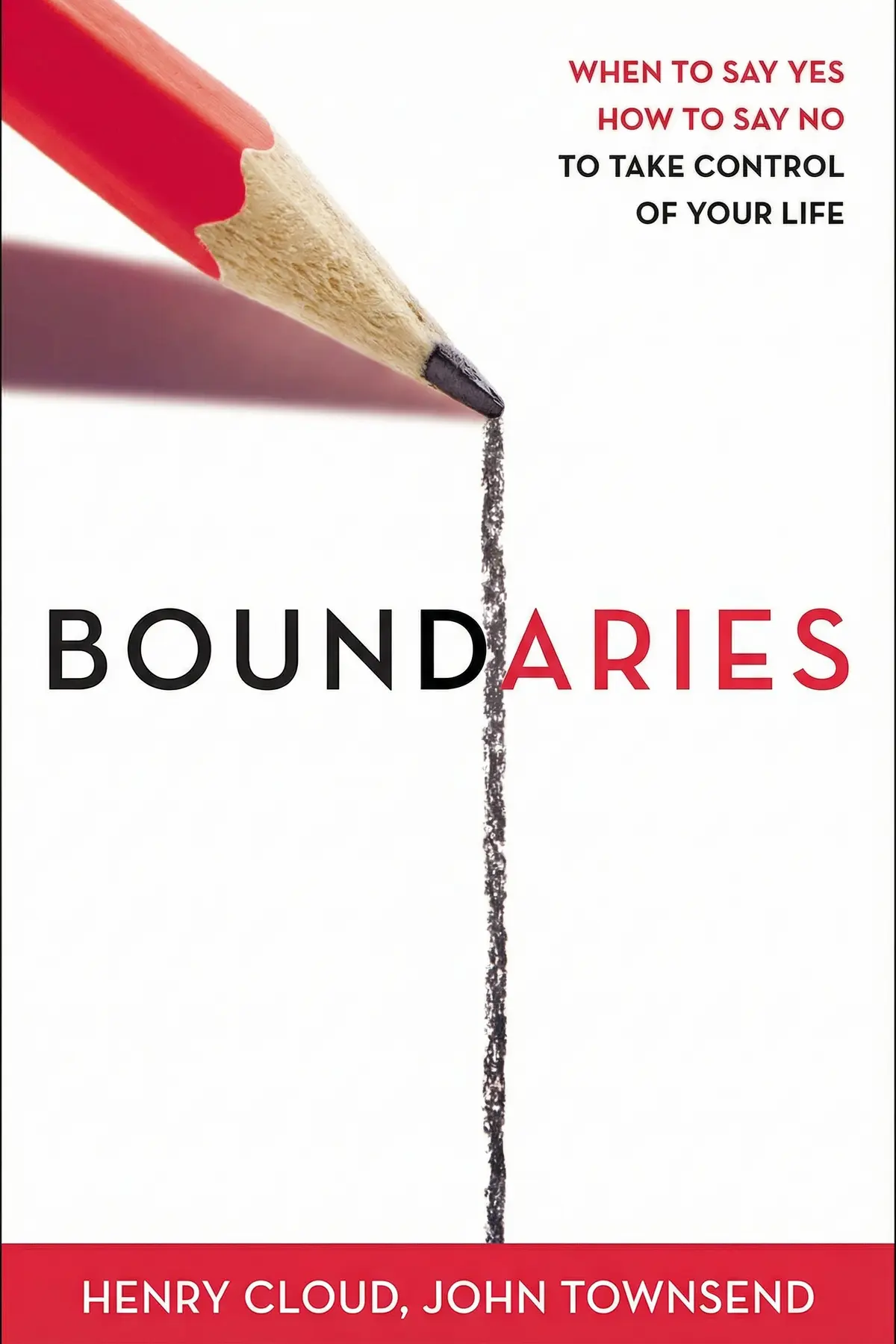
Table of Content
1. Introduction
56 sec
If your days fill up with other people’s tasks and saying no makes you feel mean, Boundaries offers a different picture of kindness. Psychologists Henry Cloud and John Townsend argue that a limit works like a property line, showing what is yours to look after and what belongs to someone else. Drawing that line clearly, they claim, helps the people around you as much as it helps you.
Everything rests on one distinction: you can care about others and support them without taking over their feelings, choices and problems. From there the authors map the hidden forms boundary trouble takes, the myths that keep people stuck, the family patterns behind them, and what healthy limits look like in a marriage, a friendship and an office. The payoff is practical: words for the moment someone asks too much, and a clear test for which burdens are actually yours.
2. Care for people without carrying their problems
1 min 30 sec
A loving family could pay their son’s fines and find him new schools, but then he would be unlikely to solve his own problem. The authors explain why their help is the obstacle, and what love could look like instead.
3. Spot the boundary problem you didn't know you had
1 min 25 sec
People who refuse requests easily often assume their limits are healthy. The authors describe several other shapes the problem takes, including one that looks like strength and leaves the person feeling unloved.
4. A fair limit never makes you the villain
1 min 25 sec
You turn down a weekly favor and your friend stops speaking to you. It feels like you caused real harm. The authors read that silence very differently, and it changes what guilt is telling you.
5. Use resentment as a map to your first limit
1 min 33 sec
The bitter feeling after yet another last-minute favor seems like something to push down. The authors treat it as a signal worth following, and they sketch the stages that come after you finally listen.
6. Break the family patterns you still repeat
1 min 36 sec
Capable adults can leave a family visit feeling small and unsure, without knowing why. The authors trace that feeling to old lessons about limits, and offer a way to stop replaying them.
7. Get closer to your partner by owning your side
1 min 30 sec
Couples who share everything often assume limits would only push them apart. Three struggling pairs show what happens when partners blur their feelings, wishes and capacity, and how small shifts in wording change the conversation.
8. Keep friendships honest by speaking up kindly
1 min 31 sec
Two friends each try so hard to please the other that both end up spending the weekend doing something neither wanted. A second friendship shows why the person being pushed around shares part of the blame.
9. Protect your evenings from endless work
1 min 27 sec
A man with a great reputation at work as a can-do team player says no to his own family all the time. His wife spots the real problem, and it applies to anyone whose job keeps spilling into home.
10. Conclusion
1 min 11 sec
Boundaries argues that much of the chaos in a crowded life comes from confusion over ownership. When you carry a son’s fines, a friend’s weekly childcare, a colleague’s unfinished work or a partner’s unspoken wishes, nobody grows. You burn out, and the others never learn to hold their own load. Clear limits fix the accounting. You handle your problems, wants and feelings, you support others in theirs without taking them over, and you become able to ask for help and accept it.
That is why the authors call boundaries a source of love and joy. The O’Rileys show it well: they could stop rescuing James while still listening to and supporting him.
Start where resentment is loudest and draw one small line there, the dirty dishes or the last-minute favor. When you speak, describe your own feeling instead of guessing someone else’s. And find company for the effort, as the authors suggest: a small support group where people share wins and slips and even rehearse setting limits on each other.
A fence with a gate keeps out harm and still lets the good come in.
About this book
What is this book about?
Many people spend their days doing jobs that are not theirs, agreeing to every request and feeling mean whenever they think about refusing. Psychologists Henry Cloud and John Townsend argue that this exhausting pattern comes from unclear boundaries, the invisible lines that show where your responsibility ends and someone else's begins. Their central idea, drawn from the book of Galatians, is that you are responsible to others but responsible only for yourself. From there they describe four kinds of boundary trouble, from the person who cannot refuse to the one who controls everyone else. They take apart the myths that make limits feel selfish, trace boundary problems back to the families where we first learned them, and show how resentment can point the way to change. Readers get concrete cases from marriages, friendships and offices, plus practical moves: stating your own feelings instead of guessing your partner's, giving a friend loving feedback, responding instead of reacting, and protecting time that work would otherwise swallow.
Book Information
Who it's for
Always saying yes
People who say yes to everyone and end most days drained and resentful.
Caught in family patterns
Parents, partners and adult children caught in family patterns of rescuing, guilt or control.
Professionals losing personal time
Professionals whose reliability at work keeps eating into their evenings, weekends and family life.
About the Author
Henry Cloud
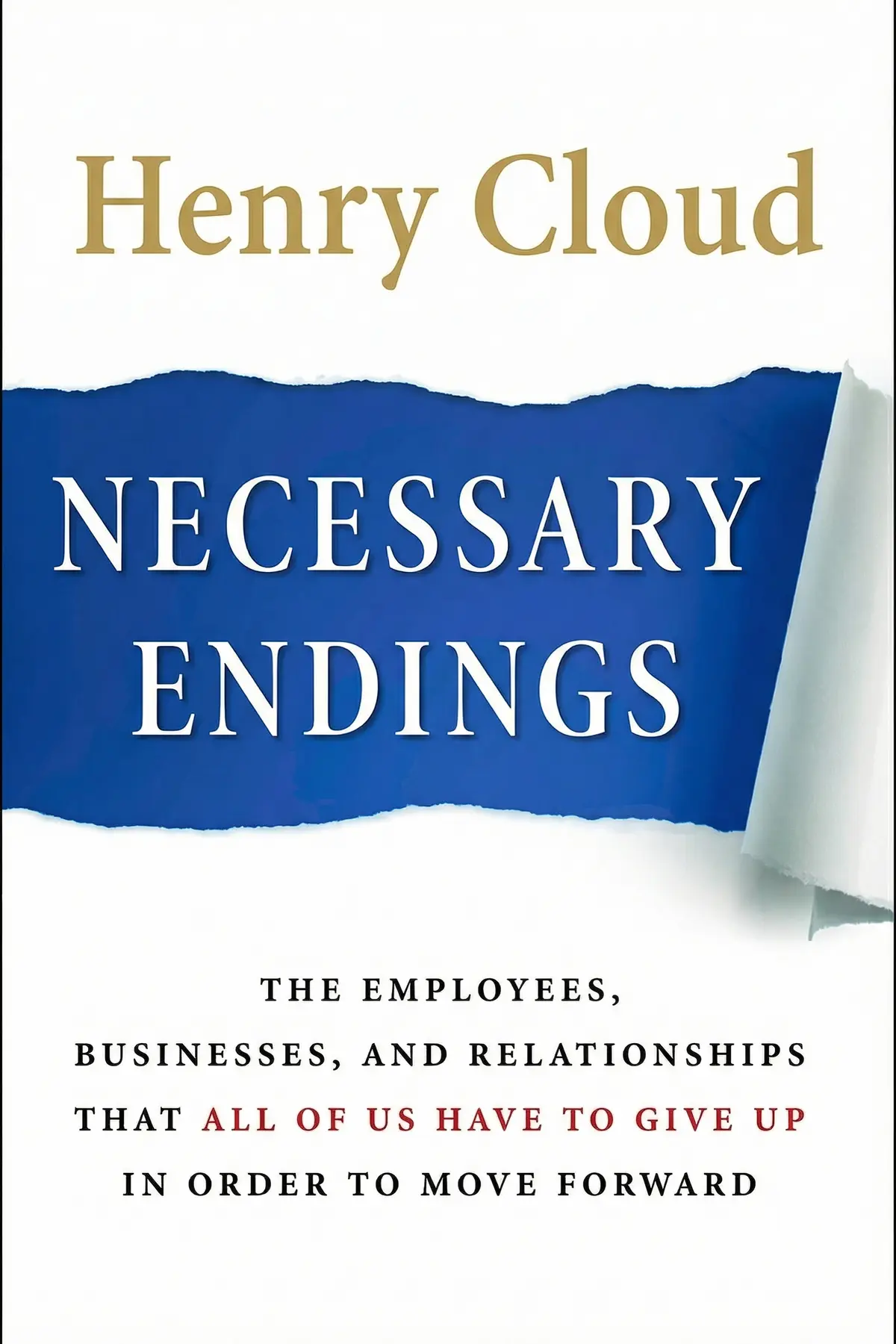
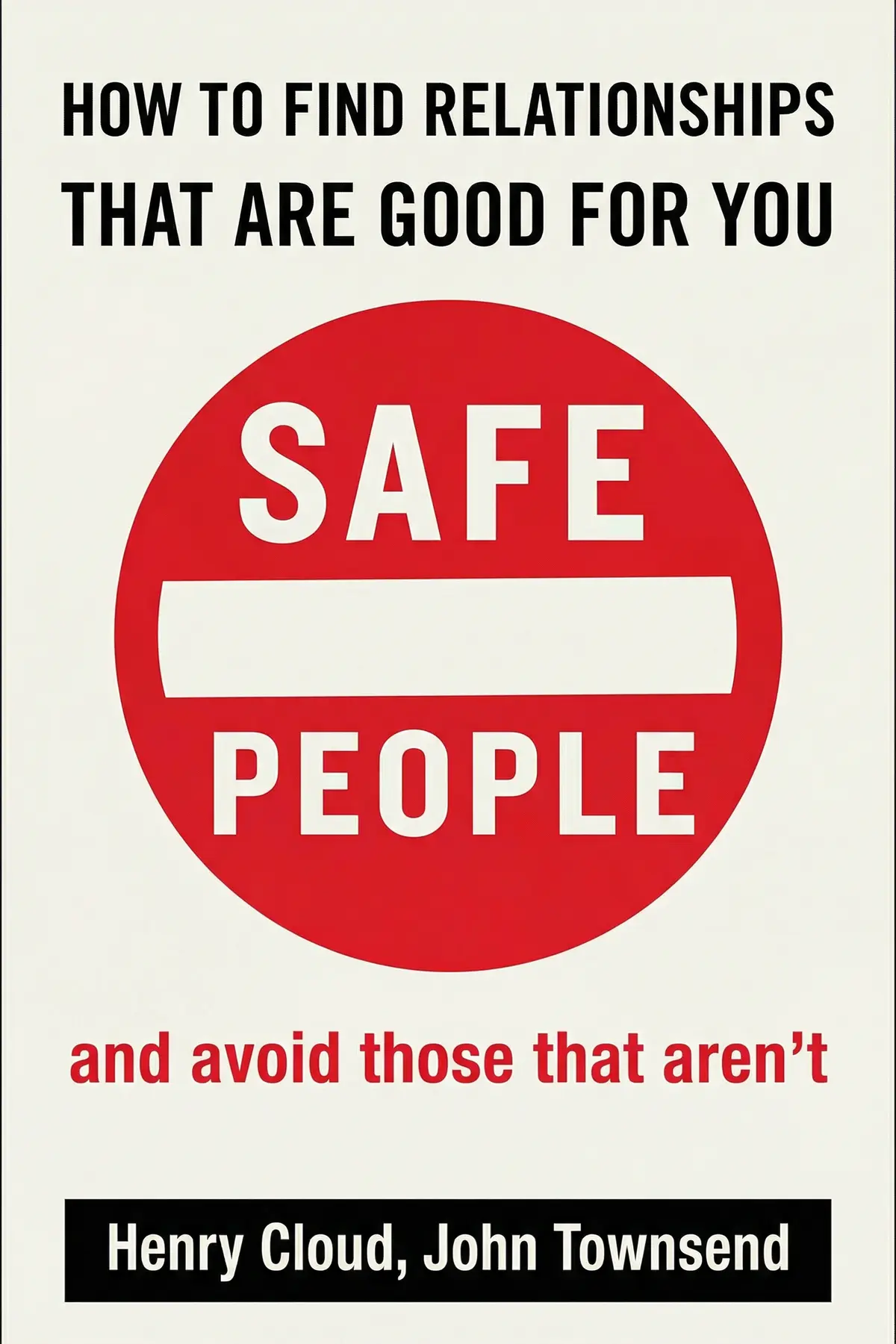
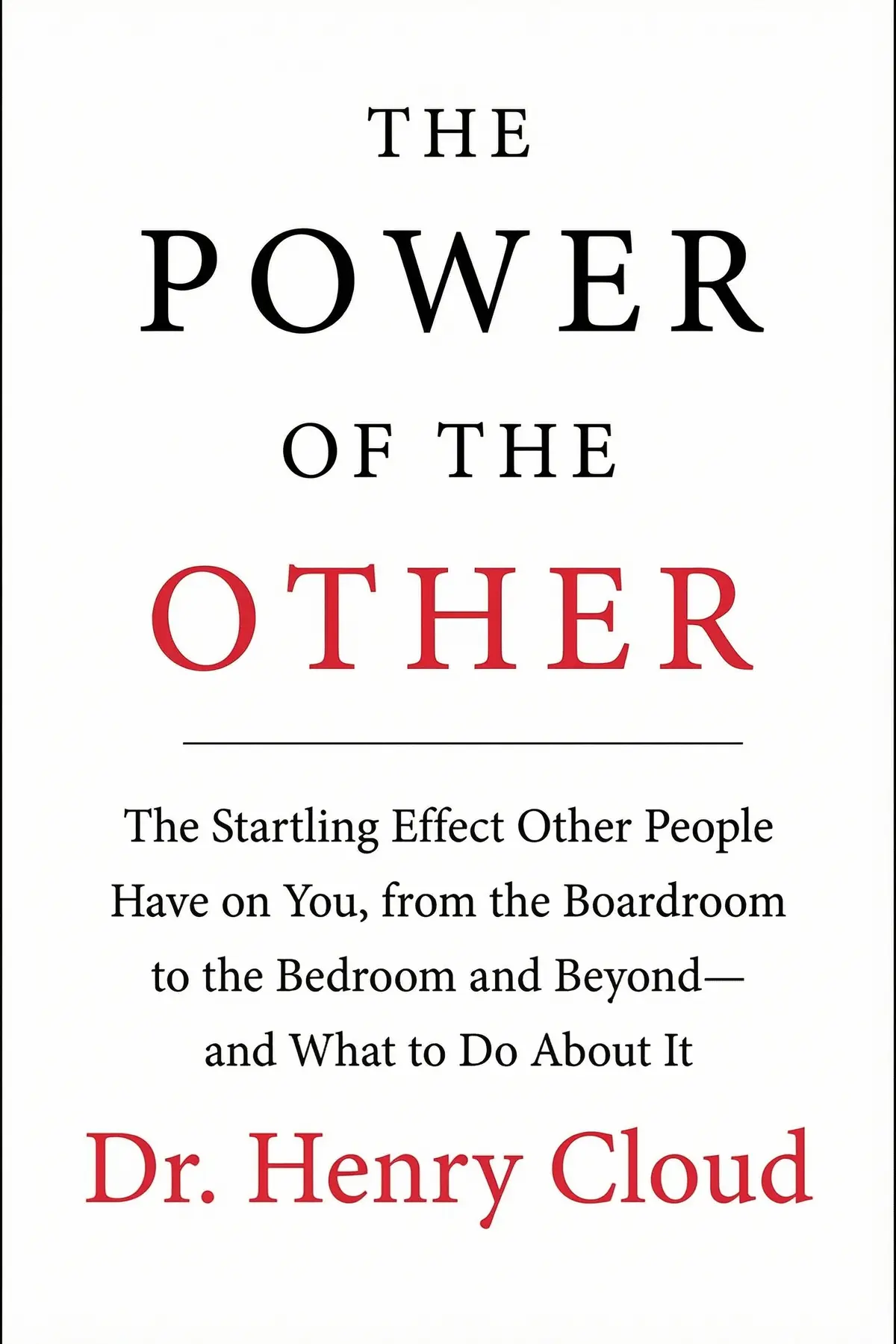
Henry Cloud is a clinical psychologist who earned his Ph.D. at Biola University. He works as a leadership consultant and executive coach for CEOs, wrote Necessary Endings, and has sold nearly 20 million books. John Townsend is a psychologist and speaker who has co-hosted the national radio program New Life Live! and written twenty-seven books, among them Safe People and Hiding from Love. Townsend cofounded the Cloud-Townsend Clinic and Cloud-Townsend Resources, which Cloud has led. Boundaries, their 1992 collaboration, sold two million copies and grew into a five-part series.
Ratings & Reviews
Ratings at a glance

What people think
Listeners find this title accessible and remarkably useful, noting that it reveals fresh perspectives and delivers principles that transform lives. Additionally, the quality of information is praised, with one listener specifically mentioning the thorough subject index. Listeners also appreciate the way it strengthens relationships, especially in family contexts. Nevertheless, the spiritual elements draw mixed reviews; some value the Christian viewpoint while others consider the material too religious.
Top reviews
Sawit
This book really shifted my perspective on what it means to be a "good" person versus a "compliant" person. I used to think that saying no was synonymous with being selfish, but Cloud and Townsend illustrate how boundaries are actually the foundation of healthy love. The opening chapter describing a day in a boundaryless life hit way too close to home; it was like looking in a mirror of my own exhaustion. To be fair, the Christian framework is very prominent, but the core psychological principles are incredibly sound. I appreciated the specific breakdown of how to handle intrusive family members and demanding bosses. It isn't just about walling people out; it's about building a gate that lets the good in and keeps the bad out. My relationships have improved because I finally stopped feeling responsible for everyone else's emotions.
Show moreStella
Finally got around to reading this classic, and I must admit, the insights on personal responsibility are staggering. The authors don't pull any punches when they explain that we are responsible to others, but not for them. That distinction changed my life. While I found some of the "pastor stories" a bit cheesy and perfectly packaged, the logic behind their advice is hard to argue with. The book is organized beautifully with a comprehensive subject index that makes it easy to go back and find specific advice for work or parenting. Frankly, even if you aren't religious, there is a wealth of wisdom here about self-worth and discipline. It helped me realize that my lack of limits was actually hurting the people I was trying to help. Truly an eye-opening read for anyone feeling burnt out by the demands of others.
Show moreWyatt
Wow. I didn't realize how much I was drowning until I read the description of a "boundaryless life" in the introduction. It’s a bit of an older book, sure, but the principles are timeless. The way the authors describe "triangulation" and the guilt-trips we allow ourselves to suffer through was incredibly convicting. I’ve started applying the "law of sowing and reaping" in my own house, and the change in my teenagers' attitudes has been remarkable. They’re finally learning that their choices have consequences. Look, some people might find the Christian tone a bit much, but I found it provided a solid moral grounding for why self-care isn't selfish. It’s about being a better steward of your own life so you can actually be useful to others. This is a life-changing resource that I’ll be recommending to everyone.
Show moreAnna
After hearing so many people rave about this, I finally picked it up to deal with a difficult work situation. It’s an easy read, but it packs a heavy punch. The central metaphor of boundaries being like a fence with a gate is something I’ll never forget. It helped me realize that I had no gate—I was just letting everyone trample over my lawn. The authors are brutally honest about how we enable other people's bad behavior by "rescuing" them. It’s painful to realize you might be part of the problem, but it’s also very freeing. I appreciated the comprehensive subject index at the back, which I’ve already used to look up specific advice for dealing with my parents. If you feel like you're losing your identity to the needs of others, you need to read this immediately.
Show moreRose
Picked this up on a whim after a friend mentioned it, and I’m glad I did. It’s rare to find a self-help book that actually provides a "how-to" rather than just vague encouragement. Cloud and Townsend give you actual phrases to use and specific scenarios to visualize. I particularly liked the distinction between "forgiveness" and "reconciliation"—that was a lightbulb moment for me. You can forgive someone without letting them back into your life to hurt you again! The tone is very encouraging, almost like having a session with a wise, if slightly old-fashioned, counselor. While the religious aspects are definitely front and center, the universal truths about human dignity and respect are what shine through. It’s an essential guide for anyone who feels like they’ve lost control of their own peace of mind.
Show moreIce
As someone who struggles with people-pleasing, I found the practical steps in this book to be a necessary wake-up call. The authors provide a very clear roadmap for identifying where your property lines end and someone else's begin. I particularly liked the section on "safe suffering" and allowing people to experience the natural consequences of their actions. However, I’m only giving it four stars because the writing can feel a bit repetitive in the middle sections. It felt like they used the same formula for every relationship type: a story about "Susan" or "John," a list of problems, and then the suggestion to join a support group. Still, the message is powerful. It’s a great resource for learning that your "no" has just as much value as your "yes." If you can look past the 90s-style anecdotes, you'll find some serious gold here.
Show morePongpan
Ever wonder why you feel so much resentment after doing favors for people? This book explains exactly why: you’re operating without a fence. Cloud and Townsend use Biblical principles to show that setting limits isn’t just okay, it’s actually a spiritual requirement. I loved the chapters on boundaries at work; they helped me see that I was letting my coworkers' lack of planning become my emergency. The text is accessible and moves quickly, though I did catch a few minor typos that felt a bit unprofessional for such a big title. To be fair, the advice to "find a support group" felt a little dated or maybe just easier said than done. Despite that, the empowerment I felt after finishing the final chapter was worth the price of admission. It gave me the permission I didn't know I needed to stop carrying everyone else's heavy loads.
Show moreDuangjai
The chapter on boundaries with yourself was probably the most challenging part of this entire book for me. Most of us think boundaries are about other people, but the authors argue that our own lack of discipline is often the biggest culprit. They dive into how we fail to set limits on our own spending, eating, and time management. It’s a very logical, structured approach to self-improvement. My only real gripe is the lack of scientific citations; for a book written by two doctors, it relies almost entirely on anecdotes and scripture rather than clinical studies. I’m a bit of a data nerd, so that was jarring. Regardless, the information quality is high, and the advice on navigating in-laws was particularly helpful for my current situation. It's a solid four-star read that offers a lot of common-sense wisdom.
Show moreHassan
Truth is, I have mixed feelings about this one even though I ultimately found it helpful. On one hand, the concept of "ownership" over one’s life is brilliant and much-needed in our culture of victimhood. On the other hand, the writing style feels very formulaic and "Christian-lite." Every chapter starts with these suspiciously perfect stories where someone says "no" and then, after a brief conflict, everyone lives happily ever after. In my experience, setting boundaries with toxic people usually results in an explosion, not a neat resolution. I wish the authors had spent more time on the messiness of the process. That said, the "myth-busting" section towards the end was fantastic. It addressed my guilt about being "selfish" head-on. It’s a good book if you’re willing to sift through the fluff to get to the core concepts.
Show moreCharlotte
Not what I expected at all, and frankly, I’m a bit baffled by the glowing reviews. I was looking for psychological tools to manage my time better, but instead, I got a sermon. The biblical references are so thick that it’s hard to find the actual "meat" of the advice if you aren't part of that specific faith tradition. Even worse, the "transformed" version of the woman in the closing chapters felt like she’d gone from one extreme to the other. She went from being a doormat to being someone who seemed almost cold and unwilling to make any sacrifices for her family. It felt less like healthy boundaries and more like a swing toward total isolation. Plus, the authors seem to blame every single adult character flaw on poor parenting, which feels incredibly reductive. It’s just too fanatical and one-dimensional for my taste.
Show moreQuestions about this book
What is the main idea of Boundaries by Cloud and Townsend?
Henry Cloud and John Townsend argue that a boundary shows what you own: your feelings, wants, limits and tasks. Drawing on the book of Galatians, they say you are responsible to others but responsible for yourself. Setting limits is therefore an act of kindness, because it lets people face their own problems instead of having someone else carry them, as the case of the O’Riley family and their son James shows.
What are the four types of boundary problems?
The authors describe compliants, who cannot say no and get used by everyone; avoidants, whose limits are so strict that they refuse help and hide their feelings; controllers, who trample other people’s limits and end up rarely feeling loved; and nonresponsives, who ignore even the responsibilities they owe others. A person can be firmer about boundaries in one setting than another, as Ahmed is more comfortable saying no to his family than at his job.
Is setting boundaries selfish?
Not in the authors’ view. They argue that loving others well requires loving yourself first, and that boundaries are an act of self-love. If a reasonable limit, such as declining to babysit every week, makes a friend stop speaking to you, they see the problem in a relationship built on total compliance. Limits are also not permanent: asking a parent to stop giving advice does not end the relationship.
How can I start setting boundaries?
The authors suggest treating resentment as a signal that a line has been crossed too often, then practicing on small things, like refusing to always do the dirty dishes or accepting a friend’s offer to bring dessert. Look for the unmet need behind your pattern, respond instead of reacting when a limit is tested, and consider a support group where people share successes and failures and rehearse setting limits together.
Readers also enjoyed


A New Earth: Awakening to Your Life’s Purpose
Eckhart Tolle

A Return to Love: Reflections on the Principles of a Course in Miracles
Marianne Williamson

59 Seconds: Change Your Life in Under a Minute
Richard Wiseman

Aflame: Learning from Silence
Pico Iyer


Alcoholics Anonymous
Alcoholics Anonymous World Services



AUDIO SUMMARY AVAILABLE
Listen to Boundaries in 15 minutes
Get the key ideas from Boundaries by Henry Cloud, plus 5,000+ more nonfiction titles.
- 5,000+ titles
- Listen as much as you want
- 7-day free trial
- Cancel anytime









