

14 min 12 sec
Available in: English
The Power of the Other: The Startling Effects Other People Have on You, from the Boardroom to the Bedroom and Beyond – and What to Do About It
By Henry Cloud
Shows how the people around you affect your health, drive and performance. It explains how to tell empty, harmful and fake relationships from real ones, and how to choose whom to trust.
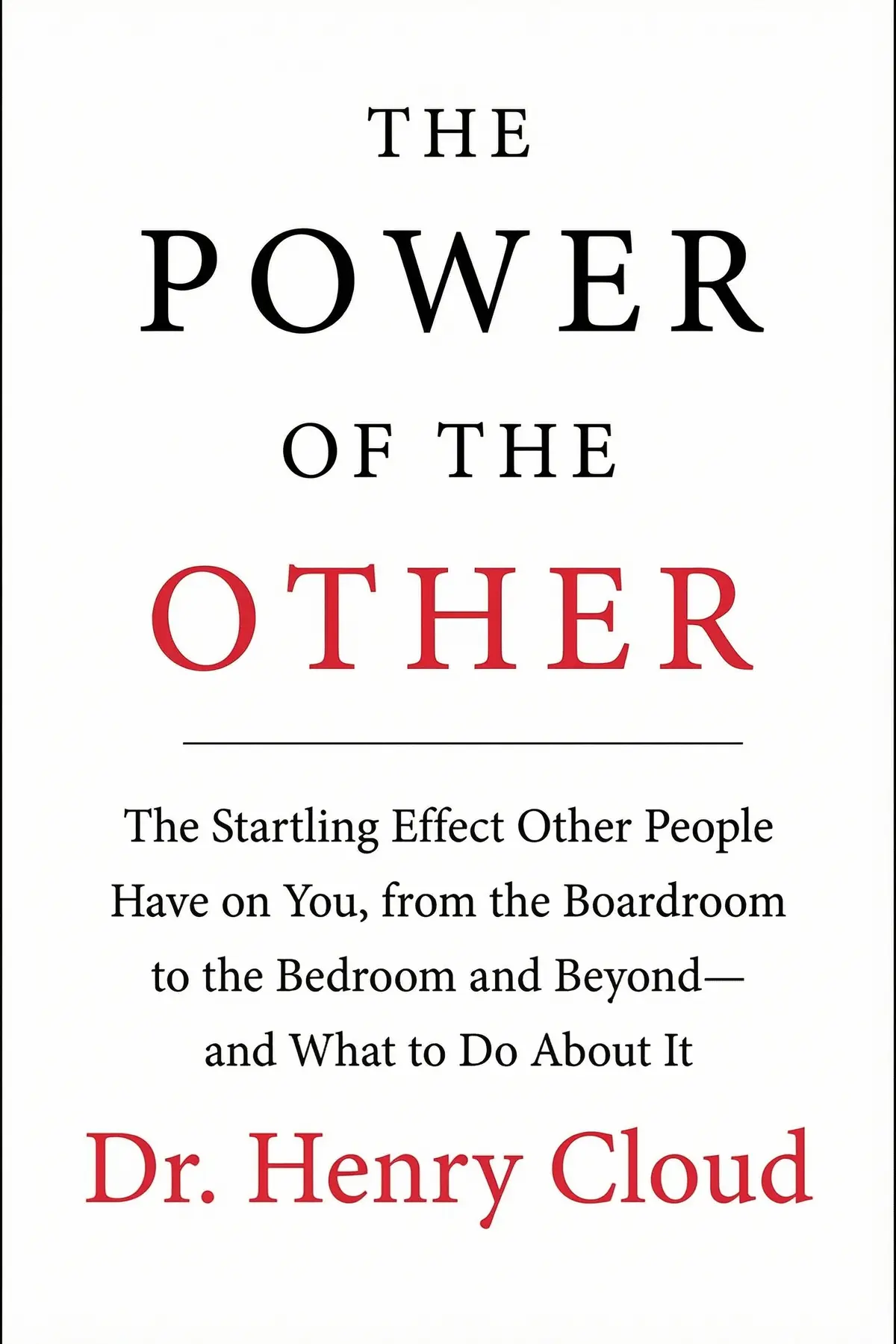
Table of Content
1. Introduction
53 sec
If the people around you leave you drained, doubting yourself or flattered into standing still, the cause may be the kind of connection you share with them. In The Power of the Other, clinical psychologist and executive coach Henry Cloud argues that other people affect your health, your thinking and your performance as directly as anything inside your own head. He sorts every relationship into four corners, and only one of them helps you grow.
The other three either give you nothing, hurt you, or feel wonderful while doing harm. His stories run from Ronald Reagan watching squirrels during a security briefing to Richard Branson admitting he needed help to start an airline. By the end, you can place each important relationship in your life into a corner, and you have five tests for deciding who deserves your trust.
2. Treat your relationships as part of your health
1 min 27 sec
Sleep, diet and a new routine are the usual fixes for a slump. Cloud points to a third factor most people never check, and a bad day at the office shows how much it can decide.
3. Spot the three connections that hold you back
1 min 31 sec
Some relationships give you nothing, some hurt, and one kind feels wonderful while it does damage. Cloud’s map of the traps explains why people stay hooked on bonds that never leave them better off.
4. Drop the mask with people you trust
1 min 40 sec
Leaders feel they can never look weak, so they keep up a front even with the people closest to them. One famous entrepreneur nearly gave up his biggest dream to that habit, until he reached out and admitted he needed help.
5. Find the rooms that give you energy
1 min 27 sec
Some meetings and gatherings lift you the moment you walk in, and you can rarely say why. Cloud found the source of that lift in his own recovery from a dark stretch after a sports injury.
6. Get feedback that lets you solve it yourself
1 min 39 sec
A president once stopped listening to his security advisor in the middle of a briefing on world crises. What looked like simple distraction carried a message about trust that the advisor understood at once.
7. Bounce back faster after you fail
1 min 31 sec
One of the most admired film studios in the world starts nearly every project with work that is frankly bad. How its people talk about those early disasters holds a lesson for anyone afraid of looking incompetent.
8. Pass your values on to those who follow
1 min 26 sec
Leaders about to retire often fear the company will fall apart without them, and parents fear the moments they cannot be present. Cloud describes the slow process that lets your judgment travel where you cannot.
9. Run five checks before you trust someone
1 min 34 sec
A hardworking, well-meaning helper can still ruin everything you hand over. Cloud offers a short set of tests that separate the people who deserve your trust from those who only seem to.
10. Conclusion
1 min 04 sec
Cloud’s book makes a simple claim with large consequences: nobody does well alone, and the people you let close are shaping your health, your thinking and your work whether you notice or not. Only the fourth corner asks something of you, honesty about weakness and ownership of your own problems, and only the fourth gives back energy, useful feedback, a safe place to fail and values worth keeping.
Start where Cloud himself ends. When a relationship leaves you dissatisfied, ask for something concrete, such as afternoon walks or a regular dinner date, because a plan to connect more cannot be scheduled and a date can. Place the people closest to you in their corners, and run the five trust checks before leaning on anyone. Then make sure at least one person hears your doubts without the mask.
Branson had the inexperience and too little capital to take on the giants. What changed his story was one honest call to someone who knew more.
About this book
What is this book about?
Most people work on their skills, their habits and their health, and rarely look closely at the people they spend their days with. Henry Cloud argues that this leaves out one of the biggest forces in a person's life. Relationships help decide how we handle stress, how we recover from setbacks and how well we think and perform. Cloud, a clinical psychologist and executive coach, sorts every relationship into four corners. The first three are traps: no real connection, a harmful one, or a fake one that feels good while doing damage. Only the fourth, real connection, lets people drop their protective masks, take ownership of their problems, get honest feedback and treat failure as part of learning. His examples range from Richard Branson asking an airline veteran for help to Ronald Reagan watching squirrels during a security briefing, and from Pixar's terrible first drafts to a mentor's simple words of comfort. Readers come away able to place their own relationships in a corner, pass good habits on to a team or a child, and test whether someone deserves their trust before relying on them.
Book Information
Who it's for
Bosses without a confidant
Managers and leaders who keep up a strong front and have nobody to share real doubts with.
Those weighing their relationships
People in draining, empty or flattering relationships who want a clear way to judge them.
Legacy-minded parents and leads
Team leads and parents who want their values to stick after they step away.
About the Author
Henry Cloud
Henry Cloud, born in 1956, is a clinical psychologist with a Ph.D. from Biola University. He co-wrote Boundaries in 1992, which sold two million copies and grew into a five-part series, and he also wrote Necessary Endings. His books have sold nearly 20 million copies and appeared on the New York Times and Wall Street Journal bestseller lists. He coaches CEOs and leadership teams, started a chain of treatment centers in more than 40 cities across the western United States, and has led Cloud-Townsend Resources, which runs seminars on relationships and personal growth.
Ratings & Reviews
Ratings at a glance

What people think
Listeners find the book extraordinary and perceptive, highlighting its research-heavy approach to explaining relationships and how they influence performance. Furthermore, the writing is skillfully executed, and listeners find it both stimulating and inspiring. Conversely, the pacing draws a varied response; while some consider it enthralling, others mention that it begins to feel dull after some time.
Top reviews
Kom
This book fundamentally shifts how you view your personal and professional networks. Dr. Cloud moves beyond the tired "self-help" trope that everything comes from within, instead arguing that our performance is inextricably linked to the people we allow into our inner circle. Truth is, the concept of the "Four Corners" of connection—especially the distinction between a fake connection and a truly fuel-injected Corner 4 relationship—was a total eye-opener for me. While some might find his business-leaning analogies a bit corporate, the underlying psychology regarding how others "wire" our brains for success is backed by solid research. I found myself highlighting nearly every page because the insights into emotional intelligence were so practical. It’s a remarkable read for anyone who feels stuck despite their best individual efforts. If you want to take your leadership to a higher level, you need to understand the science of connection. It's a life-changer.
Show moreMalee
Wow, this was exactly the perspective shift I needed this year. Most books tell you that you are the only one in control of your destiny, but Cloud proves that we are biologically designed to need others to reach our full potential. The way he describes how certain relationships "wire" us for resilience is just fascinating. I loved the emphasis on Corner 4—those authentic connections where you can be your whole self without judgment. It helped me realize I was settling for "Corner 3" connections that felt good but didn't actually push me to grow. Not gonna lie, I got a bit emotional reading about the impact a single supportive person can have on a career. The research is integrated beautifully with the narrative, making it feel both scientific and deeply human. This is more than a business book; it’s a manual for living a more connected and successful life.
Show moreAnchalee
Picked this up during a particularly rough patch in my career and it changed my entire strategy. I used to think I had to white-knuckle my way through every challenge, but Cloud explains that we actually get "fuel" from specific types of connections. The concept of "relational energy" isn't some New-Age fluff here; it’s presented as a biological reality with profound impacts on our performance. When you have people who truly believe in you, your body and mind shift into another gear. Building true trust and being someone others can trust is at the heart of the book. It’s motivational without being cheesy or unrealistic. If you want to make a positive impact on those around you while improving your own results, read this. It’s a remarkable study on why the "lone wolf" mentality is a recipe for burnout and failure. Highly recommended.
Show moreBae
"The Power of the Other" is a masterclass in understanding the invisible forces that drive human achievement. Dr. Cloud has a gift for making complex psychological concepts feel intuitive and actionable for the average reader. I loved the focus on the "Corner 4" relationship—that space where you are fully known and fully invested. It’s rare to find a book that addresses both the boardroom and the personal life with such equal weight and authority. Look, we all know relationships matter, but Cloud explains the mechanics of *why* and *how* they change our brain chemistry and our capacity for success. The writing is smartly crafted and incredibly thought-provoking from start to finish. I’d recommend it to any leader looking to create a more uplifting and high-performing environment. It truly highlights how we can go further than we ever thought possible just because someone else thought we could.
Show moreSupranee
Ever wonder why you feel drained after certain meetings but energized after others? Henry Cloud explains the "power of the other" with a blend of neuroscience and anecdotal wisdom that feels both grounded and motivational. I particularly appreciated the discussion on how we can’t actually change people; they have to decide to change themselves. Look, the middle section drags a little bit and some of the stories about unnamed companies feel slightly vague, yet the core message remains incredibly potent. The writing style is smart and clearly crafted for a wide audience ranging from CEOs to stay-at-home parents. It’s not just for managers; it’s for anyone trying to navigate complex human dynamics without losing their mind. I came away with a much better grasp of how to build a support system that actually works. It's a solid four-star read that offers a refreshing take on social skills.
Show moreNadia
Finally got around to reading this after a colleague recommended it for our management team. The opening story about the Navy SEAL nearly failing his training until a comrade gave him that "fist pump" of energy was incredibly moving. It perfectly illustrates Cloud's point about how the presence of another can unlock a new dimension of performance. In my experience, the chapters on eliminating triangulation and gossip in the workplace are worth the price of the book alone. We often underestimate how much "relational energy" is wasted on drama and office politics. While the book can be a bit repetitive at times, the smart framing of Corner 4 connections makes it a valuable tool for any leader. It’s thought-provoking and provides a clear framework for auditing your own relationships. Some of the personal stories pull their weight more than the corporate ones, but the overall message is sound.
Show moreManika
The chapter on how our brains handle problem-solving alongside others really stuck with me. Cloud points out that we only remember a small fraction of what we read, but we retain so much more through experience and shared learning processes. Personally, I found the references to leaders like Jack Welch interesting, even if some of the corporate success stories felt a bit dated. The book does a great job explaining why "willing" yourself to be better usually fails if you don't have the right "equipment"—meaning the right people around you. It's an analytical look at how relationships function as an external power source. Some sections are a bit dense and the writing can feel clinical, but the smart structure keeps it accessible. It's a great pick for anyone interested in the intersection of neuroscience and leadership development. Definitely worth a spot on the shelf.
Show moreBird
After hearing so much about Dr. Cloud’s previous bestsellers, I had high hopes for this one. While the material is definitely useful for new managers, the pacing is a bit uneven and it starts to feel repetitive after the first hundred pages. Gotta say, the constant self-promotion of his other books was a little distracting and made the reading experience feel slightly like a sales pitch. However, his treatment of triangulation—the way gossip and indirect communication destroy teams—was spot on. I’ve seen those negative effects firsthand in my own office environment. The book encourages you to take a hard look at your "current corner" and make the necessary shifts to improve your social skills. It's a "sure" recommendation from me, though not an exuberant one. It meets you where you are, providing enough "aha" moments to keep you reading, even if the content could have been tighter.
Show moreClara
As someone who enjoys deep psychology, I found this book to be a bit of a mixed bag. The core idea is brilliant, but the execution suffers from a lack of concrete details in the anecdotes. Cloud often talks about "a CEO" or "a certain company" without giving enough specifics to make the stories feel real or relatable. Truth is, it became a bit boring in the middle because the same points about the "Four Corners" were hammered home repeatedly. That said, his advice on giving constructive, reality-based feedback with care is genuinely helpful for any manager trying to build a better team. I also liked the part about how self-control is linked to our connections. It’s a decent read that could have been much shorter. It works well as a primer on social intelligence, even if it doesn't quite reach the heights of his previous work.
Show moreBook
Not what I expected given the high praise I saw online. To be fair, Cloud is a talented writer, but this felt like an overstretched magazine article rather than a groundbreaking psychology book. The central premise—that other people affect us—is something most adults already intuitively understand without needing 200 pages of explanation. I found the "Four Corners" model a bit overly simplistic and the anecdotes were often too brief to be truly helpful. Many stories featured unnamed characters which made the "research" feel more like a collection of generic parables than hard data. Frankly, I was hoping for deeper psychological insights into the mechanics of relationship-building rather than being told to find "good" people and avoid "bad" ones. It’s an easy enough read, but it lacks the depth of his earlier work like "Boundaries." If you’re already well-versed in emotional intelligence, you might find this one a bit redundant.
Show moreQuestions about this book
What is The Power of the Other by Henry Cloud about?
Henry Cloud argues that other people shape your health, thinking and performance as much as your own brain and mind do. He sorts relationships into four corners: no connection, bad connection, fake connection and real connection. Only the fourth helps you grow, because it lets you drop your protective mask, take ownership of problems, get useful feedback and accept failure as part of learning.
What is a corner four relationship?
A corner four relationship is a real connection. You can share what you think and feel without fear, the other person understands and cares about you, and they will not take advantage of a weakness you reveal. Cloud points to Richard Branson, who told airline veteran Freddie Laker he needed help, and with Laker’s guidance rose to become a leading figure in the airline business.
What are Henry Cloud's five criteria for trusting someone?
Cloud suggests checking whether the person understands what matters to you, whether they want the best for you, whether they can actually help, whether their character suits the task, and what your shared history shows. His examples include a well-meaning gardener who poisons a garden by misreading instructions, and a friend who forgets an airport pickup twice and should not be asked a third time.
How can I apply The Power of the Other at work?
Find at least one person who hears your real doubts, as Branson did with Laker. When colleagues bring problems, give them specific feedback instead of solving it for them, the way Reagan left Powell to handle his own briefing. Make failure safe to admit, as Pixar’s teams do. If you are leaving a role, share your values and routines early so your successor absorbs them.
Who should read The Power of the Other?
It suits leaders who feel they must always look strong, people stuck in relationships that feel empty, harmful or falsely flattering, and anyone deciding whom to trust with important decisions. Team leads and parents will also find Cloud’s idea of internalization useful, since it explains how values pass from one person to another and keep working after you step away.
Readers also enjoyed


A Guide to the Good Life: The Ancient Art of Stoic Joy
William B. Irvine




A High-Performing Mind: Strengthen Your Mind and Live Your Best Life
Andrew D. Thompson

A Year with Peter Drucker: 52 Weeks of Coaching for Leadership Effectiveness
Joseph A. Maciariello



Abundance: The Inner Path to Wealth
Deepak Chopra
AUDIO SUMMARY AVAILABLE
Listen to The Power of the Other in 15 minutes
Get the key ideas from The Power of the Other by Henry Cloud, plus 5,000+ more nonfiction titles.
- 5,000+ titles
- Listen as much as you want
- 7-day free trial
- Cancel anytime









