

12 min 51 sec
Available in: English
 ไทย
EnglishไทยBad Feminist: Essays
By Roxane Gay
Roxane Gay argues that you can claim feminism without passing anyone's purity test. She then uses that imperfect lens to show how reality TV, crime dramas, films and the news turn women and Black Americans into stereotypes.
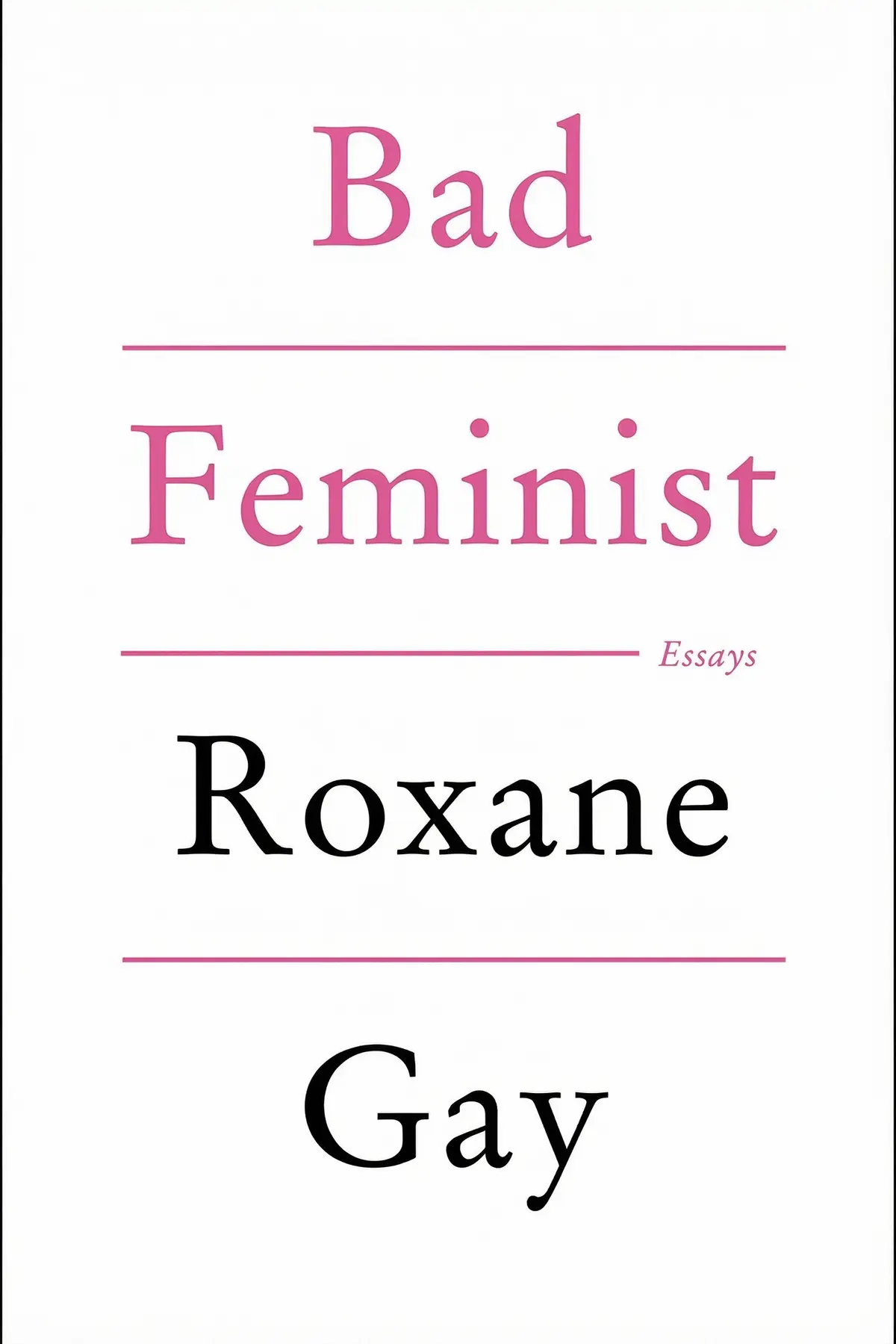
Table of Content
1. Introduction
1 min 04 sec
Plenty of people agree that women and men deserve equal rights, yet hold back from calling themselves feminists because they fear they will fail the test. In Bad Feminist, writer and professor Roxane Gay argues that the test itself is the problem. The best-known version of feminism, she says, has been written mostly by white, straight, cisgender women. Its rules push out women of color, queer and transgender women, and anyone who enjoys the supposedly wrong things.
Gay’s response is to claim the label anyway, flaws included. Then she turns that imperfect lens on popular culture: dating shows, crime dramas, a hit film about Black maids, and the way the news told the stories of a bomber and a murdered teenager. Her case is that an imperfect feminist who keeps looking closely does more good than a silent one. What stays with you is a habit of asking, of any screen or headline, who has been made into a cliché and who is allowed to be fully human.
2. Claim feminism without passing anyone's purity test
2 min 02 sec
Some women share every belief about equality yet feel they have no right to the label. Gay felt the same way for years, and she traces the problem to who wrote the rules in the first place.
3. Spot the cliché behind every reality TV woman
2 min 05 sec
A dating show contestant is handed a new name by the man she is competing for, and it is not a flattering one. Gay explains what that moment reveals, and why audiences keep coming back for more.
4. See how endless rape stories numb the people watching
2 min 12 sec
A long-running crime drama has to make every new episode more shocking than the last. Gay argues that this escalation changes what audiences feel, and that newspapers and politicians push in the same direction.
5. See past the comfort of a feel-good race film
2 min 04 sec
A warm, popular film about Black maids in the American South drew praise from critics and audiences alike. Gay argues that its kindness is the problem, and one framed photograph on a wall shows why.
6. Learn to spot who gets sympathy and who gets suspicion
2 min 10 sec
One young man killed people and landed on a magazine cover as the boy next door. Another was killed carrying a drink and a bag of candy. Gay sets the two stories side by side.
7. Conclusion
1 min 14 sec
Bad Feminist is finally an argument about permission and attention. Gay gives herself permission to be an imperfect feminist, then spends that freedom paying close attention. Thing 1 and Thing 2 on a dating show, a crime drama forced to keep raising the brutality, a maid hanging a white president’s portrait beside her son, a magazine cover that softens a bomber while a teenager holding iced tea becomes a suspect: each one shows culture deciding who gets to be a full person.
Her challenge is to join in now, flaws and all, without waiting for a perfect version of the movement to arrive. She argues that the world changes once more people who fall outside the rulebook talk openly about the ways race, gender identity and sexual orientation intersect.
Start with the screens and headlines already in front of you. When a woman is reduced to a type, when a victim vanishes from her own story, or when one face gets sympathy that another is denied, say so out loud to a friend or a colleague.
You do not need to be a perfect feminist for your voice to count. You only need to use it.
About this book
What is this book about?
Many people believe women and men deserve equal rights but hesitate to call themselves feminists. They worry they will not meet the rules. Roxane Gay understands, because she once avoided the word herself. She argues that the best-known version of feminism, which she calls essential feminism, was written mostly by white, straight, cisgender women. It shuts out women of color, queer and transgender women, and anyone who disagrees with its rules. Gay's answer is to call herself a bad feminist and keep talking anyway. Her essays turn that imperfect but honest view on popular culture. She looks at dating shows that rename women Thing 1 and Thing 2, and at a crime drama that keeps raising the brutality of its rape plots. She examines a hit film that turns Black maids into helpers for the white characters. She sets the magazine cover that softened a bomber beside the coverage of Trayvon Martin. Readers gain permission to join the conversation without being perfect. They also gain a set of sharp questions to ask of any show, film or headline about who gets to be fully human.
Book Information
Who it's for
Feeling outside typical feminism
Women who believe in equality but feel they do not fit the usual picture of a feminist.
Curious what TV teaches
Viewers of reality TV and crime dramas who want to see what those shows teach about women.
Curious about media representation
Readers who want to understand how race and gender shape films and news coverage.
About the Author
Roxane Gay
Roxane Gay writes opinion pieces for The New York Times and has published in McSweeney's and Tin House. She founded Tiny Hardcore Press and has edited for The Rumpus. Her books include the novel An Untamed State and the memoir Hunger, and she wrote World of Wakanda for Marvel. Since 2022 she has held the Gloria Steinem Endowed Chair in Media, Culture and Feminist Studies at Rutgers University. Before that she taught at Eastern Illinois University and Purdue and was a visiting professor at Yale.
Ratings & Reviews
Ratings at a glance
What people think
Listeners find this work to be a necessary read, highlighting its smart writing and evocative subject matter, with one listener mentioning how it addresses serious social issues with humor. These personal essays centered on pop culture receive favorable reviews, and listeners value the book’s connection to feminism, especially its examination of race and gender. The work's pacing draws mixed reactions, as one listener noted that the middle and later chapters drag somewhat.
Top reviews
Fatima
Roxane Gay has a way of making you feel both called out and completely understood at the same time. This collection is a must-read for anyone who feels like they don’t quite fit the 'perfect' feminist mold. I loved how she explores the contradiction of being a smart, independent woman who also loves the color pink and listens to music with questionable lyrics. It's refreshing. Her voice is intelligent but never feels condescending, even when she’s tackling heavy subjects like race and sexual violence. The humor she weaves into her critiques of reality TV and The Hunger Games kept me turning pages even during the more analytical chapters. It's a thought-provoking journey that feels incredibly relevant to today’s culture.
Show moreCaleb
The essay on 'Peculiar Benefits' should be required reading in every high school and university across the country. Gay tackles the concept of privilege with such nuance and lack of vitriol that it actually makes you want to listen and learn. I was struck by how she balances humor with devastatingly serious topics like the 'careless language of sexual violence.' Her writing style is accessible yet deeply intellectual, which is a hard line to walk. Not gonna lie, I cried during some of the more personal essays about her upbringing and the way she navigates the world as a woman of color. This isn't just a book about feminism; it's a book about the complexity of being a person in the 21st century.
Show moreKiattisak
Finally got around to this modern classic and it's clear why it resonated so deeply when it first hit the shelves. Roxane Gay is a fearless writer who isn't afraid to admit she’s human, which is exactly what makes this collection so relatable. She bridges the gap between high-brow academic theory and low-brow pop culture perfectly. Whether she's discussing the lack of Black professors or why she loves Peeta Mellark, her prose is always engaging and thought-provoking. I appreciated how she challenged the idea of 'essential feminism.' It's a relief to read someone who says it's okay to be flawed. This book changed how I view my own media consumption.
Show moreRyan
As someone who spends way too much time on Twitter, I recognized some of the threads Gay pulls on here, but the depth she adds in these essays is remarkable. She takes the 'Bad Feminist' label and turns it into a badge of honor for anyone who is trying their best in a flawed world. To be fair, the middle section about specific movies and TV shows like Orange is the New Black and The Help did drag a little for me because I hadn't seen all of them. However, her larger points about the 'struggle narrative' and how we consume Black pain in media were incredibly sharp. It’s an intelligent, messy, and deeply human book that isn't afraid to be inconsistent.
Show moreSamart
Not what I expected from a book with this title, but in a good way! I thought this would be a dry, political manifesto. Instead, it’s a collection of sharp-witted observations about everything from competitive Scrabble to the morality of Tyler Perry. Gay’s voice is so distinct and authoritative that even when I disagreed with her—like her take on trigger warnings—I still respected where she was coming from. The truth is, the book is at its best when she’s being vulnerable about her own 'failings' as a feminist. It makes the whole movement feel more accessible. My only gripe is that some of the essays end very abruptly, leaving me wanting more analysis and fewer summaries.
Show moreRatthapong
Frankly, I didn't expect to care this much about a critique of The Hunger Games or Chris Brown, but Gay’s perspective as a woman of color is incredibly sharp. She has this way of pointing out the sexism and racism baked into our 'guilty pleasures' without making you feel like a bad person for enjoying them. That’s the whole point, I guess. The writing is snappy and fast-paced, though I agree with other reviewers that the later chapters on respectability politics felt a bit more dense and slower to get through. It’s a very 'terminally online' book, but since I am also terminally online, I found it brilliant. Definitely a must-read for the modern age.
Show moreRafael
After hearing so much about Roxane Gay, I'm glad I finally dove into this collection. The way she handles the topic of 'unlikable' women in fiction was a highlight for me—especially her take on Gone Girl. She has a talent for taking a trivial topic and finding the serious social issue underneath it. While some of the middle chapters felt like they were dragging, the book picks up steam again toward the end when she gets into more personal territory. It’s a great example of how to write cultural criticism that doesn't feel like a lecture. It’s funny, it’s angry, and it’s deeply intelligent. A solid 4-star read for anyone interested in gender and race.
Show moreKevin
Ever wonder how someone can be an academic and still be obsessed with Sweet Valley High? This book provides the answer, though not always in a way that feels cohesive. While the introduction is a five-star masterpiece that perfectly defines the 'bad feminist' ethos, the rest of the book feels a bit like a collection of unstructured blog posts. I enjoyed the personal anecdotes about her family and her time in academia, but I found myself skimming the lengthy critiques of Twilight and 50 Shades of Grey. It’s a bit dated now, and the pacing is definitely uneven. I think your enjoyment will depend heavily on how much you care about 2014-era pop culture. It's okay, just a bit rambling.
Show morePracha
To be fair, I'm probably not the target audience for this since I don't watch reality TV and I've never read Twilight. A huge chunk of this book is dedicated to analyzing pop culture that I just don't care about. However, the essays that deal with race and 'the politics of respectability' were genuinely eye-opening. I think the title is a bit of a misnomer; it's less about feminism and more about Roxane Gay's personal interests. Her writing is good, but the structure is so loose that it felt more like scrolling through a very smart person's Tumblr feed than reading a book. Good for a quick read, but not as life-changing as the reviews suggested.
Show moreClara
Picked this up because of the massive hype, but it felt more like a collection of disjointed blog posts than a curated book of essays. While Gay is clearly intelligent, the lack of a cohesive structure made the experience quite frustrating for me. She jumps from the horror of sexual violence to the minutiae of competitive Scrabble without providing a strong enough tether between these wildly different worlds. Frankly, it felt a bit like a rehash of old Twitter discourse rather than deep, academic analysis. Some of the pop culture sections, like the one on 50 Shades of Grey, felt incredibly dated. I wanted more interrogation of the 'why' and less stream-of-consciousness rambling about her favorite reality TV stars.
Show moreQuestions about this book
What does Roxane Gay mean by bad feminist?
Gay uses bad feminist for anyone who believes in equality between women and men but does not fit the strict rules of the best-known version of feminism. She includes herself. She accepts that she will never please everyone and that some of her tastes and views contradict those rules. Her argument is that an imperfect feminist who speaks up is far better than someone who stays out of the movement altogether.
What is essential feminism in Bad Feminist?
Essential feminism is Gay’s name for a version of the movement shaped mainly by white, cisgender, heterosexual women, the group most often given a public platform. It treats feminism as a club with fixed rules, such as opposing pornography and rejecting all objectification of women. Gay argues that it overlooks the different obstacles faced by Black, queer and transgender women and shuts out anyone who disagrees with its rules.
What does Bad Feminist say about reality TV?
Gay argues that reality shows present inflated clichés of women as if they were real: women desperate to marry, obsessed with weight or too jealous for friendship. In Flavor of Love, Flavor Flav renames contestants, calling two of them Thing 1 and Thing 2. Viewers enjoy feeling superior to people behaving badly, but Gay warns that constant exposure makes these images seem normal and holds women back.
Why does Roxane Gay criticize the film The Help?
Gay argues that The Help relies on two stereotypes. Its Black maids, such as Aibileen and Minny, are strong and wise but use those gifts to help white characters. The film also follows a white savior pattern, in which Black characters wait gratefully for a kind white person to rescue them. She says films like this present thin portrayals of Black people and turn the civil rights struggle into entertainment.
How can I apply the ideas in Bad Feminist?
Gay’s essays suggest a few habits. Claim the feminist label if you share the belief in equality, even if you disagree with some rules. When a show invites you to laugh at a woman, ask what type she has been reduced to. In reports of assault, check whose life the story centers on. Compare how the news treats suspects of different races, and say so when you see a gap.
Readers also enjoyed

Afropean: Notes From Black Europe
Johny Pitts


All About Love: New Visions
bell hooks


A Biography of Loneliness: The History of an Emotion
Fay Bound Alberti

A Force for Good: The Dalai Lama's Vision for Our World
Daniel Goleman


A Room of One’s Own
Virginia Woolf

Abolish Rent: How Tenants Can End the Housing Crisis
Tracy Rosenthal
AUDIO SUMMARY AVAILABLE
Listen to Bad Feminist in 15 minutes
Get the key ideas from Bad Feminist by Roxane Gay, plus 5,000+ more nonfiction titles.
- 5,000+ titles
- Listen as much as you want
- 7-day free trial
- Cancel anytime









