

15 min 31 sec
Available in: English
Asking for It: The Alarming Rise of Rape Culture – and What We Can Do about It
By Kate Harding
Kate Harding shows how blaming victims, excusing attackers and blurring consent let most rapes go unpunished. She also shows how to spot these patterns in courts, policing, news and entertainment, and why consent should rest on yes.
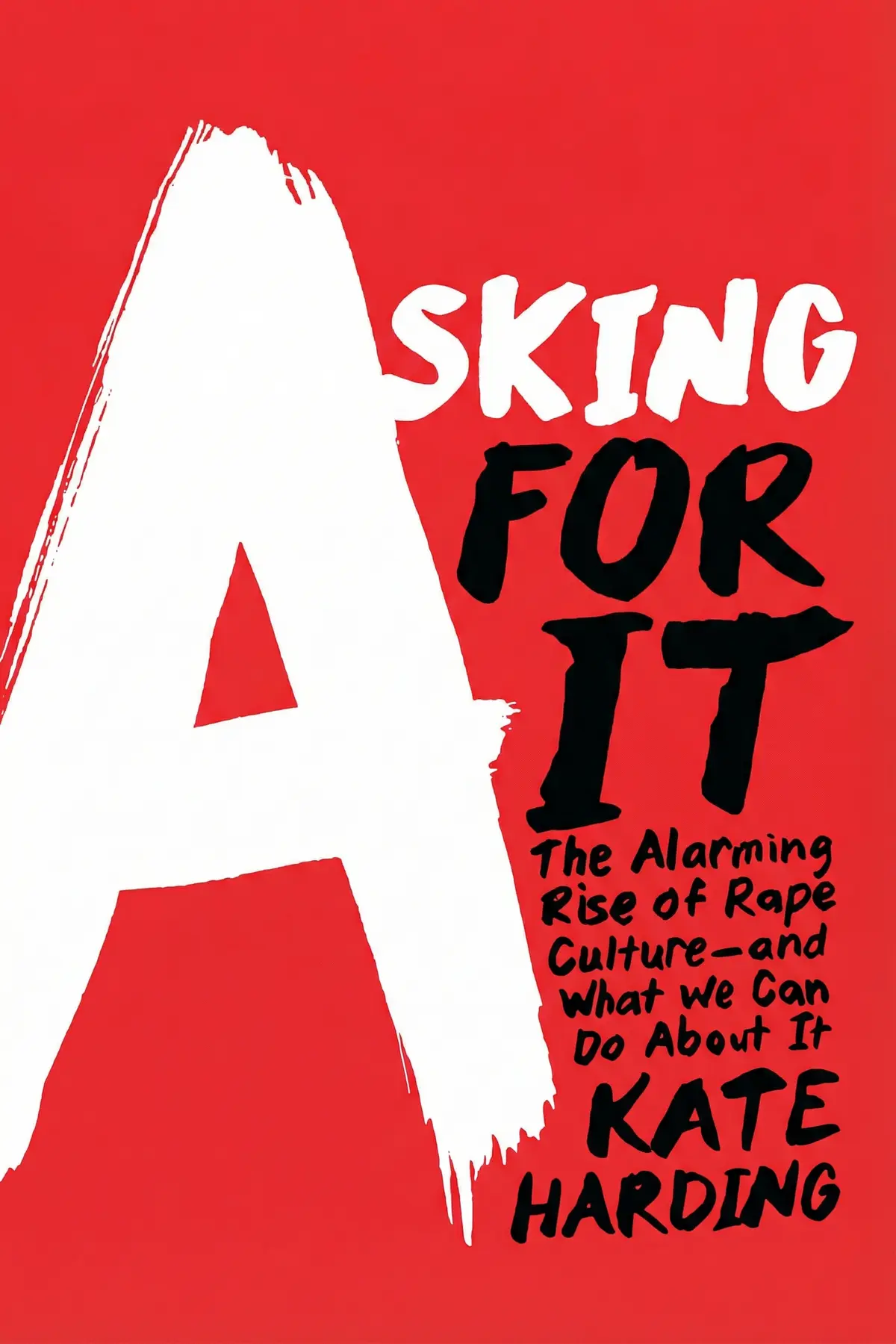
Table of Content
1. Introduction
1 min 03 sec
Fewer than 7 percent of rapes end in a conviction. If murder went unpunished at that rate, governments would fall. In Asking for It, writer and columnist Kate Harding argues that the silence around this number is no accident. Rape persists, she says, because a whole culture blames victims, excuses attackers and leaves consent vague. That culture shows up in courtrooms, police stations and legislatures, and on our screens.
Many people sense that something is wrong with how assaults get discussed but cannot say what it is. Harding gives them the words. Her cases range from Cleveland, Texas, to a bus carrying Colorado boys to a wrestling tournament, and they show the same move again and again: attention slides away from what the attacker did and onto the victim. Once you can see that move, you can refuse to make it. Harding then offers a clearer standard of consent, one you can hold every story up against.
2. Hear the moment blame shifts to the victim
1 min 28 sec
An attorney once described a child in court with a metaphor usually saved for predators. The town’s reaction was even more revealing, and it shows how ordinary people learn to look in the wrong direction.
3. Stop treating caution as the cure for rape
1 min 39 sec
Women are handed a long list of rules for staying safe. One woman followed nearly all of them on her way home, and what people said afterward shows the hidden cost of that advice.
4. Understand how gang rape builds group bonds
1 min 37 sec
The way a class turns on one child looks harmless on the playground. Harding traces the same instinct to its most brutal form, and to the community that chose sides afterward.
5. Understand why so many victims never report
1 min 37 sec
A young woman left a nightclub back room in tears and went straight to the police. The way one sergeant handled her complaint explains why so many others never make that call.
6. See how few rape cases reach a jury
1 min 38 sec
Arrest, charge and trial look like a steady path on television. Follow the real figures through each stage, and the share of rapists who ever face a jury shrinks to a startling sliver.
7. Pregnancy never proves that sex was wanted
1 min 50 sec
A former doctor once put a precise number on how rarely rape could lead to pregnancy. Specialists’ figures tell a very different story, and the logic behind his claim is worse than the mistake.
8. Spot the scenes that make assault look normal
1 min 48 sec
An actress was stunned when fans made air quotes around a word describing her character’s ordeal. Popular stories shape what audiences think they saw, sometimes even after a clear no on screen.
9. Make consent an ongoing, spoken yes
1 min 46 sec
Asking permission at every step sounds awkward to many people. A 2014 law and an unlikely sitcom scene suggest it may be the plainest protection there is, and what it looks like in practice.
10. Conclusion
1 min 05 sec
Harding’s case is that rape is kept going by far more than a few monstrous men. It leans on ordinary things: an attorney’s metaphor, a police safety tip, a sergeant’s shrug, a prosecutor’s caution, viewers making air quotes about a TV scene. Each one moves weight from the attacker to the victim. Together they explain how a crime can end in conviction less than 7 percent of the time with so little public anger. Everyone helps build this culture, which means everyone can help change it.
That change starts with listening. The next time a rape is in the news, notice whether people suggest the victim invited it or made it up. Notice whether they worry more about his future than hers, and whether he is painted as a decent man led astray by a temptress. Then say out loud what you hear. Hold every case, and every scene you watch, to Harding’s single test of whether both people wanted it. When that question comes first, the excuses have nothing left to stand on.
About this book
What is this book about?
Fewer than 7 percent of rapes end in a conviction. Kate Harding argues that a failure rate like that is not the work of a few violent men alone. It is held up by a culture that treats victims as suspects and attackers as people to be pitied, and that leaves consent vague. Harding follows this culture through real cases. She starts with a Texas courtroom where an 11-year-old girl was called a spider and moves on to a Colorado team bus and a nightclub back room. She shows police officers who mock victims, and prosecutors who drop cases because they expect juries to side with the accused. She covers anti-abortion claims that pregnancy proves a rape was not real, and popular films and series that turn assault into romance. Readers get a sharper ear for how assaults are talked about. They learn the numbers behind the missing trials and a simple standard that cuts through the excuses: sex is consensual only when both people say yes, and keep saying it.
Book Information
Who it's for
Wanting words to object
Readers who sense that something is wrong in how assaults are discussed and want the words to challenge it.
Guiding youth and teams
Parents, teachers, coaches and team leads responsible for young people and group culture.
Wanting clarity on consent
Anyone who wants a clear, practical standard of consent for relationships and conversations.
About the Author
Kate Harding
Kate Harding is a writer and columnist whose work has covered violence against women and fat acceptance. From 2007 to 2010 she ran and edited the blog Shapely Prose. She co-wrote Lessons from the Fat-o-Sphere with Marianne Kirby and co-edited the anthology Nasty Women with Samhita Mukhopadhyay, with whom she also hosts the podcast Feminasty. Her articles have appeared in Salon, Jezebel, The Guardian and the L.A. Times. She studied at the University of Toronto and Vermont College of Fine Arts.
Ratings & Reviews
Ratings at a glance

What people think
Listeners find this work informative and thoroughly documented, with one listener highlighting the extensive inclusion of statistics. They characterize it as an eye-opening resource that provides a great introduction to rape culture, and one listener mentions it's required reading for political science students. The writing is clear, compelling, and articulate, with one listener noting the author’s ability to approach the topic with wit. Listeners find the material deeply provocative, with one listener describing it as occasionally enraging.
Top reviews
Julian
Kate Harding has a way of making the most infuriating data points feel remarkably clear and urgent. This isn't just a collection of opinions; it is an incredibly well-researched deep dive into how our society handles—or fails to handle—sexual violence. I was particularly struck by the chapter on 'passive voice' in news reporting. It’s wild how we say 'a woman was raped' as if it’s something that just happened to her from the sky, like rain, rather than an act committed by another person. Harding’s wit and biting sarcasm make the heavy subject matter digestible, though you’ll still find yourself wanting to scream at the politicians quoted throughout. It really provides a necessary framework for understanding why we are so quick to doubt victims and so slow to punish perpetrators. This should be required reading for everyone, honestly.
Show moreCamila
I picked this up for a political science course, but it ended up being one of the most transformative books I’ve ever finished. The way Harding deconstructs the 'legitimate rape' comments from politicians is masterful. It’s terrifying to see those quotes lined up next to each other; it really highlights how pervasive this problem is at every level of government. The book is dense with statistics, yet it never feels like a dry textbook because the writing is so engaging and personal. She really tackles the 'gray areas' of consent that society loves to ignore, especially when it comes to relationship or 'date' rape. It makes you look at every news story and every 'rape joke' with a completely different lens. I finished it feeling angry, but also much better equipped to call out the bullshit when I see it in my daily life.
Show moreRosa
Harding’s biting sarcasm is the only thing that made getting through these horrific statistics bearable. She has this way of pointing out the sheer absurdity of victim-blaming that is both funny and deeply tragic. The examples she uses, from the star quarterback being protected by his town to the 'fly and the spider' defense used in court, are absolutely sickening. It really highlights how we treat rape as something that just 'happens' without a rapist actually being involved. I found her discussion on the 'passive voice' particularly brilliant. If nobody is actually doing the raping, how are we supposed to fix the safety issues? It’s a bold, unapologetic look at the myths we tell ourselves to keep the status quo comfortable. Every young person should read this before heading off to college.
Show moreLeila
The timing of this read felt eerie, given how often we still hear public figures spout absolute nonsense about the 'biological' nature of male desire. Harding completely dismantles the idea that men are just 'irrational beasts' who can't control themselves. Frankly, it's one of the few books that actually defends men's capacity for decency while simultaneously holding them accountable for the culture they participate in. The breakdown of high-profile cases is handled with a lot of care, focusing more on the societal reaction than the graphic details. It's a very well-written, clear-eyed look at a systemic failure. I found myself highlighting almost every other page. If you want to understand why 'no' doesn't always seem to mean 'no' in the eyes of the law, you need to read this.
Show moreSirinat
To be fair, I expected this to be a dense, academic slog, but it's surprisingly accessible despite the heavy subject. Harding manages to handle the most enraging topics with a level of wit that keeps you turning the pages. The way she breaks down the 'asking for it' myths—from the clothes a woman wears to the amount she had to drink—is just devastating. It really exposes how much work our society does to protect the perpetrator's reputation over the victim's safety. I was especially moved by the stories of people who didn't even realize they had been raped until years later because they didn't fit the 'stranger in a dark alley' stereotype. This book is a powerful tool for anyone trying to navigate the complexities of modern sexual politics. Truly a must-read.
Show moreWanphen
Wow, this book absolutely shook my sense of self-awareness. There is a specific section about switching gender pronouns in stories of sexual assault that completely changed how I perceive 'consent.' I realized that I had been unknowingly holding men and women to entirely different standards of behavior, which is a hard pill to swallow when you think of yourself as a progressive person. The book is enraging and enlightening in equal measure. My only slight complaint is that some of the references feel a bit dated since it was published in 2015, but the core arguments about rape culture are, unfortunately, more relevant than ever. Harding’s voice is sharp, and she doesn't pull any punches when calling out the 'boys will be boys' mentality that still plagues our institutions. It’s a wake-up call I didn't know I needed.
Show moreMason
Ever wonder why we're so obsessed with 'personal responsibility' only when the victim is a woman? Harding takes a blowtorch to that double standard. The most chilling part for me was the section on how we treat male victims of assault. Society’s tendency to just brush those experiences aside because 'that doesn't happen' is a huge part of the problem she describes. Not gonna lie, this was a difficult read that made me feel quite hopeless at times. The chapters on how the media and pop culture fetishize violence are especially tough to get through. However, I appreciated that she included a final chapter on how to actually combat these patterns. It’s not just a list of problems; it’s a call to be a better bystander. A bit repetitive in the middle, but the message is too important to ignore.
Show moreMethinee
Look, I thought I was an enlightened person until I read the chapter on consent and realized how many 'gray areas' I had actually internalized. This book is a gut-punch. It forces you to look at your own assumptions—like how we often excuse predatory behavior if the guy is popular or 'a good kid.' The research is extensive, and she covers everything from street harassment to the way the legal system handles (or mishandles) evidence. I did feel that the tone was a bit too snarky at points where a more serious approach might have worked better, but I can understand why the author is so frustrated. It's an exhausting topic. Despite that, the clarity of her arguments is undeniable. It’s a solid introduction to rape culture that manages to be both informative and incredibly provocative.
Show moreLily
Finally got around to this after seeing it recommended on every feminist book list for the last decade. It lives up to the hype as an essential primer. Harding is excellent at connecting the dots between small, everyday interactions—like rape jokes or street harassment—and the larger culture of violence. The book is very statistics-heavy, which I appreciated because it makes her arguments much harder to dismiss. I think some readers might find the language a bit 'salty,' but given the subject matter, a bit of anger is entirely appropriate. It’s not a fun read by any means, but it is an enlightening one. It definitely makes you more aware of the fragility of our understanding of consent and how easily we let people off the hook for 'misunderstandings.'
Show moreSirirat
While I recognize the importance of the subject matter, the execution felt a bit like a long-winded high school essay to me. The author relies very heavily on quoting other people's work and blog posts, which made it feel less like an original analysis and more like a compilation of things I’ve already read on the internet. I was expecting something more innovative or a fresh approach to the conversation around modern feminism, but it felt like a rehashing of well-known cases like Bill Cosby and the Missoula rapes. Truth is, if you’ve spent any time in feminist circles online, you won’t find much new information here. It’s a good primer for someone totally new to the concept of rape culture, but for me, it lacked the depth and personal insight I was hoping for. It just didn't quite land.
Show moreQuestions about this book
What is the main idea of Asking for It by Kate Harding?
Harding argues that rape is sustained by a culture, not only by individual attackers. That culture blames victims, excuses perpetrators and leaves consent vague. She traces it through real cases in courts, police work, prosecution, anti-abortion politics and entertainment, and shows why fewer than 7 percent of rapes end in a conviction. Ending rape, in her view, means ending the culture that excuses it.
Why do so few rape cases go to trial, according to Asking for It?
Harding cites figures showing that only 12 percent of offenders are arrested and that prosecutors dismiss two-thirds of the cases they receive, often against the victim’s wishes. Only about 6 percent of rapists reach trial. Prosecutors expect juries to blame victims, so they wait for rare evidence like video or serious injuries. A 2012 Vera Institute for Justice study linked this to the heavy burden of proof.
What does yes means yes mean in Asking for It?
Harding describes a shift from the older slogan no means no to a standard where sex is consensual only when both partners agree. A California law from September 2014 rewards colleges that teach it. Under that law, each partner must confirm the other’s affirmative consent, and consent can be withdrawn at any time. A scene from The Mindy Project shows how this works between two partners.
How can I apply the ideas in Asking for It?
Start by listening to how people talk about rape cases. Notice whether they suggest the victim invited it or made it up, or seem more worried about the attacker’s future than hers. Bring the conversation back to the person who committed the crime. Believe people who tell you they were assaulted. Make checking in on consent an ordinary part of your relationships and of what you teach young people.
Who should read Asking for It?
It suits readers who want to understand why sexual violence so often goes unpunished and who want to push back on victim blaming. Parents, teachers, coaches and team leads will find its chapters on group behavior and consent especially useful. Anyone who watches films and series with a critical eye will recognize how scenes from Mad Men and Tyler Perry’s Temptation can blur what an assault looks like.
Readers also enjoyed

A Biography of Loneliness: The History of an Emotion
Fay Bound Alberti

A Force for Good: The Dalai Lama's Vision for Our World
Daniel Goleman


A Room of One’s Own
Virginia Woolf

Abolish Rent: How Tenants Can End the Housing Crisis
Tracy Rosenthal

Abortion: Our Bodies, Their Lies, and the Truths We Use to
Jessica Valenti



Afropean: Notes From Black Europe
Johny Pitts
AUDIO SUMMARY AVAILABLE
Listen to Asking for It in 15 minutes
Get the key ideas from Asking for It by Kate Harding, plus 5,000+ more nonfiction titles.
- 5,000+ titles
- Listen as much as you want
- 7-day free trial
- Cancel anytime









