

Aflame: Learning from Silence
Pico Iyer
 English
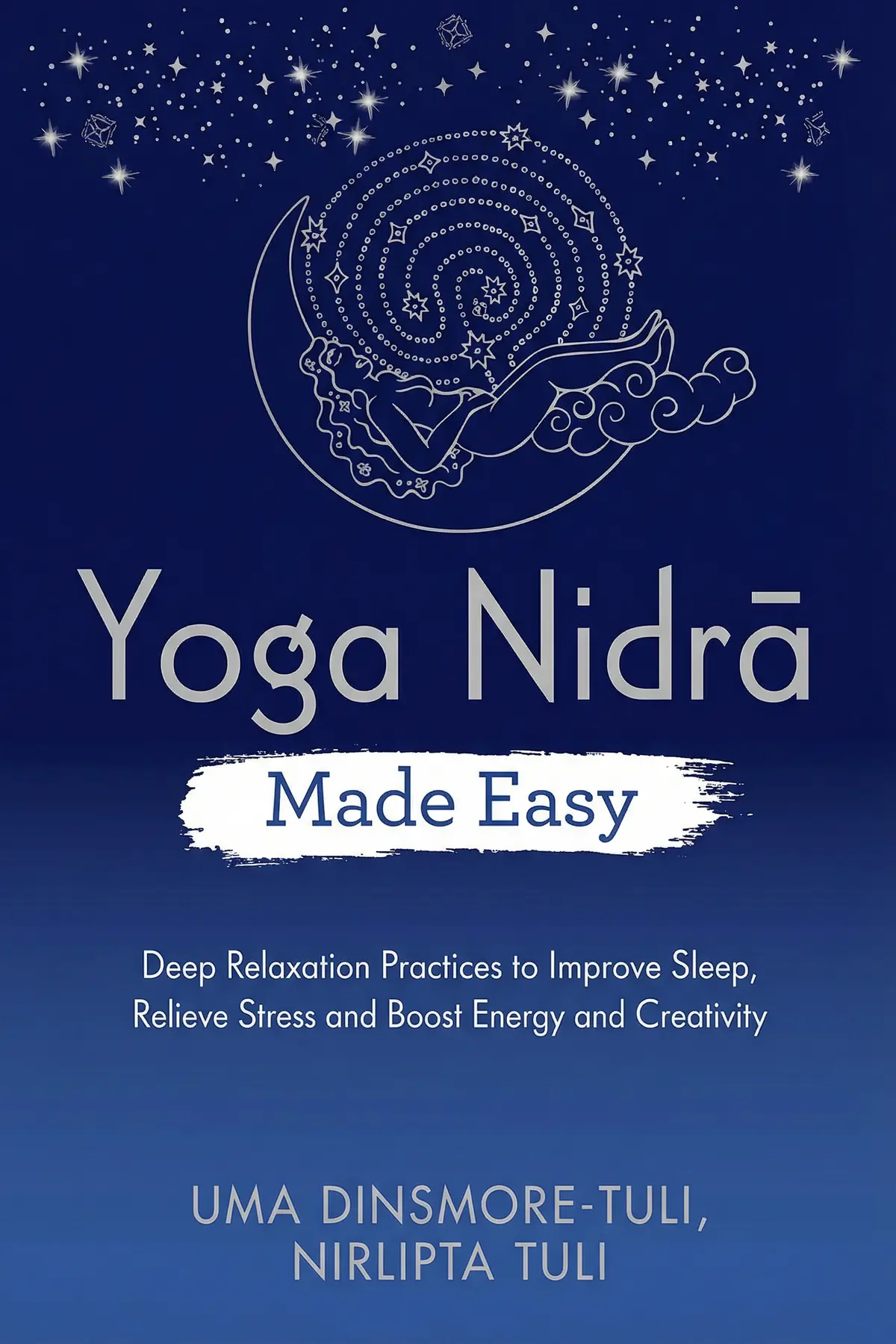
A step-by-step guide to yoga nidra, a lying-down meditation at the edge of sleep that eases stress, improves sleep or restores energy, and suits people who find seated meditation frustrating.
57 sec
If your mind starts racing the moment you finally stop, and sitting meditation has only left you more frustrated, there is a gentler way into rest. In Yoga Nidra Made Easy, yoga therapists Uma Dinsmore-Tuli and Nirlipta Tuli describe an old yogic practice done lying flat, where you stay awake while drifting at the very edge of sleep. They call it a reset for body, mind, emotions and energy, and they say it adapts to the person: some sink into deep sleep, others surface clearer and livelier, and most get a mix of both.
The idea running through the whole practice is simple. Yoga nidra is a cycle of distinct steps, and each one asks a little less of the busy, thinking mind, so you are carried into rest with no need to try hard. Follow those steps here and you will be able to run a full session on your own, from the first pillow under your knees to the sentence that ends it.
1 min 39 sec
Some people who try sitting still in seated meditation find the process frustrating or difficult. This practice starts from a different posture, lying down, and it aims to give mind and body whatever they need in the moment, whether that is sleep or energy.
1 min 54 sec
Where attention starts and how it travels through the body differs among modern methods, though ancient texts describe one original route. The oldest route is also simple to follow and remember, and it bends to fit five minutes or 50.
1 min 35 sec
Heavy, then light. Hot, then cold. Quick switches between contrasts sound like a party game, yet the authors place them near the center of the practice for a reason that concerns how logic gets stuck.
1 min 33 sec
Guided visualizations leave many listeners straining for a picture that never arrives, and some scripts carry a hidden risk. The authors propose a gentler rule for this stage that removes the pressure entirely.
1 min 29 sec
An intention set in the first minutes reappears near the end, when the mind is closest to sleep. The authors borrow an idea from clinical hypnosis to explain why that second visit matters most.
1 min 34 sec
Taking time over the transition back, rather than rushing it, prevents any sense of abruptness after deep rest. The way back out has its own steps, including one that involves chocolate and one short sentence spoken out loud.
1 min 04 sec
The claim underneath Yoga Nidra Made Easy is that rest has an architecture. It has a way in, a deep middle and a way out, and most of us only know the middle, as collapsing on the sofa. Dinsmore-Tuli and Tuli treat the return from the practice with as much care as the descent, and they credit its adaptogenic effect with leaving most people both rested and alert. The adaptogenic promise is that the practice offers each person whatever their mind and body need in that moment.
Starting is modest. On a free evening, lie in the corpse pose with a pillow under your knees and a blanket within reach, choose one small intention, and walk your attention slowly from crown to feet. If pictures refuse to come, rest in sound or touch and count that as success. When you rise, take your time, eat something sweet, and say the closing sentence out loud.
The revolving door turns both ways, and learning to pass through it calmly is the whole skill.
Many people know they need real rest but cannot find it. The mind races, the body stays tight, and seated meditation feels like one more task they are failing at. Uma Dinsmore-Tuli and Nirlipta Tuli, two yoga therapists who have taught for decades, offer an alternative: yoga nidra, an ancient practice done lying flat, in which you stay awake while floating close to sleep. The authors walk through the full cycle of a session. You settle into the corpse pose with pillows and blankets, plant a simple intention, move your attention through the body from head to feet, shift between opposite sensations, open to imagination without forcing images, return to the intention, and then come back slowly through breath, touch and taste. They describe the practice as adaptogenic: it gives each person what they need on that day, whether deep sleep, fresh energy or both. Readers get a session they can run alone, along with permission to adapt it, skip what does not suit them and treat rest as a skill worth learning.
Busy professionals whose minds keep racing at bedtime and who want a reliable way to switch off.
People who tried seated or mantra meditation and gave up out of frustration.
Anyone recovering from stress or fatigue who needs rest that also restores energy and clear thinking.
Uma Dinsmore-Tuli and Nirlipta Tuli are certified yoga therapists and co-founders of the Yoga Nidra Network. Nirlipta has taught yoga since 1989, trained hundreds of teachers in Total Yoga Nidra, and holds a master's degree in Indian religions and a diploma in clinical hypnotherapy; his recording for sleep has been downloaded hundreds of thousands of times. Uma has taught since 1994, specializes in women's health, created approaches including Total Yoga Nidra, Wild Nidra and Yoni Nidra, and wrote books such as Yoni Shakti and Nidra Shakti.
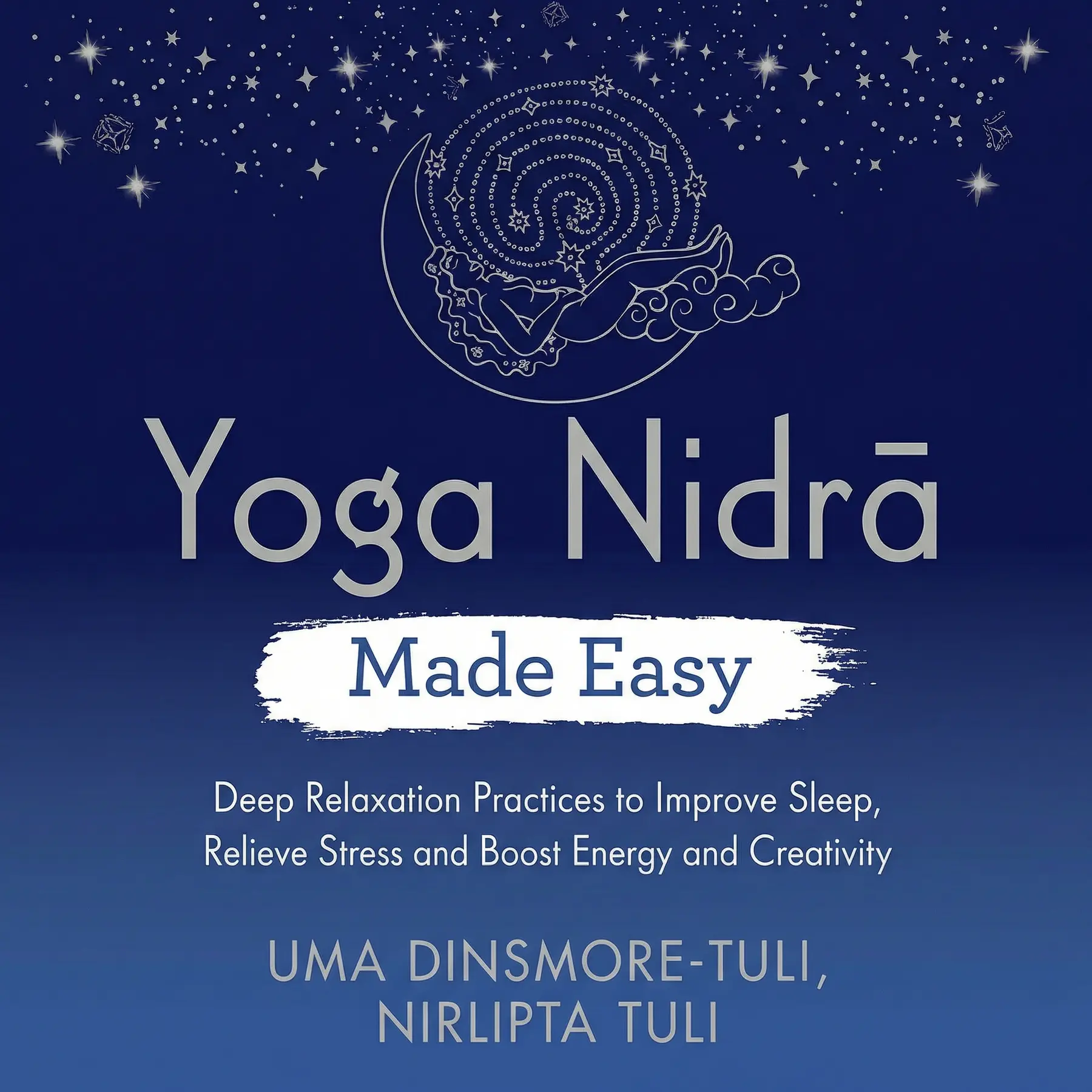
Listeners view this guide as an approachable and clear manual that successfully simplifies a complicated subject into small, digestible activities. They value how hands-on the material is, calling it a "must practice" resource that serves both newcomers and veteran instructors alike. Furthermore, listeners appreciate the utility of these methods, with one listener reporting that the soothing impact of the sessions even encouraged their cat to sit on them for the first time in five years. They also suggest that the content warrants multiple reviews and advise visiting the authors’ website to further improve the overall educational experience.
This book is a total game-changer for anyone struggling with burnout or chronic stress in our frantic modern world. Uma and Nirlipta have managed to take an incredibly deep, ancient spiritual tradition and translate it into something that feels immediate and practical. It is more than just a book; it is a call to action—or rather, a call to rest. I found the 'bite-sized' exercises particularly helpful because I don't always have an hour to dedicate to a full practice. Truth is, the authors describe Yoga Nidra as a 'lived practice,' and that really resonated with me as I navigated my daily anxieties. I’ve started viewing my sleep and rest as sacred rites rather than just physiological necessities. If you are looking for a balm for your soul, this is it. Don't just read the words; you must commit to the practice to see the real transformation.
Show moreI’ve never been one for traditional sitting meditation because my mind just races constantly, but this approach feels entirely different. Yoga Nidra Made Easy lives up to its title by stripping away the intimidating jargon and focusing on the physical experience of deep relaxation. Not gonna lie, I was shocked when my cat, who usually avoids me when I'm stressed, came and curled up on my chest during my first session. She stayed there the whole time! It’s like she could sense the shift in my energy from frantic to calm. The book treats the reader with such reverence and gratitude, making you feel supported throughout the journey. It’s an absolute must-read that I keep on my nightstand now for quick reference. Every chapter feels like a gift specifically wrapped for the tired and the weary.
Show moreWow, the depth of wisdom shared by Uma and Nirlipta is truly staggering given how easy the book is to digest. They’ve managed to create something that feels like a warm hug and a masterclass all at once. I started listening to the book during a hectic travel schedule and found that even one chapter a day helped me stay grounded. The techniques are so useful that I found myself practicing in airport lounges and hotel rooms. It’s a reminder that Yoga Nidra is something we can take with us wherever we go. The authors' website is also a treasure trove that complements the book perfectly. I’ve gone through the material twice now and I still find new nuggets of insight every time I open it. This is truly a balm for our times and an essential addition to any wellness library.
Show moreEver wonder why you feel exhausted even after a full night of sleep? This book explains exactly why our brains need more than just unconsciousness; we need the conscious rest that Yoga Nidra provides. Uma and Nirlipta are the perfect guides for this journey, offering bite-sized experiences that fit into even the most crowded schedule. I love how the book encourages us to be observers of our own lives. It’s a beautifully written, intellectually stimulating, and physically rewarding piece of work. The techniques are so effective that I've noticed a massive shift in my overall temperament. Plus, the advice to check out their website was a total pro-tip that enhanced my learning tenfold. I have absolute gratitude for this gift. It’s a must-read, a must-practice, and something I will be gifting to all my friends this year.
Show moreFinally got around to reading this guide after seeing it recommended in a dozen different yoga forums. To be fair, I was skeptical that a book could effectively teach something that is usually so experiential, but the structure here is brilliant. The way they break down complex concepts into accessible steps is impressive. I particularly appreciated the invitation to visit the authors' website for additional resources, as the audio components really help solidify the written lessons. My only minor gripe is that some of the sections felt slightly repetitive, though I suppose that helps reinforce the learning process for beginners. It’s a solid resource for both newcomers and seasoned teachers looking for fresh ways to explain the 'goddess of rest' to their students. I’ve been practicing for three weeks now and the mental clarity I'm gaining is undeniable.
Show moreAs someone who has taught Hatha for a decade, I was looking for a way to deepen the rest portion of my classes for my students. This book provided exactly the framework I needed. It breaks down the intellectual complexity of the state between waking and sleeping into something I can actually explain to a room full of beginners. The authors share their rich wisdom without being condescending, which is a rare balance to strike in yoga literature. Personally, I found the section on 'rites of rest' to be the most profound part of the entire text. It’s a reminder that we are allowed to be observers of our own lives rather than just participants in the rat race. I’ve already started recommending this to my teacher-trainees as a core text for their restorative modules. It's a very good and easy read.
Show moreAfter hearing so much hype about this 'must read' resource, I finally dove in and I'm mostly impressed by the accessibility. The authors have a way of taking a complex topic and making it feel like something you’ve known your whole life. Frankly, I think the best part is how it develops with each practice; you don't just learn it once and move on. It is a relationship you build with your own body and mind. My only criticism is that the physical layout of some pages felt a bit cluttered with sidebars, which distracted me from the flow of the text occasionally. Still, the content is top-notch. It takes us where we are at and guides us gently toward a state of profound stillness. It is so easy to use and very practical for anyone with a busy lifestyle.
Show moreGotta say, I was surprised by how much I enjoyed the tone of this book. It manages to be reverent without being exclusionary, which is a tough line to walk. The authors invite us into a relationship with rest that feels revolutionary in a culture that prizes productivity above all else. I’ve been using the techniques to manage my social anxiety, and the results have been quite life-changing. By becoming an observer of my attachments, as the book suggests, I can navigate stressful situations with much more grace. The practice is physically restorative and mentally clarifying. I did find that I had to go through several chapters more than once to really 'get' it, but that speaks to the depth of the material rather than any lack of clarity. It’s a wonderful resource for anyone who feels perpetually exhausted.
Show moreWhile the techniques are definitely effective and the authors clearly know their subject inside out, the writing style felt a bit too flowery for my personal taste. I was looking for a more clinical or straightforward manual, whereas this leans heavily into the 'Goddess of Yoga Nidra' metaphor and emotional storytelling. In my experience, the 'bite-sized' experiences are great for a quick fix, but I found the middle chapters a bit slow to get through. Look, if you enjoy a more spiritual, reverent tone, you will absolutely love this book. It just wasn't exactly what I expected based on the 'Made Easy' title, which usually implies a more utilitarian approach. However, I can't deny that the actual practice works. After following the scripts, I’ve noticed a significant improvement in my sleep quality and my ability to observe my attachments without getting overwhelmed by them.
Show moreNot what I expected from a book titled 'Made Easy' because it still felt quite dense in certain sections. I found it difficult to stay engaged with the longer philosophical passages when I just wanted to get to the actual exercises. To be honest, I think I would have preferred a much shorter pamphlet or just an audio app. It felt like a lot of fluff surrounding a few very simple techniques that could have been explained in twenty pages. If you are a scholar of yoga, you might appreciate the 'rich wisdom,' but for a casual reader looking for a quick sleep aid, it’s a bit much. I tried to visit the website as suggested, but I just felt overwhelmed by the amount of information thrown at me. It's not a bad book, but it certainly wasn't the 'easy' experience I was promised by the cover.
Show moreYoga nidra is among the oldest yoga practices, and its English meaning is the yoga of sleep, or a kind of yogic slumber. You lie down in the corpse pose and stay awake while drifting toward the edge of sleep, guided through calmer and calmer states of awareness. Uma Dinsmore-Tuli and Nirlipta Tuli describe it as adaptogenic: it gives each person what they need, whether deep sleep, more energy and clarity, or both.
Lie down somewhere quiet with a pillow under your neck and another under your knees, plus a blanket for warmth. Set a simple intention, then move your attention through the body from the crown of the head to the feet. Shift between opposite sensations, invite imagination without forcing it, return to your intention, then come back slowly through breath, contact with the floor, stretching and a spoken closing sentence. Sessions usually last 30 to 60 minutes.
The authors say that is no problem. Yoga nidra rests on noticing physical and energetic sensation, so seeing pictures is never required. You can stay with sound, scent or touch, or skip the imagination stage. They also warn that images imposed by a script can trigger past trauma, so in self-guided practice you should welcome only what arises on its own.
It suits people who want deep rest but struggle with racing thoughts, tension or poor sleep, and especially those who found seated meditation frustrating. Because the practice is done lying down, with sessions generally running 30 to 60 minutes, almost anyone can do it on their own, including people who have found seated meditation frustrating.
Pico Iyer

Eckhart Tolle

Daniel Siegel
Ram Dass
AUDIO SUMMARY AVAILABLE
Get the key ideas from Yoga Nidra Made Easy by Uma Dinsmore-Tuli, plus 5,000+ more nonfiction titles.









