

16 min 02 sec
Available in: English
Why We Can’t Sleep: Women’s New Midlife Crisis
By Ada Calhoun
Ada Calhoun explains why so many Generation X women feel anxious, angry and sleepless in midlife. She traces the strain to debt, workplace bias, heavy care duties and perimenopause, and shows how honesty and support ease it.
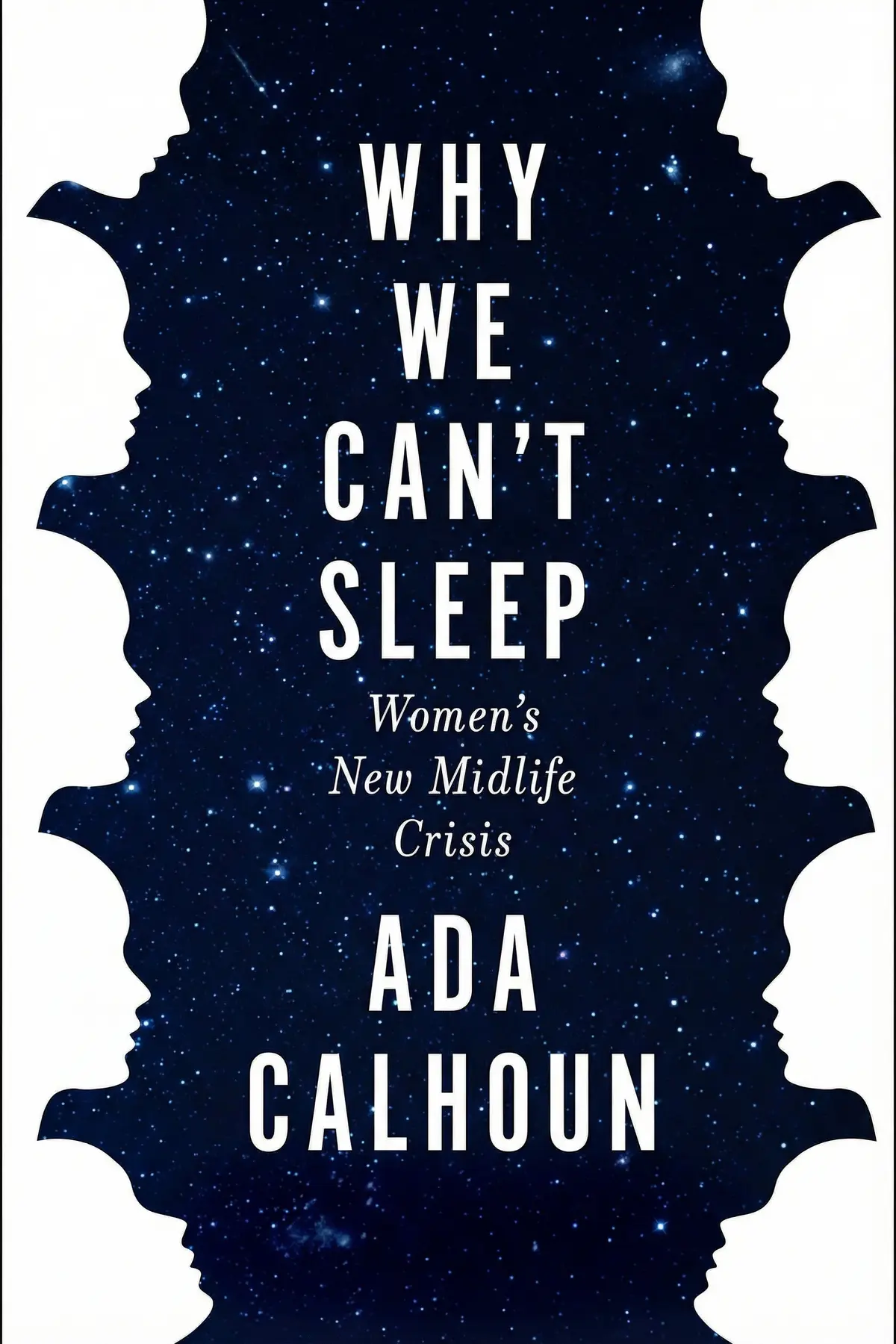
Table of Content
1. Introduction
1 min 01 sec
If you are in midlife, lying awake at night and wondering why a life that looks fine from outside feels like failure, Ada Calhoun has an answer: the problem may not be you. In Why We Can’t Sleep, Calhoun argues that women of Generation X, the people born from 1965 through 1980, are living through their own midlife crisis. It rarely involves a yellow Ferrari or an affair, so it goes unseen.
These women were promised a great career, a thriving family and a full social life. Then recessions, debt, workplace bias, a heavier load of care and a poorly understood hormonal change collided with that promise. Calhoun’s case is that the anxiety and rage many of them feel is a reasonable response to a hard situation, and that naming it is where relief begins. What follows is a map of where the pressure really comes from, and a few modest ways to carry it until it lifts.
2. Stop blaming yourself for an impossible promise
1 min 37 sec
A cheerful perfume commercial from the 1980s set a standard that a whole generation of girls absorbed. Calhoun shows how a promise of freedom slowly hardened into something far heavier to carry.
3. See the double bias stalling midcareer women
1 min 43 sec
Women of this generation were told that asking firmly for pay and promotion would carry them to the top. The figures Calhoun gathers suggest a very different force is shaping their careers after forty.
4. Understand the debt behind Gen X money struggles
1 min 48 sec
Their parents could often live on one salary and own a home. This generation did many of the same sensible things and ended up deep in debt. The dates tell the story.
5. Make the invisible work at home visible
1 min 51 sec
Mothers today spend far more hours at paid work than mothers did in 1965, yet they also spend more time on childcare. And the hardest part of the load never appears in any survey.
6. Understand the squeeze of the sandwich years
1 min 35 sec
Just as the youngest child starts school and a little free time appears, a parent falls ill. Calhoun explains why this collision is so common now, and why so little help arrives.
7. Separate the choices you made from limits you met
1 min 38 sec
Not having children can be a deliberate, happy choice or a painful loss, and the two get confused. Calhoun looks at what stood between many women and the family they planned.
8. Recognize perimenopause years before menopause arrives
1 min 56 sec
Sleepless nights, sudden rage and anxiety in your forties can have a physical cause that many women never hear named. Even many doctors, Calhoun found, were never taught much about it.
9. Find relief through honesty, support and patience
1 min 42 sec
Admitting that the expectations were impossible sounds like giving up. Calhoun argues it does the opposite, and pairs it with two practical moves that most self-reliant women find surprisingly hard to make.
10. Conclusion
1 min 11 sec
Calhoun’s book works like a second opinion on a diagnosis many women have already given themselves. The verdict they reached alone was personal failure: too little drive, too little organization, too little grace. Her evidence points elsewhere. A generation raised on the Enjoli woman entered work during recessions, took on debt for college, homes and medical bills, met bias for being women and then for being older, and carried more care for children and parents with less help. Then came a hormonal shift that many doctors were never trained to treat. Lying awake under all that is no mystery.
That reframing is the useful part, because it turns shame into something you can talk about. Tell one friend honestly how hard this stretch has been, and notice how often she says the same. Hand off one task, an evening of babysitting or the accounts. If your forties brought sleepless nights and sudden anger, ask a doctor about perimenopause by name. And when the squeeze feels permanent, keep Calhoun’s plainest comfort in mind: midlife is a phase, and phases end.
About this book
What is this book about?
Everyone recognizes the male midlife crisis: the sports car, the new hobby, the younger partner. Ada Calhoun argues that women have their own version, and that it is especially sharp for Generation X, born between 1965 and 1980. It is also easy to miss, because these women rarely blow up their marriages. Instead they lie awake, anxious and furious, convinced they have failed. Calhoun's angle is that the failure is mostly structural. Her generation was raised on the promise that women could have it all. Then came successive recessions and heavy debt, gender and age bias at work, far more intensive parenting, aging parents who needed care and little outside help. Some women also could not find a partner or conceive in time. And perimenopause arrived years before menopause with almost no medical guidance. Readers get a clear account of where the pressure comes from, with pay figures, debt totals, childcare hours and medical surveys. They also get a modest, humane way forward: drop the impossible expectations, ask for help, build regular contact with other women, and remember that this phase of life ends.
Book Information
Who it's for
Women in midlife
Women in their forties and fifties who feel anxious, angry or sleepless and quietly blame themselves for it.
Working mothers juggling care
Mothers caring for young children and aging parents while holding down a job.
Curious about midlife pressures
Partners, friends and managers who want to understand the pressures on midlife women.
About the Author
Ada Calhoun
Ada Calhoun is an American writer born in 1976, which places her in the generation she writes about. She has worked as a critic, essayist, reporter, co-author and ghostwriter, contributes often to The New York Times Book Review and teaches journalism and creative writing. Her other books include St. Marks Is Dead, a history of a Manhattan street, the essay collection Wedding Toasts I’ll Never Give, the memoir Also a Poet and the novel Crush.
Ratings & Reviews
Ratings at a glance

What people think
Listeners find this book to be a fantastic experience, particularly for Gen X women, and appreciate its humorous, insightful, and well-crafted delivery. The work is also thoroughly documented; one listener points out the use of statistics to support its arguments, and listeners generally find it relatable, with one mentioning the moving personal stories. However, the subject matter draws varied reactions, as several listeners find the narrative can be depressing at times.
Top reviews
Wichai
Finally, a book that acknowledges the weird, specific pressure of being a Gen X woman without making it feel like a personal failure. Ada Calhoun manages to weave together individual stories and hard data to show that our collective midlife crisis isn't just in our heads. I spent most of the night nodding along, finally feeling seen in a world that usually ignores our middle generation. It is sharp and deeply comforting to know that the crushing debt and career stagnation aren't just my mistakes. The writing is incredibly accessible, moving quickly from heavy topics like perimenopause to the toxic 'having it all' myth. I’ve already recommended this to three friends who also can’t stop doom-scrolling at 2:00 AM. It is a relief to stop blaming myself for a second.
Show moreLiam
If you've ever found yourself staring at the ceiling at 3 AM wondering where your life went, this is the book for you. Ada Calhoun has written something that feels like a long, honest conversation with a best friend who finally gets it. The way she breaks down the cultural expectations placed on Gen X is both hilarious and heartbreaking. We were told we could do everything, and then we were handed a recession and a housing crisis. I loved the mix of personal narratives and broader sociological trends, which together create a haunting portrait of a generation caught between the old world and the digital revolution. Truth is, I felt a weight lift off my shoulders just realizing that my exhaustion isn't a personality flaw.
Show moreWittaya
This book felt like a punch in the gut in the best way possible. I have never read anything that so accurately captured the specific brand of Gen X guilt that I carry around every single day. We were the generation that was supposed to have it all, but instead, we are just the generation that is doing it all. Calhoun’s writing is punchy, funny, and incredibly empathetic to the plight of the modern woman. She doesn't just list problems; she contextualizes them within our history. It made me realize that my failure to be a perfect parent, employee, and daughter is actually an impossible standard set by society. This is essential reading for any woman in her 40s or 50s. I feel significantly less alone now.
Show moreLayla
As someone who falls right into the Gen X bracket, I found many of the chapters here incredibly validating. Calhoun dives into why our cohort is struggling with a unique cocktail of financial instability and the 'sandwich generation' stress of caring for both kids and aging parents. To be fair, some of the anecdotes felt a bit repetitive by the end, but the overall message is powerful. It’s well-researched and uses actual statistics to back up the emotional weight of these women's stories. I did find it slightly depressing at times because the systemic issues she highlights don't have easy fixes. However, the humor kept me from spiraling too far. It is a solid, thoughtful read for anyone feeling stuck in the middle of their life.
Show moreSarocha
The statistical approach here is what actually won me over. I expected a lot of generic self-help advice, but Calhoun actually brings the receipts with data on student loans, housing costs, and divorce rates. It paints a very clear picture of why our generation is uniquely stressed compared to Boomers or Millennials. I will say, the book can be quite a downer if you're already feeling low. It doesn't offer many concrete solutions other than to forgive yourself, which might feel a bit thin for some readers. Still, the validation alone is worth the price of admission. It is a well-constructed argument that explains the historical why behind our collective sleeplessness very effectively.
Show moreErn
After hearing several friends rave about this, I decided to dive in and see what the fuss was about. I was pleasantly surprised by how much of the sandwich generation struggle resonated with my own life. Dealing with the demands of a career while your parents’ health begins to fail is an exhausting tightrope walk that Calhoun describes perfectly. The chapter on perimenopause was especially eye-opening and handled with a lot of much-needed humor. My only real gripe is that it leans a bit too heavily on the experiences of women in high-powered corporate roles. I would have loved to see more representation of different career paths and lifestyles. Overall, though, it is a very smart and timely piece of cultural criticism.
Show moreSomsri
While Calhoun's research is undoubtedly thorough, I struggled to connect with the narrow demographic she chose to highlight. Most of the women interviewed seem to come from very privileged, upper-middle-class backgrounds where struggling still means having a significant retirement fund. Frankly, it felt a bit like a pity party for a very specific type of straight, white woman. There were moments of genuine insight, particularly regarding the physical toll of middle age and the history of how our generation was raised. I appreciated the sections on the marketing of female success, but the lack of diverse voices made the narrative feel incomplete. It is a well-written book, but your mileage will vary depending on how much you relate to the specific stressors of the suburbs.
Show moreMan
Is it insightful? Yes, I would definitely say so. Is it relatable? Mostly. But is it also a massive bummer? Absolutely. I finished this book feeling more anxious than when I started because it highlights so many problems without giving much hope for change. The author is a great writer and the pacing is excellent, but the sheer volume of misery stories started to wear on me after the first few chapters. I think this book is vital for understanding the Gen X female experience, but you need to be in the right headspace to read it. If you are already in a midlife funk, this might just pull you deeper into the pit. It is an important work, but definitely not a light beach read.
Show moreNikolai
I really wanted to like this, but it felt more like an exercise in navel-gazing than a helpful guide. Look, I get that middle age is hard, but some of the complaints in here felt incredibly tone-deaf given the current state of the world. One woman was literally moaning about only having a million dollars in savings! It is hard to feel bad for someone in that position when so many others are facing actual homelessness or systemic barriers. The writing is decent, but the content felt very exclusionary to anyone who isn't a wealthy professional. I also wasn't a fan of how everything seemed to loop back to motherhood as the only metric of a woman's value. Not every woman wants children, and we aren't all shriveling up once our fertility fades.
Show moreTan
The pity party vibes were just too strong for me to actually enjoy this. I understand that the author was trying to create a sense of solidarity, but it often came across as a bunch of wealthy women complaining about life being only mostly perfect. It is hard to stay engaged when the stakes feel so low for the subjects being interviewed. To be fair, the research on the latchkey kid upbringing was interesting and explained some of our generational traits. However, the constant focus on lost fertility and the tragedy of not having a third child felt very dated and pseudoscience-adjacent. It is a well-written book, but I found myself rolling my eyes more than I found myself nodding.
Show moreQuestions about this book
What is Why We Can’t Sleep by Ada Calhoun about?
It describes a midlife crisis among Generation X women, born from 1965 through 1980, that rarely looks dramatic from outside. Calhoun argues that their anxiety, anger and sleeplessness come from a childhood promise of having it all meeting recessions, heavy debt, gender and age bias at work, intense caregiving for children and parents, fertility limits and perimenopause with little medical support.
Why are Gen X women so stressed according to Ada Calhoun?
Calhoun points to several pressures at once. Women earn far less than men by midlife, as little as 49 cents per male dollar over a 15-year career. Gen X carries 82 percent more debt than Boomers. Mothers now do more paid work and more childcare than in 1965, plus invisible household planning, and many also care for frail parents with shrinking support from siblings, neighbors or the state.
What does Why We Can’t Sleep say about perimenopause?
Calhoun explains that hormonal changes start well before menopause, which most women reach at 51: about seven to ten years earlier. Symptoms include hot flashes, poor sleep, mood swings, anxiety and rage. Treatments such as hormone replacement therapy help, yet 42 percent of women have never discussed menopause with a health provider, and few gynecology residents receive formal training on it.
How can women cope with a midlife crisis, according to the book?
Calhoun suggests admitting that the old expectations were unrealistic, which recasts what you have achieved as won against long odds. Then ask for help from friends, a therapist, an informed doctor, a babysitting relative or paid services. She also recommends a regular club around a shared interest to break isolation, and reminds readers that midlife is a phase that ends.
Who should read Why We Can’t Sleep?
It suits women in midlife who feel overwhelmed and assume the fault is theirs, especially those juggling work, children and aging parents. It also helps partners, friends and employers who want to understand why capable women in their forties and fifties may seem stretched thin, and what kinds of support actually make a difference.
Readers also enjoyed


Afropean: Notes From Black Europe
Johny Pitts


All About Love: New Visions
bell hooks


A Biography of Loneliness: The History of an Emotion
Fay Bound Alberti

A Force for Good: The Dalai Lama's Vision for Our World
Daniel Goleman


A Room of One’s Own
Virginia Woolf
AUDIO SUMMARY AVAILABLE
Listen to Why We Can’t Sleep in 15 minutes
Get the key ideas from Why We Can’t Sleep by Ada Calhoun, plus 5,000+ more nonfiction titles.
- 5,000+ titles
- Listen as much as you want
- 7-day free trial
- Cancel anytime









