
Flash Boys: A Wall Street Revolt
Michael Lewis
 English
 ไทย
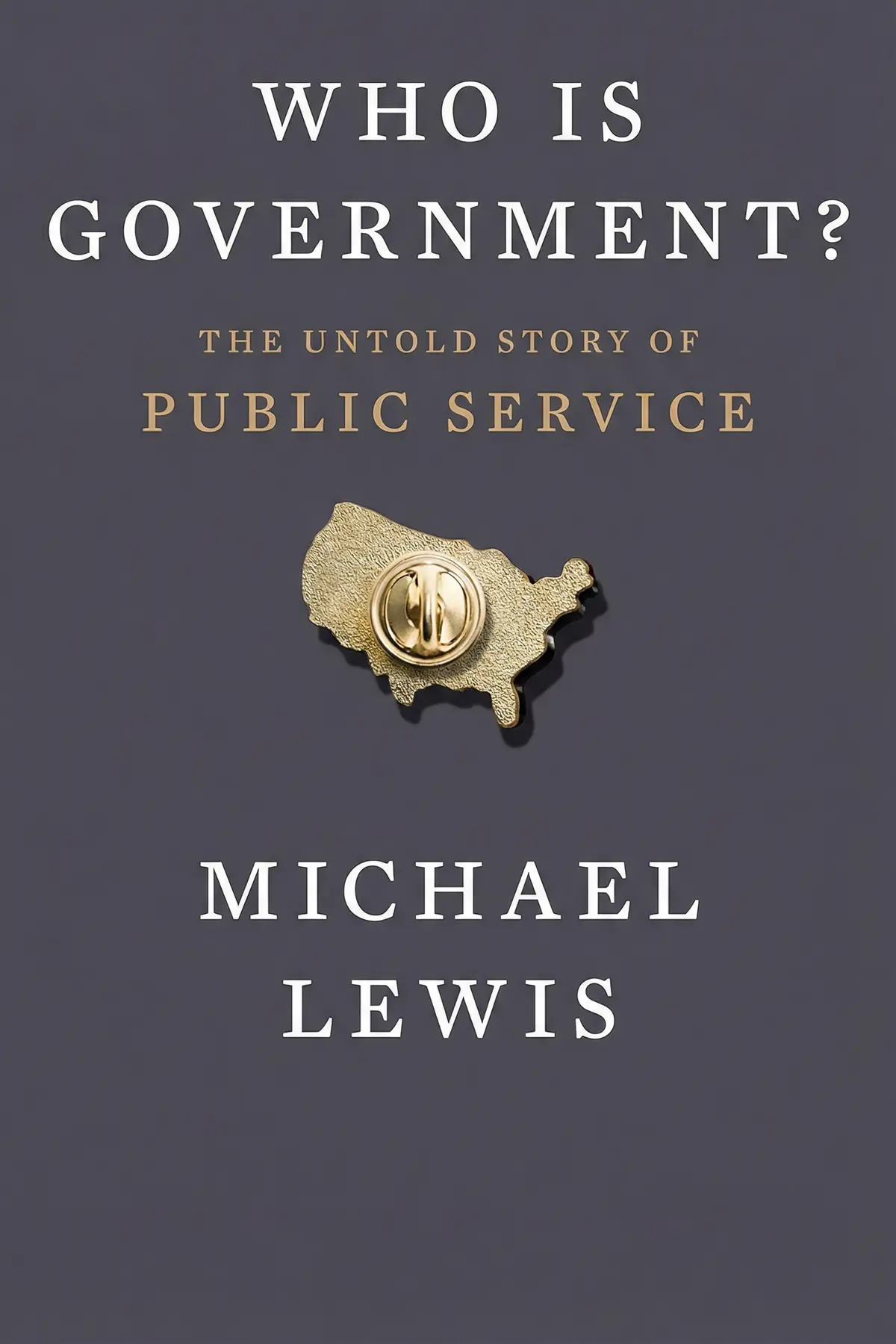
Michael Lewis shows what the US civil service actually does by profiling the people inside it, from a mine safety engineer to an exoplanet astronomer, and explains why their patient, unseen work matters.
1 min 06 sec
Most people picture government as a faceless machine, and that picture makes its work easy to dismiss. In Who Is Government?, Michael Lewis argues that the surest way to understand what the civil service does is to meet the people who do it. The opening case shows the cost of skipping that step. After winning the 2016 election, Donald Trump dismissed the roughly 500 staff preparing his handover of 15 major departments and hundreds of agencies, then chose as energy secretary Rick Perry, who had once campaigned to abolish that department.
The book’s answer is a set of portraits: a former coal miner, a cemetery chief, a tax agent chasing cryptocurrency, an archivist and an astronomer. Each shows patient, nearly invisible work producing results no company was ever going to deliver. By the last portrait, the word government has faces attached, and any debate about it can be tested by asking who does the work.
2 min 13 sec
For decades, falling mine roofs were treated as an unavoidable risk of the trade. A former radical who went underground to start a revolution found a different way to change miners’ lives, and it took him forty years.
2 min 34 sec
A bomber crew lost over France in 1942 lay unnamed for eighty years. Bringing one airman home took forensic science, an old presidential pledge and an official who turned down the honor he arranged for others.
2 min 19 sec
Cryptocurrency was supposed to make criminals invisible. A tax agent who first heard of it on a podcast saw the opposite, and his unit’s discovery echoes the case that finally stopped Al Capone.
2 min 33 sec
A fire in 1921 erased most of a national census. One official’s answer to losing history was to hand the archive to anyone with a phone and a knack for old handwriting.
2 min 23 sec
Only 82 planets outside our solar system have so far been confirmed through direct photographs. One astronomer who managed it spent around 100 nights waiting, then refused to celebrate, and her reasons say a lot about how discoveries happen.
1 min 20 sec
Lewis’s title question turns out to have a plain answer. Government is a miner who learned to read rock, a man who will not take a grave he tends for others, an agent reading a ledger nobody can edit, a volunteer squinting at old cursive. The book’s closing argument is that civil servants take on jobs private companies would find unprofitable or politically risky, and that their slow, careful efforts often produce profound results with almost no applause. Seen through these lives, sending home 500 transition staff in 2016 looks less like efficiency than like not knowing what was at stake.
That suggests a different way to hear the next argument about cutting or reshaping a public agency: ask who works there, and what problem they have been grinding away at for years. And if your own work is measured in decades instead of quarters, Chris Mark’s forty years are evidence that it can count.
In 2016, for the first time anyone had recorded, nobody in an American mine died under a falling roof. There was no parade. Public service, when it succeeds, often looks exactly like that.
Government is usually discussed as a faceless machine: too big, too slow, easy to cut. Michael Lewis starts from a moment that exposed how little even a new administration understood about it. After the 2016 election, Donald Trump fired his transition team and soon named an energy secretary who had wanted to abolish the energy department. Lewis's answer is to stop asking what government is and ask who it is. The book follows civil servants doing work that rarely makes the news. A former coal miner spends decades on the math of mine roofs. A cemetery chief cares for nearly four million graves. A tax agent traces cryptocurrency to catch criminals. An archivist opens the nation's records to volunteers, and an astronomer helps build a telescope that could find life elsewhere. Readers get vivid, specific stories and a sharper way to think about public institutions. These people take on jobs private companies would find unprofitable or politically risky, and their methodical efforts often change lives with almost no recognition.
Readers who hear government called wasteful and want to see what it actually does.
Professionals weighing a move into public service, or managers of slow, unthanked work.
Fans of Michael Lewis curious about mine safety, crypto investigations, archives and the search for exoplanets.
Michael Lewis was born in New Orleans in 1960, studied art history at Princeton and attended the London School of Economics before selling bonds at Salomon Brothers in the 1980s. That job became his first book, Liar's Poker. His later books include Moneyball, The Blind Side, The Big Short, Flash Boys, The Undoing Project and Going Infinite. They have won two Los Angeles Times Book Prizes, and several reached number one on the New York Times bestseller list.
Michael Lewis
Michael Lewis

Michael Lewis
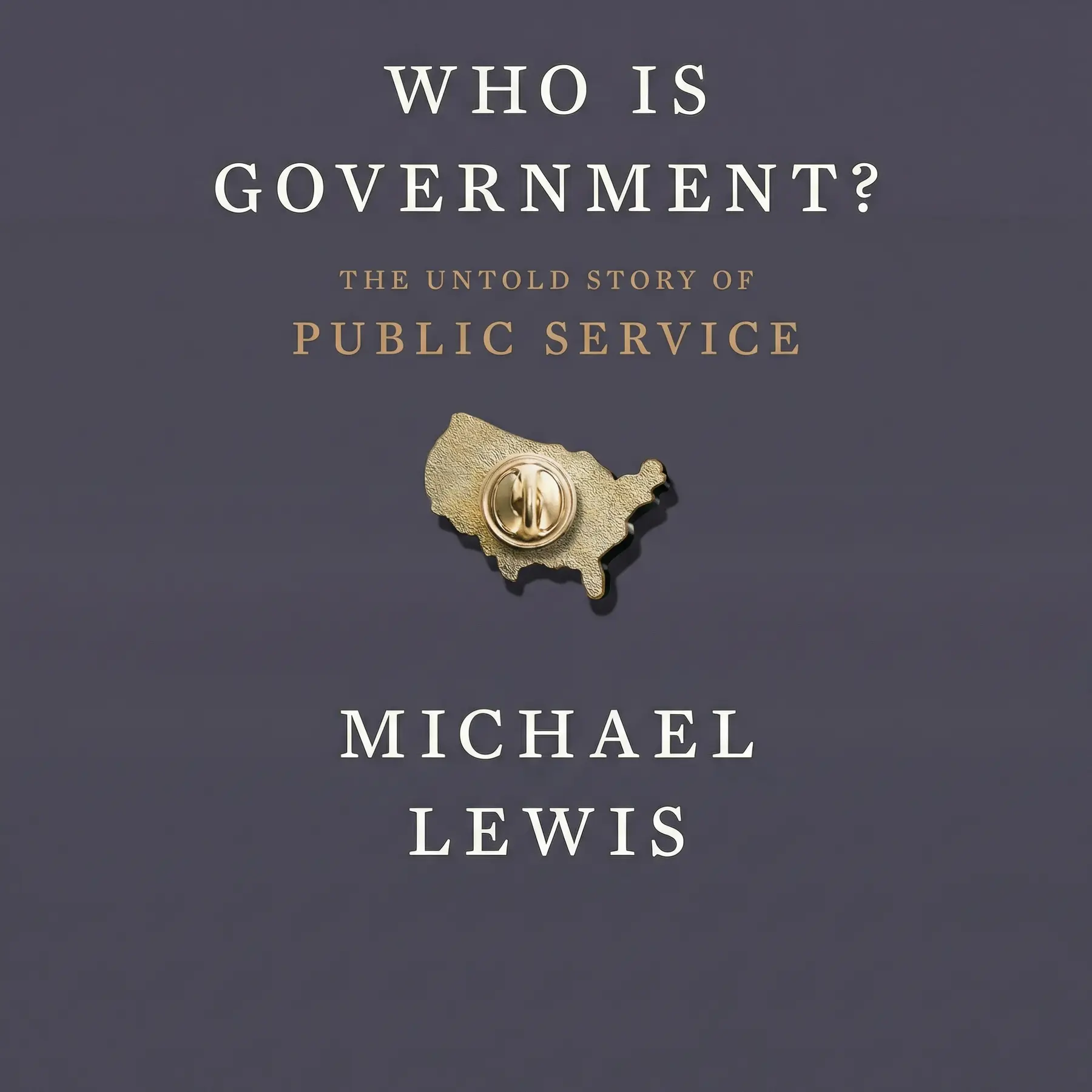
Listeners find this book to be an excellent listen featuring gripping accounts of federal employees. The prose is viewed as intelligent, and listeners value the educational quality, with one review pointing out revelatory facts about various agencies. They appreciate how relevant it is to modern politics and its overall impact, with one listener observing that the work frequently saves lives. Listeners also praise the way individuals are portrayed, with one review highlighting the commitment of public servants.
Wow. I didn’t expect a book about government employees to be this tender and heartwarming. Michael Lewis curates a beautiful collection that humanizes the faceless bureaucrats we often hear about in negative political ads. These aren't just "middle managers" or "efficiency problems"—they are people like Christopher Mark, saving lives in mines, or Ronald Walters, ensuring veterans get the dignity they deserve in death. The writing styles vary between the authors, which keeps the pace fresh, though some chapters feel more urgent than others. It’s a timely reminder that when government works perfectly, you don’t notice it because the water is clean and the ceilings don't collapse. We owe these people more than our tax dollars; we owe them our gratitude.
Show moreEver wonder how many lives are saved by people you’ve never heard of? "The Canary" by Michael Lewis is a masterclass in narrative non-fiction, focusing on Christopher Mark’s work in coal mine safety. It’s fascinating how Lewis can take a topic as niche as mine ceiling collapse and make it feel like a high-stakes thriller. This entire book is a love letter to the people who choose a life of service over a life of profit. Personally, I found the anecdote about Trump wondering why anyone would work for "two hundred grand tops" to be the perfect framing for why this book exists. It’s about the mission, not the money. The writing is sharp, evocative, and deeply necessary right now.
Show moreAfter working in the public sector for twenty years, I felt seen. This book captures that specific brand of "existential humility" that defines career civil servants. We don't do it for the fame or the bonuses; we do it because someone has to make sure the records are digitized and the coal mines are safe. The profile of Pamela Wright at the National Archives was a standout for me. Sarah Vowell captures the quiet intensity of preserving history perfectly. The book is published at just the right time, acting as a refutation of the idea that government is just "fraud and abuse." It’s an anthology of competence in a world that often feels chaotic. Every American should read this before complaining about the 'deep state'.
Show moreFinally got around to reading this, and it’s essentially a much-needed defense of the workers who actually keep the lights on. From the IRS agent catching child sex traffickers to the engineers preventing mine collapses, the book showcases a level of dedication that is frankly inspiring. It’s a direct challenge to the "DOGE" narrative that government is inherently wasteful. The writing is intelligent and the character development is surprisingly deep for such short essays. If you’re worried about the current decimation of government staffing, this book will both validate your fears and give you reasons to hope. It’s a short, punchy, and incredibly relevant read for today’s climate. I finished it in two sittings and immediately recommended it to my book club.
Show moreAs someone who follows Sarah Vowell's work, I was thrilled to see her contribution in "The Equalizer." This anthology provides such a vital counter-narrative to the current rhetoric surrounding the "DOGE" crew and the dismantling of federal agencies. It’s an intelligent, if occasionally uneven, exploration of the quiet machinery that keeps society functional. The IRS chapter was particularly eye-opening, showing how these workers aren't just bean counters; they're hunting down cyber-criminals and protecting our financial infrastructure. Truth is, the book can feel a bit like a highlight reel of previously published work, but the curation is top-notch. It successfully makes the argument that civil service is a mission, not just a paycheck for those who choose it.
Show morePicked this up because of all the talk about government efficiency lately. Frankly, it’s the best argument for the status quo I’ve read. Lewis and his contributors focus on "The Searchers" and "The Sentinel," highlighting agencies like the National Cemetery Administration that perform deeply emotional, essential tasks with zero fanfare. The tone is earnest and surprisingly hopeful despite the looming threats of budget cuts and staffing decimation mentioned in the introduction. Some of the data-heavy sections toward the middle slowed me down slightly, but the human interest stories—especially the one about mine safety—more than made up for it. It really highlights the "existential humility" of those who serve the public interest every single day.
Show moreThe chapter by Casey Cep really hit me hard. I never thought I’d spend my Sunday afternoon getting emotional over the National Cemetery Administration, but that’s the power of this collection. It’s a fast read, but the impact lingers long after you finish. My only minor gripe is that because the essays are written by different people—from W. Kamau Bell to Geraldine Brooks—the tone shifts quite abruptly at times. However, the core message remains consistent: government is made of individuals who genuinely care. In an era where "bureaucrat" is often used as a slur, Lewis gives us names and faces to respect. Highly recommend for anyone feeling cynical about our institutions and wanting to see where their taxes actually go.
Show moreThe final section regarding the FDA and the treatment for Balamuthia was absolutely gripping. Michael Lewis has a way of taking complex scientific coordination and turning it into a human interest story that feels urgent and personal. I’d read about the case in the news, but the depth provided here—showing how public servants across agencies coordinated to save lives—was new to me. I appreciated the variety of voices in this collection, especially Dave Eggers’ contribution. While a few of the essays felt a bit shorter than I would have liked, the overall impact is a powerful defense of the administrative state. It’s informative, slightly provocative, and very well-researched. This book makes a strong case for why we can't let these agencies be hollowed out.
Show moreTo be fair, I expected a bit more new material from Michael Lewis himself, rather than an anthology of mostly previously published essays. If you’ve read "The Fifth Risk," some of this might feel like a retread of familiar themes regarding the ignorance of leadership. That said, Dave Eggers and John Lanchester bring fresh perspectives that broaden the scope beyond Lewis’s typical style. The book serves its purpose as a defensive wall against the current political climate, though it can occasionally veer into being overly sentimental. I found the chapter on the Bureau of Labor Statistics a bit dry compared to the riveting story of the IRS cyber-superhero Jarod Koopman. It’s a solid 3-star read for the information, but maybe a 4 for the timing.
Show moreLook, I love Michael Lewis, but not every essay in here is a page-turner. The Bureau of Labor Statistics chapter was a bit of a slog, even if the work they do is objectively important for our economy. I also felt that some of the political commentary regarding the second Trump administration felt a little rushed, even if the sentiments are valid. However, the story of the Balamuthia infection treatment in the final chapter was absolutely incredible. It’s a sobering reminder that private pharmaceutical companies simply won't invest in research for rare diseases because there’s no profit in it. That’s why we need the FDA. It’s an imperfect book, but the highlights are definitely worth the price of admission if you skip the filler.
Show moreThe book explains the US civil service through the people who work in it. After opening with the troubled 2016 presidential transition, it profiles a mine safety engineer, the head of the national cemeteries, an IRS cybercrime chief, a National Archives innovator and a NASA astronomer. Their stories show government taking on work private companies would find unprofitable or politically risky, and producing major results with little recognition.
Chris Mark went into West Virginia coal mines in 1976 as a young radical, then trained as a mining engineer at Penn State. After 27 people died at Utah’s Wilberg mine in 1984, he joined the Bureau of Mines, studied how stress shifts onto pillars and built a roof rating system from one to 100. In 2016, US mines recorded no roof-fall deaths for the first time.
According to the book, crypto payments hide identities but are permanently recorded on public ledgers, each tied to a 64-character hash. Jarod Koopman’s IRS cybercrime unit of 200 agents studies these transactions, looking for unusual patterns and timing clues to identify who is behind them. Agent Gary Alford helped bring down Silk Road’s Ross Ulbricht by finding an email address he had left in an old forum post.
The main lesson is to judge public institutions by the people and problems inside them. When an agency is debated, ask who works there and what they have been patiently solving for years. The book also offers a model for anyone doing slow work: Mark’s decades of measurement, Walters’ daily care of graves and Bailey’s 100 nights at a telescope all show results built through persistence.


Barack Obama

Masaji Ishikawa

John Rawls



Miles Taylor


AUDIO SUMMARY AVAILABLE
Get the key ideas from Who Is Government? by Michael Lewis, plus 5,000+ more nonfiction titles.









