
14 min 27 sec
Available in: English
Visioneering: Your Guide for Discovering and Maintaining Personal Vision
By Andy Stanley
A Christian guide to finding the concern you were made to act on and keeping it alive. It shows how to share it so others join, survive criticism and lack of money, and refuse attractive distractions.
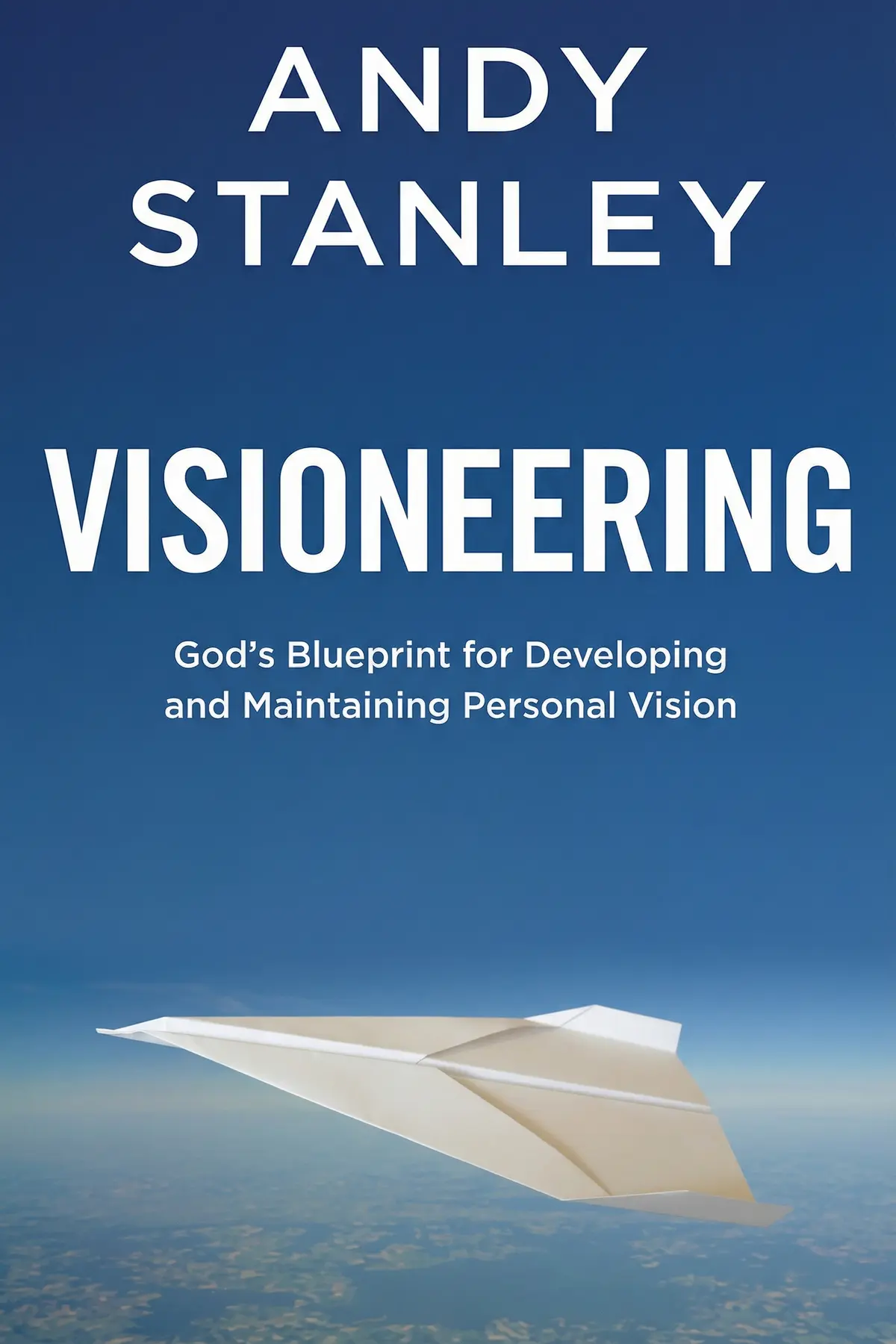
Table of Content
1. Introduction
1 min 03 sec
Plenty of people stay busy for years without being sure where their life is headed. In Visioneering, pastor Andy Stanley argues that the remedy is not more ambition or wealth but a clear picture of the future you are meant to build, one he ties directly to God’s purpose. A real vision, he says, starts with a problem that breaks your heart, and you will usually know what must be done long before you know how.
Stanley calls the whole process visioneering: inspiration, then conviction, action, determination and finally completion. His case is that a vision born of that kind of concern survives only if you let it mature, put it into words that make others feel its urgency, commit before the resources appear, guard your character and turn away from whatever pulls you off course. Each stage below comes with an example, some from his ministry or from scripture and some imagined, and the ideas hold whether your vision is small or large.
2. Find the concern that will not let you rest
1 min 57 sec
The world offers endless causes worth caring about, from poverty to lonely older people. Stanley gives one blunt test for telling a lifelong vision apart from a passing worry, and then asks for something most eager people resist.
3. Take the small step before the plan is clear
2 min 02 sec
A high school skater with no popularity and no platform wanted his entire school to hear the gospel. Every clever plan he tried fell flat. What finally worked began with one evening and one troubled classmate.
4. Say your vision so others feel its urgency
2 min 04 sec
A writer might trace her success to a teacher’s praise; a shy person might recall a parent saying he was too loud. Stanley argues that words shape lives in both directions, and he names the four parts every vision needs before anyone will join it.
5. Commit before the money and the approval arrive
2 min 07 sec
Critics will call your plan unrealistic, and some of them will be right. Stanley explains why that is not a reason to quit, and how a detour that looks like defeat can lead straight back to the original dream.
6. Keep your team united through moral authority
2 min 04 sec
Someone on your team has stopped believing, and the signs are subtle at first. Stanley shows how to spot them, and how a youth pastor’s suggestion that the kids sneak back into a water play area changed the way the author saw him for good.
7. Turn down good offers that pull you off course
2 min 00 sec
A bigger salary, a friend’s teasing, a fear of never finding something better: each can look harmless in the moment. Stanley borrows an ancient builder’s reply as a motto for the moments when your vision is most at risk.
8. Conclusion
1 min 10 sec
Stanley’s book treats a meaningful life as long faithfulness to one concern. The vision itself may look modest, raising children or befriending a lonely classmate, but he argues it gains weight once you see it as part of God’s larger design. What sinks most visions, in his telling, is rarely the size of the obstacle. It is impatience before the idea matures, vague words when sharing it, giving up under criticism, small lapses of integrity and attractive offers that lead somewhere else.
He closes with one concrete assignment. Pick someone you know whose life displays obvious purpose and direction that fit a godly way of living. List the ways you notice vision in their actions. Then contact them and set up a proper meeting to ask how they turned their vision into reality. Alongside that, name the concern that breaks your heart, and practice stating the problem, the solution, the reason and the urgency in a single breath.
Chris never found a clever plan for reaching his whole school. He found one person to talk to, and he kept going.
About this book
What is this book about?
Many people stay busy for years without knowing where their life is going. Pastor Andy Stanley argues that a good life has little to do with being the richest or most successful person around. It comes from pursuing a clear vision of the future that is tied to God's purpose. Stanley calls the process visioneering, and he describes it as moving from inspiration through conviction, action and determination to completion. He shows how to tell a real vision from a passing whim, why you should wait for it to mature, and why you will usually know what to do long before you know how. Along the way he tells the story of Chris, a high school skater whose one friendship led to the gospel reaching his entire school. The book then turns practical. It explains how to put a vision into words so others feel its urgency, how to commit before the money exists, how to respond to critics, how to keep a team or family united through moral authority, and how to recognize the three kinds of distraction that pull people off course.
Book Information
Who it's for
Christians searching for purpose
Christians who feel busy but directionless and want to find the purpose they believe God gave them.
Ministry and nonprofit leaders
Church, ministry and nonprofit leaders who need to share a vision and keep volunteers committed.
Tempted away from priorities
Parents and professionals tempted by offers that pull them away from what matters most.
About the Author
Andy Stanley
Andy Stanley, born in 1958, is a pastor, communicator and author. In 1995 he founded North Point Ministries, a nondenominational evangelical Christian church organization based in the Atlanta area. He hosts Your Move with Andy Stanley, available on television, online and as a podcast. He has written more than 20 books, among them Irresistible and Deep and Wide.

Parenting: Getting It Right
Andy Stanley
Ratings & Reviews
Ratings at a glance
What people think
Listeners find this guide accessible and educational for identifying divine visions, with one review highlighting the author's use of Nehemiah as a core example. They also value the actionable framework and incremental instructions, while one listener specifically mentions how it assists in organizing their daily schedule. Additionally, the work earns praise for its prose quality, spiritual focus, and worth for leadership training, with one listener noting its relevance for both private individuals and Christian organizations.
Top reviews
Niphon
Wow. This actually changed how I view my daily grind. I kept coming back to that line about Nehemiah on the wall: 'I'm doing a great thing, and I cannot come down.' It is so easy to let critics or petty distractions pull you away from what God has specifically called you to do. Andy Stanley does a fantastic job of taking a dry Old Testament book and making it feel like a relevant blueprint for modern leadership. To be fair, some of the steps feel a bit repetitive, but the core message is gold. It’s not just for pastors; anyone trying to build something meaningful should read this. I found the section on 'investigating before initiating' particularly helpful for my current career transition. It offers a perfect balance of spiritual depth and practical application.
Show moreTaw
As someone who struggles with staying focused on long-term goals, this was exactly the kick in the pants I needed. Stanley defines vision as a clear mental picture of what could and should be, and that distinction between the two is vital. It’s not just a dream; it’s a conviction that requires a price to be paid. I appreciated how he balanced the spiritual side of 'God-ordained vision' with the gritty reality of planning and sacrifice. The storytelling is great, especially when he links the plagues of Egypt to the specific Egyptian gods they were meant to challenge. It really helped me see God’s sovereignty in the tiny details of my own life. Highly recommend this to any Christian leader looking for direction.
Show moreMay
The chapter on maintaining moral authority alone is worth the price of the book. Stanley argues that you can’t lead a vision effectively if you’ve compromised your character, and that hit home for me. He frames leadership not as a position of power, but as a responsibility to steward what God has put in your heart. I love how he breaks down the process: inspiration, conviction, action, determination, and completion. It’s a comprehensive look at how to move from a small 'concern' to a finished project. Not gonna lie, I’ve read a lot of business books, but linking these concepts to the Gospel makes them so much more powerful. It’s a must-read for anyone in a leadership role, whether at home or in the office.
Show morePick
Picked this up during a really confusing season of my life and it provided so much clarity. I had all these 'concerns' but didn't realize they were the seeds of a vision God was planting in my heart. The way Stanley explains that a vision is a solution to a problem was a total lightbulb moment for me. It shifted my focus from 'what do I want to do?' to 'what problem is God calling me to solve?' The writing is straightforward and accessible, making it an easy read despite the depth of the content. I especially liked the emphasis on not confusing your plans with God’s actual vision. It’s a convicting, encouraging, and deeply biblical resource for anyone seeking their 'preferred future' through God's guidance.
Show moreLuke
Can a story about building an ancient wall really help you launch a startup or raise a family? I was skeptical at first, but Stanley’s breakdown of Nehemiah’s journey is surprisingly applicable to the 21st century. The 20 building blocks provide a solid framework for anyone feeling stuck between their current reality and a preferred future. One thing that stood out was his emphasis on prayer not just as a religious ritual, but as a way to keep your heart expectant and alert. Truth is, I did feel like the pace dragged in the middle chapters. It sometimes feels a bit like 'dad socks in slides'—reliable and comfortable, but not exactly exciting or poetic prose. Still, the practical value for organizational vision is undeniable and well worth the time.
Show moreSai
Finally got around to reading this after hearing my mentor mention it for the tenth time. It’s a very practical manual, almost like a step-by-step guide to engineering your life’s purpose through faith. Using Nehemiah as the primary case study works well because his obstacles—critics, fatigue, and logistics—are things we all face today. I liked the reminder that what God originates, He also orchestrates, which takes a lot of the pressure off my own shoulders. Personally, I found some of the anecdotal case studies a bit too 'perfectly wrapped up' to be entirely believable. Life is usually messier than the examples in this book suggest. However, the core principles of visioneering are sound and deeply rooted in a solid reading of Scripture.
Show moreDarawan
I’ve been thinking a lot about what it means to live 'on purpose' rather than just drifting through life. Visioneering helped me realize that a lack of motivation usually stems from a lack of clear vision for the future. Stanley’s point that 'how is God’s specialty' really resonated with me because I often get paralyzed by the logistics of my dreams. The book is very faith-based, which I appreciated, but it still offers very practical advice for secular environments and career planning. My only gripe is that it can be a bit repetitive, hammering the same points over several chapters. If you can get past the somewhat dry tone, there is a wealth of wisdom here for anyone wanting to make a difference.
Show moreNina
Ever wonder why some people seem to accomplish so much while others just talk about their big ideas? This book explains the difference between a dreamer and a true visionary. It’s all about the engineering—the 'visioneering'—that happens behind the scenes through prayer, planning, and persistence. Stanley doesn't sugarcoat the process; he’s very clear that any vision worth pursuing will require significant sacrifice and risk. I found the 'walk before you talk' principle to be a great piece of advice for young leaders who want to announce their plans too early. While the prose can be a bit clinical at times, the content itself is incredibly valuable for structuring your life and ministry. It's a great tool for personal development.
Show moreAhmed
Frankly, I have mixed feelings about this one despite its popularity. On one hand, the '20 Building Blocks' provide a very clear structure that is easy to follow and apply to a church setting. On the other hand, the book feels a bit dated and sometimes crosses the line into being slightly preachy. I found myself wanting more contemporary examples and fewer hypothetical guesses about how Nehemiah felt after a long day of work. To be fair, the section on responding to criticism with prayer and remembrance was quite moving and helpful. It’s a solid, safe book, but it lacks the fiery passion of writers like Bob Goff or Donald Miller. It gets the job done practically, but I was often sighing at the slow process.
Show morePensuda
This book took me forever to get through, mostly because it felt so incredibly slow and uninspired. While I respect Andy Stanley’s leadership, his writing style in this one just didn't click with me at all. He spends a lot of time 'mind-reading' Nehemiah, guessing what he must have felt in every scene, which felt more like filler than actual biblical insight. Also, I strongly disagree with his advice to sit and do nothing while waiting for a vision to mature. In my experience, you learn by taking action and testing ideas, not just by praying and planning in a vacuum for months on end. If you like very traditional, safe, and slightly preachy leadership books, you might enjoy this. For me, it was just too much 'wait and see' and not enough 'move and learn.'
Show moreQuestions about this book
What is the main idea of Visioneering by Andy Stanley?
Stanley argues that a fulfilling life comes from pursuing a clear vision tied to God’s purpose, not from wealth or success. He calls the process visioneering, moving from inspiration through conviction, action and determination to completion. A vision starts with a concern that breaks your heart, needs time to mature, and must be shared, defended and protected from distractions to be realized.
How do you know if you have a real vision, according to Stanley?
A vision begins when something you hear, read or see creates deep concern. Because the world is full of worthy causes, Stanley’s test is to ask which one breaks your heart. A God-given vision feels like a moral obligation, connects to something happening in the current generation, and will not let you rest. He also advises waiting for it to mature before acting.
What is visioncasting?
Visioncasting is Stanley’s term for sharing your vision so others commit to it. An effective vision states the problem, the solution, why something must be done and why it must happen now. You need to know it well enough to say it plainly and believe it deeply. He notes that parents do the most powerful visioncasting, for example at their children’s bedtime.
How should you handle critics of your vision?
Stanley warns against three reactions: believing critics and quitting, unloading frustration on family, or bottling anger up. He recommends prayer, which reminds you how the vision ties to God’s purpose. Some criticism is valid, so stay flexible: the route may change while the vision holds, as in his example of a clinic receptionist who years later helps set up a clinic in Zimbabwe.
Who should read Visioneering?
It suits Christians who want direction and purpose, and leaders in churches, ministries or families who need to share a vision and keep others committed. Readers facing critics, money shortages or tempting job offers will find Stanley’s guidance on staying focused useful, along with his closing advice to seek out a mentor whose life shows clear, godly purpose.
Readers also enjoyed

A New Earth: Awakening to Your Life’s Purpose
Eckhart Tolle

A Return to Love: Reflections on the Principles of a Course in Miracles
Marianne Williamson

59 Seconds: Change Your Life in Under a Minute
Richard Wiseman

Aflame: Learning from Silence
Pico Iyer


Alcoholics Anonymous
Alcoholics Anonymous World Services




A Guide to the Good Life: The Ancient Art of Stoic Joy
William B. Irvine
AUDIO SUMMARY AVAILABLE
Listen to Visioneering in 15 minutes
Get the key ideas from Visioneering by Andy Stanley, plus 5,000+ more nonfiction titles.
- 5,000+ titles
- Listen as much as you want
- 7-day free trial
- Cancel anytime









