
13 min 13 sec
Available in: English
Parenting: Getting It Right
Gives parents one clear goal to steer by: children who still want your company once they are grown. It then shows what discipline, training, coaching, time and words should look like at each age to get there.
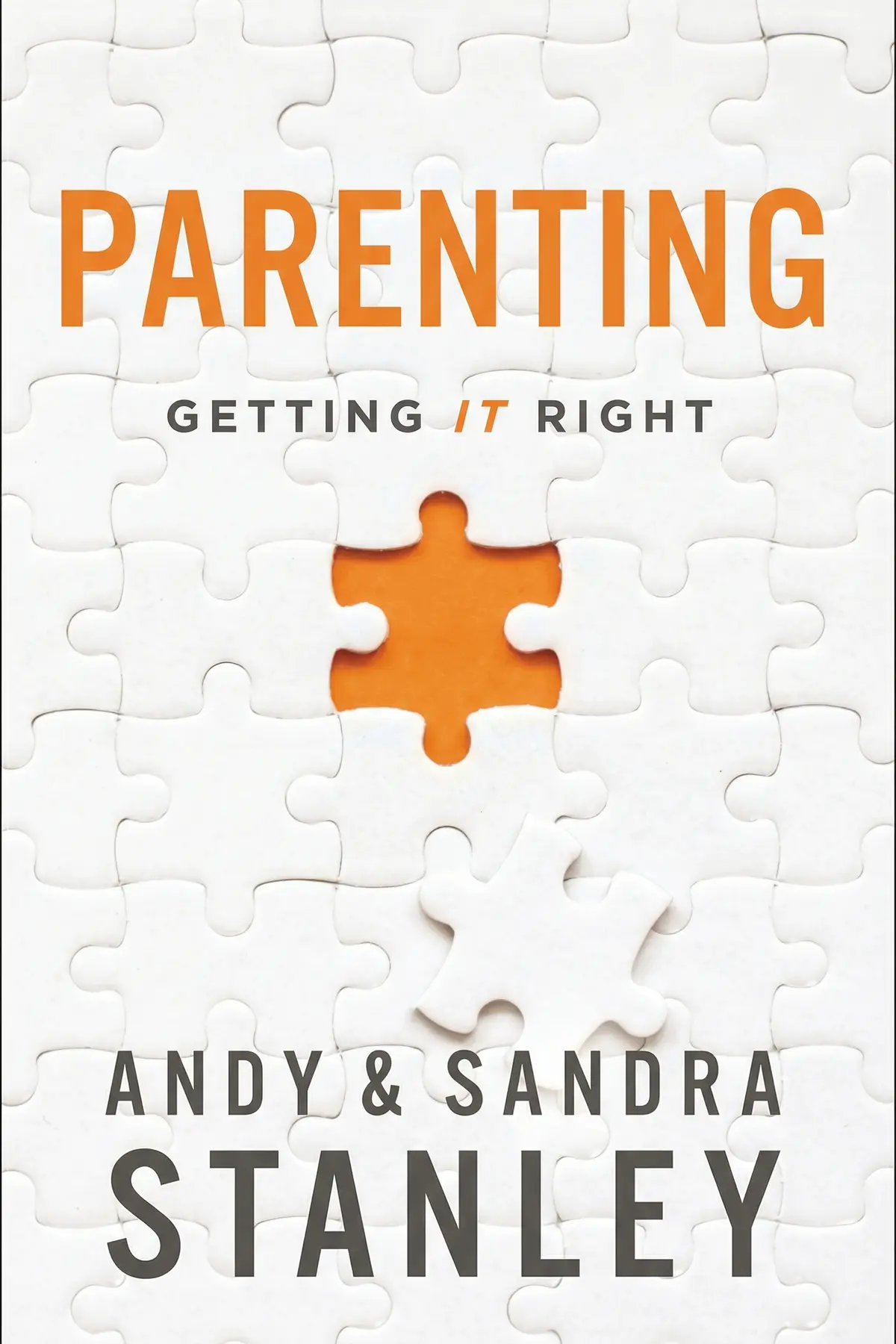
Table of Content
1. Introduction
59 sec
Most parents ask themselves whether they are doing it right many times a day, yet few ever stop to define what right means. In Parenting: Getting It Right, Andy and Sandra Stanley give one answer. The aim, they argue, is to raise children who enjoy your company and each other’s, even after nobody can make them. Health, grades and success matter, but on their own they fall short.
That single aim turns the daily scramble of raising kids into a sequence of seasons, each with its own task. Discipline comes in the early years and training through childhood. Coaching carries a family across the teens, and friendship comes last. Two tools run through every season: the way you spend your time and the way you use your words. By the end, you will know what your child’s current age asks of you and which habits to drop as they grow. You will also know how to build a bond strong enough that grown children choose to come home.
2. Choose the one goal that guides every decision
1 min 49 sec
Health, a degree, a good career: most parents carry a list of hopes for their children. The Stanleys argue that the list misses the one aim that makes all the others easier, and that ignoring it lets someone else set your family’s direction.
3. Teach consequences early while the stakes are small
1 min 48 sec
A missed lesson at age three does not disappear. It waits, and the person who finally teaches it may wear a uniform. The Stanleys offer a simple filter for deciding when a small child needs correcting.
4. Practice good manners the way athletes practice
1 min 53 sec
When a child runs wild in a restaurant, most people blame the child. The Stanleys point somewhere else entirely, and their fix involves a doorbell, a handshake and a hand resting on your arm.
5. Stay close to your teenager by coaching, not correcting
1 min 54 sec
The methods that worked beautifully at age eight can push a fifteen-year-old away. The Stanleys explain what to stop doing in the teenage years, and what earns you a place in your teen’s life instead.
6. Love your kids in your calendar
1 min 51 sec
Loving your children deeply may not be enough if they rarely see it. The Stanleys offer one question for every scheduling choice, and it gives a surprising answer about weekends away from the kids.
7. Speak so your words help children grow
1 min 47 sec
An apology does not always undo a hurtful remark, and a compliment from you lands differently than one from a friend. The Stanleys describe the hidden rules that decide how a parent’s words are actually heard.
8. Conclusion
1 min 12 sec
The Stanleys’ book comes down to one reframe. The anxious daily question of whether you are doing it right gets an answer once you know what it is. It is a relationship your children still want when they have every choice to walk away. Firm consequences, doorbell drills, calm reactions to teenage confessions, protected evenings and careful words all invest in that one account, each fitted to the season you are in.
Where to begin depends on your child’s age. With a toddler, respond to disobedience, dishonesty and disrespect every time and right away. With a school-age child, choose one social skill and rehearse it like a game until it sticks. With a teenager, meet the next hard story calmly enough that another one follows. At any age, look at next month’s calendar and ask whether each commitment is good for your relationships. When your words wound, give your child room instead of demanding forgiveness.
Like any harvest, this one comes late. It looks like a grown son or daughter who phones on a weekend with nothing in particular to say, just because they want to talk to you.
About this book
What is this book about?
Most parents ask whether they are doing it right several times a day, but few stop to decide what right actually means. Without a clear goal, a family's direction gets set by circumstance, culture or whoever pushes hardest. Two parents can even work toward different ends without noticing. Andy and Sandra Stanley propose a single goal that outranks grades, safety and success: raising children who enjoy your company and one another's, even when nothing obliges them to stay close. Parenting with that relationship in mind, they argue, teaches children how relationships work and builds their confidence. From there the book lays out four seasons. Discipline comes first, from birth to five. Training follows from five to twelve, then coaching through the teenage years, and finally friendship with adult children. Each season gets concrete tools, from the three D's that decide when to step in to doorbell drills and an interrupt rule for small children. Two habits run through every age. The first is treating time as the currency of love. The second is choosing words carefully, because a parent's words land hard on a child, and who is speaking shapes how much the words weigh.
Book Information
Who it's for
Parents of toddlers
Parents of toddlers who want a clear rule for when to discipline and when to let go.
Parents of school-age kids
Parents of school-age children looking for simple drills that teach manners and patience.
Busy parents of teens
Busy parents of teenagers who feel shut out and want to stay connected.
About the Author
Andy Stanley
Andy Stanley is a pastor, communicator and author of more than 20 books, including Irresistible and Deep and Wide. In 1995 he and his wife, Sandra Stanley, founded North Point Ministries, a nondenominational evangelical church organization in the Atlanta area, and he hosts Your Move with Andy Stanley. Sandra studied at Georgia Tech and earned a master's degree from Dallas Theological Seminary. She has written devotional books for women. The couple raised three children and spent 10 years caring for children in need in their home.
Ratings & Reviews
Ratings at a glance
What people think
Listeners find this parenting guide delivers useful perspectives for every age, keeping a primary emphasis on relational health. The content is realistic and simple to digest, with one listener pointing out how it aids in leading parents through difficult talks with their kids.
Top reviews
Mingkwan
The 'later is longer' mantra is exactly the mindset shift I needed as a parent of two toddlers. Andy and Sandra Stanley offer a refreshing perspective that moves away from short-term compliance and toward the long-term goal of a healthy adult relationship. Truthfully, many parenting books feel like a laundry list of rules, but this one focuses heavily on the heart of the child. I loved the section on the four stages—discipline, training, coaching, and friendship. It makes the transition into the teenage years feel much less daunting when you have a roadmap for when to let go. While the Christian influence is definitely front and center, the core principles of prioritizing the relationship over being right are universal. Our family has already started implementing the 'honor your mother' rule, and it has changed the atmosphere in our home for the better. This is a must-read for anyone who wants their kids to actually want to visit them when they’re thirty.
Show moreLuke
Is it possible for a parenting book to be both convicting and encouraging at the same time? The Stanleys managed to do just that by being vulnerable about their own mistakes rather than acting like the perfect "holier than thou" couple. The focus on relationship-driven parenting really resonated with me, especially the idea that lying is primarily an offense against the connection between parent and child. It’s not just about a broken rule; it’s about a broken bond. Personally, I found the "Coaching" stage description to be the most helpful part as I navigate the middle school years right now. It’s a lot of wisdom packed into a very digestible format. Even if you don't agree with every theological point, the practical takeaways for building a home where kids feel safe and respected are invaluable. I wish I’d had this copy years ago so I could have marked it up with a highlighter from day one.
Show morePawinee
After hearing so many people rave about this on social media, I decided to grab the audiobook narrated by the authors themselves. It felt like sitting down for coffee with a couple who has been through the trenches and made it out the other side. Their parenting philosophy centers on the idea that every decision should be filtered through how it affects the relationship, which is a game-changer. The way they break down the stages from discipline to friendship makes so much sense when you look at the big picture. I especially liked the emphasis on confession and restoration; it’s about fixing the bond, not just correcting the behavior. To be honest, I think every new parent should read the first few chapters to get their head in the right space. It isn't a "how-to" manual with rigid steps, but a collection of principles that actually feel sustainable.
Show moreJin
Wow. I’ve read dozens of parenting blogs and books over the years, and this is easily the most impactful one I’ve encountered. The simplicity of the "Honor your mother" and "Don't lie" rules covers so much ground without being overwhelming for the kids. It’s all about teaching them how their actions affect the people around them. In my experience, most parenting advice focuses on the "now," but this book focuses on the "years from now." They want you to parent in a way that your adult children actually want to spend Christmas with you. That perspective shift changes how you handle every argument and every discipline moment. It’s digestible, conversational, and deeply practical. I’m planning to reread this every few years to make sure I’m staying on track with the different stages.
Show moreWitthaya
As someone who struggles with over-parenting, the breakdown of the four stages was exactly what I needed to hear. Realizing that I need to move from "training" to "coaching" as my kids get older is a huge relief. It’s about trusting the foundation you’ve built and giving them the autonomy they need to grow. The Stanleys write in a way that feels very accessible, like they’re just chatting with you in your living room. The focus on making decisions based on the long-term relationship is a principle I’ve already started using during daily conflicts. To be fair, the book is very Christian-centric, but the wisdom on building a family culture of honor and honesty is something anyone can appreciate. It’s less about "do this" and more about "be this kind of person."
Show moreRapee
Finally got around to reading this after seeing it everywhere in my church circle. I appreciate that the authors speak from the vantage point of having already raised their kids, which gives their advice a layer of credibility many modern blogs lack. The distinction between punishment and discipline—focusing on restoration rather than just making them pay—was a real lightbulb moment for me. However, I have to be fair: the book is extremely heteronormative and relies on some pretty old-school gender roles that felt a bit dated. If you aren’t coming from a traditional Christian background, the last twenty percent might feel a bit like a sermon you didn't sign up for. Even with those caveats, the central idea of parenting with the end in mind is gold. It’s a quick, conversational read that I’ll likely revisit as my kids enter the 'training' phase.
Show moreThida
This book isn't exactly a 'how-to' guide in the traditional sense, and that’s precisely why I liked it. Instead of giving you a script for every tantrum, Andy and Sandra provide a framework of principles that apply across the board. The concept of "later is longer" is a powerful reminder to stop sweating the small stuff and focus on the character of the adult you are raising. I did find some of the mom and dad roles a bit regressive, but I tried not to let that distract from the overall message of relational health. The chapter on the "training stage" for ages 5-12 offered some really practical ways to give kids autonomy while still providing a safety net. Not gonna lie, the ending gets very specific about keeping kids in the faith, which might not be for everyone. But for those looking for a relationship-centered approach, it hits the mark.
Show moreNikolai
The chapter on discipline versus punishment alone makes this book worth the price of admission. Andy and Sandra explain that the goal of discipline should always be confession and restoration, which is such a beautiful way to look at childhood mistakes. It teaches kids how to own their messes rather than just fearing a penalty. Frankly, some of the examples they gave felt a bit like they were checking their privilege, but the underlying concepts are still very transferable to any household. I appreciated how both authors shared their own failures, which kept the tone from feeling too superior. It’s a quick read, but there is a lot of meat to chew on regarding the transition from coach to friend. I do wish there had been more secularly-framed arguments at the end, but the advice is still top-tier. It's a solid four-star read for any parent looking for a relational roadmap.
Show moreRungtip
Ever wonder what the end goal of your parenting actually is? Most of us are just trying to survive the day, but this book challenges you to think about the next twenty years. The central theme of prioritizing the relationship above all else is a convicting but necessary message. I loved the practical tips on how to handle lying as a relational breach rather than just a moral failure. Look, the book does rely on some traditional stereotypes that felt a bit like a 90s sitcom, and the religious emphasis is heavy throughout. However, the core wisdom about the "friendship stage" being the ultimate destination is something I haven’t seen articulated this well elsewhere. It’s an easy read that manages to be both inspiring and sensible. Even if you don't agree with their theology, the relational principles are hard to argue with. Definitely worth a read for the perspective shift.
Show moreGai
Look, there are some great gems here regarding the different stages of childhood, but the delivery was a bit of a mixed bag for me. While the "relationship first" philosophy is solid, the book feels like it was written for a very specific, privileged demographic. There’s an undercurrent of "SEC Greek mixer" energy that made certain sections feel slightly out of touch with more diverse modern families. The heavy-handed religious tone in the final chapters was also a bit much, even for someone who grew up in the church. I was hoping for more biblical backup for their specific methods rather than just anecdotal evidence from their own lives. That said, I did appreciate the two-rule system they suggested because of its simplicity. It’s a decent resource if you can filter through the parts that feel like a 90s sitcom. Not the best I've read, but certainly not the worst.
Show moreQuestions about this book
What is the main idea of Parenting: Getting It Right?
Andy and Sandra Stanley argue that parents need one clear goal: children who like being with you and with each other, even once nobody requires it. Parenting with that relationship in mind, they say, teaches kids how relationships work and builds their confidence. They then describe four seasons. Discipline comes first, then training and coaching, and finally friendship. Time and words are the two tools that strengthen the bond at every age.
What are the four seasons of parenting according to Andy and Sandra Stanley?
From birth to about five, the focus is discipline, so children learn that actions have consequences. From five to twelve comes training, where skills and manners are explained and practiced. From twelve to eighteen, parents become coaches who connect instead of correct, letting teens make decisions and mistakes. After eighteen comes friendship, the easiest season, when well-raised adult children choose to visit and call.
What are the three D's of discipline?
The three D’s are disobedience, dishonesty and disrespect. The Stanleys use them as a filter for deciding when a young child needs correcting. If a child refuses to listen, deliberately lies or is openly rude, they recommend a consequence every time and right away. Getting this right in the early years, when stakes are low, makes the later seasons much easier.
How can I apply the book's advice on time and words?
For time, test each commitment with one question: is it good for our relationships? Piano lessons and a weekend away for the parents pass, while a weekend business trip usually does not. Small, steady habits like a nightly bedtime story count most. For words, give praise far more often than criticism. Remember that intent does not undo hurt, and give a hurt child time instead of demanding forgiveness.
Who should read Parenting: Getting It Right?
It suits parents at any stage, from those with a newborn to those with a moody teenager, who want one clear aim behind their daily decisions. The Stanleys say it is never too late to adjust. The book is practical, offering tools such as the three D’s, the doorbell greeting drill, the interrupt rule and a simple test for scheduling family time.
Readers also enjoyed



AUDIO SUMMARY AVAILABLE
Listen to Parenting in 15 minutes
Get the key ideas from Parenting by Andy Stanley, plus 5,000+ more nonfiction titles.
- 5,000+ titles
- Listen as much as you want
- 7-day free trial
- Cancel anytime









