

14 min 30 sec
Available in: English
 ไทย
EnglishไทยVenture Deals: Be Smarter than Your Lawyer and Venture Capitalist
A practical guide to raising venture capital from the investor's side of the table: how funds work, what a term sheet really decides, and how founders keep money and control while they negotiate.
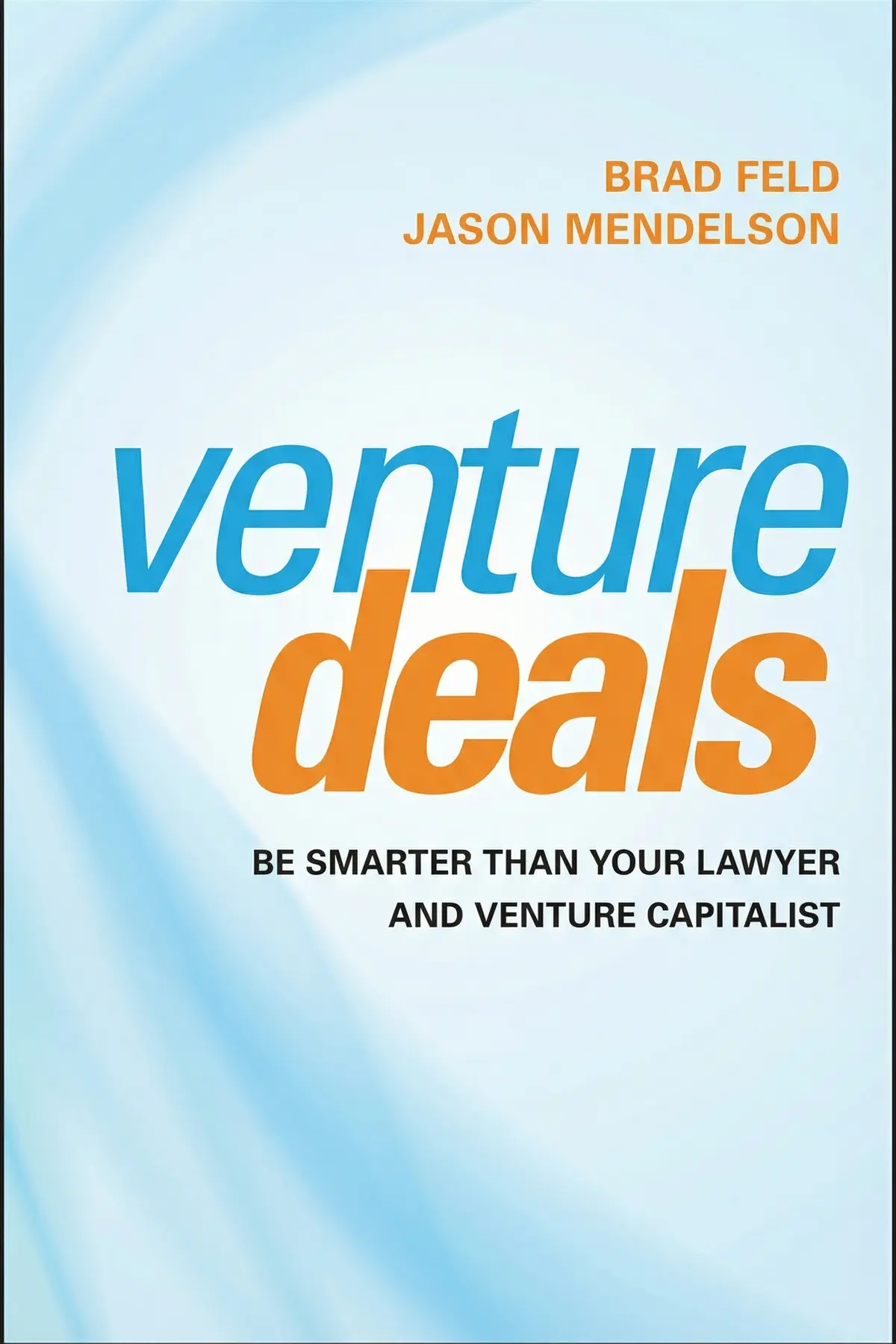
Table of Content
1. Introduction
57 sec
Most founders walk into their first funding talk at a disadvantage, since venture capitalists often have far more negotiating and business experience than they do. In Venture Deals, investors Brad Feld and Jason Mendelson argue that the gap can be closed, because nearly everything that matters in a venture deal comes down to two things, money and control. Founders lose ground when they spend their energy on everything else.
The authors, who cofounded the Colorado firm Foundry Group, show the deal from the investor’s side of the table: where a fund’s money comes from, why its clock matters, who inside it can say yes, and how one misread number can cost a founder a slice of the company. Their case is that a founder who understands the investor’s world and prepares for it can negotiate as an equal. What follows is a working map of that world, from the first email to the signed term sheet, plus a few moves for the table itself.
2. Know what venture money buys and what it costs
1 min 32 sec
Banks turn away almost every young company, yet one kind of investor will fund a risky idea with no track record at all. The money can take a start-up very far, but it arrives with strings most founders only notice later.
3. Spend your energy on the partner who decides
1 min 25 sec
An excited email from a venture firm feels like the breakthrough every founder waits for. Whether it means anything depends on one detail most people skip right past: the job title of the person who sent it.
4. Check a fund's money and clock first
1 min 34 sec
An investor can love your company, sign the deal and still be unable to help when you need more cash a year later. Two polite questions reveal whether that risk is sitting across the table from you.
5. Read the two terms that decide your deal
1 min 46 sec
Investor and founder can agree on the same sentence about valuation and walk away with different ideas of who owns what. The gap hides in a single word, and boards of directors hide a second trap.
6. Arrive with materials and research ready
1 min 34 sec
Investors rarely ask for a full business plan, so most founders skip it. The authors think that is a mistake, and they point to a better source of investor intelligence than any website or blog.
7. Hire a lawyer who guards your ownership
1 min 30 sec
The person most likely to sink your deal may be the one you are paying to protect it. The authors explain what separates a helpful lawyer from a costly one, and why a famous firm is no guarantee.
8. Set your limits and read the investor's pressures
1 min 23 sec
A nervous founder facing a seasoned investor seems to hold every weak card. One start-up team found its advantage in a detail about the investor’s week, and the authors explain how to use such things fairly.
9. Let the investor move first, and stay honest
1 min 45 sec
Founders often rush to draft terms, chase every rejection and hint at rival offers. The authors argue each of those instincts costs money, and that silence at the right moment can earn a better deal than any argument.
10. Conclusion
1 min 04 sec
Venture Deals turns fundraising from a test of charm into a matter of knowing where the weight sits. Every VC answers to limited partners and runs on a fund clock. Every firm has partners who decide and staff who scout. And every term sheet, however long, turns on money and control. A founder who sees those forces stops feeling outnumbered at a table of six and starts reading it.
The habits that follow are modest. Ask an interested fund when it last invested and when new money is due. Before you sign, state the valuation both ways and check who holds the board seats and any veto. Choose a lawyer from a small specialist firm who keeps the fight on ownership. And when the room goes quiet, let the investor speak first, and let him draft the first term sheet.
Keep the picture of that investor two hours from his vacation. The person across the table always has a clock of their own. Learn to read it, and arrive with time to spare.
About this book
What is this book about?
Young companies rarely qualify for bank loans, so many innovative start-ups turn to venture capital. That means sitting across from investors who have done hundreds of deals, often with lawyers and advisers crowding the table. Brad Feld and Jason Mendelson, cofounders of the Colorado firm Foundry Group, argue that founders can negotiate as equals once they understand how the other side works. Their angle is the investor's own view. They explain where a venture fund's money comes from, why a fund's three-to-five-year cycle can leave a founder stranded, who inside a firm can actually commit money, and why nearly every important term comes down to money or control. A single misunderstood valuation can shift five points of ownership. A badly balanced board can hand away decisions. Readers get a working method for the whole process: preparing pitch materials and researching investors, choosing a lawyer who fights for the right things, setting walk-away limits, using competition between investors honestly, and letting the investor make the first move. The result is a founder who walks in prepared and keeps what matters most.
Book Information
Who it's for
Founders preparing to raise
First-time founders preparing to raise a seed or venture round and dreading the term sheet.
Curious about investor influence
Operators and early employees who want to understand how investors, boards and valuations shape their company.
Needing deal basics fast
Career switchers heading into start-ups or venture firms who need the deal basics fast.
About the Author
Brad Feld
Brad Feld is an investor with Foundry Group in Boulder, Colorado, which he started with Seth Levine, Ryan McIntyre and Jason Mendelson. He also cofounded Mobius Venture Capital and Techstars, and his early investments included Harmonix, Zynga, MakerBot and Fitbit. Jason Mendelson cofounded Foundry Group and SRS Acquiom, was Managing Director and General Counsel at Mobius Venture Capital, and earlier practiced law at Cooley LLP. Together they bring the investor's and the lawyer's view of the deal.
Ratings & Reviews
Ratings at a glance
What people think
Listeners find the book accessible enough to read from start to finish and appreciate the depth of its content, with one listener mentioning how it breaks down complex topics. This work provides excellent insights for startups, with one review emphasizing its thorough explanation of equity structures and another noting its helpfulness for junior lawyers outside the US. Listeners value the perspective offered here, as one review highlights how it approaches the subject from the entrepreneur's point of view, making it particularly useful for understanding venture financing. However, the physical construction of the book receives mixed feedback, with one listener reporting pages falling apart.
Top reviews
Layla
Ever wonder why some founders end up with nothing after a massive exit? This book explains exactly how that happens through liquidation preferences and participating preferred stock. Frankly, it’s a gold mine for any entrepreneur. The authors break down complex equity structures into layman’s terms without losing the necessary detail. I particularly appreciated the sections written by Matt Blumberg; having that entrepreneur’s perspective to balance the VC viewpoint added a lot of credibility. It’s organized in a way that makes it easy to jump to specific topics like convertible debt or board composition. My only gripe is that my copy arrived with a weak binding, and a few pages started coming loose after just one week of heavy reading. Content-wise, though, it is absolutely the gospel for startup financing.
Show moreDylan
The truth is, fundraising feels like a black box until you read Feld and Mendelson. They pull back the curtain on the entire process, explaining not just what is in a term sheet, but the 'why' behind the negotiation tactics. I found the chapter on 'The Players' especially useful for understanding the hierarchy of a VC firm. You need to know if you're talking to a Managing Director or someone who can't actually pull the trigger on a deal. The writing is surprisingly conversational for such a heavy topic. I’ve recommended this to several other founders in my cohort because it truly puts you on a level playing field with investors. It’s the difference between being a victim of the process and being an active participant in your company’s future.
Show moreNing
The chapter on convertible debt alone is worth the price of admission. It cleared up so much confusion I had regarding valuation caps and discounts. This book is a must-read for anyone about to start a fundraise. It’s detailed, authoritative, and written by people who have clearly sat on both sides of the table. I loved the focus on the 'human' side of the deal—the reminders that these people will be your partners for the next five to ten years. The breakdown of how VC funds actually make money was also a highlight for me. It explains why they behave the way they do during down rounds or when a fund is reaching its maturity. This is the new standard for business financing books.
Show moreDen
Finally got around to finishing this, and I can say it's a foundational text for the startup ecosystem. It’s rare to find authors who are willing to be so transparent about the 'dark arts' of venture capital. They cover everything from the elevator pitch to the final letter of intent. The structure is logical, the tone is professional yet accessible, and the advice is incredibly practical. I particularly liked the section on why you shouldn't carpet-bomb VCs with your pitch deck. It’s all about the quality of the relationship, not just the numbers on the page. Whether you are a first-time founder or a seasoned executive, you will find something in here that you didn't know. Five stars for being an indispensable guide to a complex world.
Show moreSirinat
Picked this up before my first serious meeting with an angel group, and it definitely saved me from a few rookie mistakes. The level of detail here is impressive. It covers everything from the 83(b) election to why you should never ask a VC for an NDA. Some of the legal jargon can get a bit thick, but the 'Entrepreneur’s Perspective' sidebars help translate the technicalities into actionable advice. Look, it’s not exactly a beach read, and it took me longer to get through than a standard business book because I had to keep stopping to digest the implications of certain clauses. However, the insight into how VC funds actually operate—their management fees and commitment periods—was eye-opening. It changed how I view the entire partnership. Essential for the modern founder.
Show moreElias
As someone navigating the venture capital scene from outside the US, I found this remarkably helpful for understanding the Delaware-centric world of tech financing. Even if some of the specific regulations differ in my region, the underlying logic of Economics and Control remains the same. The authors do a great job of highlighting which terms are worth fighting for and which are just 'market standard.' I especially liked the advice on choosing a lawyer—specifically one who has done hundreds of these deals. My only minor complaint is the lack of diverse case studies. It’s very focused on a specific type of high-growth software business. Still, it’s a foundational text that every junior lawyer or aspiring entrepreneur should have in their library.
Show moreFord
Brad and Jason managed to turn a dry subject like term sheets into something actually readable from cover to cover. Most business books are 200 pages of fluff around one good idea, but this is the opposite. Every page is packed with information about board seats, protective provisions, and drag-along rights. I appreciated the bluntness of the advice, especially regarding things like 'no-shop' clauses and proprietary information agreements. Not gonna lie, some of the financial modeling talk went over my head, but the overall framework for negotiation is brilliant. It emphasizes that the goal isn't just to 'win' the negotiation, but to build a long-term relationship with your investors. This perspective is often missing from more aggressive business guides. A solid four-star resource.
Show moreIngrid
This book serves as a dense legal commentary that functions well as a reference guide, but it falls short as a cohesive narrative. While the authors clearly know their stuff, I found the writing style a bit dry and repetitive at times. To be fair, explaining the nuances of a term sheet isn't exactly like writing a thriller, but I was hoping for more colorful real-world anecdotes to ground the technical advice. It often feels like a thirty-page pamphlet that was stretched out to fill a book-length format. That said, the breakdown of economic terms versus control terms is quite clear. If you are actively negotiating a deal right now, keep it on your desk for the definitions alone. Otherwise, you might find yourself skimming through the more repetitive sections about legal protections and regulations.
Show moreAmara
After hearing so much hype in the tech community, I was disappointed by the actual physical quality of the paperback version I received. The pages started falling apart halfway through, which is frustrating for a book meant to be used as a reference. Content-wise, it’s a bit of a mixed bag. The explanations of pre-money vs. post-money valuations are great, but some chapters felt like they were written for lawyers rather than founders. Personally, I found the section on anti-dilution provisions a bit too technical for my needs. It’s a useful book to have on the shelf if you are deep in the weeds of a Series A, but it might be overkill for someone just starting out with a small seed round. It’s informative, just not very engaging.
Show moreEmma
Not what I expected given the rave reviews on my social feeds. It felt more like a dry legal textbook than a helpful guide for a busy founder. I was looking for a compelling story or some narrative context, but instead, I got page after page of definitions and legal hypotheticals. For a non-lawyer, the language is just too dense to be easily digested. Honestly, they could have condensed the entire book into a short blog post about hiring a good attorney and understanding liquidation preferences. I didn't feel any more comfortable going into an investor meeting after reading this than I did before. If you enjoy reading contracts for fun, you'll love it. For everyone else, it’s a bit of a slog.
Show moreQuestions about this book
What is the main idea of Venture Deals by Brad Feld and Jason Mendelson?
Feld and Mendelson argue that founders can negotiate with venture capitalists as equals if they understand the investor’s world. Funds answer to limited partners, run on fixed cycles of three to five years, and have partners who decide and analysts who scout. Above all, nearly every important term in a deal concerns either money or control, so founders should protect those two and avoid wasting energy on minor details.
What is the difference between pre-money and post-money valuation in Venture Deals?
The authors use a $5 million investment on a $20 million valuation. If the investor means post-money, the value after his money arrives, the $5 million buys 25 percent. If the founder hears pre-money, the value before the investment, he pictures a $25 million company and only 20 percent going to the investor. Founders should confirm which one is meant before agreeing.
How should a startup board be structured according to Venture Deals?
The authors describe a balanced board of five: two founders or executives, two venture capitalists without an absolute veto, and one outside member, such as an independent expert. Because investors usually own less than half the company, the board is where they gain influence, and veto rights add even more, so founders should look at board seats as closely as at the money.
Should a founder send the investor a term sheet first?
No. Feld and Mendelson advise letting the investor draft the first term sheet, because in finance they see reacting as stronger than acting. The investor may offer better terms than the founder would have proposed. The same logic applies in conversation: when unsure what to say, wait and listen, since the other side will often reveal what it wants.
Who should read Venture Deals?
It suits founders about to raise venture capital, especially first-timers facing experienced investors and lawyers. It also helps early employees and managers who want to understand how valuation, board seats and fund cycles shape their company. The advice is concrete: questions to ask about a fund’s timing, documents to prepare, how to choose a lawyer and how to set walk-away limits.
Readers also enjoyed



Alibaba: The House That Jack Ma Built
Duncan Clark



7 Powers: The Foundations of Business Strategy
Hamilton Helmer


Bad Blood: Secrets and Lies in a Silicon Valley Startup
John Carreyrou
AUDIO SUMMARY AVAILABLE
Listen to Venture Deals in 15 minutes
Get the key ideas from Venture Deals by Brad Feld, plus 5,000+ more nonfiction titles.
- 5,000+ titles
- Listen as much as you want
- 7-day free trial
- Cancel anytime









