
12 min 16 sec
Available in: English
 ไทย
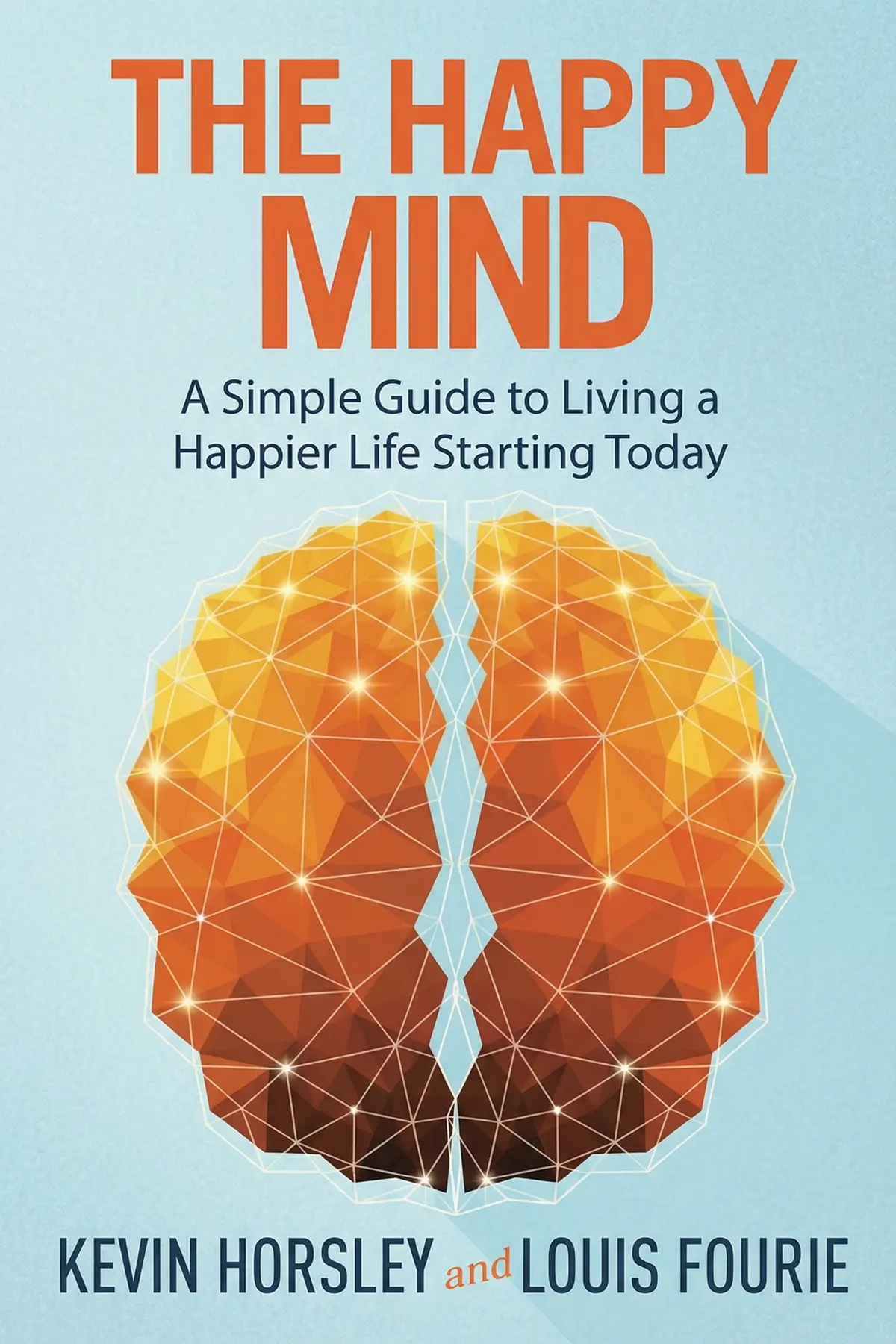
EnglishไทยUnlimited Memory: How to Use Advanced Learning Strategies to Learn Faster, Remember More and be More Productive
Shows how to train an ordinary memory to hold names, numbers, speeches and foreign words by focusing attention, turning facts into vivid images, storing them along familiar routes and reviewing them on a widening schedule.
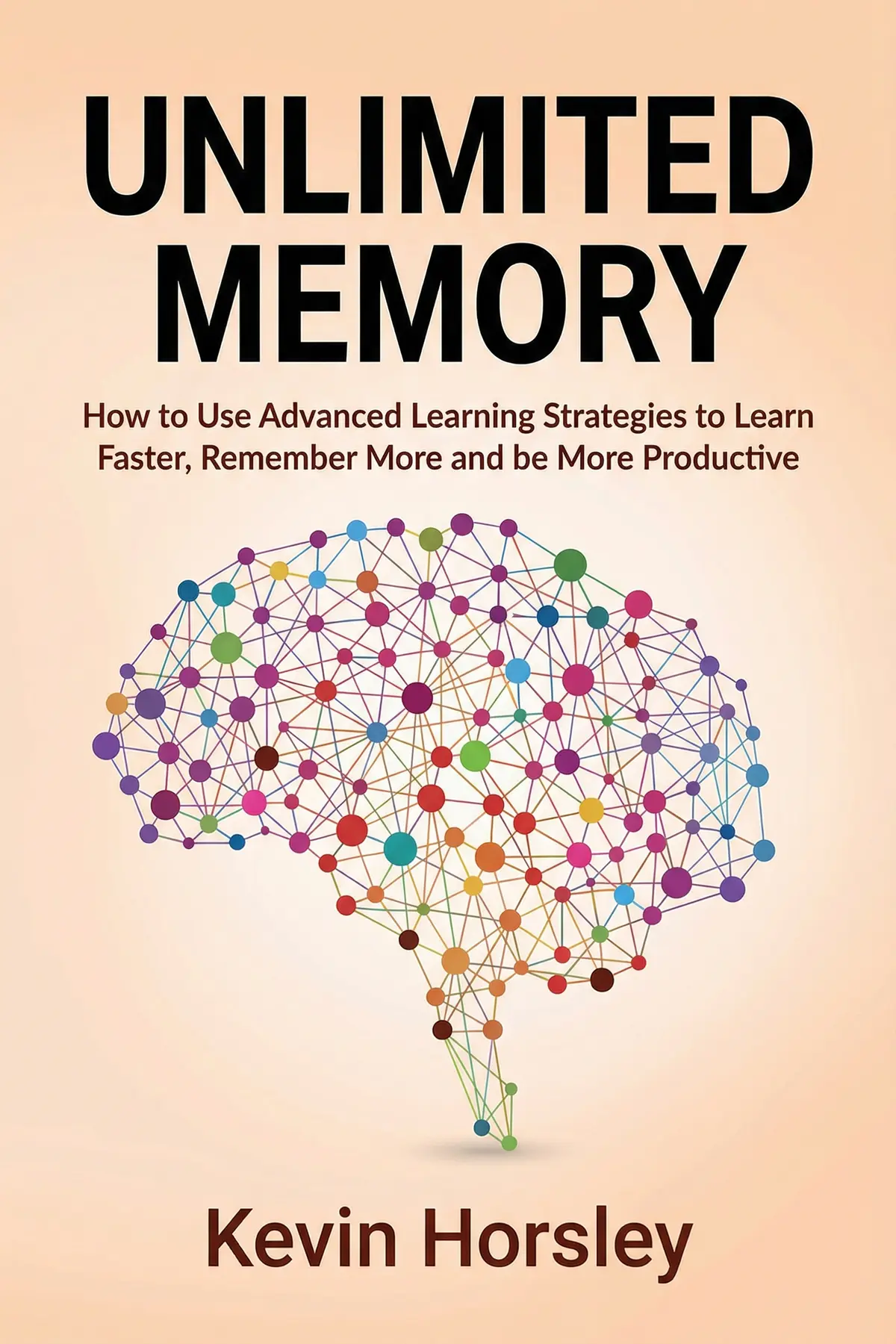
Table of Content
1. Introduction
57 sec
Most of what you study is gone sooner than you think. By the author’s own research, people two years out of school keep the equivalent of roughly three weeks of lessons out of twelve years of classes. In Unlimited Memory, Kevin Horsley, one of the few people to hold the title International Grandmaster of Memory, argues that this loss is not fate. Memory, in his view, is a skill, and a learnable one.
His method rests on one claim: information sticks when you bring it to life and tie it to something you already know. That takes four moves. Clear your mind so the information gets in, turn it into a vivid picture, store that picture somewhere familiar, and come back to it on a schedule.
The same tools handle a speech, a foreign word, a historical date and the name of the colleague you keep forgetting at meetings, and each one can be tried before the week is out.
2. Clear your head before you try to remember
1 min 42 sec
A phone call at the wheel costs a driver more road than most people would guess. The same split attention is wrecking your recall at the desk, and the fix starts before any memory trick.
3. Turn dry facts into scenes you can't forget
1 min 46 sec
A word on a page has almost nothing for the brain to grab. Horsley adds a giant chicken, a hungry kangaroo and a horse in formal wear, and the strangeness is exactly what makes them work.
4. Store any list along a walk through your home
1 min 42 sec
The route you walk every day without thinking is one of the strongest memory tools you own. Horsley used it to hold a number so long it sounds impossible, and the same trick fits a speech.
5. Make every new name stick for good
1 min 46 sec
You have met her three times and even chatted, yet the name is gone. Horsley’s fix uses a horse, a famous fighter and a pair of icy eyes, and it begins in the first seconds of hello.
6. Remember dates and numbers by turning them into words
1 min 46 sec
Digits all look alike and give the imagination nothing to work with. A simple sound code changes that, and it puts a churchman on the moon for one of the most famous years in history.
7. A review schedule that keeps what you learned
1 min 36 sec
Twelve years of school lessons shrink to a few weeks’ worth surprisingly fast. Horsley’s defense is a timetable for returning to what you know, built around gaps that grow longer each time.
8. Conclusion
1 min 01 sec
Horsley’s book turns memory from a talent some people are born with into a set of habits anyone can practice. The thread running through all of it is connection. A fact survives when it is joined to the senses, to an absurd image, to a familiar place or face, and to a purpose you care about. Each technique is a different way of building that link, and review keeps it from rusting.
The simplest place to begin is attention. Horsley’s practical advice is to spend less time on social media apps, so the mind stays in the present and has room for new information. Then choose one thing you need to keep, a name, a date or a short list. Make it vivid, place it somewhere you know well, and write the review dates into your calendar.
Horsley’s hope for his readers is modest and concrete: that one day the weekly shopping list no longer needs paper. Somewhere between a pink horse in a tuxedo and a bishop on the moon, forgetting stops being the default.
About this book
What is this book about?
Most people accept forgetting as normal: the name of a colleague met three times, the page read a minute ago, nearly everything learned at school. Kevin Horsley, an International Grandmaster of Memory, argues that a poor memory is mostly an untrained one, and that the training is simpler than it looks. His approach starts with attention. Multitasking and a wandering mind keep information from getting in, so he offers ways to clear the head and give learning a purpose. Then comes the core of the method: turning dry information into vivid, exaggerated, moving images that engage the senses, and anchoring those images to things the mind already knows well, such as the rooms of your home or a person's face. Readers get a working kit: a route method for lists and speeches, a sound code that turns numbers and dates into words, a four-step system for names, and a review schedule with growing gaps that keeps memories from fading. Horsley used the same route technique to memorize 10,000 digits of pi.
Book Information
Who it's for
Losing what they read
Students and professionals who read something and lose it minutes later.
Afraid of forgetting names
People who dread forgetting names at meetings, parties and client visits.
Memorizing vocab and speeches
Language learners and presenters who need to hold vocabulary, speeches or numbers without notes.
About the Author
Kevin Horsley
Kevin Horsley has studied the mind and memory for more than 30 years and is one of only a handful of people in the world to hold the title International Grandmaster of Memory. He has won a medal at the World Memory Championship and set a world record twice. The author of four books, including The Happy Mind, he works as an international speaker and advises organizations on how their people learn, think and stay motivated.
Ratings & Reviews
Ratings at a glance
What people think
Listeners find this book effective for enhancing memory, as every method includes illustrative examples and connects to personal experiences to boost recall. Furthermore, the clear organization makes the concepts simple to grasp and apply, and listeners view it as essential reading for students. They also value the inspiring material, mentioning how it encourages people to improve their daily lives through a functional strategy that yields results with consistent effort.
Top reviews
Oak
Picked this up during a particularly brutal semester, and frankly, I wish I’d found it years ago. Kevin Horsley doesn't just lecture; he gives you the tools to turn boring lists into vivid, impossible-to-forget images. I’ve already started using the 'loci' method for my anatomy finals, and the difference in my recall speed is quite shocking. This is more than just a book about memory; it’s a manual for how to actually use your brain efficiently. The structure is incredibly logical, making it easy to practice one technique before moving to the next. If you are a student drowning in information, this is a must-read.
Show morePete
As someone who has always struggled with focus, reading about Horsley’s own journey from dyslexia to World Memory Champion was incredibly inspiring. The book is structured beautifully, moving from basic mindset shifts to complex systems like the peg method. The author manages to be motivational without being overly corny, which is a rare balance in the self-help genre. I loved the quote from Alexander Graham Bell about focusing the sun's rays; it really set the tone for the entire practice. You can tell the author truly believes in the potential of the human mind. My memory feels more like a muscle now—the more I train it using these specific drills, the stronger it gets.
Show moreFord
Wow, I am genuinely stunned by how quickly I was able to memorize a list of twenty random items using the car method. The author refers to legends like Tony Buzan, and you can see that influence in the focus on creativity and mental mapping. This isn't just about rote memorization; it's about making your thoughts more colorful and engaging so they actually stick. The writing is punchy and conversational, which makes the exercises feel more like a game than a chore. I feel more confident in my ability to learn new things now than I did ten years ago. It’s a diamond in the rough that actually delivers on its big promises.
Show moreThawee
Ever wonder why you can remember a random movie quote from 1998 but forget what you walked into the kitchen for? This book explains exactly why that happens and how to fix it by tapping into our natural spatial memory. The techniques are effective, though some of the examples feel a bit dated or overly simplistic for complex professional work. I particularly enjoyed the section on the 'Journey Method' because it’s something you can start using immediately without any special equipment. It takes a lot of practice to make it second nature, but the results are undeniable. I’m finally remembering names at networking events, which is a total game-changer for my career.
Show moreWoramet
This book delivers exactly what it promises on the cover without making things overly complicated for the average reader. I was skeptical about the 'mental movie' concept, but it actually works once you stop being too lazy to try and just let your imagination go wild. Who knew imagining an elephant in a bikini could help me remember my grocery list? The writing style is very accessible, almost like having a personal coach walking you through the drills. My only gripe is that it requires constant maintenance; if you don't use these methods daily, you'll lose the knack for them quite quickly. Still, it’s a powerful toolkit for anyone willing to put in the work.
Show moreSangduan
Finally got around to finishing this, and the biggest takeaway for me was the shift in how I view my own brain. Horsley makes a compelling case that 'bad memory' is just a lack of training, not a fixed trait you’re born with. I've been applying the visualization techniques to my language learning, and I'm finding it much easier to stick vocabulary. The book is short and punchy, which I appreciate because it gets straight to the point without hundreds of pages of anecdotes. It’s a practical guide that empowers you to stop making excuses. I’ll definitely be keeping my notes on the 'Four C's' of learning nearby for future reference.
Show moreKenji
The chapter on the PEG system was the most valuable part of the entire experience for me personally. While I didn't care for the frequent references to other self-help gurus, the practical application of the number-alphabet code is life-changing for remembering dates. It’s fascinating to realize how much we limit ourselves by just assuming we aren't 'naturally' good at remembering things. The book is well-organized, though I think the author could have spent more time on how to apply these methods to abstract concepts rather than just lists. Regardless, the motivational tone is infectious. It’s a solid resource for anyone looking to sharpen their mind and stop losing their keys every morning.
Show moreChan
To be fair, the actual memory systems described here—like the peg method and the journey system—are historically grounded and technically sound. However, the author wraps these useful tools in a thick layer of new-age 'power of positive thinking' fluff that I found quite off-putting. It felt like I was constantly being sold on a specific self-help lifestyle rather than just learning a skill. I had to mentally filter out the pseudo-scientific 'laws' and the constant references to other gurus just to get to the practical exercises. If you can ignore the worldly, 'motivational' filler, there is a good core here, but it takes work to find the substance.
Show moreSelin
After hearing so much hype from fellow students, I picked this up hoping it would solve my massive retention issues in medical school. The truth is, while memorizing a list of twenty random objects using a 'mental movie' is a fun party trick, it doesn't translate easily to the sheer volume of a pathology textbook. These methods require a significant upfront time investment to create images for every single concept. When you are on a tight external schedule, it often feels more practical to just use traditional active recall. It’s a well-structured book with good intentions, but the application feels a bit clunky for high-volume technical data.
Show moreFon
Not what I expected at all, and to be blunt, it was a massive disappointment for someone with aphantasia. The author repeatedly insists that we should just 'see' these vivid mental movies to store information. Look, some of us have a blind mind’s eye, and this book basically implies that we are just lazy or unwilling to put in the effort. It felt incredibly exclusionary and frustrating to be told my brain is just 'unfocused' when it’s actually just neurodiverse. I had to DNF this before the halfway point because the methods are completely inaccessible if you can't visualize. I'll find a way to learn that doesn't require me to pretend I have a projector in my skull.
Show moreQuestions about this book
What is the main idea of Unlimited Memory?
Kevin Horsley argues that memory is a trainable skill rather than a fixed gift. Information sticks when you bring it to life with vivid, sense-rich images and connect it to something you already know well, such as a familiar route or a person’s face. Focused attention gets the information in, and reviewing it at growing intervals keeps it from fading.
What is the SEE method in Unlimited Memory?
SEE is Horsley’s rule for making mental images memorable. The senses come first: imagine how something looks, feels, smells and even tastes. Exaggeration comes next, so an ordinary horse becomes a giant bright pink one in a tuxedo. Energize adds movement, such as the horse galloping toward the sunset. The more absurd and active the picture, the easier it is to recall.
How does the loci or route method work?
You take an imagined walk along a route you know well, such as the rooms of your house, and pick a few spots in a fixed order in each room. Each item you want to remember is placed at one spot as a vivid image. Walking the route again in your mind brings back the items in their exact order. Horsley used it to memorize 10,000 digits of pi.
How can I remember names better, according to Kevin Horsley?
Horsley uses four Cs. Concentrate by saying the name aloud, repeating it and asking for the spelling if needed. Create an image from parts of the name, such as a horse fighting Bruce Lee for Horsley. Connect that image to the face, either through a striking feature or by comparing the person to someone with the same name. Then keep using the name so it stays fresh.
How often should I review what I learn?
Horsley recommends gaps that grow longer each time. Go back over new material a day after learning it, again at the three-day mark, then at seven days, and keep widening the gap each time. Finish with a review after a two-month break and one more after a further three months. During each review, recall and sharpen the images you built rather than simply rereading, and keep your goal in view to stay motivated.
Featured in
Readers also enjoyed

AUDIO SUMMARY AVAILABLE
Listen to Unlimited Memory in 15 minutes
Get the key ideas from Unlimited Memory by Kevin Horsley, plus 5,000+ more nonfiction titles.
- 5,000+ titles
- Listen as much as you want
- 7-day free trial
- Cancel anytime









