
14 min 42 sec
Available in: English
The Happy Mind: A Simple Guide to Living a Happier Life Starting Today
Shows why money, possessions and other people bring only brief pleasure, and how to build steadier happiness from within through planning, gratitude, decluttering, calmer reactions and less exposure to negative news.
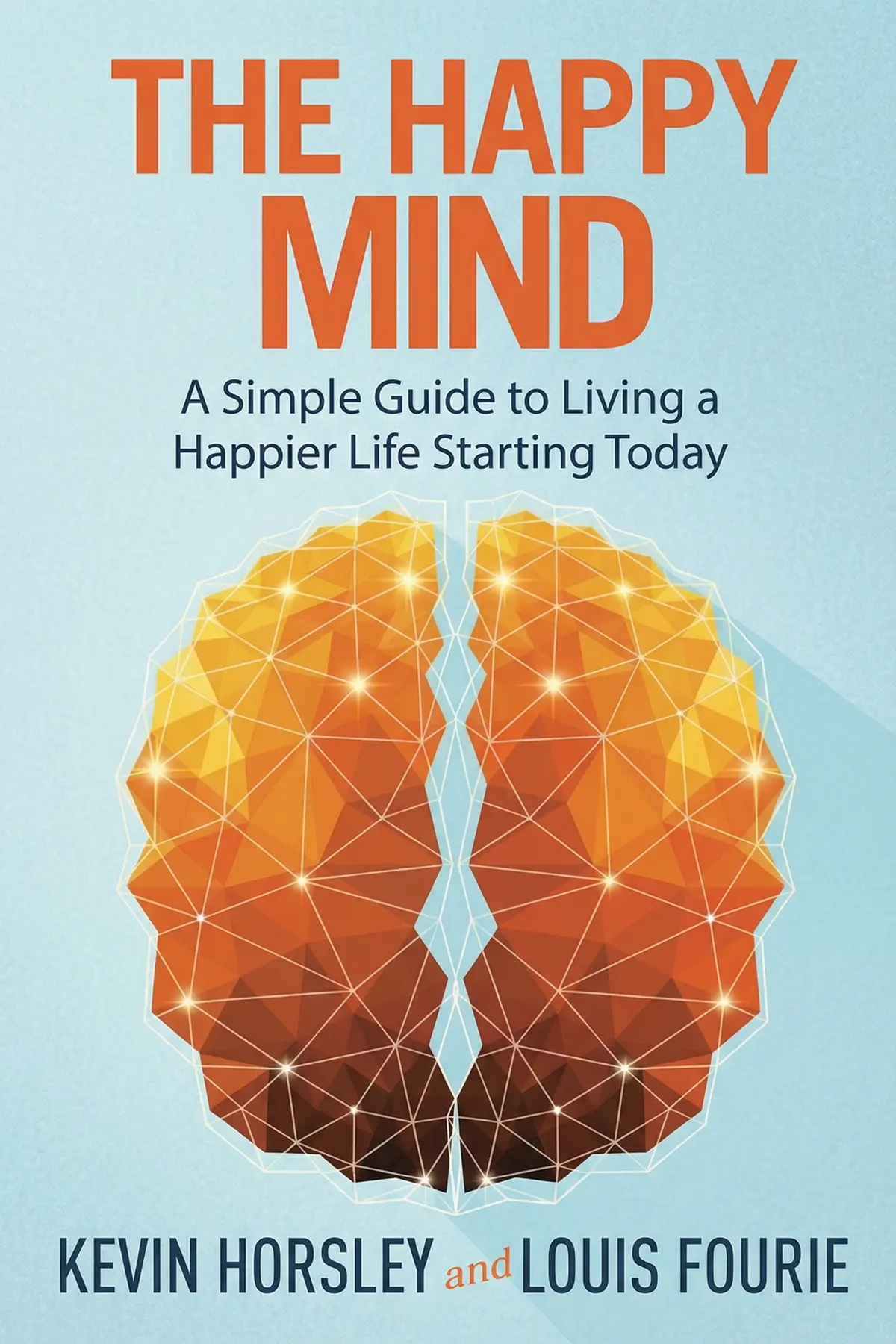
Table of Content
1. Introduction
1 min 00 sec
If you have chased a raise, a new car or the right partner and still felt flat afterward, Kevin Horsley and Louis Fourie have a plain explanation: you were looking in the wrong place. In The Happy Mind, they argue that money, possessions, applause and even other people offer only short bursts of pleasure. Lasting happiness has to be built from the inside.
It lives in the present moment and in how you respond to events, while old survival instincts keep pulling you toward fear and harmful habits. So contentment takes deliberate, daily practice. The authors supply that practice in small pieces: a half hour of planning each evening, a gratitude habit, a lighter home, a smaller dose of news and a calmer answer to a messy partner. Afterward you can tell a treat from real happiness and spot which of your reactions are stone age alarms you can safely ignore.
2. Stop expecting money or a partner to make you happy
1 min 30 sec
A new car, a bigger salary or the perfect partner seems like the obvious fix for feeling flat. The authors explain why chasing those things can leave you worse off than before you started.
3. Tell a passing treat from lasting contentment
1 min 38 sec
A bar of fine chocolate can feel good, yet that pleasure soon fades, while real happiness can hold steady as circumstances change. The difference changes what you reach for the next time loneliness arrives.
4. Calm the survival alarms that small slights set off
1 min 40 sec
A colleague’s snub or a surprise bill can ruin a whole day, out of all proportion to the actual problem. The cause sits in wiring far older than offices or phone contracts.
5. A hard childhood need not decide your mood
1 min 36 sec
Some people cannot simply shake off a bad mood, and their earliest years may explain why. The authors also point to a part of the brain that keeps the door to change open.
6. Thirty minutes a day to steer your life
1 min 33 sec
You cannot borrow happiness the way you borrow money, and you cannot control the markets. What you can do takes about half an hour each evening and a simple calendar.
7. Feel richer through gratitude and a new route
1 min 34 sec
Imagine losing everything you own and everyone you love, then getting it back piece by piece. That exercise, and a small change to your commute, point to two simple daily habits.
8. Lighten your home, your mind and your goals
1 min 30 sec
A mansion sounds wonderful until you picture cleaning it. The same hidden cost applies to crowded closets, lingering jealousy and goals so ambitious they spoil the very thing you love doing.
9. Turn down the bad news and the home drama
1 min 30 sec
Your news feed and your reaction to an untidy partner can both chip away at your happiness if you let them. Seeing it clearly can calm both your mornings online and your evenings at home.
10. Conclusion
1 min 11 sec
The Happy Mind keeps returning to one picture: a person searching everywhere except the one place happiness can live. They search the bank balance, the next purchase, the right partner and the perfect future, while ancient alarms about tribe and resources keep them anxious over cold shoulders and phone bills. Happiness cannot be bought or borrowed, the authors insist, but it can be practiced, because the response is always yours.
The practices are small enough to begin tonight. Spend half an hour on a plan covering work, home and free time, and let a bullet journal show you a month of ticked-off goals. Keep a short list of what you are grateful for, your health included, before an illness reminds you. When the news or a messy kitchen sets off an alarm, pause long enough for the thinking brain to answer before the stone age one does.
None of this erases pain or loneliness. It lets a steadier contentment sit beside them, in the only moment anyone actually lives, which is this one.
About this book
What is this book about?
Plenty of people reach the goals they were told would make them happy, such as the salary, the house or the partner, and still feel empty. Kevin Horsley and Louis Fourie argue that this happens because pleasure and happiness are different things. Money, gadgets, applause and even loved ones deliver brief highs, and a mind that depends on them has no control over its own mood. The authors trace much modern unhappiness to stone age wiring, which treats a snub at work or a doubled bill as a threat to survival. Childhood trauma can make those alarms louder still. Their hope rests on the thinking brain, which can learn to pause and choose a better response. From there the book turns practical. Readers get a short, plain toolkit: a daily half hour for a life plan, a bullet journal, a gratitude list, fresh routes through ordinary days, a decluttered home and mind, realistic goals, a leaner news diet and a kinder reading of a partner's habits. It suits anyone who wants a gentle, workable starting point for feeling steadier from one day to the next.
Book Information
Who it's for
Successful professionals feeling flat
Professionals who reached their money or career goals and still feel flat.
Adults under daily strain
People worn down by daily stress, alarming news feeds or small conflicts at home.
Newcomers to happiness books
Readers new to happiness books who want a short, practical routine to start with.
About the Author
Kevin Horsley
Kevin Horsley has studied the mind and memory for more than 30 years. He is one of only a handful of people in the world to hold the title International Grandmaster of Memory, has won a medal at the World Memory Championship and has twice set a world record. He has written four books, including Unlimited Memory, and works as an international speaker advising organizations on how people learn, think, create and stay motivated. Louis Fourie co-wrote The Happy Mind with him.
Ratings & Reviews
Ratings at a glance

What people think
Listeners find the suggestions in this book practical and logically structured, with one listener noting that it offers significant depth for such a quick read. They value the concentration on happiness, as one listener emphasizes the value of opting for gratitude and appreciation. The educational content earns praise, with one listener referencing the nine principles that anchor the information. Listeners categorize the work as straightforward. How the material flows receives varied opinions from listeners.
Top reviews
Bank
Kevin Horsley and Louis Fourie have managed to distill complex psychological concepts into a highly digestible, high-impact guide for the modern reader. I particularly appreciated how they contrasted lasting contentment with the fleeting nature of short-term pleasure-seeking. The structure is incredibly logical, moving from the theory of the 'optimal life' into actionable prompts that actually stick in your daily routine. Frankly, the advice on self-respect being the foundation of public respect hit home for me. It is a relatively short read, yet it feels packed with content that demands deep reflection. If you are tired of the usual fluff in self-help, this grounded approach to neuroscience and economics is a refreshing change of pace. Highly recommended for anyone seeking mental clarity and a sense of purpose.
Show moreMia
Wow, what a punchy read that actually delivers on its promises. The Happy Mind isn't just about smiling more; it is about the courage to make decisions and the discipline to look after your body. I found the section on 'giving without remembering and receiving without forgetting' to be particularly poignant. It challenges the reader to clean the slate and walk away from the nonsense that clutters our mental space. The authors' different backgrounds create a unique synergy that feels both practical and deeply spiritual. It is the kind of book you should read, then reread when life gets chaotic. Action may not always bring happiness, but there is no happiness without action.
Show moreGabriel
Finally got around to reading this, and it is easily one of the most peaceful books I have encountered recently. The central idea that action brings happiness, even if it doesn't always guarantee immediate results, is a game changer for my productivity. I love how it encourages you to prepare for tomorrow today while remaining rooted in the present moment. The authors' belief in human capacity to improve is infectious and truly optimistic. It is not a dense academic text; rather, it is a clear-eyed guide on how to stay true to yourself. This book genuinely helps you let go of old habits that no longer serve your growth. Thank you for this perspective.
Show moreTuck
This book provides a remarkably clean slate for anyone looking to overhaul their mental habits and find joy again. I was particularly struck by the quote about tomorrow belonging to the people who prepare for it today. Horsley and Fourie offer a unique perspective on 'the optimal life' that feels achievable regardless of your background or current situation. The writing style is simple and direct, which makes the profound messages about love and spirit even more impactful. Truth is, we often overcomplicate our own misery, and this book does a fantastic job of stripping away that nonsense. It is a beautiful, poignant read that I will be recommending to all my friends and family.
Show moreSaovapa
Ever wonder why we keep chasing external goals but never feel truly satisfied? This book suggests that genuine happiness is essentially a 'now-and-here' skill rather than a distant finish line we cross once we have enough money. The authors emphasize that we must create our own reality through specific, intentional choices every day. I loved the distinction between happiness and pleasure; one is a deep-seated state of being, while the other is just a temporary chemical spike. To be fair, some of the chapters felt a bit repetitive towards the end, but the core message remains powerful. It is a gentle reminder to stop looking for perfection and start looking for value in every small, simple moment.
Show moreSoontorn
Picked this up after seeing Kevin Horsley’s name, and I was pleasantly surprised by the collaboration with Louis Fourie. The nine principles guiding the text provide a solid framework for anyone feeling adrift in their daily routine. It is a very simple read, almost like having a conversation with two very wise mentors who just want you to succeed. The flow of material can be a bit jumpy at times, transitioning from economic theories to memory techniques, but it eventually clicks together. Not gonna lie, I have started implementing the 'gratitude over complaints' rule, and it is already shifting my morning mood. A solid, practical addition to any personal development shelf.
Show moreMay
The chapter on practical prompts is easily the most valuable part of this entire book. Instead of just theorizing about what happiness looks like, the authors give you actual tools to apply their theories to your messy, real-life situations. I particularly enjoyed the focus on harnessing your spirit and showing courage in your decision-making. Look, it is a very simple read, but simplicity is often where the most profound truths hide. While some sections felt like a speaker just talking about everything and anything, the overall message about choosing appreciation over expectation is vital. It serves as a great reminder that our minds are our own to run, provided we take responsibility for them.
Show moreBrahim
As someone who struggles with staying present, I found the 'now-and-here' philosophy in this book to be exactly what I needed. The authors argue that happiness is a skill we practice, not a gift we receive, which is a powerful shift in perspective. Personally, I appreciated the focus on sustainable goals rather than chasing short-term highs. The book is well-organized, though I wish some of the theoretical chapters in the beginning were a bit more concise. Still, the emphasis on choosing gratitude and learning from pain rather than succumbing to it is incredibly useful. It is a solid, practical guide for anyone looking to build a better life from the inside out.
Show moreRin
To be fair, much of the advice in 'The Happy Mind' isn't exactly groundbreaking if you have read a lot of self-help literature. We all know we should laugh more and cry less, or that we need to live in the present. That said, the way Horsley and Fourie package these 'basics' is quite organized and easy to follow. I found the audiobook version particularly soothing, as the narrator’s voice is slow and clear, making it a good 'wind-down' listen before bed. My main gripe is that it feels a bit light on the 'how-to' for the deeper psychological hurdles some people face. It is a nice enough book for a quick boost, but don't expect a radical transformation overnight.
Show morePrapaiwan
Not what I expected from a memory grandmaster. I was hoping for more neuroscience-heavy insights on how to rewire the brain for joy, but this felt more like a collection of generic inspirational quotes found on Pinterest. The material flow is quite disjointed, moving from one topic to another without much of a cohesive thread connecting the chapters. Frankly, it felt like a short blog series expanded into a book without much added depth. While there are a few useful thoughts on self-respect, the rest of it felt like common sense that didn't justify the purchase price for me. It is okay if you are a total beginner to mindfulness, but seasoned readers might find it underwhelming.
Show moreQuestions about this book
What is the main idea of The Happy Mind?
Kevin Horsley and Louis Fourie argue that money, possessions, achievements and other people can only give brief pleasure, so a mood tied to them is out of your control. Lasting happiness comes from inside: staying present, keeping attention on what is good and choosing your responses. Because old survival instincts keep triggering fear and distraction, the authors offer simple daily practices to keep that inner steadiness.
What is the difference between pleasure and happiness in The Happy Mind?
The authors describe pleasure as a sensation, like eating good chocolate, and sensations always pass and get balanced by pain or discomfort. In their view, happiness can hold fairly steady even when circumstances shift, provided you remain present in the current moment. It can even exist alongside a painful feeling such as loneliness, if you accept that feeling instead of rushing to distract yourself.
Why do people feel unhappy even when they have money?
The authors point to stone age wiring. Losing your place in the tribe or losing resources once meant death, so the brain still reacts to a snub from a coworker or a doubled phone bill with near panic. These small alarms repeat all day and add up to constant stress. Childhood trauma can make them louder, though the thinking brain can learn to answer them calmly.
How can I apply The Happy Mind in daily life?
Set aside about thirty minutes each evening for a life plan covering personal life, work and free time, and track daily goals in a bullet journal. Keep a gratitude list that includes ordinary things like health. Vary small routines, such as your route to work. Declutter your home, let go of jealous thoughts, set realistic goals, limit negative news and recall a partner’s kindness before reacting to an annoyance.
Readers also enjoyed

59 Seconds: Change Your Life in Under a Minute
Richard Wiseman





A Guide to the Good Life: The Ancient Art of Stoic Joy
William B. Irvine


A High-Performing Mind: Strengthen Your Mind and Live Your Best Life
Andrew D. Thompson


Abundance: The Inner Path to Wealth
Deepak Chopra
AUDIO SUMMARY AVAILABLE
Listen to The Happy Mind in 15 minutes
Get the key ideas from The Happy Mind by Kevin Horsley, plus 5,000+ more nonfiction titles.
- 5,000+ titles
- Listen as much as you want
- 7-day free trial
- Cancel anytime









