Traffic: Why We Drive the Way We Do (and What It
Tom Vanderbilt
 English
Explains why learning new hands-on skills as an adult keeps the mind alert, and how to get through the awkward beginner stage with group practice, imitation, patience and a fresh way of seeing.
1 min 03 sec
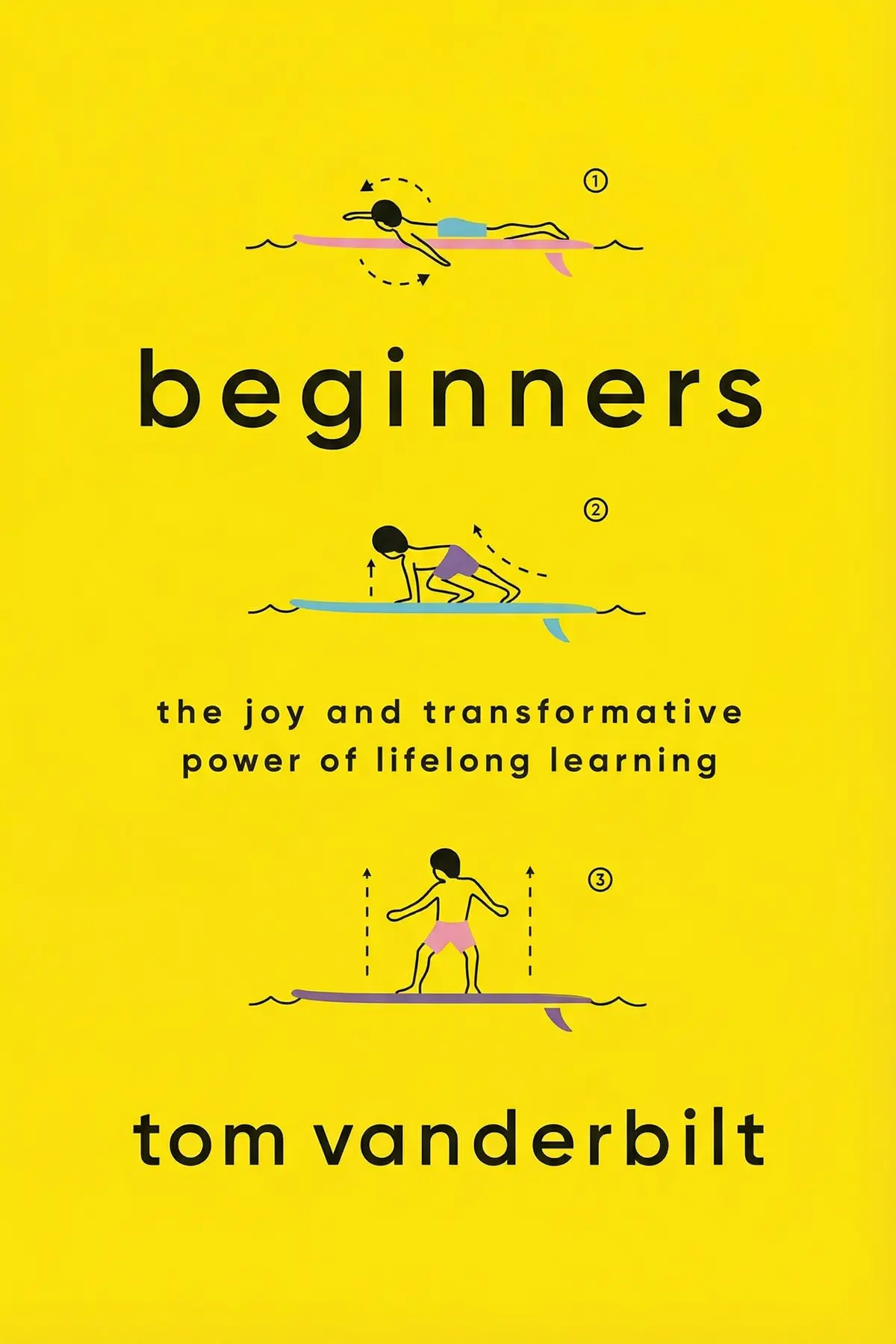
Most adults stopped learning new skills years ago, and they rarely notice until a child asks to be taught something. In Beginners, journalist Tom Vanderbilt argues that a grown brain can still change, and that older adults who took up painting or writing music also improved on general tests of thinking.
Vanderbilt tested the idea on himself, learning chess and surfing among other things, and he sets his own attempts beside findings from psychology and neuroscience. His case is that learning to do new things, beyond simply knowing new facts, keeps a mind awake at any age, and that the awkward early stage is worth enduring.
The evidence comes from a Monday-night choir in Manhattan, a juggling experiment, a study about dumbbells and glasses, and a retired woman who learned to swim at 70. What it adds up to is a map of the beginner’s stage: why it feels so clumsy, where most people give up, and which habits get you through.
1 min 53 sec
Children pick up new abilities with an ease adults envy, and they have a measurable head start. Yet the adult brain keeps a capacity that most grown-ups simply stop using, and using it shows up on tests of thinking.
1 min 42 sec
Researchers who wanted to study embarrassment found the perfect trigger in one ordinary request. The reason so many adults dread it says a lot about how we misjudge any skill we think we were born without.
1 min 44 sec
Fifty amateurs gather every Monday in a Manhattan cultural center to sing old British hits. What happens to their stress, their mood and their pitch explains why solo practice leaves so much on the table.
2 min 00 sec
A surfer follows every instruction perfectly and still ends up face down in the water. Two researchers who studied fighter pilots and chess players explain why, and why this exact moment empties most beginner classes.
1 min 40 sec
Scientists love studying people who toss balls in the air. Their experiments reveal what blocks beginners, and why novice jugglers who watched videos did better than those given a written guide.
1 min 37 sec
How to draw ranked among the most searched questions of its year, even though every kindergartner draws. A simple experiment with two circles and a line shows what goes wrong, and it has nothing to do with steady hands.
1 min 38 sec
A retired film professional who smoked a pack a day decided to learn to swim. A master jeweler decided his craft was not finished. Their choices show what staying a beginner looks like in practice.
1 min 09 sec
Adults often settle into what they already do well, and society tends to treat being a beginner as something for children. Vanderbilt answers that view with a choir, a wave, a juggling lab and a swimming pool. The clumsy stage is simply how learning feels from the inside, and returning to it now and then keeps a brain alert and a life interesting. A new skill changes how you see the world, and how you see yourself.
His most freeing advice is to learn something pointless. There is pressure to spend spare hours only on marketable skills such as coding. Vanderbilt suggests picking something purely for the pleasure of it, like flying a kite, dancing or a new language, with no guilt attached. Find others who do it, so the group can lift your performance. Watch someone skilled before you read the manual. And when progress stalls after the first lessons, remember that only 5 percent of new surfers come back, then decide to be one of them.
Patricia needed neither talent nor youth to swim that kilometer. She needed the willingness to look like a beginner, every morning, for a year.
Most adults stop learning new skills once school and early careers are behind them. They keep reading and absorbing facts, but they rarely pick up anything they have to do with their bodies or hands. Journalist Tom Vanderbilt noticed this in himself while teaching his young daughter to walk, talk and ride a bike, and decided to become a beginner again. Beginners follows that decision. Vanderbilt tried chess, surfing and other new pursuits, and he pairs his experience with findings from psychology and neuroscience: a five-stage model of how adults gain skills, juggling experiments, a study on how expectations bend our drawings, and research on why people perform better in groups. Along the way he meets a Manhattan choir that sings old British pop hits and a retired woman who learned to swim at 70. Readers get a clear picture of why the beginner stage feels so clumsy, where most people give up, and which habits carry them through. The book also makes a plain case for learning things purely for the pleasure of it.
Professionals who have not learned a new hands-on skill in years and feel mentally stuck.
Retirees and older adults wondering whether it is too late to start swimming, singing or drawing.
Anyone who gave up a hobby after the first awkward lessons and wants to understand why.
Tom Vanderbilt, born in 1968, is a journalist, blogger and author who has written for Wired, The New York Times Magazine, Popular Science and The Financial Times. His book Traffic: Why We Drive the Way We Do, published by Alfred A. Knopf in 2008, became a New York Times bestseller. He has also written Survival City, a travelogue through the hidden Cold War history of America, and You May Also Like, a book about taste.
Tom Vanderbilt

Listeners find the book thought-provoking, and one listener highlights its perspective on developing a growth mindset. They describe it as a captivating and great read. However, several listeners mention that the work is overly long.
Vanderbilt manages to capture the awkward, clumsy beauty of childhood learning and projects it onto the adult experience in a way that is incredibly heartwarming. The segments where he learns chess alongside his daughter were my absolute favorite because they highlight the unique bond that forms when a parent becomes a fellow student. Honestly, the book is a masterclass in curiosity, reminding us that we don't have to be experts to have a meaningful life. I was particularly captivated by the descriptions of open-water swimming in Greece—the writing is so vivid you can almost smell the salt air. While some might find the detailed breakdowns of his progress a bit much, I found the vulnerability of his failures to be the most authentic part. It’s a beautiful reminder that the journey is the destination and that failure is just another way of growing.
Show moreThis book arrived at exactly the right moment in my life when I was feeling terrified of starting a new job. Vanderbilt’s descriptions of his repetitive struggles with drawing and jewelry making were strangely comforting to read during my own steep learning curve. The way he frames failure as a necessary data point rather than a character flaw is a total game-changer for anyone dealing with performance anxiety. I loved the balance between heartfelt introspection and well-researched science, even if the author's lifestyle is a bit more 'jet-set' than my own. Look, if you need a nudge to finally sign up for that pottery class or start learning a new language, this is the book that will give you the confidence to do it. It’s an inspiring, lovely read that I've already recommended to three different friends this week.
Show morePicked this up because I wanted to understand why I feel so much pressure to be an expert at everything I do. Vanderbilt’s exploration of the 'beginner's mind' helped me realize that our time is too precious to spend only on pursuits with clear, productive outcomes. The chapter on juggling was especially enlightening, not because I want to juggle, but because it perfectly illustrated the science of how we process physical tasks. It’s a captivating read that challenges the assumption that adulthood must be synonymous with mastery and stagnation. While he definitely has more resources than the average person, the emotional core of the book—the relationship with his daughter and his own self-doubt—is something anyone can relate to. I finished it feeling like I had permission to be a clumsy novice again, and that is a truly valuable gift.
Show moreAs someone who has always felt stuck in a professional rut, this book felt like a breath of fresh air for my brain. Vanderbilt’s exploration of why adults should embrace being bad at things is genuinely thought-provoking and offers a refreshing perspective on the growth mindset. I loved the chapters on juggling and singing, though I'll admit some of the technical descriptions of neuroscience felt a bit dry after a while. The truth is, the book makes a compelling case for 'the beginner’s mind' even if the author’s ability to fly to Costa Rica for surf camp isn't exactly relatable for the average reader. Still, I found myself inspired to pick up my old guitar again after years of it gathering dust. It's a bit long-winded in the middle sections, but the overall message about finding joy in the process rather than the outcome is something every adult needs to hear.
Show moreFinally got around to reading this after seeing it on several bestseller lists, and I have to say the optimism is quite contagious. Vanderbilt writes with a clear, engaging style that makes even the technical aspects of chess theory feel accessible to a total novice like me. To be fair, the book is definitely a bit of a 'privilege-fest,' but if you can look past the private tutors, there are some great nuggets of wisdom here about the neuroscience of neuroplasticity. I particularly enjoyed his reflections on how parenting forced him out of his mid-career comfort zone and back into the role of a student. It’s a bit overstuffed with personal anecdotes, but the central premise—that learning is its own reward—is handled with a lot of grace. A solid choice for anyone looking to shake up their routine and find a bit of wonder.
Show moreLook, the idea of failing repeatedly in public sounds like a nightmare, but Vanderbilt makes it sound like a grand adventure. This is a fun book about the journey from being a total beginner to becoming someone who is just 'okay' at something, which is a goal we don't celebrate enough. I was fascinated by the section on how singing affects the brain and the community aspects of joining a choir as an adult. Got to say, the book is a bit lengthy and could have used a sharper editor to trim down some of the more indulgent memoir segments. Nevertheless, the infectious enthusiasm for learning is what kept me turning the pages until the very end. It’s not a perfect book, but it’s a very motivating one for anyone feeling stuck in their ways and looking for a new spark.
Show moreThe core message is fantastic, but the execution left me feeling a little conflicted by the end of the final chapter. I love the idea of adult novices, yet the book is so heavily focused on the author’s personal memoir that the actual 'how-to' advice gets lost in the shuffle. Frankly, it’s hard to stay focused when he spends pages detailing his surfing lessons at Rockaway Beach while ignoring the practical logistics of a normal working schedule. The neuroscience bits are the strongest part of the text, offering real insight into how our gray matter adapts to new challenges like drawing or jewelry making. However, the pacing is quite slow and the book could have easily been fifty pages shorter without losing any of its intellectual weight. It's a decent read for a rainy weekend, but don't expect a life-changing epiphany that applies to your daily commute.
Show moreEver wonder why we stop trying new things the moment we hit thirty? Vanderbilt dives deep into this question, using his own experiences with juggling and singing to illustrate the mental barriers we build as we age. In my experience, the book works best when it focuses on the psychological benefits of being a 'non-expert' and the freedom that comes with low expectations. That said, the narrative structure is a bit scattered and some chapters definitely drag on far longer than necessary. You get the sense that he’s trying to justify a very expensive series of vacations under the guise of 'research,' which leaves a sour taste if you’re reading this while working a 9-to-5. It’s an interesting enough look at the growth mindset, but it lacks the grounded, practical accessibility I was hoping for when I first picked it up.
Show moreI really wanted to like this book, but it ended up being a tedious slog through one man’s expensive mid-life hobbies. While the science of how we learn as we age is fascinating, those sections are buried under mountains of self-indulgent anecdotes about private coaching sessions. Not gonna lie, I felt a bit alienated by the sheer level of privilege on display here; most of us can't just hire a professional chess tutor or a voice coach for our casual interests. It’s too long and repetitive, making the same point about 'willingness to fail' over and over again until the original charm wears thin. If you want a concise guide to learning, look elsewhere, because this feels more like a travelogue for the elite than a helpful manual for the masses. I struggled to finish it because it felt more like an excuse for a vacation than a serious study.
Show moreTo be fair, the research presented in the first few chapters is quite strong, but the rest of the book is frankly dull. I found myself skimming through the endless descriptions of his surfing trips and singing lessons, waiting for a point that never really landed. Most of the book is just the author detailing his efforts to learn a collection of skills that most people will never have the time or money to pursue. It felt like a collection of magazine articles that were stretched out to fill a book-length format, resulting in a very repetitive reading experience. The central insight—learning by being willing to fail—is something most people already know, so it didn't feel particularly revelatory or helpful. It was a chore to get through the second half, and the elitist tone made it hard to stay engaged.
Show moreVanderbilt argues that adults should keep learning new skills they have to practice, such as singing, surfing or drawing, and not only absorb facts. The adult brain keeps its plasticity, and studies he describes found that older adults who took up painting or music also improved on general thinking tests. Staying a beginner at something, he says, keeps the mind alert and life engaging.
Drawing on the five-stage model of Stuart and Hubert Dreyfus, Vanderbilt explains that becoming a novice only requires learning basic rules, but becoming an advanced beginner means applying them in a messy real world full of exceptions. Progress suddenly stalls at that point and frustration peaks. In surfing, only 5 percent of learners return after their first lessons. Knowing the stall is normal helps you keep going.
Watch and then do. In one experiment, novice jugglers who watched videos did better than those given a detailed written guide. Practice until movements become automatic, since overthinking every step overwhelms the brain. Practicing with others helps too: Norman Triplett found that cyclists rode their best times in company, an effect called social facilitation.
Vanderbilt’s answer is no. He tells the story of Patricia, a retired film professional in Chamonix who smoked a pack a day and had never swum. At 70 she learned from YouTube videos, rehearsing strokes at home each night and testing them in a pool each morning. A year later she swam a kilometer in the Mediterranean, then took up pickleball and astronomy.
Pick one skill purely for enjoyment, even a pointless one like kite flying or dancing. Join a group or use an app to practice with others. Watch skilled people before reading instructions, and repeat until the moves run on their own. Expect a stall after the first lessons and treat it as a normal stage. When drawing or learning anything, check what is really there before trusting what you expect.
AUDIO SUMMARY AVAILABLE
Get the key ideas from Beginners by Tom Vanderbilt, plus 5,000+ more nonfiction titles.