

A Room of One’s Own
Virginia Woolf
 English
Don Lemon explains why American racism was designed for profit, how indifference and myth keep it alive, and how votes, legal pressure and everyday spending can make it costly enough to dismantle.
1 min 06 sec
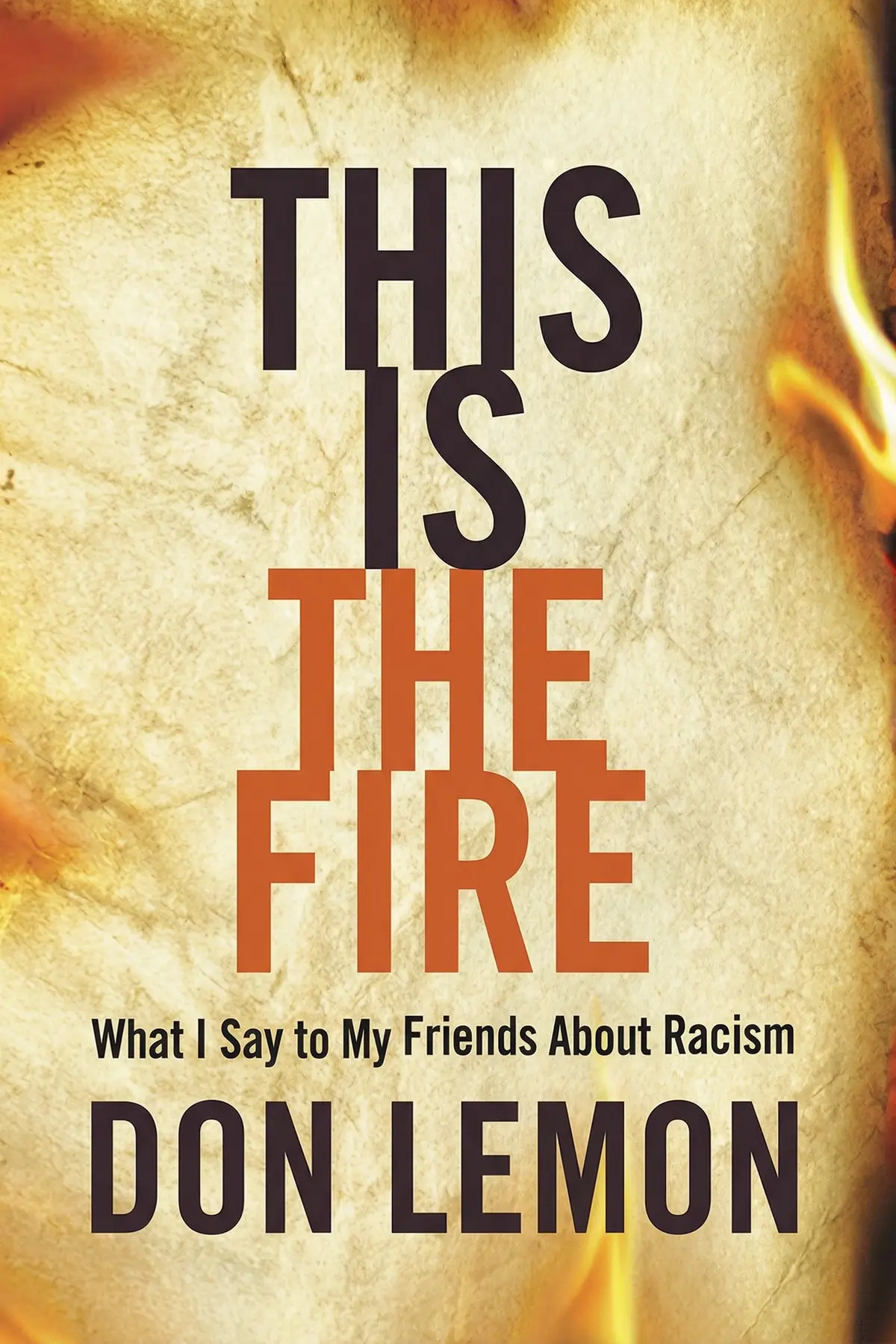
If you want to talk honestly about racism with friends or colleagues but are unsure where to begin, Don Lemon offers a starting point: American racism was designed, and anything designed can be redesigned. In This Is the Fire, the longtime CNN anchor reads the summer of 2020, when a video of George Floyd’s death set off nearly 5,000 protests, as the blaze James Baldwin warned of in 1963.
Lemon’s case is that racism in the United States was built deliberately to make money, then kept alive by indifference to Black deaths and by comforting myths. The crisis, he argues, is a chance to replace that system, though change will come from coalitions using votes, laws and wallets, not from a sudden change of heart.
The ideas ahead follow the system from Louisiana plantations to police cars, cinema screens and a shop doorway. Each one leaves you with something usable: a way to read the news, a story worth questioning, a purchase worth refusing.
2 min 21 sec
Lemon makes a startling claim about the most divisive presidency in recent memory: that the country needed it. His reasoning turns a year of grief into an opening, but only on one demanding condition.
2 min 28 sec
Many people picture racism as old prejudice that simply drifted into the present. Records from a Louisiana plantation museum tell a colder story, and that story changes what it would take to undo it.
2 min 11 sec
Four words from a president during the worst days of the pandemic struck Lemon as a confession about something far older. Images of suffering have moved crowds for centuries, and he asks how long that can last.
2 min 12 sec
The anger behind the slogan to defund the police is easy to understand. Lemon still thinks the slogan points the wrong way, and a city in New Jersey hints at what could work instead.
2 min 13 sec
Statues, history lessons and favorite childhood films can carry ideas their makers never questioned. Lemon wants them examined openly, yet he refuses the popular answer of tearing everything down.
2 min 18 sec
A simple purchase of chopping boards ended with Lemon walking back into the shop to ask for a refund. The small episode leads to his largest argument about where racism began and how it ends.
1 min 22 sec
Lemon’s book reads like a long talk among friends, and its message is that racism in America was never just a matter of feeling. It was a business plan, written in Louisiana records and enforced with branding irons, later dressed up in myths about noble generals and sustained by a shrug whenever Black people died. Something built that deliberately will not dissolve because people feel sorry. It has to be taken apart with the tools that built it: law, politics and money.
That is why Lemon found hope in the fire of 2020. A crisis that exposes a system also offers the chance to replace it, provided people sit with uncomfortable ideas and join hands with those unlike themselves.
What he asks is practical. Protect the people most exposed to racist violence by voting, by peaceful activism and by giving time and resources. Keep your phone ready, since a recorded incident can become evidence when justice is sought. Watch old stories with context instead of worshipping or erasing them. And spend as if each purchase counts, the way Lemon did when he walked back into that shop and asked for his money.
Baldwin warned of the fire. What gets built once it burns down, Lemon insists, is still a choice.
In 2020, a pandemic that hit Black Americans disproportionately collided with the killings of Ahmaud Arbery, Breonna Taylor and George Floyd, and the protests that followed were the largest in the nation's history. Don Lemon, the longtime CNN anchor, sees that year as the fire James Baldwin warned of in 1963. He also sees it as an opening. Written as the conversation he has with his own friends, the book traces racism back to a deliberate economic system: slavery on Louisiana plantations, enforced with terror and later defended by myths such as the Lost Cause. Lemon follows its legacy into the low expectations he faced as a child, the muted response to Black deaths from COVID-19, police violence and the films and statues that still carry old stereotypes. His proposals are concrete and sometimes contrarian. He rejects defunding the police in favor of specialized units and justice reform, opposes cancel culture in favor of context, and argues that racism will end through political and economic pressure rather than guilt. Readers get a clear account of how the system works and specific ways to push against it.
Readers who want a clear, personal account of how American racism works today and what to do about it.
People who were moved by the 2020 protests and want to turn that feeling into votes, spending and conversations.
Managers and educators who want to understand microaggressions, low expectations and the history behind them.
Don Lemon is a journalist born in Baton Rouge, Louisiana, in 1966. He anchored local news in Alabama and Pennsylvania, reported for NBC, joined CNN in 2006 and presented Don Lemon Tonight from 2014 to 2022 before launching his independent The Don Lemon Show. He won an Edward R. Murrow Award for his reporting on the capture of the Washington, D.C. snipers, along with three regional Emmy Awards. He also wrote the memoir Transparent and has taught as an adjunct professor at Brooklyn College.

Listeners consider this work essential for the current social climate, full of perceptive ideas that provoke deep reflection. The narrative voice feels genuine, mirroring the author’s natural speaking style, and listeners enjoy the rapid tempo and profound sentiment that resonates on an emotional level. They prize its informative and instructive nature, with one listener highlighting the useful materials provided in the appendix, though others characterize the text as severe and gut-wrenching.
Don Lemon’s voice translates remarkably well from the screen to the page, making this feel less like a lecture and more like an urgent conversation across a kitchen table. I opted for the audiobook to hear his specific cadence, and his stories about growing up in Louisiana were deeply moving. He doesn't hold back on the trauma of our history, but he balances it with a surprising amount of optimism for the future generations. While some might find the mentions of recent political figures distracting, I think it's impossible to discuss modern racism without acknowledging that context. The book moves at a lightning pace, yet it lingers in your mind long after the final chapter. It’s a heartbreaking look at the 'fire' Baldwin warned us about, yet Lemon offers a flicker of hope that we can still douse the flames.
Show moreWow, what a punch to the gut this was. I finished it in two sittings because I simply couldn’t put it down, even as it made my heart ache with every page. Lemon doesn't sugar-coat the reality of being Black in America, and he uses his platform to shine a light on the subtle indignities that most white people never have to think about. The way he references James Baldwin throughout the text provides a beautiful, haunting continuity between the civil rights era and the present day. It is a necessary read for anyone who wants to understand why our country is currently so polarized. Some might call it a rant, but to me, it felt like an honest cry for justice and a plea for empathy. The factual information he provides about historical incidents I had never heard of made this an incredibly educational experience.
Show moreThis book is a necessary artifact for our current era. Lemon captures the frantic, heartbreaking energy of the last few years and distills it into a narrative that is both personal and prophetic. I particularly appreciated how he didn't shy away from the 'fire' imagery—he makes it clear that we are in a state of emergency. The chapters on his childhood in Louisiana were particularly striking, offering a window into a world that many of us only see in headlines. He writes exactly as he speaks, which makes the prose feel authentic and urgent. I’ve read a lot of books on this topic lately, but this one felt the most immediate, probably because it’s so rooted in the 'now.' It’s an eloquent call to action that refuses to let the reader remain a passive observer in the fight for equality.
Show moreEver wonder what it’s like to have the 'talk' with your children, or to feel the weight of history every time you walk out the door? Lemon explains these nuances of the Black experience with such clarity and compassion that it’s hard not to be moved. This isn't just a book about politics; it’s a book about the soul of a nation that is currently on fire. He weaves in references to Caste and the works of James Baldwin to show that our current struggles are part of a much longer, uglier timeline. The prose is beautiful and raw, often feeling like a letter to a friend. It’s a call for us all to do better—not just by talking, but by actually changing the way we interact with the world around us. A truly necessary read for those of us trying to find a path through the polarization.
Show moreFinally got around to reading this and I’m struck by how much it feels like Lemon is speaking directly to the reader. The prose is conversational and fast-paced, making a heavy subject matter much more accessible for a general audience. To be fair, there are moments where he veers into what feels like a CNN monologue about the Trump administration’s handling of the pandemic, which sometimes muddies the broader historical points he’s trying to make. However, the chapters where he explores his family’s genealogy and the systemic barriers they faced are absolutely essential reading. He relies on works like Caste to build his arguments, which gives the book a solid intellectual foundation despite its brevity. It’s a gut-punch of a book that asks us to look in the mirror, even when we don’t like what we see.
Show moreAs someone who typically identifies as conservative, I went into this expecting a political manifesto but found something far more personal and challenging instead. Lemon writes with a vulnerability that I wasn't expecting, especially when discussing the internalized racism and the 'talk' that Black families have to give their children. Frankly, some of the blanket statements about America felt a bit harsh to me at first, but I tried to sit with that discomfort rather than dismissing it. The appendix at the back is a goldmine of resources for anyone actually looking to do the work and move past just 'being a good person.' My only real gripe is that he occasionally loses the thread by focusing on specific news cycles. Still, it’s a vital perspective that helped me see things from a viewpoint I rarely encounter in my own social circle.
Show moreTruth is, I didn't expect to be so moved by the family anecdotes in this book. Most people know Don Lemon as the polished news anchor, but here he lets the mask slip to show a man who is deeply worried about the state of his country. The pacing is excellent; it’s a quick read that packs a significant emotional wallop without feeling over-encumbered by academic jargon. Look, there are definitely sections where his political leanings are front and center, particularly his criticisms of the 45th president, which might alienate some readers. But if you can look past the partisan friction, there is a wealth of wisdom here about how we treat one another. It’s a harsh mirror to hold up to society, but Lemon does it with a sense of love for what America could eventually become if we finally address the infection of racism.
Show morePicked this up after seeing the author's passion on screen and I wasn't disappointed by the emotional depth he brings to these pages. He tackles heavy themes like systemic injustice and white privilege with a directness that is refreshing, even if it’s occasionally uncomfortable to sit with. The book is short, but don't let the page count fool you; it’s a dense, challenging look at our culture. I found the appendix of resources to be particularly helpful for continuing my education beyond his own experiences. While I agree with other reviewers that he spends a lot of time on the previous administration, it’s hard to deny that those years were a catalyst for the 'fire' he’s describing. It’s an authentic, heart-on-his-sleeve kind of book that everyone should at least give a chance.
Show moreThe writing style feels very much like a CNN broadcast—loud, urgent, and deeply focused on the current political climate. While Lemon is clearly brilliant and passionate, I found that the book spent a bit too much time on Trump and the pandemic rather than offering a truly new framework for dismantling racism. If you’ve already read Wilkerson or Kendi, you might find this to be a bit of a rehash of familiar themes and 'preaching to the choir.' It’s a quick read, and his personal anecdotes about his family in the South are the highlights, providing a much-needed human element to the statistics. I was looking for more definitive, actionable steps to take, but this felt more like a collection of essays or a long-form rant. It’s a good introduction for someone just starting their journey into anti-racism.
Show moreI wanted to love this, but it felt a bit repetitive at times. Not gonna lie, I’ve been following the news closely, so a lot of what was discussed here felt like a recap of the last two years of CNN broadcasts. The personal stories about his mother and his upbringing were the most compelling parts, but they were often interrupted by long sections about Donald Trump and COVID-19. It’s definitely a fast read, which I appreciated, but I’m not sure I walked away with any new tools for helping my community move forward. It’s more of an emotional overview than a strategic guide. For someone who isn't already 'plugged in' to these conversations, it would be a 5-star revelation. For me, it felt like a 3-star summary of things I’ve heard him say on TV for years.
Show moreLemon argues that racism in America was created deliberately to profit from enslaved Black labor, then sustained by indifference to Black deaths and by myths such as the Lost Cause. He reads the crisis of 2020, from George Floyd’s killing to the pandemic, as the fire James Baldwin predicted, and as a chance for change if people build coalitions and use political and economic power.
No. Lemon agrees policing must change but thinks the defund demand alienates potential allies and is too simple. He favors specialized units for problems such as domestic violence, citing Newark’s Office of Violence Prevention staffed by social workers, and wider reform of the justice system, including policies and prosecution patterns that discriminate against Black people, through voting and new laws.
Lemon wants racist tropes in films, books and television, including blackface, called out whatever the creator intended, because they feed prejudice in workplaces and courtrooms. But he does not support removing old works or canceling performers, saying that threatens free speech and leaves gaps in the national story. He prefers presenting such works with context about where the stereotypes came from and what they led to.
Lemon traces racism to profit from slavery and argues that appeals to guilt will not end it. Instead, Black Americans and their allies should make racism costly by refusing to spend at racist brands and businesses and by suing over police brutality. He did this himself, returning chopping boards to a shop that kept him outside during COVID rules while a white woman shopped inside.
He urges readers to shield those most at risk from racist violence by voting, taking part in peaceful activism, giving their time and resources, and educating themselves. He also advises being ready to document racist incidents, since recordings can become evidence in the search for justice. Beyond that, he asks people to engage with uncomfortable ideas, form coalitions across marginalized groups and spend their money deliberately.
Virginia Woolf

Tracy Rosenthal

Jessica Valenti



Johny Pitts


bell hooks


Fay Bound Alberti
AUDIO SUMMARY AVAILABLE
Get the key ideas from This Is the Fire by Don Lemon, plus 5,000+ more nonfiction titles.









