

A Room of One’s Own
Virginia Woolf
 English
 ไทย
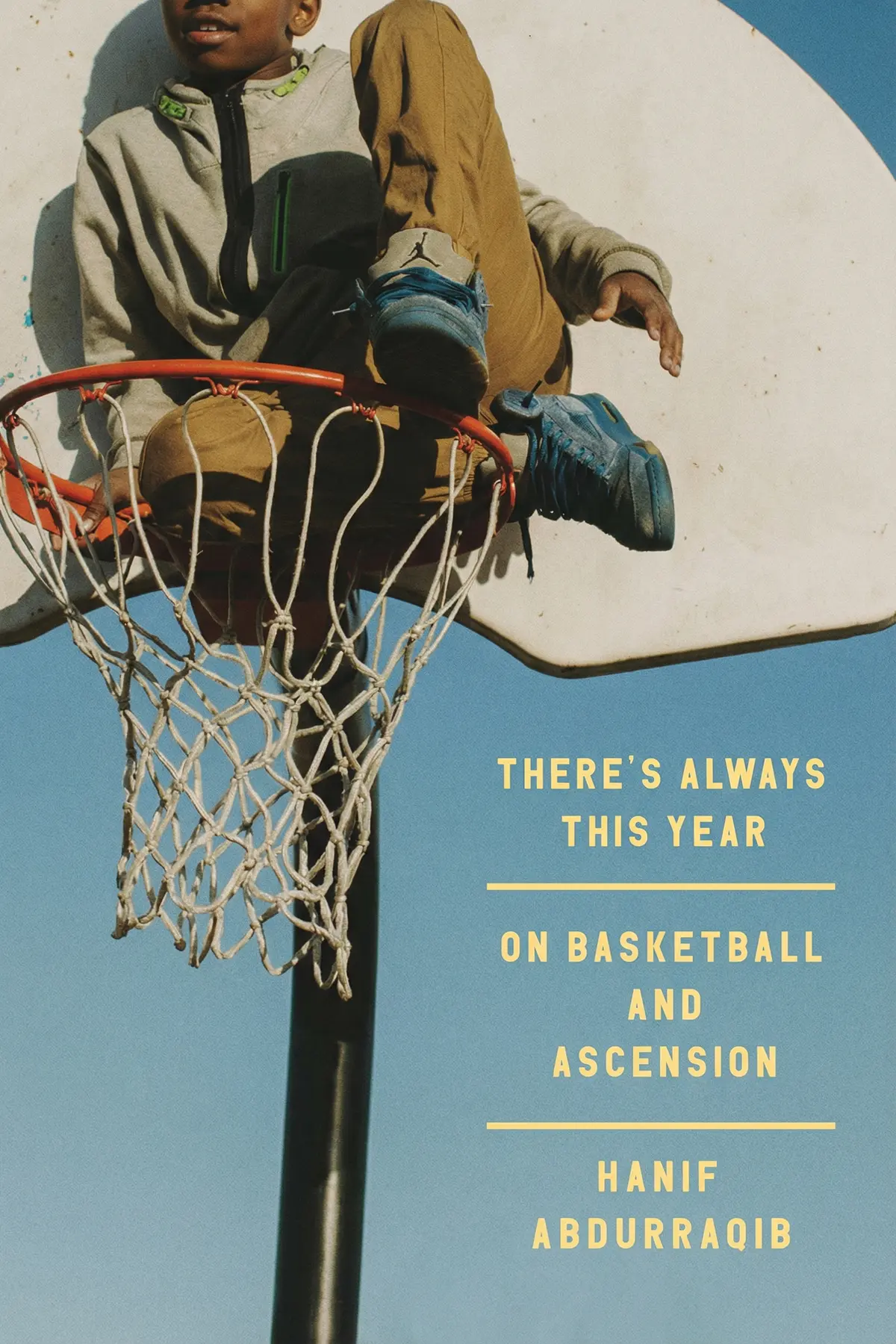
Hanif Abdurraqib uses Ohio basketball, from LeBron James to neighborhood high school teams, to rethink home, identity, time and success, and to question an American Dream that hides what making it really costs.
1 min 02 sec
If your idea of success is measured in titles, money and applause, Hanif Abdurraqib has an unsettling observation: those markers say little about whether a life is going well. In There’s Always This Year, the poet and critic uses basketball in his home state of Ohio to ask what home, identity, time and success really mean, especially for people society celebrates one moment and uses the next.
His throughline runs through every court he describes. The things we think we earn alone, from a sense of belonging to a sense of self, are in fact held in common, easily broken, and worth more than fame. The book moves through the life of LeBron James as seen by the people who claimed him, the brothers who passed a school jersey down like an inheritance, and a lesser-known Cavalier whose story echoed the author’s own hard years. What it offers is a sharper way to read your own ambitions, and a reason to measure them against your roots instead of the scoreboard.
1 min 49 sec
Many Ohioans treated one player’s choice of team as a personal betrayal, then welcomed him back. The episode reveals how fragile belonging is, and why the author ended up with two homes that each felt half right.
2 min 00 sec
In some Ohio neighborhoods, a basketball jersey passes from brother to brother like a family heirloom. Yet the same sport that builds that pride can also shrink how the wider world sees the people who play it.
1 min 35 sec
A city’s heartbreak over a departing star and its longing for his return taught the author something about pain. The game clock, he suggests, offers a better way to read a losing season in your own life.
1 min 47 sec
Fame and money look like the finish line, yet for many athletes they arrive with burdens nobody agreed to carry. The author asks who the American Dream really serves, and what a better measure of success might be.
1 min 06 sec
What the book finally builds is a way of watching. Abdurraqib looks at a basketball court and sees a town’s pride, a family’s inheritance, a young man’s limits and a country’s myths, all in one frame. Fandom, he suggests, is really about the stories we tell ourselves through games, stories full of love, loss and hope, and the comfort of cheering for something larger than any one of us.
You do not need basketball for this. Soccer, hockey or cricket can serve the same purpose. Think about the sport, team or place that has shaped you, and what it taught you about belonging and failure. When the usual markers of success tempt you, set them beside the people and places that ground you, and notice which ones you would grieve losing. When a season goes badly, remember the clock.
James left Cleveland and came back, and the city chose to welcome him. Home, for Abdurraqib, is that choice to endure together. And as long as time remains, there is still this year.
Fame, wealth and trophies are the usual proof that someone has made it in America. Hanif Abdurraqib, a poet and critic who grew up in Columbus, Ohio, looks at those markers through the sport he knows best and finds them wanting, especially for Black athletes who are cheered and boxed in at the same time. He follows four ideas across the basketball courts of his home state. Home turns out to be a bond a single decision can shake, as Cleveland learned when LeBron James left and later returned. Identity is something families pass down and the public narrows. Time is the clock that keeps a losing game alive. And success carries costs in health, relationships and selfhood that the American Dream rarely admits. Readers get a way to look at their own ambitions differently: to weigh them against the people and places that ground them, to treat loss as part of growth, and to remember that while time remains, a turnaround is still possible.
Sports fans who sense their loyalty to a team says something about who they are.
Ambitious professionals questioning whether fame, pay and titles are worth what they cost.
Readers interested in Black identity in America and the myths built around star athletes.
Hanif Abdurraqib, born in 1983, writes poetry, essays and music criticism, with work in The New Yorker, The New York Times, Pitchfork and The FADER. His 2019 book on A Tribe Called Quest, Go Ahead in the Rain, was a New York Times bestseller longlisted for the National Book Award. His poetry collection A Fortune for Your Disaster won the 2020 Lenore Marshall Prize, and his essay collection A Little Devil in America earned the 2022 Andrew Carnegie Medal for Excellence.
Listeners find the author’s prose to be lyrical and nearly poetic in its delivery. Additionally, the narrative is praised for its sense of everlasting hope, and one listener characterizes the work as a beautiful game of basketball.
Picked this up after the National Book Critics Circle announcement and wow, Abdurraqib is operating on another level entirely. He uses the framework of a basketball game to explore the heavy weight of expectations and the concept of home in Ohio. The prose is thick and lyrical, demanding that you slow down and really inhabit every single syllable. Truth be told, it feels more like an extended poem than a standard memoir, which might frustrate some readers looking for a straight timeline. But for me, the way he connects LeBron’s career to the lived realities of Black life and the cycle of the prison system was breathtaking. It’s a book about miracles and how we define them. Truly stunning work that lingers long after you close the cover.
Show moreThis book is a masterclass in how to weave personal history with cultural observation. I’ve always admired Hanif's ability to find the profound in the mundane, but here he elevates basketball to something spiritual. It’s rhythmic, it’s messy, and it’s deeply vulnerable. He doesn’t just talk about sports; he talks about the ghosts of the people we used to be and the cities that keep us grounded. Frankly, the discursive style might be a bit much if you aren't in the mood for deep thinking, but the payoff is immense. It felt like a beautiful game where the score doesn't matter as much as the effort. I’m in awe of his brain and how he sees the world.
Show moreAs a basketball fan from the Midwest, seeing LeBron James used as a lens for examining ambition and displacement hit home in a way I can't quite describe. Abdurraqib captures that specific feeling of "there’s always this year," that eternal hope that keeps us coming back to the court and to our hometowns. The structure is brilliant, mimicking a game with four quarters and timeouts that allow the reader to catch their breath. It’s dense and demands your full attention, covering everything from the invisibility of certain communities to the costs of becoming a legend. I found myself highlighting entire pages just for the sheer beauty of the phrasing. This is easily one of the best things I’ve read in years.
Show moreLook, Hanif Abdurraqib writes sentences that you want to live inside of for a while. This isn't just a book about basketball; it’s a book about how we survive the places we are from. He treats LeBron James not just as an athlete, but as a symbol of possibility and a mirror for the community’s own dreams. The way he explores the concept of "witnessing" is nothing short of profound. I was moved to tears by the sections on his family and the quiet moments of grace found in the struggle. It’s a complex, multi-layered text that rewards multiple readings. If you’re looking for a simple sports bio, look elsewhere, but if you want art, this is it.
Show moreFinally got around to finishing this today, and I think it’s a stunning meditation on the concept of grace. Abdurraqib has this way of making you care about things you never thought you’d be interested in through sheer poetic force. The book explores the intersections of class, race, and athleticism with such a sharp, intellectual edge. I loved the rhythmic quality of the writing; it felt like listening to a great jazz record where the improvisations are the best part. It’s about the people who stay and the people who leave, and the stories we tell ourselves to keep going. A total triumph of cultural criticism that feels both timely and timeless.
Show moreEver wonder if a sports book could actually be a prayer? This feels like one. Hanif Abdurraqib is an alchemist of language, turning stories of Ohio neighborhoods and hoops into something sacred and shimmering. It’s a challenging read because it refuses to be linear, jumping through time and space like a fast break. I did find the pacing a bit sluggish in the middle sections where the poetic digressions went on for a bit too long. However, the emotional hits are so heavy that they more than make up for the occasional confusion. It’s a meditation on grace and what it means to belong to a place that doesn't always love you back.
Show moreThe countdown structure of the chapters creates this incredible sense of urgency that mimics the final minutes of a tight game. I loved how the author blended his own memories of growing up in Columbus with the larger-than-life mythos of LeBron James. It’s a very internal book, focused on the author’s perspective and his specific, soulful way of looking at the world. Gotta say, it’s not a light read by any means. You have to be prepared for some heavy topics like the carceral state and the fragility of Black life. While I loved the sentiment, I do think the lack of a clear narrative might lose some people who prefer traditional biographies. Still, the prose is absolutely top-tier.
Show moreTo be fair, I went into this expecting a standard biography of LeBron James and found something much more experimental instead. It took me a second to adjust to the "prose poetry" style, but once I did, I was hooked. The author’s voice is so earnest and heartfelt that you can’t help but be swept up in his observations about Ohio and the nature of fame. It’s a slower-paced book than I’m used to, and it leaves a lot of questions unanswered, which was a bit frustrating at times. But the beauty of the language and the depth of the insight into human ambition are undeniable. It’s a book that asks for your patience and pays it back in full.
Show moreNot what I expected at all, and I'm still trying to process the experience of reading it. While I recognize the brilliance in the writing, I found it incredibly difficult to follow the thread of the narrative. It’s very much "prose poetry," and there were times when I just wanted him to get to the point rather than drifting into another tangential thought. I came for basketball history and stayed for… well, I’m not entirely sure what I stayed for. There are important discussions about racism and classism buried in here, but the stream-of-consciousness style made it a bit of a slog for me personally. If you like experimental non-fiction, you’ll love it, but it just wasn't my cup of tea.
Show moreThe truth is, I struggled with the nonlinear flow of the narrative for the first fifty pages. I’m a huge fan of Hanif’s previous work, but this one felt a bit more self-indulgent in its stylistic choices. It reads more like a collection of loosely connected thoughts than a cohesive book about basketball or identity. I appreciated the sections on family and the weight of legacy, but I often felt like I was drowning in the "lyrical" descriptions. It’s undeniably well-written, but the lack of a grounding narrative made it hard for me to stay engaged. I wanted to love it more than I actually did, even though I respect what he was trying to achieve with the format.
Show moreIt uses basketball in Ohio to explore four ideas: home, identity, time and success. Abdurraqib draws on Cleveland’s relationship with LeBron James, families of brothers who played for local high schools, and his own life to argue that these things are shared and fragile, and that real success lies in staying connected to your roots more than in fame or wealth.
Abdurraqib reads James’s 2010 move to the Miami Heat, known as The Decision, as proof of how easily a shared sense of home can be shaken, since many Ohioans felt betrayed. After James came back four years on and the city embraced him, the author took it as a sign that home is somewhere to survive hardship, recover and rebuild as a group, and not just to cheer.
Abdurraqib argues that the idea that talent and hard work are enough ignores systemic barriers that keep many people from getting a real chance. Stars like Michael Jordan and LeBron James are exceptions, and their stories should not represent all Black Americans. Success, he says, depends heavily on the hand a person is dealt, and reaching the top can cost relationships, mental health and sense of self.
Reflect on the sport, team or place that shaped you and what it taught you about belonging and loss. Weigh any big ambition against the relationships and roots that ground you. When things go wrong, take up the book’s basketball image: as long as the clock has not run out, you can still turn the game around, and your community is your bench.
Virginia Woolf

Tracy Rosenthal

Jessica Valenti



Johny Pitts


bell hooks
Jonathan Eig

AUDIO SUMMARY AVAILABLE
Get the key ideas from There’s Always This Year by Hanif Abdurraqib, plus 5,000+ more nonfiction titles.









