
12 min 19 sec
Available in: English
The Upstarts: Uber, Airbnb, and the Battle for the New Silicon Valley
By Brad Stone
Shows how Uber and Airbnb grew from a car service and a borrowed sofa into global giants by owning no assets, adapting to rivals fast and trusting strangers, and what their founders' boldness has cost.
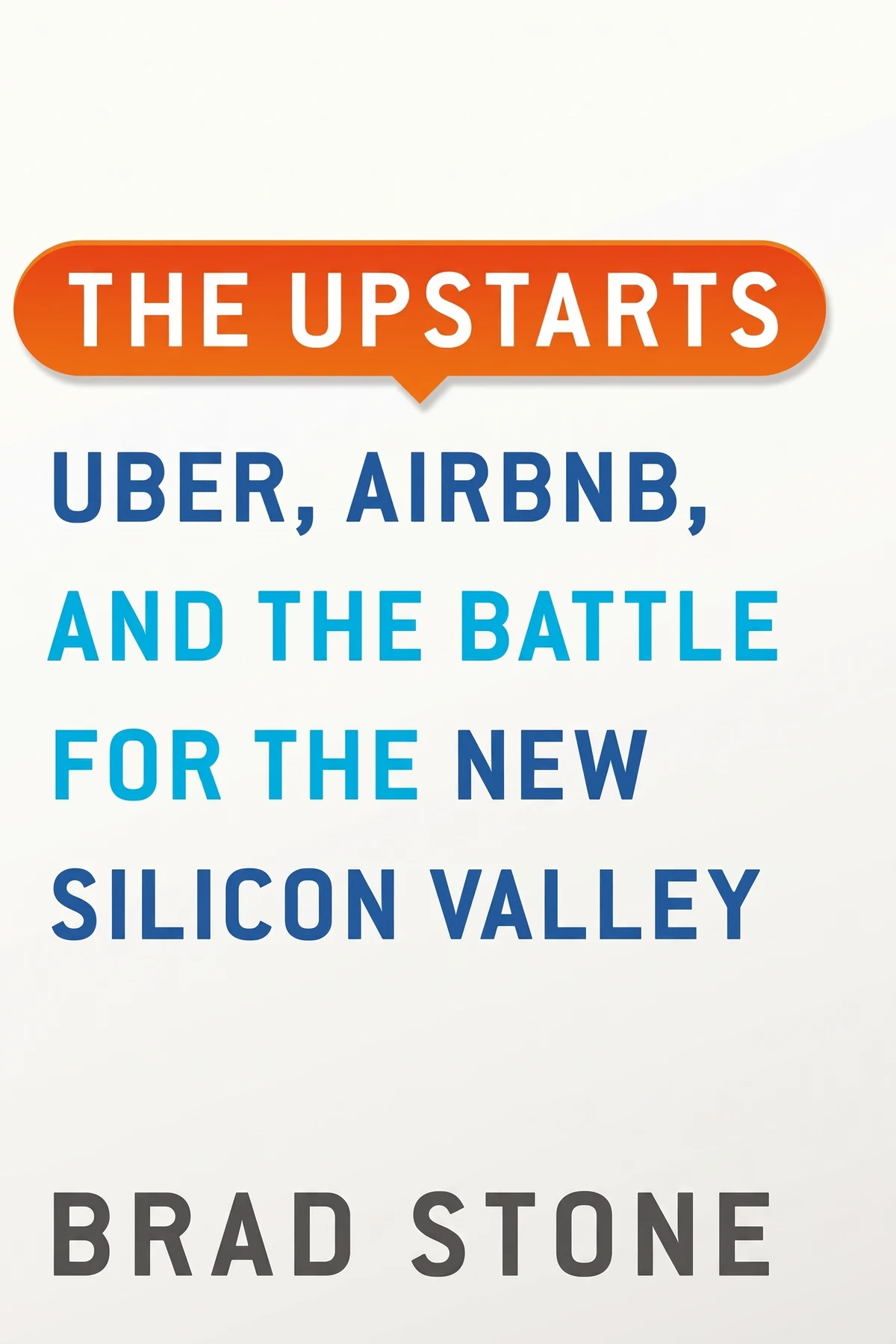
Table of Content
1. Introduction
1 min 01 sec
If you work in tech or run a business, you have watched two companies change travel and transport without owning a single car or hotel room. In The Upstarts, journalist Brad Stone tells how Uber and Airbnb did it, and his first point is that owning nothing was an advantage: with no fleet and no buildings, they could expand faster than any taxi firm or hotel chain.
Stone, who covered Silicon Valley for the New York Times and later Bloomberg, traces both companies from shaky beginnings to giants valued in the tens of billions. The thread through his account is simple. Uber and Airbnb grew huge through speed, constant reinvention and two bold, persuasive founders, and those same traits now raise the question of whether they will keep the ideals they began with.
Along the way you get a working model of how a scrappy idea becomes a global business, and a clear view of the bill that boldness eventually sends.
2. Grow faster by owning less of the business
1 min 54 sec
The world’s biggest car service has no cars, and its biggest room provider owns no rooms. That missing piece turns out to explain how two young companies spread across the globe faster than the industries they took on.
3. Turn a rival's attack into your next move
2 min 01 sec
When ride-sharing rivals like Lyft arrived, Uber could have defended its stylish niche. In China it faced a rival it simply could not beat. Both moments show a founder deciding when to change, and when to walk away rich.
4. Learn why people trust strangers with their homes
1 min 51 sec
Investors refused to touch the idea, convinced that safety fears would keep guests away. A few years later, one summer night proved them badly wrong, and the reason had as much to do with feeling as with price.
5. Weigh what a bold, charming leader wins and costs
2 min 18 sec
One founder charmed his way into a private gathering of the most powerful people in business. The other turned a city official into an open enemy. Both styles built empires, and both left damage that had to be paid for.
6. Keep your early ideals alive after success arrives
2 min 01 sec
A pair of brothers made a business of copying apps and forcing the originals to buy them out. How Airbnb answered them, and how Uber treats its drivers, shows two very different paths for a company that has already won.
7. Conclusion
1 min 13 sec
Stone’s account works as a portrait of a bargain. Owning nothing let Uber and Airbnb move at a speed no hotel chain or taxi firm could match. Reinvention let Uber survive Lyft and turn a defeat in China into a fortune. Charisma carried both founders past regulators and doubters and into rooms full of powerful investors. The same boldness produced the fight with Hayashi, the broken promise to EJ and drivers working without benefits.
Stone does not ask the upstarts to slow down. He asks them to remember the sofa and the stranded commuter, the small human problems they began by solving. Their long-term effect on the world is still unknown, and he hopes they keep their original ethos.
If you are building something, his story suggests treating a rival or a setback as a cue to change shape, the way Uber did when Lyft arrived. It also suggests checking, as you grow, whether you still treat hosts, drivers and staff the way you promised at the start. The companies that broke the old rules now write the new ones, and that is exactly why their early promises matter.
About this book
What is this book about?
Riding in a stranger's car and sleeping in a stranger's home once sounded like bad ideas. Within a few years, Uber and Airbnb made both routine, and by 2016 they were valued at $68 billion and $30 billion. Journalist Brad Stone tells how two young companies with no fleet and no hotel rooms grew faster than the industries they challenged. Stone follows Uber from a San Francisco town car service through its fight with Lyft and its lucrative exit from China, and Airbnb from Brian Chesky's unpaid rent to a night when it housed more guests than Marriott has rooms. At the center are two charismatic founders, Travis Kalanick and Chesky, whose charm and willingness to fight opened doors and also made enemies, from city regulators to angry hosts. Readers get a clear picture of what lets a company scale this quickly: few assets, constant reinvention and leaders who push hard. They also get Stone's warning about what success can do to a company's early ideals, especially in how it treats the people who do its work.
Book Information
Who it's for
Curious about asset-light scaling
Founders and operators who want to see how asset-light companies scale so quickly.
Curious about combative leadership
Tech workers and managers curious about what charismatic, combative leadership wins and costs.
Uber and Airbnb users
Readers who use Uber or Airbnb and wonder how they took over transport and travel.
About the Author
Brad Stone
Brad Stone is an American journalist who became editor of Bloomberg Businessweek in January 2024, after serving as senior executive editor for global technology at Bloomberg News. He previously covered Silicon Valley for the New York Times and reported for Newsweek. His book The Everything Store, about Amazon, won the Financial Times and Goldman Sachs Business Book of the Year in 2013, and he followed it with Amazon Unbound in 2021. He has lived in San Francisco for more than twenty years.
Ratings & Reviews
Ratings at a glance
What people think
Listeners find the book both absorbing and well-crafted, featuring high-caliber journalism that effectively connects the stories of Airbnb and Uber. The level of detail is impressive, and one listener remarked that it provides a good understanding of startup struggles. Listeners also praise the rapid tempo, the sense of motivation found in the subjects' tenacity, and the thorough development of the founders’ characters.
Top reviews
Kae
Brad Stone has a knack for turning corporate history into a genuine page-turner. I loved how he wove the parallel stories of Uber and Airbnb together, showing how they both disrupted stagnant industries through sheer audacity and tech-driven efficiency. The character development of Travis Kalanick and Brian Chesky is particularly well-done, tracing their evolution from scrappy, desperate "cockroaches" to the steely capitalists they became. It’s superb journalism that feels immediate, urgent, and deeply researched. My only minor gripe is that the ending feels a bit abrupt since both companies are still works-in-progress, but that is the nature of writing about the current tech landscape. If you enjoyed Stone’s previous work on Amazon, you will find the same level of incredible detail and insider access here. It's a must-read for any startup enthusiast.
Show moreArthit
What a wild ride through the world of aggressive venture capital and disruptive technology. This book moves at a breakneck pace, mirroring the explosive growth of the companies it covers. I couldn't put it down, reading it everywhere from my morning commute to late at night while my code was compiling. Stone manages to make the dry world of municipal taxi regulations feel like a high-stakes battlefield. The parallel storytelling is a brilliant choice; seeing how Airbnb focused on design and community while Uber focused on pure market dominance provides a great contrast in leadership styles. It’s addictive, informative, and left me with a much better understanding of how my favorite apps actually came to be. Easily one of the most engaging business books I have read this year.
Show morePlernpiriya
It’s rare to find a business book that manages to be both a rigorous piece of reporting and a genuinely compelling story. Stone succeeds by treating the founders as human beings rather than just untouchable icons of industry. You see the painful evolution from idealistic startups to the massive, sometimes cold corporations they eventually became just to survive the onslaught of competitors. The level of detail regarding the competition between Uber and Didi in China was a total highlight for me. It provides a window into a world most of us only see from the outside. While some might find the constant mentions of investment returns a bit tiring, the overall quality of the insights makes it worth it. This is a fascinating, comprehensive study of modern disruption.
Show moreSamira
As a longtime fan of business narratives, I had high hopes for this, and it mostly delivered on the hype. The book perfectly captures that specific "move fast and break things" energy that defined Silicon Valley in the early 2010s. I found the sections on Uber’s global expansion particularly gripping—the way they basically ignored local laws to gain a foothold was both shocking and impressive to read about. However, the narrative does jump back and forth between the two companies quite a bit, which can be disorienting if you aren't paying close attention. It isn't quite as laser-focused as Stone's Amazon book, perhaps because the founders here are still figuring it out. Still, it's a solid 4-star read for anyone interested in the grit required to build a unicorn.
Show moreWanida
The sheer grit required to build a multibillion-dollar firm is the real star of this book. I was absolutely fascinated by the early days of Airbnb when the founders were literally selling themed cereal boxes just to keep their dream alive. It’s an inspiring look at perseverance and the “cockroach” mentality needed to survive when every investor tells you your idea is crazy. Stone does a great job of highlighting the ugly side of growth too, like the regulatory battles and the internal culture issues at Uber. It is definitely not a hagiography; it shows the founders as flawed, obsessive, and sometimes outright difficult people. While it gets a little heavy on the valuation numbers toward the end, it’s a necessary read for anyone thinking about entering the startup world.
Show moreAva
If you've ever used Uber or stayed in an Airbnb and wondered how they actually conquered the world so fast, this is the book for you. It’s less of a dry business text and more of a narrative history that focuses heavily on the outsized personalities at the top. I liked the gossip value of the internal struggles at Uber—Travis Kalanick is a fascinating, if polarizing, figure to read about. The writing is clear and engaging, though it does get a bit repetitive when discussing the various legal challenges in different cities across the globe. It’s a great example of how high-quality journalism can demystify complex corporate structures. It’s well-written, fast-paced, and gives a fair look at both the benefits and the significant costs of the sharing economy.
Show morePong
Finally finished this over the weekend and I’m impressed by the sheer amount of primary research Brad Stone clearly put into the project. It’s a comprehensive look at the "upstarts" that fundamentally changed our daily lives and our cities. The book does a fantastic job of illustrating the tension between the "doing good" mission of Airbnb and the aggressive "win at all costs" mentality of Uber. It’s a fast read despite its length, and I actually found the details about the early seed funding rounds to be quite gripping. My only complaint is that it occasionally ignores the larger economic impacts on the workers themselves in favor of focusing on the glamorous CEOs. Still, for a look inside the C-suite of two of the world's most valuable startups, you really can't do much better than this.
Show morePop
While the reporting is top-notch, the book occasionally gets bogged down in valuation numbers and corporate minutiae that might bore a casual reader. I appreciated the insight into how surge pricing was developed, but some chapters felt like they were padding the page count with repetitive details. To be fair, Stone is excellent at explaining the "why" behind these companies' success, focusing on the technology and the timing rather than just pure luck. It’s a bit of a "work-in-progress" story because the legal battles are still ongoing, which makes the conclusion feel a bit speculative. If you want a deep dive into the mechanics of the sharing economy, this is perfect. If you want a character-driven drama, it might be a bit too analytical for your taste. It’s informative but lacked that final spark for me.
Show moreIsaiah
I really wanted to like this one, but it just didn't click for me at all. Compared to Nick Bilton’s Hatching Twitter, which reads like a fast-paced thriller, The Upstarts felt a bit dry and meandering. The jumps between the Airbnb hosts and the Uber driver protests felt disjointed, and I never really felt a strong connection to any of the players involved. Stone is clearly a talented journalist with incredible access, but the book lacks a cohesive emotional core. It felt more like a collection of very long magazine articles than a unified story. Frankly, I found myself skimming the middle sections just to get to the end. It’s an okay choice for a long plane ride, but don’t expect to be blown away like you were with his previous work. Stick to Bilton for the real drama.
Show moreSumalee
In my experience, the subject matter here is inherently interesting, but the execution felt messy and disorganized. I found the constant switching between Uber and Airbnb to be a distraction rather than a benefit to the narrative. Just as I was getting interested in the internal drama at Airbnb, the story would jump back to a regulatory fight in a city I had never heard of. It lacked the singular focus that made Stone's Amazon book such a classic. I also felt like the author was a bit too close to the subjects at times, leading to a narrative that occasionally felt like it was pulling its punches regarding the 'ugly' side of their growth. It’s informative for the facts, sure, but it didn't spark my imagination or make me care about the players involved. Disappointing.
Show moreQuestions about this book
What is The Upstarts by Brad Stone about?
It tells how Uber, which began in San Francisco, and Airbnb grew from small ideas into companies valued at $68 billion and $30 billion in 2016. Stone credits their lack of physical assets, their speed in adapting to rivals and the charisma of founders Travis Kalanick and Brian Chesky. He also examines the controversies their methods created and asks whether they can keep their early ideals.
Why did Uber leave China?
Uber came close to dominating the Chinese market but faced Didi Chuxing, a local rival with more capital that operated in 400 cities against Uber’s 100. Recognizing that it could not prevail, Kalanick gave Uber’s Chinese operations to Didi and took a 17 percent share of that company in return. Uber left China but gained billions, which funded faster growth elsewhere.
How did Airbnb start?
Brian Chesky could not afford his rent, so he slept on a friend’s sofa and paid him a little for it. That gave him the idea that hosts could rent spare rooms for extra income while travelers saved money compared with hotels. Investors were wary of safety risks at first, yet by August 2016 Airbnb hosted 1.8 million guests in one night.
What criticisms does Brad Stone make of Uber and Airbnb?
Stone notes that Uber treats drivers as independent contractors, avoiding benefits like health insurance, and resists letting them unionize, which he sees as a break from its origins. Airbnb promised to compensate a host called EJ whose apartment guests wrecked, then failed to pay until public pressure forced it to change its insurance terms for hosts.
What can founders learn from The Upstarts?
The book suggests owning as few assets as possible to grow fast, treating a competitor’s attack as a reason to reinvent, and knowing when a deal beats a long fight, as Uber’s China exit shows. It also warns that charm and aggression make enemies, and that a company should keep checking whether it still lives by the principles it started with.
Readers also enjoyed


Alibaba: The House That Jack Ma Built
Duncan Clark



7 Powers: The Foundations of Business Strategy
Hamilton Helmer


Bad Blood: Secrets and Lies in a Silicon Valley Startup
John Carreyrou
AUDIO SUMMARY AVAILABLE
Listen to The Upstarts in 15 minutes
Get the key ideas from The Upstarts by Brad Stone, plus 5,000+ more nonfiction titles.
- 5,000+ titles
- Listen as much as you want
- 7-day free trial
- Cancel anytime









