
15 min 43 sec
Available in: English
 ไทย
EnglishไทยThe Everything Store: Jeff Bezos and the Age of Amazon
By Brad Stone
Shows how Jeff Bezos grew a Seattle garage bookstore into a store for nearly everything by obsessing over customers, accepting losses for long-term gains and running small, data-driven teams. It also shows what that model costs its workers.
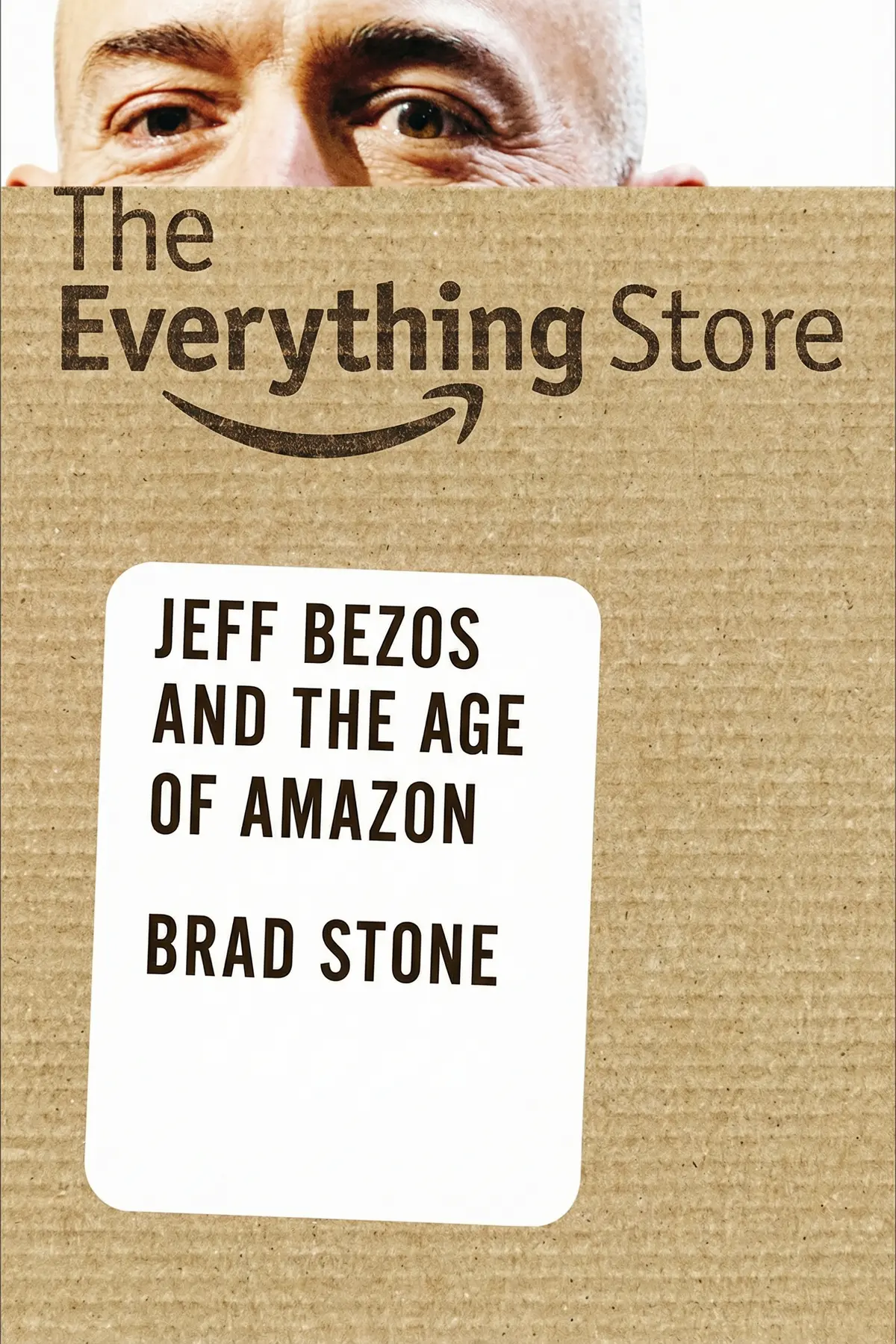
Table of Content
1. Introduction
1 min 03 sec
If you run a team or a business, you probably feel pressure to show results this quarter and to keep everyone inside the company happy first. In The Everything Store, journalist Brad Stone shows how Jeff Bezos built Amazon by doing almost the opposite. He put the customer above publishers, investors and his own staff, and he was willing to lose money for years to win the long game. The company that began in a Seattle garage selling only books grew into a store with an annual turnover of $75 billion.
Stone traces that rise to a handful of stubborn habits of mind. Bezos obsessed over customers, thought in decades, kept teams small and spending tight, and tried things before they felt safe. Those same habits carry a real cost, paid largely by the people in Amazon’s warehouses. Along the way you get working methods you can borrow, from the silent six-page meeting to the two-pizza team, and a clear view of their price.
2. Start narrow to build something huge
1 min 44 sec
Bezos dreamed of a store that would sell almost everything, yet his first move was to shrink that dream. The way he chose where to begin says a lot about turning a giant ambition into a first step.
3. Put the customer ahead of every insider objection
1 min 50 sec
Publishers hated one of Amazon’s earliest features, and some of its own people resisted another. Both survived. A forwarded email containing a single character shows how far the company takes this principle.
4. Accept short-term losses to win a long-term advantage
2 min 04 sec
Amazon once lost money on every e-book it sold, on purpose. Investors worried for years about numbers like that. The bet behind them explains one of the company’s biggest products.
5. Swap presentations and crowded meetings for written memos
1 min 56 sec
At Amazon, an important meeting can begin with half an hour in which nobody says a word. That odd ritual, and a rule about pizza, reveal how Bezos tried to make ideas sharper and faster.
6. See what extreme thrift gains and what it costs
2 min 07 sec
A company worth billions still makes managers pay for their own flights. Bezos says limits breed invention, but in the warehouses the same philosophy looks very different, and Stone does not look away.
7. Reward bold attempts, including the ones that fail
1 min 55 sec
Amazon has launched products that died within months, and it once lost a fortune on bad deals. Yet Bezos hands out a prize that can go to people who fail. The prize itself is a joke with a point.
8. Sell what customers will need next
1 min 51 sec
The first Kindle vanished from stock within hours and stayed gone for months. Around the same time, Amazon began serving buyers who had nothing to do with books. Both moves started from the same habit.
9. Conclusion
1 min 13 sec
Stone’s portrait adds up to a company that is really a set of habits run at enormous scale. Bezos starts small but keeps the full map in view, lets the customer overrule insiders, measures with numbers and patience, and treats a failed attempt as the fee for finding the next Kindle. The same habits help explain the silent warehouse halls and the seasonal workers let go after Christmas. Amazon’s success and its costs grow from one root.
The tools are easy to try. Ahead of your next important decision, ask for a written paper instead of a presentation and give the room time to read it in silence. Keep teams small enough to share two pizzas, and judge them by how often they produce something new. When a choice loses money now but builds customer loyalty, weigh it on a longer clock, the way Bezos weighed every $5 lost on an e-book. And decide in advance which costs you will never push onto the people with the least power.
In Texas, Bezos is paying for a clock meant to tick once a year for ten thousand years. He wanted his company to keep the same kind of time.
About this book
What is this book about?
Amazon began in 1994 as an online bookstore run from a Seattle garage. Its founder had quit a comfortable hedge fund job to chase an odd idea: one online store that would sell almost everything. Journalist Brad Stone tells how that idea became a company with $75 billion in yearly turnover, and he traces the success to the way Jeff Bezos thinks. Stone shows Bezos letting customers overrule publishers and his own managers, and accepting years of losses to build infrastructure and win the e-book market. Inside the company, silent six-page memos take the place of presentations, and the work is split among teams small enough to share two pizzas. Failures such as Amazon Auctions sit beside wins such as 1-Click ordering, the Kindle and Amazon Web Services. The book does not hide the costs. Extreme frugality, a harsh internal culture and poorly paid, tightly controlled warehouse work belong to the same story. Readers get a set of methods worth borrowing and a clear sense of what those methods demand.
Book Information
Who it's for
Founders and operators
Founders and operators who want to borrow Amazon's methods, from silent memo meetings to two-pizza teams.
Managers tired of meetings
Managers tired of crowded, unproductive meetings and slow decisions.
Curious how Amazon grew
Anyone curious how a garage bookstore became a store for nearly everything, and who paid the price.
About the Author
Brad Stone
Brad Stone is an American journalist who became editor of Bloomberg Businessweek in January 2024. Before that he served as senior executive editor for global technology at Bloomberg News. He earlier covered Silicon Valley for the New York Times and reported for Newsweek. The Everything Store won the Financial Times and Goldman Sachs Business Book of the Year prize for 2013 and has been translated into more than 35 languages. He continued Amazon's story in Amazon Unbound and also wrote The Upstarts, about Uber and Airbnb.
Ratings & Reviews
Ratings at a glance

What people think
Listeners find the book absorbing and skillfully composed, offering thorough and scholarly details that give excellent perspective on Jeff Bezos' mentality. Moreover, the narrative is compelling, with one listener observing how it integrates different aspects of the story quite well. Additionally, the text provides useful strategic advice and is notably helpful for founders, while ensuring the writing remains briskly paced.
Top reviews
Bee
This book provides a deeply immersive deep-dive into the relentless engine that powers the world's most aggressive retailer. Brad Stone successfully avoids the trap of founder-worship, instead presenting a balanced view of Jeff Bezos as a man who is both a brilliant strategist and a terrifyingly demanding boss. To be fair, the descriptions of the 'mercenary' culture inside the Seattle offices are enough to make any sane job-seeker run for the hills. However, the way Stone weaves the 'flywheel' philosophy into the narrative makes it almost impossible to stop reading once you start. It feels like a high-stakes thriller rather than a dry business biography. You get to see the exact moment the vision for an 'Everything Store' turned from a crazy dream into a global reality. If you want to understand why the retail landscape looks the way it does today, this is essential reading.
Show moreNarongrit
As an aspiring entrepreneur, I found this to be the ultimate manual on what it takes to actually scale a global empire from scratch. The book perfectly captures the 'start-something' goal that defines our current era, showing both the glory and the extreme personal cost of that ambition. Stone’s narrative is well-paced and filled with 'mantras of success' that you won't find in a standard textbook. Bezos is presented as a visionary genius, but one who is also remarkably impetuous and controlling. The way the book explores his 'Amazon.love' memo was particularly insightful for me. It shows that even at the top, there is a constant fear of becoming a hated, stagnant incumbent. This is more than just a biography; it's a deep dive into the psychology of extreme success and the relentless pursuit of perfection.
Show moreMadison
Picked this up on a whim and was immediately sucked into the high-stakes world of the 90s tech boom and the eventual dominance of the platform. The way Brad Stone structures the narrative makes the rise of Amazon feel almost inevitable, even though the book makes it clear how close they came to failure multiple times. I appreciated the focus on the 'best truth at the time' philosophy, which seems to guide every decision Bezos makes. It’s a fascinating study of a man who is obsessed with the long game rather than quarterly earnings. Even the parts about the brutal internal competition were strangely compelling. This book doesn't just tell you what happened; it explains the specific mindset that made it happen. It’s easily one of the best and most thoroughly researched business biographies I’ve read in years.
Show moreOmar
After hearing so many horror stories about Amazon’s 'churn and burn' employee turnover, I finally decided to see what the hype was about. Frankly, the picture Stone paints isn't exactly flattering for those hoping for a work-life balance. Bezos comes across as an intense figure who values customer obsession over almost everything else, including his own executives' sanity. The detail regarding the early days of the dot-com bubble is fascinating, specifically how they survived when everyone else was crashing. My only real gripe is that the narrative occasionally gets bogged down in the minutiae of quarterly reports and supply chain logistics. That said, the insight into Jeff’s 'ice water' veins and his 'improbable standards' provides a masterclass in modern corporate dominance. It’s a compelling, well-paced look at a man who essentially reinvented how we consume everything in the 21st century.
Show moreAna
Brad Stone managed to turn what could have been a boring corporate history into something that feels remarkably visceral and immediate. The writing style is sharp and the research is clearly extensive, drawing from sources that actually saw the 'Jungle' conditions firsthand. I was particularly struck by the description of Bezos as a 'missionary and mercenary' leader. This duality explains so much about why the company is both beloved by customers and feared by competitors. While the book captures the excitement of innovation, it doesn't shy away from the brutal tactics used to crush rivals like Diapers.com. Truth is, it’s a bit of a wake-up call for anyone who thinks successful startups are built on kindness and collaboration alone. It is a dense read, but the lessons on business strategy are worth the effort for any entrepreneur looking for an edge.
Show moreOm
Ever wonder how a tiny online bookstore managed to swallow the entire retail world in just two decades? This book answers that question by focusing on the 'flywheel' effect and the absolute obsession with the end-user experience. Brad Stone does an excellent job of illustrating how Jeff Bezos used his background in finance to create a platform that prioritizes long-term growth over short-term profits. The anecdotes about Bezos lashing out at subordinates were eye-opening, to say the least. It paints a picture of a leader who is more interested in winning than in being liked by his peers. My favorite parts were the behind-the-scenes looks at how they negotiated with publishers during the Hachette conflict. It’s a bit scary to see how much power one company can wield, but the strategic insights provided here are undeniably brilliant and worth studying.
Show moreKrisada
Look, Jeff Bezos might come across like a tech-savvy version of Dr. Evil in some of these chapters, but his business acumen is simply unmatched. The book does a stellar job of explaining the 'Why' behind Amazon's move from books to electronics and eventually to the cloud. I loved the specific details about the early days in the garage and the transition to the sleek, high-pressure environment of the modern offices. Some of the stories about the distribution centers were genuinely unsettling, which keeps the book from feeling like a PR puff piece. It’s a balanced account that respects the achievement while questioning the human cost. I deducted one star only because the pacing felt a bit uneven during the chapters on international expansion. Otherwise, it's a gripping account of a world-changing company that everyone should read.
Show moreLeah
The chapter on the development of the Kindle was the highlight of the book for me, showcasing the sheer force of will required to disrupt an entire industry. Stone provides a clear-headed analysis of how Bezos identifies 'customers who aren't getting what they deserve' and then builds a solution from the ground up. In my experience, most business books are full of fluff, but this one is packed with actual examples of high-level strategy grounded in history. I did find the sections on the dot-com bubble a bit long-winded, though they do provide necessary context for Amazon's survival. The book successfully captures the 'mercenary' spirit of the company without losing the 'missionary' vision that keeps customers coming back. It’s a must-read for anyone who uses Amazon daily and wants to know the true cost of that two-day shipping.
Show moreRyan
While it’s undeniably well-researched, the sheer amount of detail regarding corporate meetings and technical infrastructure started to drag for me toward the middle. I picked this up because I wanted to understand the man behind the brand, but at times it feels more like a warning manual for prospective employees. If you aren't prepared to work 16-hour stints or answer emails on weekends, this book makes it clear that Amazon isn't for you. Personally, I found the chapters on the Kindle’s development much more engaging than the endless talk of Wall Street expectations. The tone is a bit cynical, though perhaps that’s just a reflection of the company’s own internal culture. It’s a decent enough read if you’re a business nerd, but casual readers might find it a bit too technical and dry for a weekend read.
Show morePhu
Not what I expected from a business biography, as it spends a surprising amount of time detailing the high turnover and intense pressure faced by the rank-and-file. It’s almost a cautionary tale for anyone looking to enter the tech industry without knowing what they're getting into. The book describes an environment where 'working smart' means giving up your personal life entirely to feed the machine. While the strategic breakdowns of the 'Everything Store' concept are interesting, I found the constant focus on Bezos’s abrasive personality to be a bit exhausting after a while. Got to say, I left this book feeling more concerned about the future of retail than I did before I started. It’s well-written and certainly informative, but it lacks the warmth or inspiration I usually look for in a biography. It's a cold look at a cold business.
Show moreQuestions about this book
What is The Everything Store by Brad Stone about?
It tells how Jeff Bezos left a hedge fund job in 1994, started Amazon as an online bookstore in his Seattle garage, and grew it toward a store that sells almost everything. Stone credits Bezos’s way of thinking: extreme focus on customers, willingness to lose money for long-term goals, small data-driven teams and a taste for risk. He also describes the harsh culture and difficult warehouse conditions that came with it.
What is Amazon's two-pizza rule?
In Bezos’s view, a team ought never to grow beyond what two pizzas could feed. He considers big group meetings unproductive, so Amazon is organized into autonomous units of fewer than ten people. These teams compete with one another for resources and work on whatever stops customers from being a little happier. Bezos believes small groups are more agile and get ideas to customers faster.
How do Amazon's six-page memos work?
At Amazon, nobody gives presentations at internal meetings. Whoever has an idea writes a six-page paper, and every participant, Bezos included, reads it in silence before discussion, which can take up to 30 minutes. Bezos believes writing that much forces people to examine their ideas critically, so they argue them more convincingly. Discussions are then expected to rest on hard data.
What does The Everything Store say about Amazon's downsides?
Stone describes a harsh, fiercely competitive culture and frugality that some see as excessive, with staff paying for parking and sharing hotel rooms. Warehouse workers are poorly paid, may walk up to 30 kilometers a day and can be fired for talking. Amazon has also hired tens of thousands of temporary workers in economically weak regions for busy seasons and let most of them go afterward.
Who should read The Everything Store?
It suits founders and managers who want concrete methods, such as written memos instead of presentations and small autonomous teams. It also helps anyone weighing short-term results against long-term bets, as with Amazon’s $5 loss on each e-book that paved the way for the Kindle. Readers interested in the human cost of efficiency will find that side of the story too.
Readers also enjoyed





A Year with Peter Drucker: 52 Weeks of Coaching for Leadership Effectiveness
Joseph A. Maciariello



Acting with Power: Why We Are More Powerful Than We Believe
Deborah Gruenfeld

All In: How Great Leaders Build Unstoppable Teams
Mike Michalowicz

AUDIO SUMMARY AVAILABLE
Listen to The Everything Store in 15 minutes
Get the key ideas from The Everything Store by Brad Stone, plus 5,000+ more nonfiction titles.
- 5,000+ titles
- Listen as much as you want
- 7-day free trial
- Cancel anytime









