

A Long Way Gone: Memoirs of a Boy Soldier
Ishmael Beah
 English
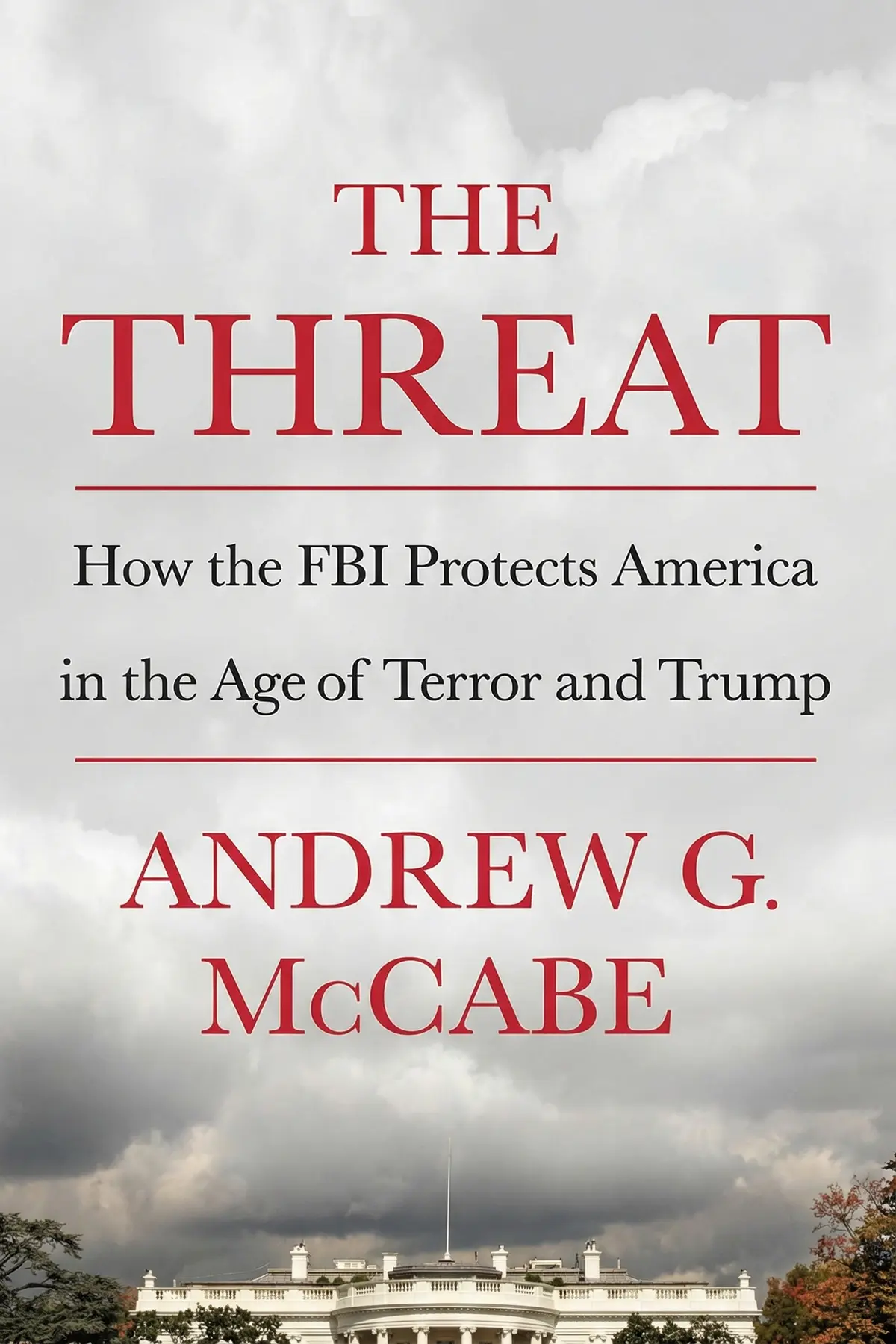
A former acting FBI Director explains how the bureau was rebuilt after 9/11, how agents really investigate and question suspects within legal limits, and why presidential pressure on the Russia inquiry alarms him.
1 min 05 sec
Most people picture the FBI as an all-seeing agency free to watch anyone it likes, and that picture is mostly a movie invention. In The Threat, Andrew G. McCabe, who rose from field agent to acting Director of the FBI, shows a bureau held in by layered rules, built to take apart networks, and remade almost overnight by the attacks of September 11, 2001.
His argument runs in two directions. The FBI that came out of 9/11 became more united, more precise and more careful about the law than the one before. Yet McCabe believes its most serious new pressure since 2017 has come from the top of the government itself, in the form of President Donald Trump.
Along the way you will hear how agents build a case against an entire crime family, why they stopped chasing every tip, how terror suspects are questioned within legal limits and what an agent may search at each stage of an inquiry. You will also get a plain test for when political pressure on the police crosses a line.
2 min 06 sec
Before September 2001, two FBI divisions each believed they alone did the real work, and a huge workforce rarely found common ground. One morning changed the bureau’s structure, its budget and something harder to rebuild than either.
2 min 12 sec
For decades, arresting a gangster barely dented his gang, because the law only let agents pursue one person at a time. A change in 1970 opened another route, and a single photograph came to matter as much as a confession.
2 min 06 sec
After 9/11, thousands of tips reached FBI headquarters every week, and the bureau chased nearly all of them. One intercepted phone call about two brothers shows why that instinct wastes the very resources an investigation needs.
2 min 14 sec
Guantánamo left the United States facing harsh criticism over how it questioned terror suspects. The group created to replace those methods had to be ready for a man nobody had heard of until Christmas Day 2009.
1 min 53 sec
An anonymous caller accuses you of stealing cars. Can an agent now read your messages, watch you on camera or enter your home? The answer depends on a ladder of rules most people have never heard of.
2 min 15 sec
A president who trusted Vladimir Putin over his own intelligence officials, and an inquiry into a foreign attack on an election. McCabe explains why the president’s public comments on that case are, in his view, corrosive to democracy.
1 min 17 sec
The Threat is finally an argument about where an institution’s strength comes from. McCabe’s FBI did not grow more capable by becoming the all-powerful agency of the movies. It grew by uniting after 9/11, by mapping whole networks, by aiming its effort, and by binding itself to rules: a Field Manual in the interrogation room, a court warrant before a search. Every gain he describes came with a limit attached. That is why a president leaning on a live investigation looks so dangerous to him. The limits only work if they bind the people at the top as well.
Some of this carries into ordinary life. If you run a team buried in requests, try targeting before muscling, and find the one record or relationship that narrows the field. When an FBI case makes the news, ask whether it is an assessment, a preliminary inquiry or a full investigation, since each implies different evidence. And when a leader publicly predicts the result of a case about himself, recognize it as pressure, whichever side you are on.
Fidelity, Bravery, Integrity has been the bureau’s motto since 1908. McCabe’s book is a reminder that the third word is the one others most often try to take away.
Films show the FBI as an agency that can watch anyone and search anything. Andrew G. McCabe, who rose from field agent to acting Director, describes a very different organization: one bound by tiered rules, built to dismantle criminal networks and reshaped almost overnight by the attacks of September 11, 2001. McCabe traces how the bureau moved its focus from organized crime and drugs to preventing terrorism, how a divided workforce found a common purpose, and how investigators learned to aim their effort instead of chasing every tip. He explains enterprise theory, the method for prosecuting a whole crime family, the creation of a group to question terror suspects lawfully after Guantánamo, and the three levels of investigation that decide what an agent may search. He then turns to what he sees as a new danger. He argues that Donald Trump, as president, has tried to sway the inquiry into how Russia meddled in the 2016 election since 2017, and McCabe sees this as an attack on the independence that the rule of law relies on. Readers get a clear inside picture of how federal investigations work and a way to judge when politics crosses the line.
Readers who follow politics and want to know how FBI investigations actually work behind the headlines.
Managers of overloaded teams curious how the bureau learned to focus its effort.
Anyone trying to judge when political pressure on law enforcement crosses a line.
Andrew G. McCabe joined the FBI in 1996 as a field agent on a task force targeting Eurasian organized crime, which he later supervised. He went on to lead the bureau's counterterrorism work, its National Security Branch and its Washington Field Office, and was the founding head of the High-Value Detainee Interrogation Group. In May 2017, after James Comey was dismissed, he became acting Director of the FBI. He has been a CNN contributor since 2019.
Listeners find this book exceptionally accessible and immersive, providing thorough insights into FBI training and field operations. The narrative is skillfully composed, and one listener mentions the author’s credibility is clearly based on facts. Listeners value the work's honesty and principles, describing it as a powerful story about staying committed to the rule of law.
Andrew McCabe might be described as a 'straight-arrow' by some, but his dedication to the rule of law is exactly what this country needs. This book isn't just a political tell-all; it is a deep dive into the inner workings of the FBI that most of us never see. I was particularly fascinated by the transition from 9/11-era counter-terrorism to the modern complexities of the Russia investigation. McCabe writes with a lucid, no-nonsense style that highlights his integrity. Even when he describes dry agency procedures like the Domestic Investigations and Operations Guide, you feel the weight of every decision. It’s a compelling tale of a man who put the institution above himself, even when it cost him his retirement just 26 hours before he was set to leave. Frankly, we are lucky to have had people like him at the helm during such a perilous time.
Show moreThe level of detail regarding the FBI’s counter-terrorism efforts is truly eye-opening for the average citizen. I loved the story about the raid on Najibullah Zazi’s residence where the agents thought they found five gallons of explosives, only for it to be flour! It shows the high-stakes, high-stress environment these agents work in every single day. McCabe’s account of the Boston Marathon bombing aftermath, specifically the monumental task of clearing thousands of abandoned backpacks, was equally gripping. He writes with a clipped, authoritative tone that makes the action feel immediate. Not gonna lie, I expected a dry memoir, but this felt more like a masterclass in investigative procedure. His descriptions of Robert Mueller—sitting straight, circling his chin with his knuckles—add a human element to a legendary figure. This book proves that McCabe is an honest, reliable narrator who simply wanted to do his job.
Show moreListening to the audiobook version, narrated by McCabe himself, adds a layer of undeniable authenticity to the narrative. You can hear the exhaustion and the earnestness in his voice as he recounts his firing. This is a man who spent decades in the trenches, from tracking mobsters to interrogating the 'underwear bomber.' The way he describes the internal culture of the FBI—fidelity, bravery, integrity—isn't just a marketing slogan to him; it’s a way of life. I was struck by his description of the political pressure put on the Bureau during the Clinton email investigation. It’s clear that he was caught between a rock and a hard place. The book is well-crafted and provides a much-needed defense of the intelligence community. In an age of 'alternative facts,' McCabe’s reliance on procedure and evidence is incredibly refreshing. I highly recommend this to anyone interested in the truth behind the headlines.
Show moreWow, what a gut-wrenching read regarding the way career professionals are treated in the current political climate. McCabe’s integrity is palpable on every page, especially when he discusses the fallout of the Comey firing. The fact that the President asked him who he voted for is simply mind-boggling and shows a complete lack of understanding of how the FBI is supposed to work. This book is an essential piece of the puzzle for anyone trying to make sense of the last few years. McCabe isn't just venting; he’s providing an authoritative account based on facts and direct experience. I appreciated the humor he sprinkled in, like the 'flour explosives' incident, to lighten the mood. It’s a compelling, engaging, and ultimately frightening look at the threats facing our nation. We need more people like Andrew McCabe who are willing to stand up for the truth, no matter the personal cost.
Show moreFinally got around to finishing this memoir, and the sections regarding Jeff Sessions were deeply unsettling. To see how a sitting Attorney General was seemingly obsessed with the national origin of every suspect—even those born in America—is a stark reminder of how much has changed. McCabe does an excellent job portraying the tension in the room during his first meeting with Trump after James Comey was fired. The 'beautiful tie' anecdote really captures the bizarre, mob-boss style of communication used by the administration to fish for loyalty. While some parts of the book are a bit slow, especially when he gets bogged down in bureaucratic minutiae, the overall narrative is essential reading for 2020. It isn't just about the 'threat' from abroad; it’s about the internal erosion of our most vital institutions. Personally, I found his respect for the FBI's mission to be the most authentic part of the story.
Show moreNot what I expected from a high-level bureaucrat, as McCabe manages to blend dry procedure with moments of real tension. The chapters on 'Operation Overt' and the pursuit of the London Underground attackers are as fast-paced as any fiction I’ve read recently. Truth is, the most 'boring' parts—the ones about FBI procedure—are actually the most important because they show how many safeguards are in place. He makes a strong case for why the Bureau must remain independent from the White House. I found his portrayal of Trump to be consistent with what we've heard from others, specifically the constant demand for personal loyalty over professional duty. My only gripe is that he occasionally skips over his own personal life to focus entirely on the job. It makes him seem a bit like a machine, but perhaps that’s what it takes to reach the top of the FBI.
Show moreAs someone who follows legal proceedings closely, I found the explanation of the DIOG procedures to be the most valuable part of the book. Understanding the specific 'tools' available during an assessment versus a full investigation changed how I view the headlines about the Russia probe. McCabe is clearly a by-the-book guy, and his passion for thoroughness shines through every page. He doesn't hold back when it comes to the Trump administration’s attempts to politicize the Bureau. The contrast between the Obama era’s professional distance and the current administration’s 'brown shirt' mentality is stark. While the writing is a bit dry in the middle, the payoff at the end is worth it. He captures the tragedy of a career professional being discarded for political points. It’s a sobering look at the state of our democracy and a call to action for every voter.
Show moreThis memoir offers a fascinating trajectory of a career that began with Russian mobsters in New York and ended at the center of a national crisis. McCabe is a lucid writer who avoids the flowery language common in most political books, opting instead for a 'just the facts' approach. I found the sections on the Boston Marathon bombing to be particularly moving, especially the logistical nightmare of processing the crime scene. His respect for Robert Mueller is evident, and the descriptions of their working relationship add a lot of depth to the Special Counsel’s image. The book does a great job of explaining why the Russia investigation was opened in the first place, countering the 'witch hunt' narrative with actual evidence. While I agree with other reviewers that it can be a bit dry at times, the overall message of dedication to the rule of law is powerful. It’s a solid, authentic read for any history buff.
Show moreLook, I wanted to love this, but parts of the prose felt like a parody of a paperback spy novel. McCabe has a habit of using these ludicrously laconic, one-sentence paragraphs that are clearly meant to be dramatic but often fall flat. For example, he’ll describe a high-stakes phone call with the Director as if he’s auditioning for a thriller movie. To be fair, the information about Russian organized crime in New York was genuinely interesting and offered a perspective I hadn't considered. However, when it came to defending his 'lack of candor' in the Inspector General’s report, his explanations felt a bit thin. Saying your 'mind was elsewhere' during a crucial interview isn't what I expect from a veteran counter-terrorism official. It’s a readable book with some great nuggets about Trump and Mueller, but I found myself skimming through the more self-serving chapters toward the end.
Show moreEver wonder what really happens behind those closed doors at the J. Edgar Hoover Building? McCabe gives us a peek, but it’s a very curated one. The first half of the book, detailing his rise through the ranks, is excellent and provides great insight into the life of an agent. I enjoyed the stories about Russian mobsters and the tactical side of counter-terrorism. However, the tone shifts significantly once we get to the Trump years. It starts to feel more like a legal defense than a memoir. He is quite vague about the Wall Street Journal leak that led to his firing, which was disappointing given the level of detail elsewhere. To be fair, the book is still well-written and engaging, but it leaves you with more questions than answers regarding his own conduct. It’s a 3-star read for me—informative, but perhaps a bit too biased to be the definitive account.
Show moreMcCabe, a former acting FBI Director, explains how the bureau changed after September 11, 2001, shifting its focus from organized crime and drugs to preventing terrorism. He describes how agents prosecute whole criminal networks, how terror suspects are questioned lawfully, and the rules that limit every investigation. He then argues that President Trump’s attempts to influence the Russia investigation threaten the FBI’s independence and the rule of law.
Enterprise theory grew out of the Organized Crime Control Act of 1970, which let agents prosecute an entire criminal organization in one case. Agents first prove the group exists by linking its members, for example with photos of a suspect alongside other mobsters. They then show that a member took part in at least two of its crimes, often using cooperating witnesses or undercover agents.
McCabe describes an assessment, a preliminary investigation and a full investigation. An assessment needs only a clear objective and allows records checks, social media searches, interviews and physical surveillance. A preliminary investigation needs information suggesting a crime and adds camera monitoring and account data from phone and internet firms. A full investigation needs factual evidence and allows, with a court warrant, home searches and monitoring of communications.
Muscling is the older blanket approach of chasing every lead until the data runs out, which the FBI used heavily after 9/11 when thousands of tips arrived weekly. Targeting narrows the search with organized data. To find brothers mentioned in an intercepted call, analysts would search a database of known terrorists and associates for family ties, then use surveillance to confirm a match.
McCabe argues that Trump distrusts the bureau as part of the Washington establishment and tried to shape the inquiry into how Russia interfered in the 2016 election. He asked several FBI directors to confirm he was not under investigation and publicly called the inquiry a witch hunt. McCabe says this signals a desired outcome to judges and juries and damages the independence democracy needs.
Ishmael Beah

James Herriot


Pankaj Mishra

Barack Obama

Anthony Pratkanis


Masaji Ishikawa

Ben Macintyre
AUDIO SUMMARY AVAILABLE
Get the key ideas from The Threat by Andrew G. McCabe, plus 5,000+ more nonfiction titles.









