

14 min 12 sec
Available in: English
After the Fall: The Rise of Authoritarianism in the World We've Made
By Ben Rhodes
Shows how America's choices after the Cold War, from unequal capitalism to the War on Terror and exported technology, helped leaders in Hungary, Russia and China build authoritarian rule from one shared playbook.
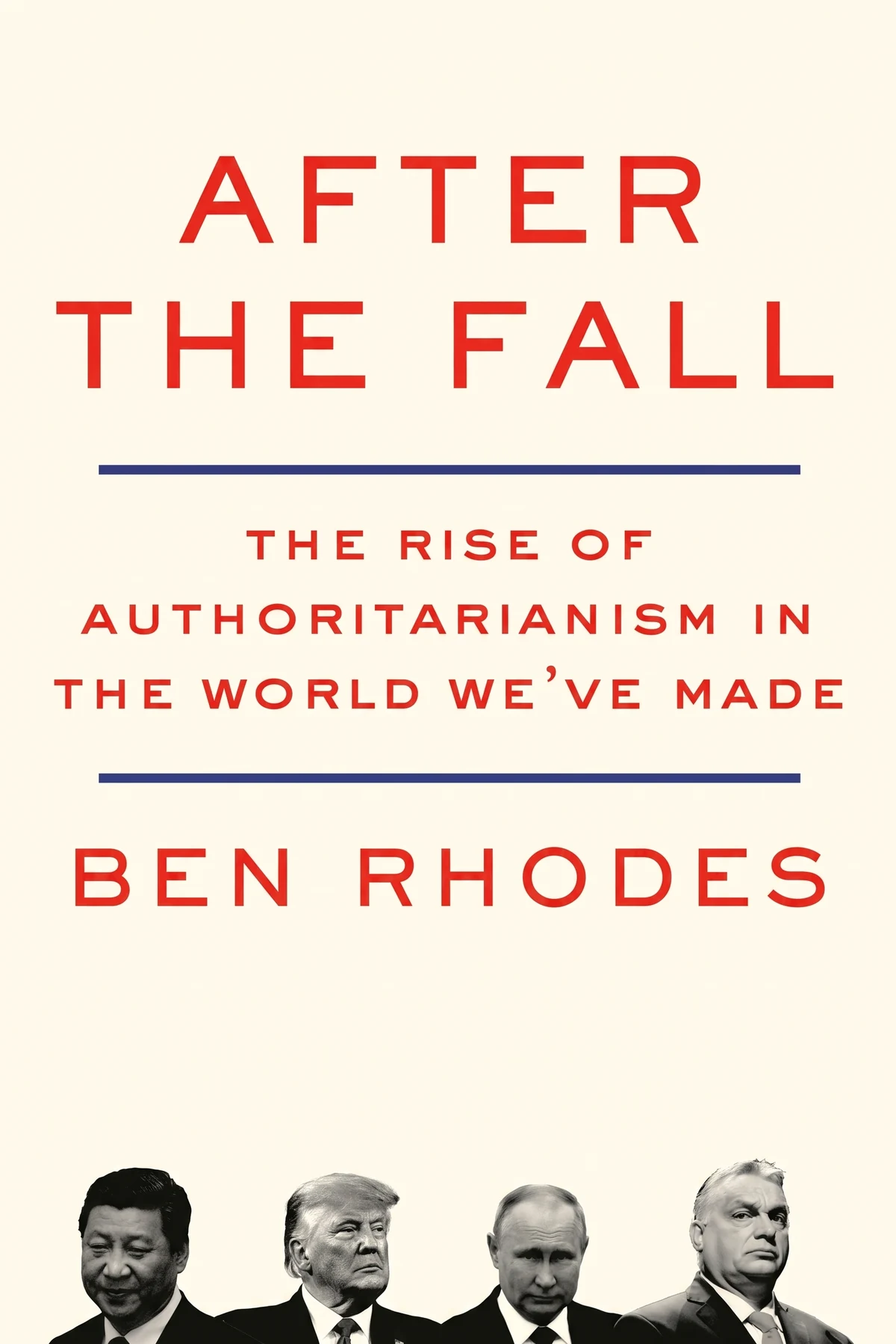
Table of Content
1. Introduction
1 min 00 sec
If the news feels like a parade of strongmen with no pattern behind them, After the Fall offers a map. Ben Rhodes, who served as deputy national security advisor under Barack Obama, argues that the leaders now ruling Hungary, Russia and China follow one shared playbook, and that America helped write it. The story starts at what looked like democracy’s finest hour, the night crowds danced as the Berlin Wall came down.
Rhodes’s case is that the United States lost its sense of purpose after that victory. It exported a capitalism that rewarded the few, then fought a War on Terror that loosened the rules for everyone, and authoritarians abroad borrowed both, along with American technology. From Viktor Orbán’s Budapest to Vladimir Putin’s Moscow and the camps of Xinjiang, the same moves repeat. Learn them here and you can name each step when it appears in a headline, and weigh why Rhodes still expects such regimes to fail.
2. Understand how America's Cold War victory turned sour
1 min 36 sec
The fall of the Berlin Wall looked like the moment America proved its model to the world. Rhodes argues it was also the moment the country stopped knowing what it was for, and others were watching.
3. Spot the strongman playbook in Orbán's Hungary
1 min 42 sec
A young reformer who once attacked corruption and Soviet control became the model of a modern nationalist ruler. The steps he took to get there turn out to be anything but unique.
4. See where the playbook leads in Putin's Russia
1 min 44 sec
Russia in the 1990s was supposed to become a Western-style market democracy. What grew instead was a system where critics end up in prison, poisoned or shot within sight of the Kremlin.
5. Learn how America handed authoritarians their excuses
1 min 41 sec
After 9/11, the United States finally found a new mission. Rhodes argues it also gave rulers from Moscow to Beijing permission to do things they could never have justified alone.
6. Read China's rise as markets without freedom
1 min 41 sec
China opened its economy to the West and grew rich, yet its ruling party only grew stronger. Rhodes explains the bargain behind that outcome and who paid its heaviest price.
7. Recognize how everyday data becomes control
1 min 36 sec
A new job, a school place for a child, even freedom itself can hinge on a number built from ordinary habits. Rhodes shows how tools invented in America made that possible.
8. Find grounds for hope among those resisting
1 min 52 sec
The dissidents Rhodes met had every reason to despair: a murdered father, a group branded an enemy of the state, a poisoning. Yet they share a stubborn belief about how such regimes end.
9. Conclusion
1 min 20 sec
Rhodes’s book traces a chain of cause and effect that begins at an American celebration. The country that won the Cold War let its purpose drift from freedom to profit, saw the cost exposed in 2008, and answered 9/11 with invasion, torture and laws against privacy. Each failure handed a script to someone else: Orbán’s call back to Christian roots, Putin’s Russia against the West, Beijing’s people’s war on terror. American technology then made the script cheaper to run, from Russian disinformation to a score that decides a Chinese family’s school.
The practical gain is recognition. When a leader sells a simple, flattering version of the national past and then reaches for the media, the courts and the voting rules, you are watching the sequence Hungary lived through after 2010. When a government cites another country’s harsh laws to excuse its own, remember how Moscow used Washington’s. And when you weigh the platforms you use every day, ask who holds them to account.
Navalny’s wager is the image worth keeping. Power gathered only for money and control eventually runs out of stories to tell, and the protesters in Budapest, Moscow and Hong Kong are holding on until it does.
About this book
What is this book about?
When the Berlin Wall fell, democracy seemed to be winning everywhere. Three decades later, strongmen run Hungary, Russia and China, and nationalism shapes politics in the United States too. Ben Rhodes, a former deputy national security advisor to Barack Obama, sets out to explain how that reversal happened and what part America played in it. His argument is that the United States lost its sense of purpose after its Cold War victory. It promoted a version of capitalism that rewarded the wealthy, saw that system fail in the 2008 financial crisis, and answered 9/11 with invasions, torture and laws that eroded privacy. Authoritarians abroad used each failure as cover. Rhodes follows Viktor Orbán's turn from anti-corruption reformer to nationalist, Vladimir Putin's capture of media and wealth, and China's use of American-born technology to build a system of mass surveillance. Readers get a clear picture of the steps strongmen repeat from one country to the next, along with the voices of dissidents who resist them. They also get Rhodes's case for why power built on money and control cannot hold forever.
Book Information
Who it's for
Following world news
Readers who follow world news and want to see the pattern linking Orbán, Putin and Xi.
Students of world politics
Students of politics and international relations looking for an insider's account of America's role after the Cold War.
Uneasy about digital surveillance
Professionals uneasy about social media and surveillance who want to understand how these tools serve authoritarian rulers.
About the Author
Ben Rhodes
Ben Rhodes served in the Obama administration from 2009 to 2017 as deputy national security advisor, responsible for strategic communications and speechwriting, after working as a speechwriter and foreign policy advisor on the Obama campaign. Earlier he worked for congressman Lee Hamilton. He wrote the best-selling memoir The World as It Is and co-wrote Without Precedent. He co-hosts the podcast Pod Save the World, comments for NBC News and co-chairs National Security Action with Jake Sullivan.
Ratings & Reviews
Ratings at a glance
What people think
Listeners consider this work a vital resource for comprehending modern history, offering thorough observations through the lens of an experienced expert. The prose is elegantly crafted, and listeners characterize it as a captivating narrative that adds a human element to significant policy issues. There is high praise for the book's distinct viewpoint and precision, with one listener highlighting how it identifies America's touch and influence on the world. Opinions on the flow are varied; some label it a mandatory read, whereas others perceive it as being too cynical.
Top reviews
Ingrid
This book feels like a wake-up call that doesn't just scream at you but instead walks you through the wreckage of the last twenty years. Ben Rhodes has a way of humanizing massive, tectonic shifts in global politics by focusing on the individuals caught in the crossfire. Frankly, I was struck by how he connects the rise of Orban in Hungary to our own political fractures here in the states. It’s a beautifully written, almost poetic analysis of how the 'American-led globalization' we pushed ended up feeding the very authoritarianism we’re now fighting. While some might find it a bit self-reflective regarding his time with Obama, I think that's exactly what gives it such a seasoned professional perspective. It isn't just a dry policy paper; it's a story about identity and what happens when a superpower loses its way.
Show moreMatteo
Few policy-heavy books manage to pack this much heart into their pages. The truth is, I expected a dense political science text, but what I got was a hauntingly beautiful look at the human cost of rising autocracies. The chapter on Navalny and the Russian opposition feels especially poignant given everything that has happened since this was published. Rhodes doesn’t shy away from the U.S.’s own role in this mess, particularly how our post-9/11 obsession with national security provided a template for dictators elsewhere. He avoids the typical partisan bickering to offer something much more profound: a meditation on what it actually means to be a 'citizen' in the 21st century. It’s a must-read for anyone who cares about the future of democracy.
Show moreAdam
Brutally honest and deeply necessary. Rhodes doesn't just point fingers at foreign dictators; he looks in the mirror and asks how American choices—from the 2008 financial crash to our invasions in the Middle East—created the vacuum these authoritarians filled. The sections on Hong Kong are particularly moving, bringing a real humanity to policy matters that often feel abstract when you're just reading the news. I loved the way he framed the 'American identity' as something that is inherently contested and full of contradictions. It’s a magnificent read that somehow manages to end on a note of hope despite the grim subject matter. If you want to understand the world we’ve actually made, start here.
Show morePierre
The chapter on Navalny is haunting now, but the entire book is a masterclass in political observation. Rhodes uses his unique position as a former Deputy National Security Advisor to give us a 'behind the curtain' look at how world leaders actually think. I was particularly impressed by the Part 3 analysis of Xi Jinping’s China—the transition from 'get rich' to 'become strong' is such a succinct way to frame that shift. The writing is seasoned and professional, yet it never feels cold. He captures the anxiety of this moment in history perfectly. Some might call it pessimistic, but I think it’s just being realistic about the challenges we face. Compulsory reading for anyone who wants to understand the 'authoritarian playbook' before it’s too late.
Show moreStella
Ever wonder how we actually got to this point? Rhodes provides the most comprehensive answer I’ve read yet. He masterfully ties together the threads of Russian disinformation, Hungarian nationalism, and Chinese techno-totalitarianism into one cohesive narrative. What sets this apart is how it brings humanity to the table—you aren't just reading about 'regimes,' you're reading about people trying to find their dignity in a system that feels rigged against them. The book’s core message about how our scaling up of technology we didn't understand helped create this mess is spot on. It’s a fascinating, beautifully written, and ultimately hopeful call to figure out what it actually means to be an American in this new, darker era.
Show moreTod
Finally got around to reading Rhodes’ latest and I have to say, the prose is stunning. He captures the 'ocean-liner' nature of the U.S. government perfectly—how hard it is to turn the ship even when you see the iceberg coming. I particularly appreciated the sections on the 'Chinese Dream' and how they’ve managed to blend state-led capitalism with a level of data collection that is honestly terrifying. My only real gripe is that it leans a bit too heavily into memoir territory at times. I wanted a bit more hard data and a little less 'here is what I was feeling while talking to a dissident in a cafe.' Still, it’s an essential read for anyone trying to understand why the post-Cold War era didn't end in the utopia we were promised.
Show moreNum
Look, Ben Rhodes can write better than almost anyone else in the political sphere. The way he describes the 'Authoritarian Playbook' in Hungary is chilling because it feels so familiar to current American headlines. He highlights how the right wing has embraced a specific brand of Christian nationalism and resentment toward 'globalist' elites. It’s an interesting recap of the last few decades, and he is surprisingly self-critical about the Obama administration’s own shortcomings. My only complaint is the pacing. Some chapters move like a thriller, while others get bogged down in philosophical musings that feel a bit repetitive. However, the insight into how American social media essentially exported Russian-style conspiracy theorizing is worth the price of admission alone. A solid 4-star effort that identifies America's touch on the world.
Show moreChamlong
As someone who follows international relations closely, I found this to be a fascinating, albeit pessimistic, look at our current reality. Rhodes does a great job of showing how Putin used our own 'War on Terror' rhetoric to justify his own aggressions. The book is definitely US-centric, but it uses that lens to show how our cultural and technological exports have backfired. I listened to the audiobook version and did find myself getting lost a few times during the more dense sections on Hong Kong’s security laws. Personally, I think it works better as a physical book where you can sit with the heavier paragraphs. It’s not a light read by any means, but it’s a necessary one if you want to understand the 'why' behind the global shift toward strongman politics.
Show moreCharles
Is this a history book or a diary? I’m still not entirely sure. While the premise is fantastic, the execution felt a bit disjointed to me. The subtitle about 'The Rise of Authoritarianism' is slightly misleading because the book spends so much time on the author’s personal anecdotes and his interactions with Obama. I was hoping for a more clinical, in-depth analysis of the economic factors driving these movements. Instead, it’s a collection of very well-written stories that don’t always feel like they’re proving a cohesive point. To be fair, his writing style is top-notch and he is clearly an astute observer of the world stage. But if you aren’t already a fan of Rhodes’ previous work, you might find this a bit self-indulgent. It’s a decent read, but not the definitive history I wanted.
Show moreChon
Not what I expected based on the title and I was pretty disappointed. I wanted a deep dive into the psychological and social drivers of autocracy, but instead, I got a lot of stories about Ben Rhodes traveling. It felt very partisan and, at times, incredibly self-serving. There is almost no historical research here; it's mostly just him recounting conversations he had with like-minded people. The 'ocean-liner' argument he makes about the government is okay, but it doesn't justify the lack of academic rigor in the rest of the text. Unless you are a die-hard fan of the author’s podcast or his work with Obama, you can probably skip this one. There are much better books on the rise of populism that don't feel like a long-form memoir in disguise.
Show moreQuestions about this book
What is the main argument of After the Fall by Ben Rhodes?
Rhodes argues that America lost its purpose after winning the Cold War. It promoted a capitalism that deepened inequality, saw that system fail in 2008, and answered 9/11 with a War on Terror that eroded civil liberties and lowered global standards. Leaders in Hungary, Russia and China used those failures, along with American technology, to build authoritarian rule following one shared playbook.
What is the authoritarian playbook described in After the Fall?
In Rhodes’s account, it starts with identity politics: stirring fears about national identity and offering a simple, proud version of history. Once in power, the leader takes control of the media and courts, restricts civil liberties, rewards loyal allies with wealth and changes voting rules so opponents struggle to be heard. Viktor Orbán’s Hungary after 2010 and Vladimir Putin’s Russia after 1999 both follow these steps.
How does Rhodes say the United States helped authoritarian regimes?
He points to two things. The War on Terror, with the PATRIOT Act, invasions on false pretenses and torture abroad, gave leaders like Putin cover for their own wars and anti-terror laws, and China borrowed the framing for its crackdown on Uighurs. American social media and online tools were also turned against democracy, through Russian disinformation and China’s social credit and surveillance systems.
Is After the Fall hopeful about democracy?
Cautiously. Rhodes records Barack Obama’s view that democracy and totalitarianism have always risen and fallen in turns, and Maria Stepanova’s hope that the pandemic might show the value of truth and global unity. Alexei Navalny told him that leaders built on corruption eventually run out of justifications. Rhodes also calls for holding platforms like Facebook accountable and putting rules on social media.
Readers also enjoyed

A River in Darkness: One Man’s Escape from North Korea
Masaji Ishikawa

A Theory of Justice
John Rawls



A Warning
Miles Taylor



Abolish Rent: How Tenants Can End the Housing Crisis
Tracy Rosenthal

Abortion: Our Bodies, Their Lies, and the Truths We Use to
Jessica Valenti

Adults in The Room: My Battle With Europe’s Deep Establishment
Yanis Varoufakis
AUDIO SUMMARY AVAILABLE
Listen to After the Fall in 15 minutes
Get the key ideas from After the Fall by Ben Rhodes, plus 5,000+ more nonfiction titles.
- 5,000+ titles
- Listen as much as you want
- 7-day free trial
- Cancel anytime









