

A Long Way Gone: Memoirs of a Boy Soldier
Ishmael Beah
 English
Follows Kobe Bryant from Italy to a Pennsylvania state title. It shows how he turned the same talent that failed his father into greatness through discipline, obsessive study, resilience and careful control of his public image.
1 min 03 sec
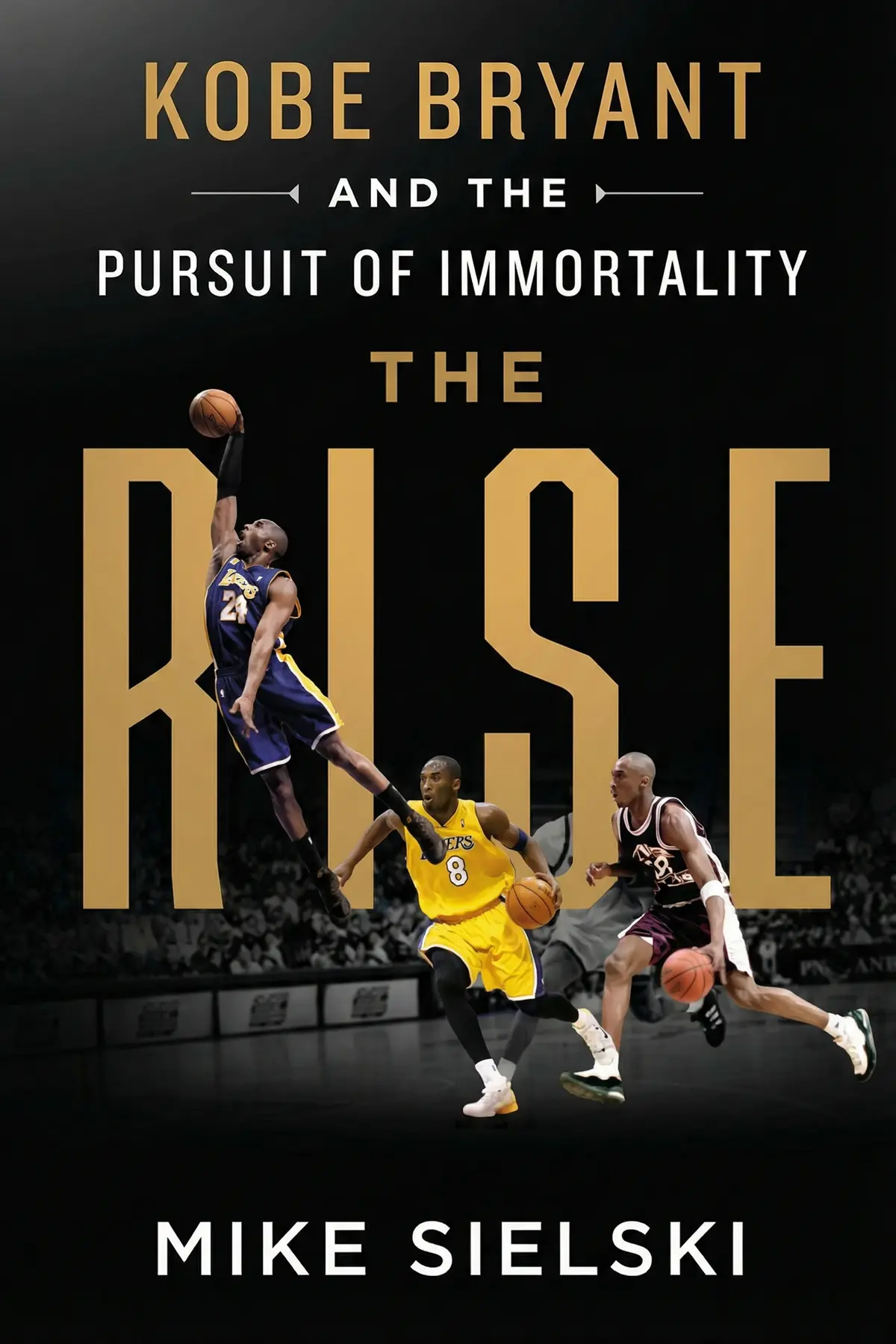
Talent alone did not make Kobe Bryant. His father, Joe, had just as much of it, and his NBA career fizzled out with a scandal and a move overseas. In The Rise, Philadelphia Inquirer sports columnist Mike Sielski looks past the shock of Bryant’s death in a helicopter crash in January 2020 to the years that formed him, and shows where the difference came from.
His answer is that Kobe paired his father’s gift with things Joe lacked: steely discipline, obsessive study of the game, a refusal to stay down after failure and, even as a teenager, a sharp instinct for shaping his public image. The story moves from a toddler slamming a ball into a toy hoop to a small town in Italy, a scoreless summer in Philadelphia and a suburban high school that had not won a state title in 53 years. It shows how raw ability turns into greatness, and what that drive costs the people standing beside it.
1 min 58 sec
Two Bryants had the same gift for basketball. One drifted from team to team until no NBA club wanted him. The other watched his father’s career from close up and learned from it, above all what not to do.
2 min 02 sec
In a small Italian town, a six-year-old made his teammates cry and had to be chased off a professional court. His evenings in front of the television mattered even more than his afternoons on it.
2 min 10 sec
Back in Philadelphia, the boy who had dominated in Italy could not score once all summer. He thought about switching sports. What he did instead says more about him than any later trophy.
2 min 24 sec
A suburban team lost eight straight games while its best player brooded alone in his room. A young coach’s gamble and a newcomer from Queens changed everything within a single season.
2 min 07 sec
Kobe shoved a teammate into a concrete wall in practice and hurled a ball at another’s head. In the biggest game of his young life, he finally did something he had almost never done.
2 min 09 sec
Every top college wanted him, and Michael Jordan himself offered advice. Kobe told the press only that he was weighing his options, and his silence turned a high school decision into a national event.
1 min 18 sec
The Rise ends where the legend begins, and that choice is the book’s argument. By the time Kobe Bryant joined the Lakers, the player the world would watch for 20 years already existed. He had been assembled in an Italian driveway, on videotapes watched until every move was memorized, in a summer of zero points, and in a state final that began with boos and ended with one unselfish pass.
Sielski’s portrait is not a gentle one. The same drive that lifted an obscure suburban team also sent a teammate into a wall, and it took Kobe years to learn that trust could make him better. Talent ran in the family. What he added was choice: to study his father’s slide, to practice harder after humiliation, and to decide what the public would see and when.
His early years offer something to borrow. Pick the best performers in your field and watch them until their decisions feel familiar. Treat your worst season as a reason to train harder. And the next time you are the strongest player in the room, look for the moment to pass.
He was born into basketball royalty. He made himself immortal.
Kobe Bryant's father, Joe, was a gifted basketball player whose NBA career fell apart after a public scandal and years of erratic play. His son had just as much talent. The Rise asks why the two careers ended so differently, and it finds the answer in Kobe's childhood and teenage years. Philadelphia Inquirer columnist Mike Sielski follows Kobe from the arenas where his father played to a small town in Italy, where he memorized taped games like lines from a film. Then come a humiliating return to Philadelphia, where he scored zero points in an entire summer league, and Lower Merion High School, where he turned a losing suburban team into the 1996 state champion. Along the way Sielski shows the discipline, ruthlessness and confidence that drove him, and the instinct with which he shaped his own public persona long before social media. Readers get a close portrait of how raw ability becomes greatness. They also see what that drive cost the people around him, and how one unselfish pass in a championship game marked Kobe's growth as a player.
Basketball fans who want to know how Kobe Bryant became Kobe before the NBA.
Ambitious students and young professionals with talent who want the habits that make it last.
Coaches and team leads managing a gifted but self-reliant performer.
Mike Sielski has been a sports columnist for The Philadelphia Inquirer since 2013, after working as a reporter at The Wall Street Journal. He also co-hosts on Sports Radio 94 WIP. In 2015 the Associated Press Sports Editors named him the best sports columnist in America, and his work has appeared in The Best American Sports Writing. His other books include Magic in the Air and Fading Echoes, and he co-wrote How to Be Like Jackie Robinson.

Listeners find the book to be an excellent listen with highly immersive storytelling. They value the narrative approach, with one listener noting how it methodically reveals the specific influences and decisions that molded Kobe's life.
Wow. Mike Sielski has managed to capture the lightning in a bottle that was Kobe’s pre-NBA life without falling into the trap of cheap sentimentality. This book systematically uncovers the various influences—from the Italian courts to the Philadelphia suburbs—that forged the Black Mamba. I was particularly struck by the stories of Kobe’s high school English teacher, Mrs. Mastriano, and how her lessons on Greek mythology mirrored his own journey. The level of detail regarding his obsessive practice habits at Lower Merion High is honestly staggering to read. To be fair, some chapters get a bit dense with basketball stats, but the narrative style kept me hooked throughout. It is a hauntingly beautiful look at a legend before the world knew his name. Every sports fan needs to see where that fire actually started.
Show morePicked this up expecting a standard sports biography but ended up with a masterclass in narrative non-fiction. Sielski’s ability to weave contemporaneous notes and interviews into a cohesive story about Kobe’s 'Pursuit of Immortality' is impressive. I loved the small, tasty morsels of info, like the detail about his room on the second floor or the trampoline dunks when he was only three years old. It makes a global icon feel like a real, flesh-and-blood kid who was just desperately trying to find his place in a culture he didn't initially understand. The book moves fast, almost like Kobe on a fast break, though some readers might find the lack of involvement from his immediate family a bit noticeable. Regardless, the author’s passion for the subject matter shines through on every single page. A must-read for anyone who misses the Mamba.
Show moreFinally got around to reading this and I’m struck by how systematically Sielski uncovers the specific decisions that shaped Kobe's destiny. The chapter on his relationship with his high school coach, Gregg Downer, is particularly strong, illustrating the friction required to produce a diamond. I appreciated that the author didn't just focus on the glory; he showed the loneliness, the arrogance, and the social isolation Kobe faced as a teenager. The detail about him choosing to go to prom just to 'experience' it like a normal kid, despite already being a celebrity, was surprisingly moving. My only real gripe is that I wish there had been more insight into his relationship with his mother, but the archival research here is top-notch. If you want to understand the origins of the Mamba, start here.
Show moreAfter hearing so much about the 'Mamba Mentality' for years, it was fascinating to see it in its rawest, most unpolished form during his high school years. Mike Sielski has written a definitive account of Kobe’s rise that feels both authoritative and deeply personal. The way he describes a three-year-old Kobe dunking on a plastic hoop until it breaks perfectly sets the stage for the next three hundred pages. It’s a great read with engaging storytelling that manages to balance the athletics with the human element of a kid trying to find his identity. To be fair, the book is quite long, but for a fan, every anecdote feels like a hidden treasure. Seeing his evolution from an outsider to a national sensation was truly gripping. This is a beautiful tribute to a sports icon.
Show moreEver wonder how an American kid living in Italy transforms into an NBA icon by age seventeen? The Rise answers that question by focusing exclusively on his formative years, which is a refreshing change of pace from typical biographies. Sielski does a fantastic job exploring the tension between Kobe and his teammates at Lower Merion, highlighting the isolation that often accompanies greatness. Not gonna lie, the sections about his father Joe’s failed NBA career and the family’s move back to Philly were the most compelling parts for me. The book loses a bit of steam when it dives into hyper-specific recruitment letters from colleges he never intended to attend. Still, the storytelling is engaging and systematically uncovers the decisions that led to that famous prom night with Brandy. It’s a solid, well-researched tribute.
Show moreMike Sielski delivers a deeply reported look at the formative years that usually get skipped over in the highlight reels of Kobe's career. Personally, I found the early chapters regarding his time in Italy to be the most enlightening, as they explain his unique manners and 'outsider' status. The book explores how he didn't know the slang or the songs popular in the U.S., which fueled his singular focus on basketball. While the author's prose is generally sharp, there are moments where the sheer number of minor characters introduced becomes a bit overwhelming to track. I also felt the author's personal opinions on the Bryant family's internal drama at the end were slightly out of place. However, the systematic uncovering of Kobe's 'Mamba Mentality' in its rawest form is undeniably fascinating. It’s an insightful, albeit slightly dense, biography.
Show moreAs someone who grew up watching the NBA in the 90s, reading this was an incredible nostalgia trip that filled in so many gaps. The truth is, we all knew Kobe was a prodigy, but seeing the gritty details of his AAU days and his interactions with local Philly legends is eye-opening. Sielski’s writing style is engaging, and he does a great job of showing how Kobe’s intellectual side—his love for literature and poetry—influenced his approach to the game. I did find the pacing a bit uneven, as some chapters fly by while others linger too long on secondary figures who didn't really impact Kobe's trajectory. Despite those minor lulls, the book succeeds in making the reader feel the weight of his ambition. It's a poignant reminder of a life that was taken way too soon.
Show moreIn my experience, sports biographies can be hit or miss, but this one definitely leans toward a hit due to its unique focus. Instead of retreading the Laker championships, Sielski stays disciplined in his exploration of Lower Merion and the surrounding Philly basketball scene. The narrative systematically uncovers how Kobe’s time in Italy gave him a fundamental advantage in his footwork and basketball IQ. I’ll admit that the prose can be a bit 'wordy' at times, and I found myself skimming some of the more repetitive game descriptions toward the end. However, the accounts of him meeting Michael Jordan for the first time are worth the price of admission alone. It’s an authentic, well-crafted origin story that provides a much-needed perspective on Kobe’s early life. A very solid four-star read for me.
Show moreThis book bored me for long stretches because it focuses far too much on inconsequential side characters instead of the man himself. I wanted to understand Kobe’s internal psyche, but Sielski often settles for superficial descriptions of his work ethic that we’ve all heard before. We get told he was obsessive and dedicated a thousand times, yet the author rarely peels back the layers to show us the 'why' behind the drive. The middle section felt roughly 100 pages too long, bogged down by repetitive game recaps that lack the energy of a live broadcast. Frankly, the writing style is a bit disjointed, with long paragraphs and sudden transitions that make it hard to maintain a rhythm. It’s an okay read for completionists, but it lacks the depth I was hoping for.
Show moreNot what I expected from a journalist of Sielski's caliber, as the book suffers from poor organization and a lack of focus. It feels like a collection of articles mashed together rather than a cohesive narrative, with random quotations peppered throughout that don't always add value. The paragraphs are way too long, making the reading experience feel like a chore rather than an enjoyment. I struggled to get through the endless descriptions of high school practices and meaningless tournament scores that all started to run together after a while. Look, Kobe was a fascinating human being, but this book makes him feel one-dimensional by ignoring his complexities in favor of basketball hagiography. I really wanted to like this, but I simply cannot recommend it to anyone who isn't a die-hard Laker fan. It was a disappointment.
Show moreThe Rise covers Kobe Bryant’s formative years, from childhood in Philadelphia and Italy to his high school career at Lower Merion and his decision to go straight to the NBA. Sielski argues that Kobe had the same talent as his father, Joe, whose NBA career faded, but combined it with discipline, obsessive study of the game, resilience and a deliberate grip on his own public image.
In Rieti, Kobe played in a youth league against older boys, followed his father to practices and away games, and performed moves at halftime of Joe’s games. In the evenings the family watched basketball tapes, and Kobe replayed the same games again and again while Joe analyzed each play. That habit made his style rehearsed and systematic, unlike his father’s playful, unpredictable game.
After a first season of heavy losses, coach Gregg Downer built the team around Kobe, and the arrival of rebounder Jermaine Griffin gave him a serious partner. The Aces began winning, beat Rip Hamilton’s Red Raiders 78 to 77, and in 1996 beat Erie Cathedral Prep 48 to 43 for the school’s first state championship since 1943, sealed when Kobe passed for the final layup.
Top programs, including North Carolina, offered him full scholarships, and Michael Jordan advised him to go there. Kobe had long decided on the NBA. He wanted opponents to see him as inexperienced so he could surprise them, attacking like a shark they never saw coming. He kept the plan secret, then announced it at a press conference in his high school gym.
Kobe’s early years suggest studying the best in your field until their choices become your own, treating failure, like his 25 scoreless summer games, as a reason to train harder, and finding at least one teammate as serious as you are. His title-winning pass also shows that trusting others can be a stronger form of confidence than doing everything alone.
Ishmael Beah

James Herriot


Barack Obama


Masaji Ishikawa

Ben Macintyre


James Shapiro
AUDIO SUMMARY AVAILABLE
Get the key ideas from The Rise by Mike Sielski, plus 5,000+ more nonfiction titles.









