

A Promised Land
Barack Obama
 English
 ไทย
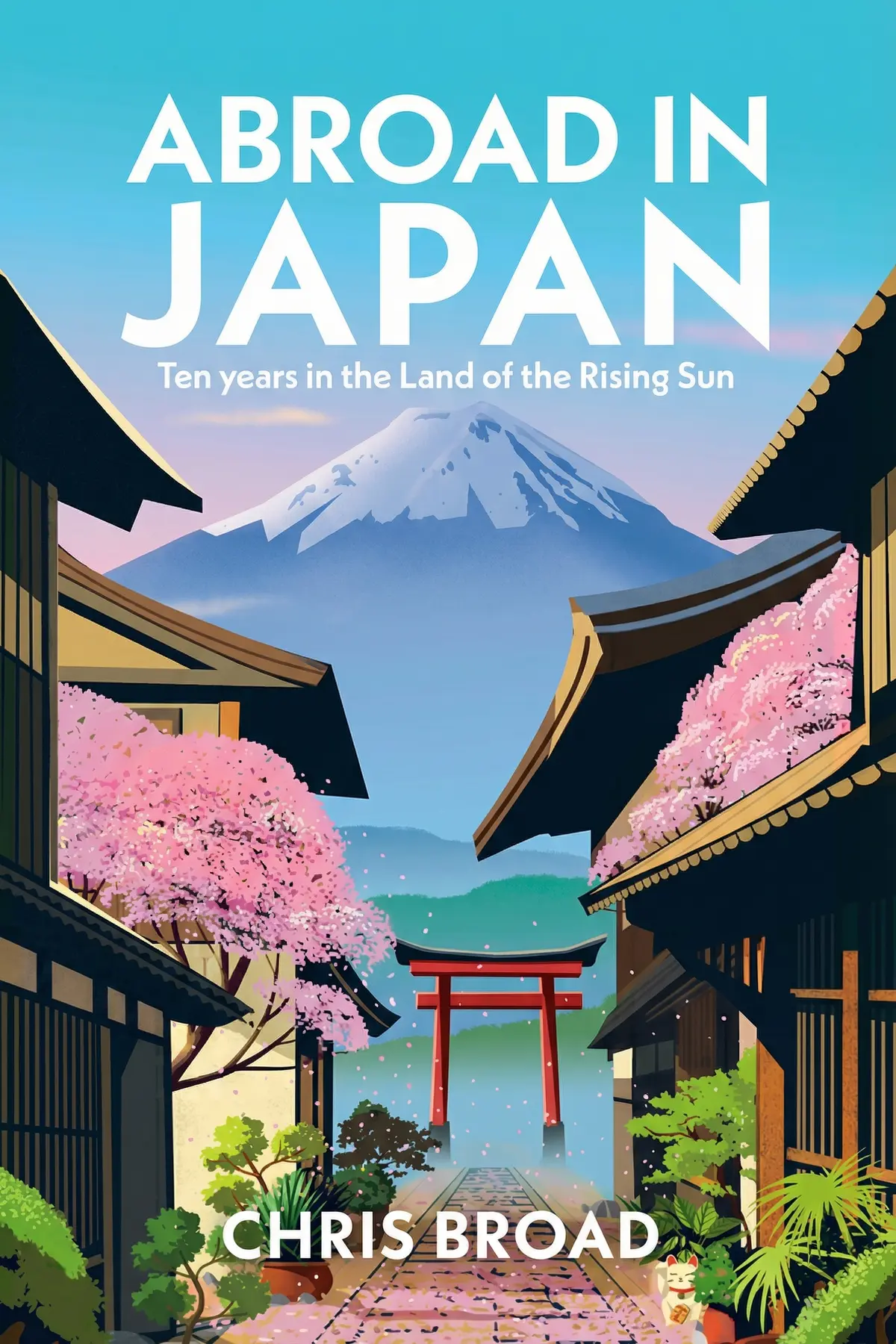
A funny, honest account of a young Briton teaching in rural Japan. It shows how saying yes before you feel ready, and laughing through culture shock, can turn an outsider into someone who belongs.
1 min 10 sec
Feeling unready is a poor reason to turn down a new life, and Chris Broad’s decade in Japan makes the case. In Abroad in Japan, the filmmaker and YouTuber recalls nearly failing the interview that got him there. Sitting at the Japanese Embassy next to a grammar test he suspected he had failed, he smiled far too hard. He answered no when asked about his Japanese, then hurried to take it back, offered to live in a cave in Hokkaido and confessed he had chosen Kobe for the beef. Asked to explain wabi-sabi, which he barely understood, he mumbled something vague and emotional. Three months later he was accepted onto Japan’s biggest teaching exchange.
That pattern repeats through everything after. Broad says yes before he is ready, embarrasses himself, and gets through by staying curious and laughing at his own mistakes. Follow him from steaming bathhouses and silent classrooms to a freezing summit and a viral midnight video, and you get an honest picture of everyday Japan, plus a working model for adapting wherever you feel like the outsider.
2 min 04 sec
Broad expected neon cities and got rice fields, a car that felt like a toy and a room full of naked strangers. One small gift from an old man changed how the whole strange month felt.
1 min 58 sec
A falling whiteboard, a failed exam and a room full of students who would rather say nothing at all. Broad’s first months in the classroom show what it takes to keep going while still incompetent.
2 min 05 sec
Japan is famous for slim figures and healthy food, yet Broad’s waistline kept growing. His nights out and one alarming medical report reveal a society that offers comfort and keeps score at the same time.
2 min 04 sec
Two friends started up Japan’s most famous volcano in shorts, in late afternoon, after a sleepless night. They reached the top, but one of them paid for it, and an old hiker had the last word.
1 min 52 sec
On the first morning of a new school year, something happened that changed how Broad saw every silent student he had taught. At the same time, a side project was starting to grow into something else.
1 min 57 sec
No job, no visa, no landlord willing to rent to him. From that low point came a cat documentary, a midnight siren and an award, followed years later by the night he nearly gave up on Japan.
1 min 08 sec
Broad’s decade suggests that belonging is built one embarrassment at a time. The man who said he wanted Kobe for its beef ends the book choosing to stay in a city that had just shaken beneath him. Almost every turning point in between came from saying yes without being ready: the job itself, the onsen, Fuji in shorts, a cat film he had no experience hosting, a midnight video that won an award.
The book does not pretend any of this is painless. A student’s fall, a landlord’s refusal and a friend shaking on a summit are all part of the record. What carried Broad was humor, stubborn effort and real curiosity about the people around him.
If you are weighing a move, a new job or any leap you feel unqualified for, take the chance before you feel ready, learn the local rules fast and let people correct your mistakes. Keep a small project of your own running, because Broad’s channel turned his worst months into his next life. And when the people who live there warn you about the cold, believe them and pack the extra layer.
Chris Broad nearly talked himself out of Japan. At his embassy interview he smiled too hard, admitted he had picked Kobe for the beef and could not explain wabi-sabi. He was accepted anyway, and soon found himself teaching English in Yamagata, a rural area of rice fields, crushing summer heat and deep winter snow. Abroad in Japan follows the years that came next. Broad faces naked hot spring baths, silent classrooms, the thousands of kanji characters, hostess clubs, a government law about waistlines and a freezing night on Mount Fuji in shorts. He also sees the harder side of Japanese life, from the pressure on schoolchildren to landlords who refuse to rent to foreigners. Alongside it all runs the YouTube channel that slowly became his career, through viral videos about chocolate-covered fries and a North Korean missile alert. Readers get an insider's picture of everyday Japan, and an example of how humor, persistence and openness carry someone through the hardest stretches of life abroad.
People thinking about teaching, working or studying abroad who want an honest picture of the awkward early months.
Travelers and fans of Japan curious about rural life, schools, pubs and everyday customs beyond the big cities.
Career switchers who doubt they are qualified and want proof that starting unready can still work.
Chris Broad, born on 21 April 1990, is a documentary filmmaker, podcaster and writer who started the Abroad in Japan channel on YouTube. His videos cover Japanese culture, food and travel, and he has visited all 47 of Japan's prefectures. He has also made documentaries about the nuclear accident at Fukushima and about the earthquake and tsunami in Tohoku, and he has appeared on the BBC and TEDx and in the Japan Times.

Listeners find this title to be essential reading that is straightforward to follow and provides clear descriptions. Moreover, they appreciate the humor, with one listener highlighting its biting British wit. Additionally, the narrative offers useful perspectives on Japanese life and culture, with one listener characterizing it as a sequence of stories told chronologically. Listeners also admire the prose and find the work heartwarming.
Picked this up after watching Chris’s videos for years, and it's basically like having his sarcastic narration playing in your head while you turn the pages. It’s a chronological joyride through a decade of culture shock that manages to be both informative and incredibly cynical in the best way possible. From his early days in the JET program in Yamagata to the high-profile interviews with Ken Watanabe, the progression feels earned and authentic. I was especially gripped by the chapters on the Tohoku disaster; he handled the sensitivity of that tragedy with a grace that balanced out his usual biting British wit. While the book focuses heavily on his first few years, I think those were clearly his most formative. Not gonna lie, seeing his relationship with Natsuki and Ryotoro fleshed out on paper made me appreciate the channel even more. It’s a heartwarming, albeit sarcastic, look at what it means to actually build a life in a foreign country.
Show moreEver wonder what it's actually like to move to a rural Japanese town without knowing a single word of the language? Chris Broad answers that question with a perfect mix of self-deprecating humor and genuine wonder. This isn't just a travelogue; it's a testament to the power of saying 'yes' to weird opportunities, like trekking across the country or meeting superstars like Hyde. The narrative transitions seamlessly from hilarious anecdotes about takoyaki being too hot to moving accounts of people rebuilding after the 2011 tsunami. I found the segments on his early struggles with the climate and the language particularly endearing. It’s rare to find a memoir that makes you laugh out loud and then immediately feel a lump in your throat. He has a way of making the landscape of Japan feel like a character itself. Absolute must-read for any Japanophile.
Show moreJapan is often romanticized to death in Western media, so it was refreshing to read such a gritty, honest, and hilarious take on living there. Broad doesn't hold back on the difficulties of the JET program or the isolation of living in a rural prefecture like Yamagata. His voice is distinct—sarcastic, dry, and yet clearly full of love for his adopted home. The stories about Natsuki are highlights for me; their friendship is one of the most wholesome things I've read in a long time. I finished the book in two sittings because the prose is just so engaging and effortless. It’s a chronological journey that captures the evolution of a person as much as the evolution of a career. Whether you’re a fan of his videos or just someone looking for a good laugh, this is a banger.
Show moreFinally got around to reading this and it's easily one of the best memoirs on the expatriate experience I've ever found. Most people who move to Japan write about the same five things, but Chris manages to make even the mundane stuff feel fresh with his wit. The way he weaves together the history of the regions he visits with his own personal disasters is brilliant. I particularly liked the section about his interview with Ken Watanabe; it felt like a real full-circle moment for his journey. The book is heartwarming without being cheesy and informative without being a textbook. It’s a chronological series of stories that perfectly encapsulates the highs and lows of the last decade. Even with the minor typos mentioned by others, the spirit of the book is 10/10. I’ll be recommending this to everyone.
Show moreAfter hearing so much hype on social media, I finally dove into this account of Chris’s life in Tohoku and beyond. The writing style is punchy and moves at a fast clip, perfectly capturing that fish-out-of-water feeling. I particularly enjoyed the early sections about his struggles as an English teacher because it felt so relatable to anyone who has ever felt like an outsider. However, I have to agree with some other readers regarding the lack of professional proofreading for the Japanese terms. Seeing 'danbo' instead of 'danbooru' for cardboard or some of the romanization choices felt a bit sloppy for a book published by a major house. Despite that, the stories about the stationmaster cat and the North Korean missile scare are gold. It’s an easy, entertaining read that doesn't take itself too seriously. If you want a deep academic dive into Japanese culture, look elsewhere, but for a fun memoir, this hits the spot.
Show moreThis book is a masterclass in that biting British self-deprecation we’ve come to expect from the Abroad in Japan brand. Broad manages to avoid the typical 'Orientalist' tropes by focusing on the mundane, frustrating, and ultimately rewarding aspects of daily life. The anecdotes are mostly gold, though some do feel a bit cliched, like the classic love hotel foreigner struggles. I did notice a few confusing character name swaps in the middle chapters—Noriko becoming Naoko out of nowhere was a bit jarring. Still, the emotional core of the book is strong. The way he describes his friendship with Natsuki is genuinely touching. It’s a very quick read, perhaps a bit too short at 300 pages, but it covers a lot of ground. I’d recommend the audiobook version especially, as his delivery adds a whole other layer to the comedy.
Show moreThe chapter on the Tohoku disaster was unexpectedly moving and provided a depth I wasn't expecting from a book that starts with jokes about squat toilets. Chris has a knack for balancing the 'wacky' side of Japan with the serious, human side of the country. I loved the chronological approach, even if the timeline gets a bit compressed toward the end. The writing is incredibly easy to follow, making it a perfect 'armchair travel' companion. My only real gripe is that he glosses over a lot of his later filmmaking process, which I was personally very curious about. To be fair, he covers the early culture shock so well that it makes up for the lighter ending. It’s an inspiring story about an ordinary guy who ended up doing something extraordinary. Definitely worth a spot on your shelf if you've ever dreamt of moving abroad.
Show moreLook, I love the YouTube channel, but this book felt strangely lopsided to me. The first 60% of the text is almost entirely dedicated to his first couple of years in Yamagata, which is fine, but it leaves the last six or seven years feeling like a rushed montage. I was really looking forward to hearing more about his adventures with Joey and Connor, or even a bit more about his relationship with Sharla, but they are barely mentioned or completely absent. It’s his story to tell, of course, but as a fan, it felt like several chapters were missing from the second half. The humor is definitely there, and his descriptions of the food are enough to make anyone book a flight immediately. Truth is, it’s a good book for beginners, but long-time viewers might find themselves wanting more depth on the recent era.
Show moreTo be fair, the anecdotes are mostly gold, but as someone who speaks Japanese, the lack of proofreading was hard to ignore. Seeing 'oshiteimasu' when he clearly meant 'oshieteimasu' is a small thing, but when it happens every twenty pages, it starts to grate on you. The content itself is entertaining enough, especially the bits about the North Korean missile video and the general absurdity of the Japanese school system. However, the book feels like it’s aimed purely at people who have never been to Japan. A lot of the 'revelations' about the culture are things you'd find in any basic travel guide. I enjoyed the personal bits about his anxiety and his growth as a creator, but I think the book could have used another round of edits. A decent read, but not quite the definitive 'Japan book' I was hoping for.
Show moreFrankly, I found the narration style a bit much and the pacing was all over the place. If you aren't already a fan of his YouTube channel, I’m not sure there’s enough here to keep you hooked. The first few chapters about his teaching job drag on forever, and then suddenly we're fast-forwarding through five years of his life in a single chapter. It felt like a collection of blog posts stitched together rather than a cohesive memoir. Also, the errors in Japanese were incredibly distracting. How does a book about Japan get through editing with so many typos in the basic vocabulary? It felt a bit lazy. I appreciate the hustle he put into his career, but the book itself felt like a bit of a cash-in on his existing fame. It’s okay for a plane ride, but don’t expect a masterpiece.
Show moreIt is Chris Broad’s memoir of roughly ten years in Japan. He begins as an English teacher on the JET Program in rural Yamagata, struggles with heat, snow, kanji and silent classrooms, and slowly finds his place. Alongside teaching he builds a YouTube channel, Abroad in Japan, which grows through viral videos and later becomes his career after he moves to Sendai.
Broad describes students who avoided answering questions to escape embarrassment, and a deep culture of conformity in which even top students could be mocked. On the opening day of his second year, a student leapt out of a window on the fourth floor and survived with broken bones. The event made him see how much pressure, including bullying known as ijime, sits behind the classroom’s polite surface.
He started the channel before moving to Japan to show rural areas few foreigners visited. An early video of coworkers practicing English swear words went viral, and later a review of McDonald’s fries with chocolate sauce took off while he was struggling in Sendai. In September 2017 his raw video of a North Korean missile alert drew millions of views and led to a Words of the Year award.
The book suggests saying yes to opportunities before you feel ready, learning local rules quickly, as Broad did at the onsen, and letting people correct you in public. It also shows the value of listening to local advice, after his underdressed Mount Fuji climb, and of keeping a personal project going through hard times, since his channel turned his lowest months into a new career.
Barack Obama


Masaji Ishikawa

Ben Macintyre


James Shapiro


Ben Macintyre


Ron Chernow
AUDIO SUMMARY AVAILABLE
Get the key ideas from Abroad in Japan by Chris Broad, plus 5,000+ more nonfiction titles.









