

A Room of One’s Own
Virginia Woolf
 English
Explains why paid work has come to control our income, identity and free time, what happens to people who choose to work less, and which shared changes could give everyone their time back.
1 min 02 sec
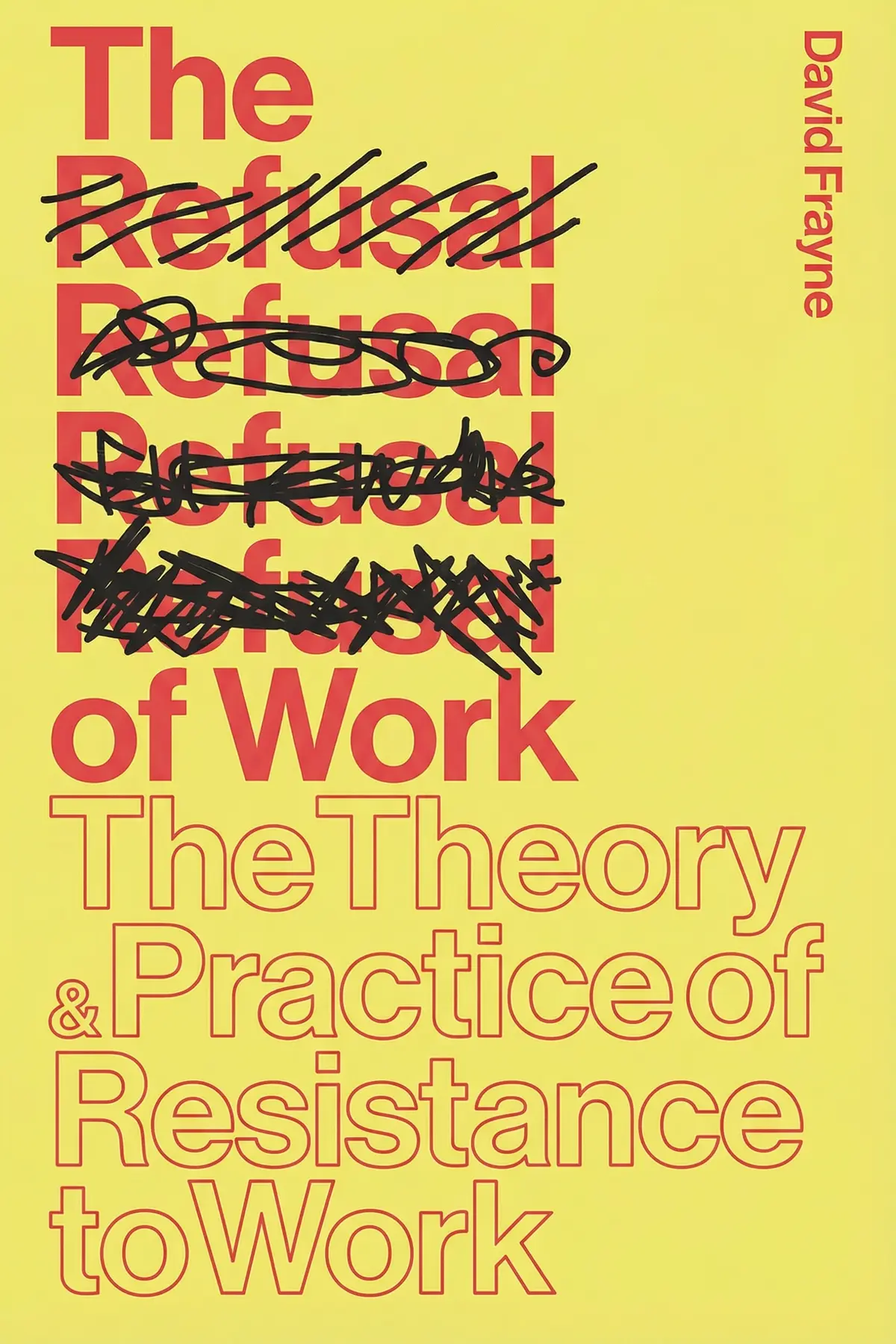
If your evenings go to recovering from the day and your weekends to bracing for Monday, the problem may not be your stamina. In The Refusal of Work, sociologist David Frayne recalls that in 1932 the economist John Maynard Keynes expected people in 2030 to work only 15 hours a week.
We built the opposite: a society where income, status, health care and even friendship run through a job, and where that arrangement serves almost nobody well. Frayne’s case is that the trouble lies less in work itself than in making paid work the only door to a decent, respected life.
He follows that idea from factory floors to playful open-plan offices, through schools and shopping malls, and into the lives of people who chose to work less. Along the way you get a clearer view of why your job feels so heavy, what stepping back really costs, and which changes could lighten the load for everyone.
1 min 58 sec
Two famous thinkers once expected a future with far less work, and Marx pinned that hope on technology. Something went badly wrong between their predictions and your calendar, and an old attitude to pay raises shows exactly where the road turned.
2 min 03 sec
An employee at a giant company carried a briefcase everywhere, though there was nothing inside it. That small detail explains why a day at a desk can leave you more exhausted than the work itself seems to justify.
2 min 06 sec
You finish a hard day, pour a drink and reach for something nice you feel you have earned. Frayne sees a loop hidden in that ordinary evening, and it reaches all the way back to the classroom.
1 min 59 sec
Wanting a shorter week can feel faintly shameful, as if you were letting society down. That feeling has a birth date, and the people who promoted it had very practical reasons for doing so.
2 min 12 sec
A patent attorney with a doctorate now waits tables and says she loves it. Her contentment is real, yet the hardest part of her choice turned out to be something no budget can solve.
2 min 08 sec
Workshops promise better balance, and secret acts of rebellion help people survive the week. Frayne thinks both miss the scale of the problem, and a national law in France and a city experiment in Gothenburg hint at what a collective response looks like.
1 min 16 sec
Frayne’s book is finally about a mismatch between what work could be and what we have made it carry. Marx saw labor as the way people shape the world and themselves. Keynes saw a future of short weeks. What arrived is a society where a job hands out income, health care, status and friendship all at once, so losing it, or simply wanting less of it, feels like a threat to who you are. The empty briefcase and the kombucha tap are symptoms of that weight. The deeper problem, Frayne argues, is the belief that only paid labor opens the door to acceptance, status and a living.
That shift in view suggests a few things to try. Before cutting hours, build sources of meaning and approval outside your job, as his most contented interviewees did. When guilt appears at the thought of a shorter week, remember who first taught that guilt and why. And treat your exhaustion as a shared, structural problem worth organizing around, whether that means backing shorter hours or a basic income.
When Samantha left patent law for waiting tables and tutoring, she kept working, now on a life she had chosen. Frayne’s argument is that everyone deserves the time to do the same.
Many people live with jobs that drain them, evenings spent recovering, and a nagging sense that work has taken over everything. Sociologist David Frayne asks why a society that once expected short working weeks ended up organizing nearly all of life around paid employment. His answer draws on Marx's idea of alienation, Max Weber's picture of pre-industrial attitudes to time, and a history of business leaders and politicians who cast work as the only moral path. He shows how the same logic shapes schools, advertising and leisure, and how today's offices ask workers to perform enthusiasm for goals that mean little to them. Frayne also interviewed dozens of people who chose to work less, including a social worker who cut his hours and a patent attorney who became a part-time waitress. Their stories reveal both the rewards and the social cost of stepping back. The book closes by arguing for collective fixes, such as shorter hours for everyone and a basic income, in place of individual stress management.
Office workers who spend their evenings recovering from the day and wonder why work takes up so much of life.
People thinking about cutting their hours or leaving a career, who want to know what that choice really costs.
Readers curious about shorter working weeks, basic income and the history of the work ethic.
David Frayne is a sociologist and writer from South Wales who has worked as a lecturer and social researcher at Cardiff University. His research covers radical approaches to work, alternative education, the sociology of happiness and consumer culture. As a sociologist, he has also contributed to a project called The Hard Problem in the Berggruen Fellows Program at New York University. The Refusal of Work is his first book.
Listeners find this an intellectually stimulating and affirming investigation of contemporary labor, though perspectives vary regarding the author’s scholarly tone and cyclical arrangement. Listeners value the book’s robust conceptual framework and its articulation of the mental burden caused by overwork, with one listener mentioning that it supplied a "useful lexicon" for their personal defiance of standard employment. Additionally, many highlight the qualitative interviews featured in the second half as a perceptive look at the everyday realities and hurdles of choosing to work less. They also note that the writing successfully disputes societal expectations about identity, with another listener describing the volume as "tremendously psychologically validating" for those who feel estranged by the typical 9-to-5 grind.
Ever wonder why we are so obsessed with being busy even when the work itself feels totally meaningless? This book provided a much-needed lexicon for feelings I’ve had for years but couldn't quite put into words. Frayne moves beyond simple complaints about bad bosses and instead questions the very foundation of the 'work ethic.' I found the concept of a 'worthwhile ethic' to be incredibly refreshing. It suggests that our value doesn't have to come from a paycheck, but from what we actually find meaningful. While the writing can get a bit academic, the psychological validation it offers is well worth the effort. It’s a brave look at how we might reclaim our time and our identities from the clutches of corporate life. Truly life-changing perspective.
Show morePicked this up because I’ve been feeling a total disconnect between my job and who I actually am. One interviewee in the book compares realizing the falsity of the work ethic to finding out there is no Santa Claus, and that really hit home for me. Once you see through the disguise, you can't go back to the autopilot of the 9-to-5 grind. Frayne treats his subjects with immense respect, showing that their refusal to work isn't about laziness, but about a desire for autonomy and creative freedom. He doesn't sugarcoat the financial struggles they face, which makes the book feel much more authentic. It’s a radical, challenging, and ultimately hopeful book that everyone should read before they commit another forty years to a cubicle.
Show moreLook, the truth is that Frayne relies heavily on the work of André Gorz, but he updates those ideas for our 21st-century gig economy brilliantly. I was particularly struck by his discussion on the 'politics of time.' He argues that we need a collective movement to reclaim our hours, rather than just individual escapes. This intersects so well with current concerns about climate change and over-consumption. If we work less, we consume less, and we might actually have the time to be active citizens again. The writing is definitely on the scholarly side, but the arguments are accessible enough if you take your time with them. This book gave me the lexicon I needed to explain my own desire for a slower, more meaningful life.
Show moreFinally got around to finishing this, and I'm left with a profound sense of both hope and frustration. It’s an incredible piece of cultural criticism that exposes how deeply entrenched work has become in our repositories of power. Frayne is careful to acknowledge that refusing work is a privilege that many can't afford, yet he insists it’s a struggle we should all partake in. The stories of people living on the margins to protect their time were fascinating and grounded the theory perfectly. They showed that a less materialistic 'good life' is possible, even if it’s difficult. This book isn't a 'how-to' guide for quitting your job, but it is a vital 'why-to' for anyone questioning the sanity of our modern work-centered society.
Show moreAfter hearing a lot of buzz about the 'anti-work' movement, I decided to give this a shot to understand the intellectual side of things. Frayne does an excellent job of tracing the history of how work became the center of our lives. The second half of the book, which features qualitative interviews with people in the UK who have stepped back from traditional employment, was the highlight for me. Hearing their stories made the theory feel grounded and real. They talk about the 'breaking point' where they realized the 9-to-5 life was just a social construct. My only real gripe is that the sample size is quite small—just 17 people—and they all seem to be from a similar geographic area. It's a great starting point, but I would have loved to see more diverse data.
Show moreWow. This was exactly what I needed to read after another soul-crushing week at my corporate desk. Frayne captures the psychological toll of overwork in a way that feels deeply personal and validating. He doesn't just argue for better wages; he argues for the right to exist outside of our job titles. I loved the distinction he makes between work as an activity and work as a wage-earning necessity. The book definitely makes you look at your own life and wonder what you could be doing with those forty-plus hours every week. It’s not a light read, and the academic tone can be heavy at times, but the ideas are revolutionary. It’s a powerful reminder that we are more than just our resumes.
Show moreThe chapter on 'The Breaking Point' is easily the most compelling part of this entire volume. Frayne captures that precise moment when the veil drops and you realize that the 'work ethic' you’ve been fed since childhood is actually quite arbitrary. He explores how work colonizes our time, leaving us too exhausted to even participate in our own communities or politics. Personally, I appreciated his focus on identity. We are constantly asked 'what do you do?' as a way to define our worth, and Frayne pushes back against that with grace. The book is a bit lopsided, focusing heavily on Marxist theory in the beginning, but it eventually finds its stride. It’s a thought-provoking read for anyone feeling alienated by the modern economy.
Show moreIn my experience, few books manage to dismantle the cultural pedestal of 'work' as effectively as this one does. Frayne asks the hard questions: why, at our peak of productivity, are we still working so much? Why is unemployment treated like a moral failing? The 'worthwhile ethic' he proposes is a beautiful alternative to the grind. My only criticism is that the book can be quite dry, and the author's personal interpretations sometimes overshadow the voices of the people he interviewed. Still, the core message is vital. It’s a tremendously validating read for those of us who feel like the current system is designed to drain us of our humanity. It provides a strong theoretical backbone for anyone looking to resist the status quo.
Show moreDavid Frayne’s text is a bit of a mixed bag, sitting somewhere between a radical manifesto and a dry sociology dissertation. On one hand, his critique of modern labor is razor-sharp and deeply necessary in an age of burnout. However, the structure is incredibly repetitive, often feeling like a summary of André Gorz’s work rather than something entirely original. Honestly, Gorz is cited so frequently—appearing on what feels like every third page—that I started to wonder if I should have just read his books instead. The first half is quite dense with theory, which might turn off casual readers looking for practical advice. It’s an important contribution to the field, but it could have been much tighter. I agree with the message, but the delivery was a bit of a slog.
Show moreTo be fair, I went into this with very high expectations that weren't quite met. I am fully on board with the idea of working less, but this book felt padded to reach a certain word count. It’s deeply repetitive, circling back to the same points about Gorz and the harms of capitalism without offering much new evidence. The research in the second half is based on a tiny group of 17 individuals, which feels thin for a book making such broad claims. It reads more like an academic lit review than a groundbreaking piece of original research. If you’ve already read Kathi Weeks or other labor theorists, you probably won’t find much new here. It’s okay as a primer, but it was ultimately quite disappointing for me.
Show moreSociologist David Frayne argues that modern society has made paid work the gateway to income, identity, status, community and even health care, and that this arrangement serves almost no one well. He traces how it formed, from Marx’s idea of alienation to business leaders who promoted work as a moral duty, shows how it shapes schools, advertising and free time, and argues for redistributing work collectively.
Frayne interviewed dozens of them, including Larry, a social worker who cut an hour from each day, and Samantha, a patent attorney with a PhD who became a part-time waitress and tutor. They described their lives in terms of enjoyment and richer connections. Their struggle was social: family expectations, dread of being asked what they do, and inner shame. Those who did best built other sources of meaning first.
Frayne rejects individual fixes like time management workshops and stress courses, which put the burden back on each worker. He favors collective change. One option is shorter hours across society, as France tried with a 35-hour week in 2000 and Gothenburg with six-hour days for city staff from 2014. Another is a basic income covering essentials, so income no longer depends entirely on a job.
It suits knowledge workers who feel their job has spread into every corner of life, people weighing a move to fewer hours or a different career, and anyone dealing with work-related stress who suspects the cause is bigger than their own habits. Readers interested in the history of the work ethic, shorter working weeks or basic income will also find a clear argument here.
Virginia Woolf

Tracy Rosenthal

Jessica Valenti


Johny Pitts


bell hooks

Fay Bound Alberti
AUDIO SUMMARY AVAILABLE
Get the key ideas from The Refusal of Work by David Frayne, plus 5,000+ more nonfiction titles.









