
12 min 26 sec
Available in: English
The Pursuit of Excellence: The Uncommon Behaviors of the World's Most Productive Achievers
By Ryan Hawk
Shows why measuring yourself against yesterday works better than chasing rankings. It turns that idea into daily practice: small rituals, a supportive home, transformational relationships and a written habit of learning from every setback.
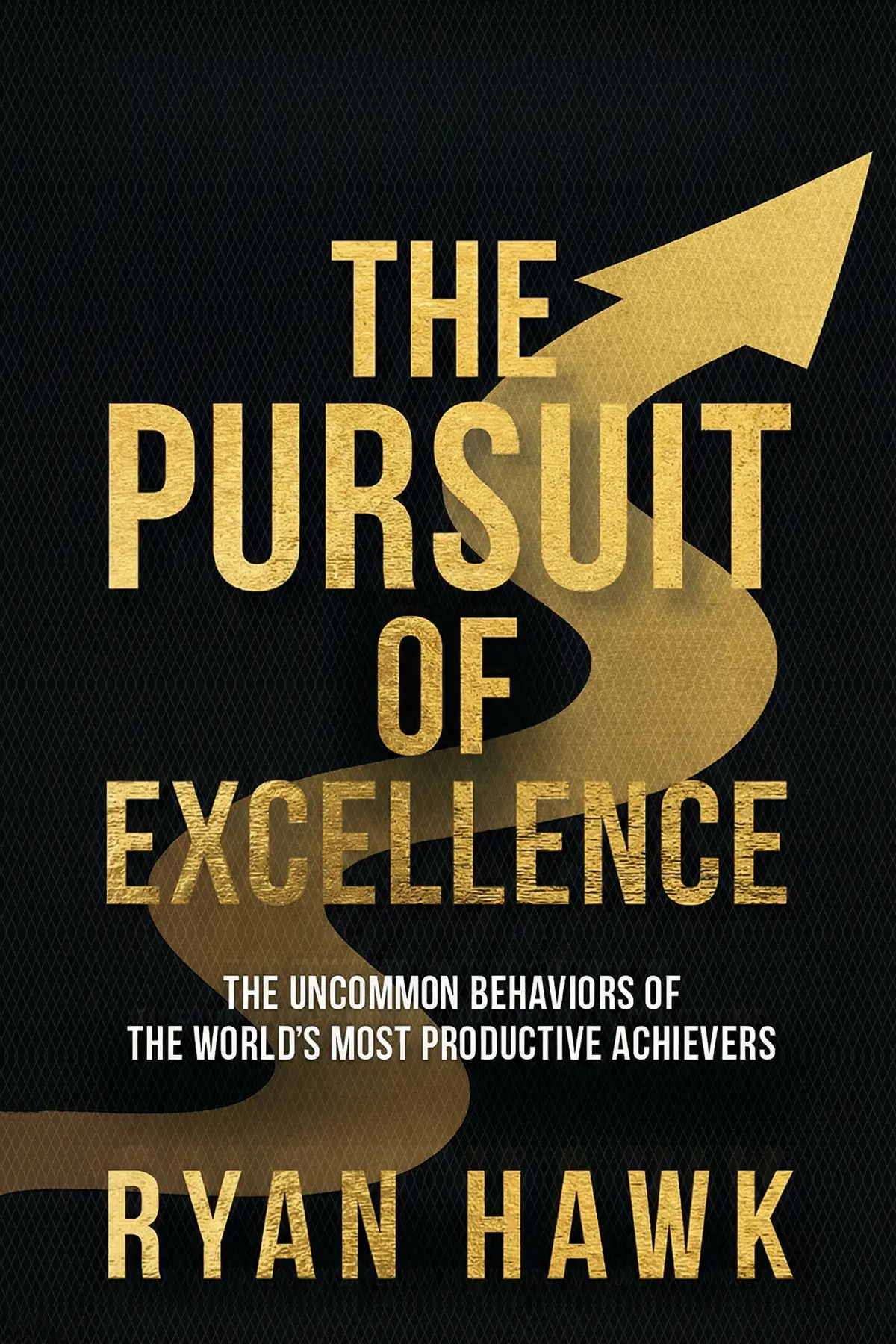
Table of Content
1. Introduction
57 sec
If your sense of progress rises and falls with how you compare to colleagues, you are playing a game you can never fully control. In The Pursuit of Excellence, podcast host and former quarterback Ryan Hawk offers a different measure: excellence, judged only by whether you are better today than you were yesterday. Success is measured against other people, its definition is often out of your control, and it ends once the goal is reached. Excellence is personal, and it never runs out.
Hawk built this view from conversations with hundreds of experts and entrepreneurs. He distills what they do into three habits: respecting a daily process, choosing work you love and people who lift you, and treating failure as material for learning. Each habit pulls the target back inside your own control. By the end, you will have a way to plan small daily steps, test the relationships around you, and turn your next setback into a written lesson.
2. Pick a goal that keeps giving you purpose
1 min 33 sec
Hitting a big target often leaves people strangely flat, wondering what comes next. Hawk traces that letdown to the kind of game they chose to play, and to a piece of popular career advice that sets people up to quit.
3. Discipline gives you more freedom
1 min 25 sec
Strict routines sound like the opposite of a free life. One of the greatest distance runners of all time sees it the other way around, and his reasoning changes what you should worry about before any big test.
4. Break big ambitions into rituals you repeat daily
1 min 24 sec
A year-end deadline feels serious and motivating, yet it rarely produces the book, the skill or the fitness it promises. A quote hanging in a professional basketball locker room explains what works instead.
5. Build a home that makes the plan easy
1 min 28 sec
At the start of every new year, many of us announce we will eat better and waste less time. Hawk argues that results come from building new habits and a new lifestyle, and that clearing temptations out of the room you live in helps as well.
6. Love the work enough to keep showing up
1 min 32 sec
Basketball legends talk about willing themselves to greatness. A famous comedian thinks they leave out the real fuel, which is love, and the book pairs his point with another lesson about asking for the help you need.
7. Spot the relationships that make you better
1 min 28 sec
Some contacts look impressive and still leave you weaker after every meeting. Hawk lists the quiet warning signs, and starts with a question about you that most people never think to ask themselves.
8. Turn every setback into a lesson you can teach
1 min 37 sec
The physicist who pioneered quantum electrodynamics left behind a learning method so simple a child is part of it. Paired with a daily notebook, it changes what a mistake is worth and what you do the morning after one.
9. Conclusion
1 min 02 sec
What Hawk offers is a change of scoreboard. Success keeps your eyes on other people, rankings and luck. Excellence moves the score to the one place you can always reach: the small thing you did today. From there, the rest follows. Kipchoge’s discipline becomes a kind of freedom, the stonecutter’s unseen blows become progress, and a failure becomes a note in a journal instead of a final verdict.
The book points toward a few plain actions. Pick one ambition and shrink it to a daily step, the way a novelist might commit to one hundred words, then clear away one thing at home that works against it. Look honestly at the people around you, asking whether you add value to them and whether they push you higher or only trade favors. And when you fall short, write down what happened and explain the lesson as if to a child.
None of this needs a dramatic start. It needs one more blow on the rock tomorrow, and the patience to know the crack is coming.
About this book
What is this book about?
Many people tie their sense of progress to titles, rankings and comparisons with colleagues. Those targets shift, depend on others and leave a strange emptiness once they are reached. Ryan Hawk argues for a different aim: excellence, judged only by whether you improved today. Drawing on hundreds of conversations with experts and entrepreneurs, Hawk builds his case around a purpose mindset that respects the process. He takes lessons from marathon runner Eliud Kipchoge on discipline as freedom, from James Clear on small steps, rituals and removing obstacles, and from Jerry Seinfeld on why love, more than willpower, supplies the energy for hard work. He shows how to become someone others want around and how to tell transformational relationships from transactional ones. Readers also get a way to treat failure as information. That includes the Feynman Technique of explaining what you learn to a child, and a daily writing habit that turns mistakes into new goals.
Book Information
Who it's for
Professionals who compare themselves
Ambitious professionals who keep measuring themselves against colleagues and feel empty after each win.
Wanting process over willpower
People whose resolutions fade by February and who want a daily process instead of more willpower.
Rebuilding confidence after setbacks
Anyone rebuilding confidence after a setback who wants a practical way to learn from failure.
About the Author
Ryan Hawk
Ryan Hawk hosts The Learning Leader Show, a podcast on which he has interviewed more than 450 experts about leadership and wisdom. He played quarterback in high school, in college and as a professional, serving as team captain. In business he rose from award-winning individual contributor to vice president of sales at a multibillion-dollar company. He advises and speaks at Fortune 500 companies, works with teams and players in the NFL, NBA and NCAA, and wrote the bestselling Welcome to Management.
Ratings & Reviews
Ratings at a glance
What people think
Listeners find the work to be an engaging read that offers practical advice throughout its pages. Furthermore, the content contains excellent storytelling and is uniquely beneficial for leadership growth, with one listener observing how it assists established leaders in maintaining high standards. They also value its hands-on utility, with one listener emphasizing the book's tactical methodology.
Top reviews
Kae
Ryan Hawk has essentially distilled hundreds of hours of his podcast into a tactical manual for anyone tired of just 'getting by.' The distinction between chasing success and pursuing excellence is the most vital takeaway here. By focusing on the 'infinite game,' Hawk shows that the finish line doesn't actually exist. I loved the story about John Chambers and Cisco; it really highlights how a leader’s tenure depends on falling in love with daily actions rather than just quarterly numbers. My only minor gripe is that the pace is so fast you might miss some of the nuance. Still, it's a phenomenal resource for building a purpose-driven lifestyle. It forces you to look in the mirror.
Show moreManee
Wow, the comparison between Michael Phelps and Chad le Clos in the Rio Olympics really stuck with me. Hawk uses that iconic photo of le Clos looking at Phelps to illustrate the danger of divided focus. It’s a powerful reminder that excellence requires a singular gaze on your own 'wall' rather than worrying about the competition. The book is packed with these kinds of vivid, memorable anecdotes that make the lessons actually stick. I’ve started applying the 'Discipline = Freedom' mantra to my morning routine and the results are already visible. This isn't just a book you read; it’s a toolkit you use to rebuild your daily intentions. It is worth every penny.
Show moreHiroshi
After hearing Ryan speak on a webinar, I grabbed this book and finished it in two sittings. The chapter on Roger Bannister’s sub-four-minute mile was a masterclass in the power of mental visualization. It’s easy to forget that 'impossible' is often just a collective belief waiting to be shattered by one disciplined person. Hawk’s writing is incredibly direct, which I appreciate because it respects the reader’s time. He provides a roadmap for those willing to do the hard work of self-discipline. If you’re looking for a reason to stop making excuses and start taking action, this is the fuel you need. It turns vague intentions into a concrete plan for growth.
Show moreRoydao
Look, most leadership books are 300 pages of fluff wrapped around one good idea, but Hawk delivers actionable insights on every single page. He pushes the reader to move beyond the comfort zone and embrace the 'struggle' as a necessary component of greatness. I loved the advice from Scott Galloway about not just 'following your passion' but becoming great at something first. Once you achieve mastery, the passion usually follows the success and the economic rewards. This book is a must-read for anyone who wants to sustain excellence over a long career. It’s tactical, gritty, and deeply inspiring for those of us in the middle of the grind. Highly recommended.
Show moreEllie
Ever wonder why some leaders seem to have an endless supply of energy while others burn out in a year? This book argues it isn't about willpower, but about a deep, sincere love for the process of improvement. Hawk organizes the book into three logical sections—The Build, The Fuel, and The Chase—making it easy to navigate his various insights. I found the section on the 'Feynman Technique' particularly useful for my own professional development. Truthfully, the sheer volume of actionable habits mentioned can feel a bit overwhelming if you try to implement everything at once. Pick one or two rituals to start with, or you’ll end up staring at the page feeling paralyzed by choice.
Show moreDylan
As someone who's followed Ryan's podcast for years, I knew the content would be high-quality, but the structure of this book is what truly shines. He manages to weave together the wisdom of world-class athletes and CEOs into a cohesive narrative about gradual improvement. The concept of the 'Purpose Mindset' shifted how I view my current career setbacks. Instead of seeing a failure as a dead end, Hawk encourages us to see it as a data point for growth. I do think some of the chapters could have benefited from more personal stories from Ryan’s own life to balance out the celebrity examples. Regardless, it's a compelling read for any manager seeking to sustain high standards.
Show moreAroha
Picked this up after a recommendation from a mentor and I’m glad I finally took the plunge. The section detailing Admiral Stockdale’s time in the Hanoi Hilton was incredibly moving and put my own 'hard days' at the office into perspective. Hawk does a great job of showing that excellence isn't about being perfect, but about having the endurance to stay in the pursuit. I appreciate the tactical approach he takes toward goal setting, especially the advice on not penalizing your superstars with higher quotas. It’s a practical guide that avoids the fluffy, vague language found in most self-help books. I’ll definitely be keeping this on my desk for quick reference during tough weeks.
Show moreIff
Finally got around to reading this and I was surprised by how much it applied to my life as a teacher and parent. We often focus so much on the 'win' that we forget the beauty of the process. Hawk’s emphasis on small, smart choices compounding over time is a lesson I’ve already started sharing with my students. The idea that 'action shows intention' is a simple but profound truth that hit home for me. My only critique is that the book can feel a bit 'bro-heavy' with its reliance on sports metaphors. However, the underlying principles of mastery and autonomy are universal and well worth the price of admission for anyone in a leadership role.
Show moreChanikarn
To be fair, this reads more like a 'Best Of' compilation of the most popular non-fiction books of the last decade. If you have already read Atomic Habits, Think Like a Rocket Scientist, and The Fifth Discipline, a lot of this will feel like a retread. Hawk is a great curator, but I was hoping for a bit more original theory rather than just a synthesis of his podcast guests. That said, it is a very convenient one-stop shop for someone who hasn't spent years reading leadership literature. The writing style is punchy and accessible, which makes it a quick weekend read. It’s a solid 3-star book that serves as a gateway to deeper topics.
Show moreLadawan
Not what I expected in terms of depth, though the 'Learning Leader' fans will likely love the familiarity of the tone. While the book is jam-packed with insight, it occasionally feels like it’s trying to cover too much ground in too few pages. The transitions between a story about Eliud Kipchoge and a lesson on the 4-minute mile can feel a bit abrupt at times. Frankly, I think it works best as a companion piece to the podcast rather than a standalone masterpiece. It’s a great summary of excellence, but it lacks the 'deep dive' feeling I prefer in my non-fiction. Good for a quick hit of motivation, but maybe not a book I’ll return to yearly.
Show moreQuestions about this book
What is the main idea of The Pursuit of Excellence by Ryan Hawk?
Hawk argues that pursuing excellence works better than chasing success. Success depends on comparisons with others and ends once a goal is reached, while excellence asks only whether you improved today, so it keeps giving you purpose. He builds this on a purpose mindset that respects the daily process, supported by work you love, the right relationships and a habit of learning from failure.
What does freedom equals discipline mean in the book?
Hawk draws the idea from marathon runner Eliud Kipchoge, who says an undisciplined person is ruled by moods and passions. Without a plan you are also at the mercy of competitors and other people’s opinions. With a disciplined daily process, your only responsibility is following the plan you control, which frees you from worrying about everything else. Prepare well, Kipchoge argues, and results follow.
How do you tell a transactional relationship from a transformational one?
Transactional relationships trade favors, while transformational ones change both people for the better. Hawk lists warning signs of transactional people: dropping names, talking big while doing little, appearing only when they gain something, focusing on themselves instead of the group, and looking for ways to bend rules. Seek out gratitude, mutual respect, optimism, vulnerability, humor and trust instead.
How can I apply the Feynman Technique from The Pursuit of Excellence?
After learning something, try to explain it so a child could understand. Where you struggle, research until the gaps close, then organize the details into a clear story. Hawk pairs this with writing: record your small daily goals, turn new knowledge into simple stories, and note what each mistake taught you so it becomes a new goal.
Who should read The Pursuit of Excellence?
It suits people who feel stuck comparing themselves with others, who start ambitious plans and lose steam, or who want help staying on track after setbacks. Its tools are concrete: a daily minimum such as one hundred words of writing, removing temptations from your home, asking a mentor for guidance and keeping a journal of lessons learned.
Readers also enjoyed


A High-Performing Mind: Strengthen Your Mind and Live Your Best Life
Andrew D. Thompson


Abundance: The Inner Path to Wealth
Deepak Chopra

59 Seconds: Change Your Life in Under a Minute
Richard Wiseman




AUDIO SUMMARY AVAILABLE
Listen to The Pursuit of Excellence in 15 minutes
Get the key ideas from The Pursuit of Excellence by Ryan Hawk, plus 5,000+ more nonfiction titles.
- 5,000+ titles
- Listen as much as you want
- 7-day free trial
- Cancel anytime









