
13 min 45 sec
Available in: English
 ไทย
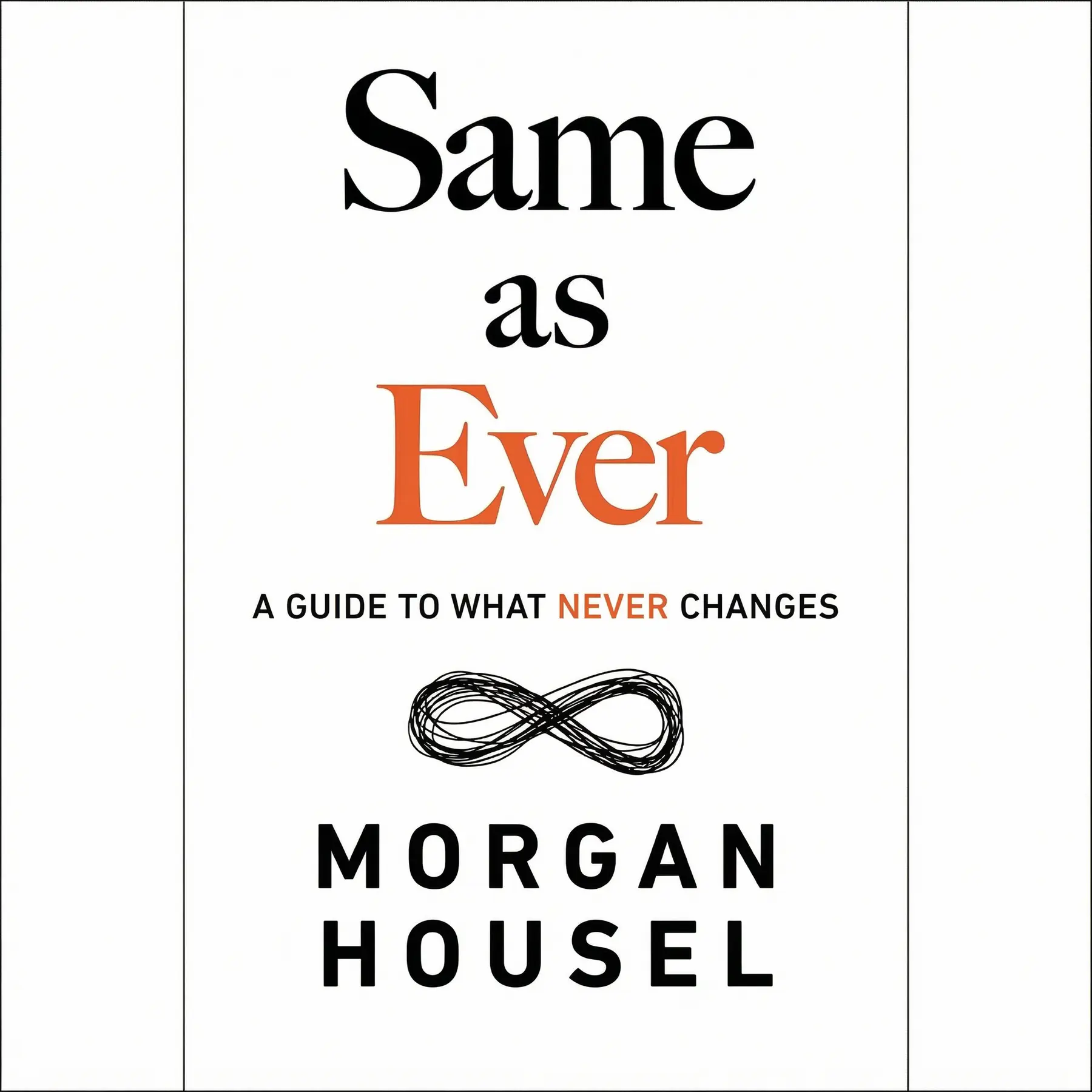
EnglishไทยSame as Ever: A Guide to What Never Changes
Shows why predicting events is mostly hopeless while predicting human behavior is not, and how to use that steadiness to handle risk, judge forecasts, persuade people, invest patiently, stay content and understand those who disagree.
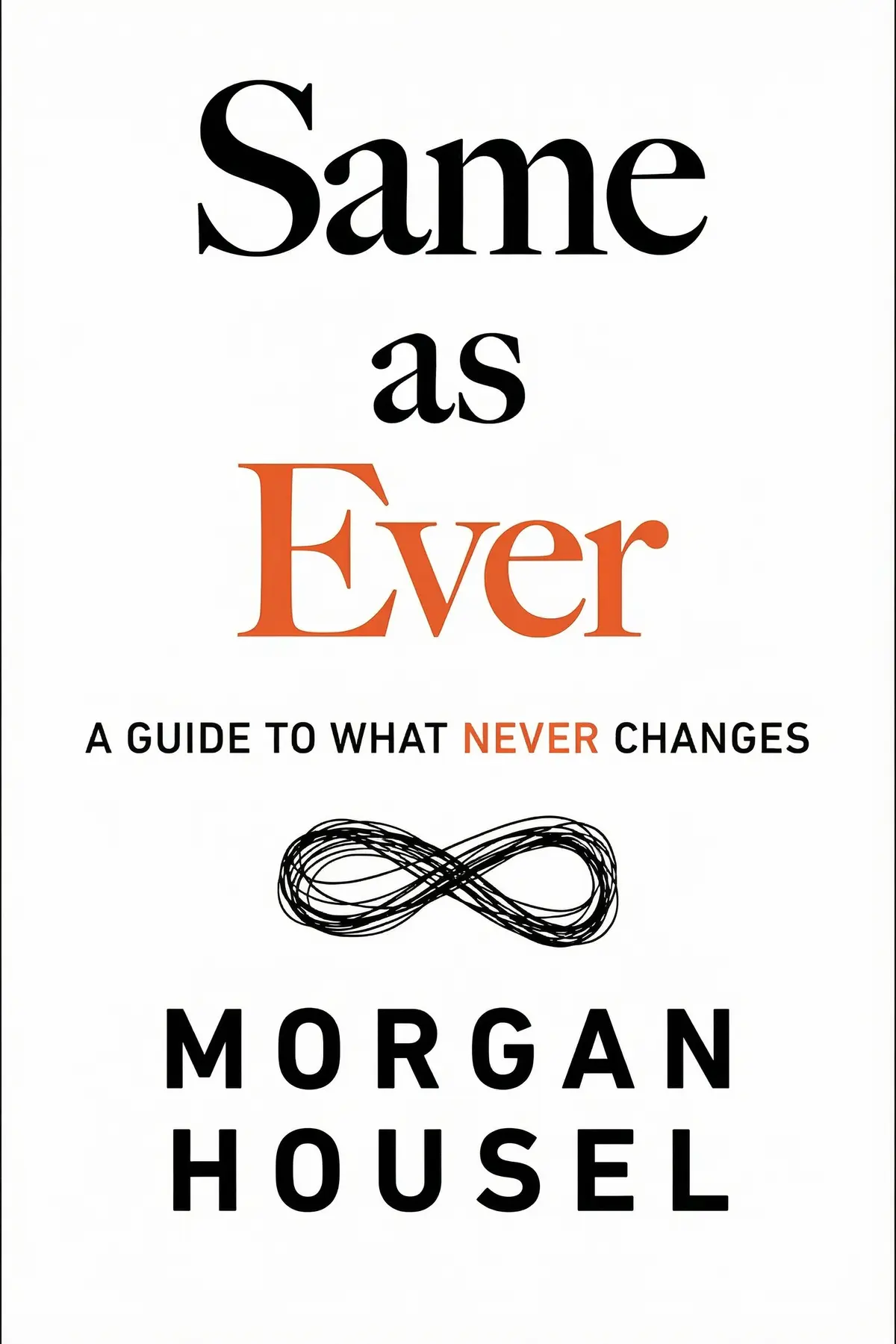
Table of Content
1. Introduction
1 min 05 sec
Most of us spend a lot of energy guessing what happens next, and most of those guesses fail. In Same as Ever, financial journalist and investor Morgan Housel argues that the smarter move is to stop predicting events and study the one thing that hardly changes: how people behave. Technology and politics shift all the time, he says, yet people react to fear, uncertainty, booms and busts much as they always have.
That steadiness is the thread through everything that follows. The future will keep surprising you, but human nature gives you something firm to plan on. Housel draws on history, psychology and finance, from a lucky wind on the East River in 1776 to a drowned astronaut trainee and a war run on daily statistics. Each lesson turns into a habit for work, money and family life: how far to trust a forecast, how to prepare for risks you cannot name, why happiness depends on what you expect, and what to ask someone who sees the world differently.
2. Stop forecasting events and start reading people
1 min 35 sec
A change in the wind may have decided a war, and a teenager’s passing whim decided who lived through an avalanche. If chance rules that much, what can anyone actually plan on?
3. Prepare for the danger nobody listed
1 min 32 sec
A test flight 22 miles above the Earth went perfectly. The astronaut trainee still did not come home. His story shows why the most careful risk list can leave you exposed.
4. Trust modest forecasts over confident ones
1 min 43 sec
The experts who draw the biggest audiences are often the least reliable ones. Housel explains why we reward them anyway, and how a simple percentage can tell you whom to believe.
5. Persuade with the story your numbers leave out
1 min 51 sec
A defense chief had every figure he asked for and still misread a war. Two companies with similar finances met opposite fates. In both cases, what mattered never showed up on a report.
6. Bet on slow gains that compound for decades
1 min 36 sec
A house takes months to build and minutes to destroy. That lopsided rule shapes what we notice, what we fear and why so many investors keep asking exactly the wrong question.
7. Lower your expectations to enjoy good things more
1 min 39 sec
Living standards rise decade after decade, yet people report feeling no happier. Housel traces the problem to a moving target, and he offers a cure from an investor who lived to 99.
8. Turn disagreement into understanding with one question
1 min 35 sec
Wars end and recessions reverse, yet the people who lived through them may never think the same way again. Housel offers a single question that changes how an argument with them goes.
9. Conclusion
1 min 09 sec
Same as Ever asks you to trade one kind of confidence for another. Confidence about what will happen next is mostly an illusion, as a gust of wind over the East River or one afternoon’s choice on a ski slope can show. Confidence about how people will behave stands on much firmer ground. They will crave certainty, follow stories, overlook slow progress, chase rising expectations and carry their past into every argument. That was true long ago, and it will be true after the next crisis.
The shift makes daily choices lighter. Keep a margin for the danger you have not imagined, remembering that Prather’s real threat came after the test had already succeeded. Trust anyone who sounds completely sure a little less, and judge your own decisions over many results. Give slow, unexciting compounding the patience it needs, and keep your expectations low enough that good things still feel good. When someone disagrees with you, ask what they have lived through.
The future will stay a mystery. The people in it will stay remarkably familiar.
About this book
What is this book about?
Most of us spend real energy trying to guess what comes next: the next market move, the next crisis, the next turn in our careers. Most of those guesses miss. Morgan Housel argues that this is not a failure of effort. History keeps turning on tiny accidents, a change in the wind or a whim on a ski slope, and no forecaster can see them coming. What does not change, Housel says, is how people behave. Drawing on history, psychology and finance, he shows that humans crave certainty over accuracy, overlook the risks that matter most, trust stories over statistics, ignore slow progress while fixating on sudden failure, chase rising expectations and carry their past into every disagreement. These patterns held long ago and they hold now. The result is a set of short, practical lessons. Readers learn how much to trust a forecast, how to prepare for dangers they cannot name, why a story often persuades better than a spreadsheet, why patience beats speed in investing, how lower expectations protect happiness and which single question turns a frustrating argument into understanding.
Book Information
Who it's for
Tired of missed forecasts
Professionals and investors tired of forecasts that keep missing and looking for a steadier way to decide.
Leaders handling disagreement
Managers and team leads who need to persuade people and handle disagreement without assuming the other side is foolish.
Successful yet no happier
High achievers who keep getting more yet feel no happier.
About the Author
Morgan Housel
Morgan Housel is a financial journalist, investor and advisor, and a partner at the Collaborative Fund. He has twice won the Best in Business Award from the Society of American Business Editors and Writers and has received the New York Times Sidney Award. He has also been a finalist twice for the Gerald Loeb Award for Distinguished Business and Financial Journalism. His other books include The Psychology of Money and The Art of Spending Money.
Ratings & Reviews
Ratings at a glance
What people think
Listeners find the work deeply insightful, with one listener pointing out a rare knack for turning intricate theories into actionable advice, and they enjoy its accessible nature, which keeps them engaged. The author's prose is well-received, and listeners treasure its timeliness, with one labeling it a "handbook of absolutely useful timeless knowledge." By linking fascinating tales to every lesson, the book is viewed by listeners as a valuable purchase. Pacing earns varying opinions; some describe the text as succinct while others sense a lack of cohesion, and the content’s authenticity similarly triggers a range of responses.
Top reviews
Fatima
Morgan Housel has this incredible knack for taking the complex gears of human history and making them feel like simple common sense. Same as Ever isn't about predicting what the world will look like in 2050, which is a relief because most forecasters are wrong anyway. Instead, he focuses on the 'sturdy perennials'—those human traits like greed, fear, and overconfidence that never go out of style. The chapter on risk was particularly eye-opening for me, especially the idea that the biggest dangers are the ones we never see coming. Look at the Titanic or the 2008 crash; we always prepare for the last war instead of the next surprise. While some might find the short, punchy chapters a bit disjointed, I found the pacing to be perfect for a busy schedule. This is a handbook of absolutely useful timeless knowledge that I’ll likely revisit whenever the world feels a bit too chaotic.
Show morePrasarn
Picked this up on a whim and now I can't stop thinking about the concept of 'pessimistic planning but optimistic dreaming.' In a world that seems to be changing at breakneck speed, there's immense comfort in realizing that some things remain constant. Housel doesn't just tell you things; he shows you through vivid stories, like the inventor of chess and the rice grains. This book acts as a lens that helps you zoom out and see the bigger picture of the human condition. Frankly, it’s one of those rare reads that actually reduces your anxiety about the future because it gives you a solid foundation to stand on. The writing style is captivating and keeps you hooked from the first page to the last. It’s a must-read for anyone who wants to make better sense of the news and their own life choices.
Show moreJom
As someone who spends most of their day obsessing over market trends, Housel’s perspective on what never changes is a much-needed breath of fresh air. He argues that we are better off focusing on what we can control and ignoring the unpredictable 'black swan' events that knock us off our feet. The storytelling is top-notch, especially when he discusses how progress is usually a 'drunken stumble forward' rather than a smooth line. It is a reminder that the future is uncertain, but human nature is the one thing we can always count on. This book is a practical guide that distills complex psychological principles into actionable knowledge. I found the pacing to be concise and the chapters were just the right length to keep me engaged. If you want to develop better frameworks for understanding the world, this is worth every penny.
Show moreBird
The chapter on the 'invisible' boogeyman of risk is worth the price of admission alone. I love how Housel points out that we always overlook the things that actually end up changing history. The dead outnumber the living fourteen to one, and ignoring their accumulated experience is a mistake we make every single day. This book is a masterclass in distilled wisdom and storytelling. It’s fast-paced, insightful, and incredibly readable for anyone interested in why humans do what they do. I didn't find it to be a 'dump of notes' at all; rather, it felt like a carefully curated gallery of human behavior. Every story connected back to the central theme in a way that felt organic and meaningful. It’s the kind of book you buy for yourself and then immediately buy five more copies of for your friends.
Show morePrayoon
Finally got around to finishing this today, and my immediate reaction was to flip back to page one and start taking notes. After the massive success of 'The Psychology of Money,' I was worried this might be a 'sophomore slump,' but Housel proves he's one of the best storytellers in the game. He manages to distill massive concepts from thinkers like Dalio and Greene into digestible, engaging narratives that actually stick in your brain. Truth is, we spend so much time obsessing over how the world is changing that we forget to study the things that are permanent. This book acts as a much-needed anchor, reminding us that envy, greed, and the human response to uncertainty are constants. The writing style is conversational yet profound, making it feel like you're getting advice from a very smart friend. I’ve already started re-evaluating my long-term savings after reading his section on compound growth.
Show moreChanida
While I absolutely loved 'The Psychology of Money,' this sequel felt slightly different in its execution. To be fair, Housel is an artful storyteller who can make even a dry historical anecdote feel like a thriller. The book is essentially a collection of seemingly smart articles that explore human behavior through a very wide lens. I enjoyed the focus on why we should plan like a pessimist but dream like an optimist, as it’s a framework that actually helps with daily decision-making. However, there were moments where it felt like a dump of notes rather than a fully cohesive narrative. Some of the ideas are repeated from his blog, and if you’ve read a lot of Nassim Taleb, you might find the insights a bit familiar. Still, the way he distills these concepts into bite-sized nuggets of wisdom makes it a worthwhile read for anyone looking to sharpen their filters.
Show moreRoydao
Ever wonder why we keep making the same dumb mistakes century after century? This book dives deep into the psychology of people, arguing that while our technology changes, our basic hardware remains identical to our ancestors. Housel uses fascinating 'what if' scenarios, like imagining a world where Al Gore won in 2000, to show how much chance dictates our lives. It’s a bit humbling to realize how much of our success is just being in the right place at the right time. Personally, I found the advice to keep the horizon long and not take up as much debt as you think you can handle to be the most practical takeaway. The book does feel a bit repetitive in the middle sections, and the themes bleed together a little too much. Despite that, the core message is solid and it’s a great reminder to focus on the invariants.
Show moreDao
Following up a massive hit like his previous work is a tall order, but Housel mostly sticks the landing here. The book reminds us that while the world is constantly changing, our reactions to risk, opportunity, and scarcity are the same as they were hundreds of years ago. I particularly enjoyed the dry wit he sprinkles throughout the text, like the quip about experience charging expensive tuition. To be fair, some of the anecdotes come from longer-form content and the paraphrasing misses some of the original nuance. You might get more out of reading the primary sources if you have the time, but Housel is such a skilled writer that he makes the summary version more entertaining. It’s a great 'handbook' for building a better filter for the news and the constant noise of the modern world.
Show moreAiden
Is it a good book? Yes. Is it groundbreaking? Not really. Look, I appreciate Housel’s writing style and his ability to land a joke even when discussing serious topics like the 2008 financial crisis. He has a way of making you feel like you're chatting with a wise friend over coffee. However, the book leans very heavily on a Western-centric view, and I found myself craving more concrete action steps. A lot of the 'lessons' felt like barely insightful platitudes that could be easily argued against depending on the context. It’s an enjoyable read for a flight or a weekend, but it lacks the profound 'aha' moments that made his previous work so special. It’s essentially a summary of ideas from Greene, Dalio, and Ridley, which is fine as a refresher but feels a bit like a greatest hits album rather than new material.
Show moreMan
Not gonna lie, I felt like I was reading a high-quality blog post that just wouldn't end. After the brilliance of his first book, this one feels more like a collection of disparate notes than a cohesive guide. The truth is, if you've read Taleb or Matt Ridley, you’ve already seen these arguments made with much more nuance and depth elsewhere. Housel is undeniably a gifted storyteller, but the anecdotes here feel cherry-picked to fit a specific narrative. Every chapter seems to end with a forced segue that tries to link unrelated historical events together. It’s fine if you want a few smart-sounding talking points for a cocktail party, but don't expect a rigorous examination of human behavior. The content is so surface-level that it becomes almost worthless for anyone already familiar with these thinkers. I’d recommend skipping this and going straight to the original sources he quotes so frequently.
Show moreQuestions about this book
What is the main idea of Same as Ever by Morgan Housel?
Housel argues that specific events are nearly impossible to predict because history turns on small accidents, such as the wind that spared Washington’s army in 1776. Human behavior, however, stays remarkably steady. People react to fear, risk, uncertainty and success in familiar ways, so the better strategy is to plan around those lasting patterns instead of relying on precise forecasts.
How should I judge a forecast according to Same as Ever?
Be wary of extremes. Housel cites psychologist Philip Tetlock’s work showing that confident experts are more popular than modest ones, even when the modest forecasters are more reliable. A forecast stated with 80 percent confidence is probably more accurate than one claiming total certainty. Judge predictions and your own decisions over many results, since one surprising outcome does not prove the odds were wrong.
Why does Housel say stories beat statistics?
Numbers miss emotion and social forces. Robert McNamara received daily statistics on the Vietnam War that looked encouraging while the American effort kept struggling. Housel also contrasts GameStop and Lehman Brothers, which had similar financials in 2008 yet met opposite fates because of the stories people believed. When persuading someone, he suggests, pair your data with a compelling story.
What does Same as Ever say about happiness?
Housel argues that happiness depends heavily on expectations, which rise as fast as life improves, a pattern known as the hedonic treadmill. Social media and rising inequality speed it up. Following Charlie Munger’s view that low expectations come first, he suggests comparing yourself to others less often, enjoying what you have and remembering that wealth and fame often disappoint.
How can I apply Same as Ever when people disagree with me?
Housel explains that most disagreement comes from different experiences, not from stupidity. People who lived through crashes, wars or disasters may see risk and stability very differently for the rest of their lives. His suggested question is to ask what the other person has lived through that you have not, which leads them to their view. It opens the door to empathy instead of argument.
Readers also enjoyed



A Liberated Mind: How to Pivot Toward What Matters
Steven C. Hayes



Acting with Power: Why We Are More Powerful Than We Believe
Deborah Gruenfeld




Age of Propaganda: The Everyday Use and Abuse of Persuasion
Anthony Pratkanis
AUDIO SUMMARY AVAILABLE
Listen to Same as Ever in 15 minutes
Get the key ideas from Same as Ever by Morgan Housel, plus 5,000+ more nonfiction titles.
- 5,000+ titles
- Listen as much as you want
- 7-day free trial
- Cancel anytime









