
Choose Yourself: Be Happy, Make Millions, Live the Dream
James Altucher
 English
A short guide to using one word on purpose. Turn down the people, expectations, scarcity fears and noise that drain you, and your time and energy go back to health, love and calm.
1 min 00 sec
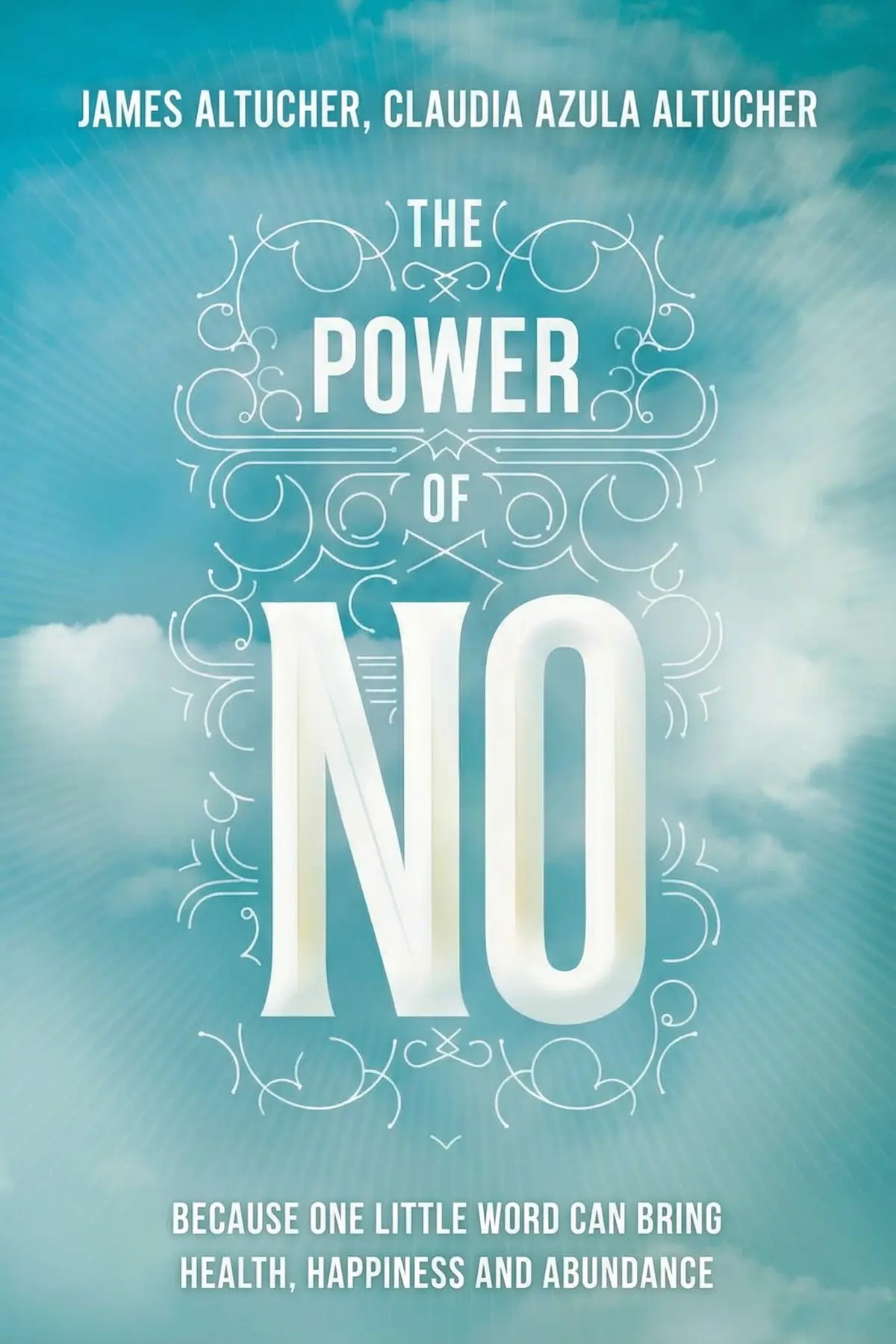
Most of us know what it feels like to agree to something we wanted to refuse and then resent it for days. In The Power of No, James Altucher, an author and hedge-fund manager, and Claudia Azula Altucher, a writer and yoga teacher, argue that one word can repair far more than that single moment. A well-placed no to whatever harms you makes room for health, love and calm. Their simplest tool is a list. Write down everyone you see at least five times a week, rate each encounter from one to ten, and you will know who deserves more of your time.
The Altuchers carry the same logic further. They say no to bad relationships, to other people’s scripts for your life, to the fear that there is never enough, and to the noise that crowds your head. Each refusal turns out to be a yes to yourself. Along the way come exercises you can start today, from a morning gratitude list to an imaginary alien who takes over your body for a day.
1 min 55 sec
A few minutes with a pen and a simple score can show who is feeding your energy and who is taking it. One author’s two-year pursuit of a near stranger shows why acting on that list is harder than writing it.
1 min 53 sec
A favor done with a heavy heart can leave both people feeling worse than a plain refusal would have. The authors argue that the same is true of whole careers chosen to please someone else.
1 min 28 sec
An instinct that kept our ancestors alive still drives the urge for more of everything. The authors’ cure starts in an unlikely place: a traffic jam.
1 min 34 sec
One news report the night before a flight can ruin a whole trip. The fix the authors offer is simple, and the second half of it changes how you treat strangers.
1 min 50 sec
Saying no once is easy; saying it every day is not. The authors rely on a ten-item morning ritual and an odd thought experiment about a visitor from another planet.
1 min 03 sec
Every day brings a stream of decisions, and the Altuchers’ claim is that many of them turn on one small word. On the surface their book is a list of things to refuse: the cigarette, the draining friend, the favor you resent, the career someone else picked for you, the fear of not having enough, the headline that keeps you awake. What links them is what each no gives back. Time goes to the people who score above eight. Attention goes to a cashier nobody has really seen all day. Energy goes to the subjects that pull you across a bookshop.
You can begin small. Score the people you see most this week and move an hour toward the best of them. Start tomorrow by thinking of ten things you are thankful for. And when a yes you do not mean starts to form, hold it back and offer a clear no in its place.
Claudia said no to one man, and then to a whole pattern, and a marriage grew in the space that refusal left. Each no you say can clear a space like that.
Most people know the moment: someone asks for something, every instinct says decline, and a yes comes out anyway. James Altucher and Claudia Azula Altucher argue that those small surrenders add up. Each one gives away time, energy and attention that could have gone to the people and work that matter. Their answer is a deliberate no, aimed at whatever harms you. That covers unhealthy habits and draining relationships, other people's plans for your life, an old fear that there is never enough, and the noise of bad news and anxious thoughts. Each refusal, in their telling, is really a yes to yourself. The book is built on simple exercises. You score the people you see every week to find your inner circle, and a bookshop visit points you toward your real interests. A 24-hour attention challenge teaches you to listen, a morning gratitude diet keeps you steady, and an imagined alien in your body for a day helps you notice what you need. Claudia's own story of breaking free from chasing unavailable men shows what a well-placed no can lead to.
People-pleasers who keep agreeing to favors and tasks they quietly resent.
Young professionals unsure whether their path is their own or someone else's expectation.
Anyone worn down by draining relationships, anxious news and the constant feeling of not having enough.
James Altucher is an author, blogger and hedge-fund manager who has also done angel investing, and he has founded or cofounded more than 20 companies. He is also a chess master. His blog, started in 2010, recorded his fall from wealth to rock bottom and his climb back. Claudia Azula Altucher is a writer, speaker, yoga teacher and podcast host. She was born in Buenos Aires, Argentina, has lived in the United States since 1994, and co-hosts the Ask Altucher show.
James Altucher
James Altucher

Listeners consider this work an essential read that provides useful insights and hands-on activities. They value its accessibility and the direct, succinct prose, while one listener observes that the advice clearly stems from genuine personal experience. The book earns praise for its encouraging outlook and intellectually stimulating ideas, with one listener identifying the section regarding silence as especially helpful.
The chapter on silence resonated with me on a level I wasn't prepared for. Claudia’s tips for being still and quiet are practical and easy to implement, even for someone with a racing mind like mine. I’ve read a lot of self-help, but this one feels like it comes from a place of true experience rather than just academic theory. James and Claudia don't hide their scars; they show them to prove that you can survive and thrive after total failure. The 10 ideas a day challenge has been a game-changer for my creativity and personal business goals. It forces you to push past the easy answers to find the truly innovative ones. This is a must-read for anyone who feels overwhelmed by the 'noise' of modern life. It’s concise, punchy, and provides the permission you need to finally put yourself first.
Show moreJames Altucher has a way of sharing his failures that makes his success feel attainable. This book isn't about the word 'no' in a negative sense, but rather as a tool for creating space for 'yes.' The authenticity here is what sets it apart from other personal development books. You can tell the authors have lived through the dark days they describe, which makes their advice on abundance and gratitude feel earned. I particularly liked the 'No to Phony Storytelling' section, which helps you identify the limiting beliefs we all carry. The book is easy to read and gets straight to the point without a lot of fluff. If you need a kick in the pants to stop letting toxic people drain your energy, this is definitely the book for you. I’ve already recommended it to several friends who are feeling burnt out.
Show moreAs someone who struggles with people-pleasing, I found the 'No Bill of Rights' to be a total wake-up call. This isn't just a book about being rude; it’s about valuing your own life enough to protect your energy from things that don't matter. The authors are incredibly transparent about their own struggles, which makes the advice feel much more grounded in reality. I loved the section on saying no to the 'angers of the past' because it focuses on internal freedom rather than just external boundaries. It’s a very fast read, but the exercises—like writing down ten ideas every single day—provide a long-term roadmap for personal growth. If you feel like you are constantly running on empty, you need to read this and start claiming your right to say no. It’s one of the most practical guides to mental health I’ve found in years.
Show moreFrankly, the advice here is a mixed bag of brilliant gems and absolute filler, but the gems make it worth it. On one hand, the authors are incredibly authentic about their failures, which is refreshing in a genre full of 'perfect' gurus who never make mistakes. James is open about losing money and love, which makes his 'Daily Practice' feel like it was forged in actual hardship. On the other hand, some of the content feels like it was pulled from a series of old blog posts without much reorganization. The transition between topics like sex addiction and business advice happens so fast it can give you a bit of whiplash. I liked the focus on abundance and gratitude, but the 'vibration' talk might be a bit too 'woo-woo' for some. It’s a great book for a weekend read.
Show moreAfter hearing so much about the Altuchers' unconventional approach, I went in with an open mind. The book is surprisingly uplifting and focuses on reclaiming your time from toxic people and negative chatter. I particularly enjoyed the section on the 'NO to scarcity,' which challenges the way we view our resources and opportunities. The writing style is clear and concise, making it easy to digest in short sittings between meetings. Some might find the personal stories about their marriage a bit much, especially knowing their history, but the vulnerability is what makes it feel real. I’ve started implementing the rule of letting people finish their sentences, and it has actually improved my professional interactions significantly. It’s a thought-provoking guide that encourages you to stop being a doormat and start living with more intention and health.
Show moreFinally got around to reading this, and while it's a bit scattered, the core message is vital. As a parent and a teacher, I am constantly overdoing things for others, often to my own detriment. This book gave me the courage to start saying 'no' to commitments that don't align with my values. The exercises at the end of the chapters are simple but effective, particularly the ones focused on physical and emotional health. I loved the suggestion to read 500 books as a way to reinvent yourself; it’s a bold goal that emphasizes the importance of constant learning. To be fair, the typeface and layout are a bit distracting, but the content is strong enough to overlook the aesthetics. It’s a helpful reminder that our time is our most precious asset and we need to guard it fiercely.
Show morePicked this up during a particularly stressful month when my boundaries were basically non-existent. I appreciated the core concept that saying 'no' to others is effectively saying 'yes' to yourself and your own creative energy. The 'No Bill of Rights' at the beginning provides a solid framework for anyone who feels like they’ve lost control of their schedule. However, I found the constant back-and-forth between James and Claudia to be a bit distracting and at times difficult to follow. Some chapters felt like they were written in a huge hurry, with generalizations that didn't quite land for me professionally. I did enjoy the 'idea muscle' exercise, and I’ve actually started jotting down ten thoughts every morning to see if it helps my focus. It’s an interesting read, though it lacks the polish of more traditional self-improvement books.
Show moreEver wonder what happens when two people decide their daily banter is worth publishing as a manifesto? The result is this bizarre volume that feels like reheated Eckhart Tolle mixed with some very strange, and occasionally disgusting, personal humor. James mentions agreeing to babysit kids—only to joke that he'd never do it—and the tone just feels off-putting and slightly arrogant at times. Claudia’s sections on the meditation cushion are okay, but they often lack the clarity needed to really help someone struggling with serious issues like addiction or depression. The advice to write down 10 ideas a day sounds good on paper, but the book doesn't provide enough structure to make it a sustainable habit. Truth is, it’s a quick read, but I’m not sure the 'power' described here is anything more than basic common sense wrapped in new-age jargon.
Show moreNot what I expected from authors who are supposed to be experts on creativity and fulfillment. This felt incredibly sketchy and lacked any sense of proper planning or logical flow. The male voice in the audiobook is fine, but the content itself feels like a couple just chatting about their internal thoughts without any regard for the reader's time. I found the humor to be quite off-putting in parts, especially when James talks about his lack of desire to help others. It feels like a 'cult of two' where they are so convinced of their own genius that they forgot to write a cohesive book. They touch on very deep issues, like love addiction, but only give them two pages of superficial analysis. I’m quite surprised this has so many positive reviews, as it felt like a total waste of my morning.
Show moreThis book felt more like a transcript of a messy podcast than a professional self-help guide. The authors, James and Claudia, spend half the time chatting about their personal lives in a way that feels self-indulgent rather than helpful. I found the layout to be bottom-of-the-barrel, making the actual reading experience quite frustrating for anyone used to polished non-fiction. While there are a few decent nuggets about boundaries, they are buried under layers of anecdotes about jerky ex-boyfriends and questionable financial decisions. It gives the impression that the entire manuscript was rushed through production in just a few months without a real editor. If you are looking for a structured, well-thought-out presentation on psychology or habit-building, you will likely be disappointed by this disorganized collection of thoughts. It simply lacks the depth required for such heavy topics.
Show moreJames Altucher and Claudia Azula Altucher argue that saying no to whatever harms you is how you say yes to yourself. That means refusing unhealthy habits, draining people, other people’s expectations, scarcity thinking and mental noise. Each refusal returns time and energy that can go to health, close relationships and work you care about, and daily gratitude helps keep the habit going.
List everyone you interact with at least five times a week, then rate from one to ten how each encounter makes you feel. Spend more time with anyone above eight and less with everyone else, and keep a real distance from anyone below five. The authors admit this can be hard, because it may mean breaking old patterns, as Claudia did when she stopped chasing unavailable men.
The gratitude diet means starting each day by thinking of ten things you are thankful for. The authors also suggest first writing two lists, one of your problems and one of the good things in your life, down to fresh air and a roof overhead. The daily practice keeps the good in view, which they say makes it easier to refuse what is bad for you.
It is an exercise for caring for your four bodies: physical, emotional, mental and spiritual. Imagine you are an alien agent on a mission to save lives who must live in a human body for one day. On waking, you notice clearly what that body needs, such as a run, a book, a green smoothie with some meditation, or a fix for a stressful problem, and then you do it.
It suits people who find it hard to refuse requests, feel pulled along by other people’s expectations, or feel drained by certain relationships and by bad news. Its exercises are short and practical, such as scoring the people you see weekly, browsing a bookshop to find your interests, and giving full attention to everyone you meet for 24 hours.


Andrew D. Thompson


Deepak Chopra


Richard Wiseman




AUDIO SUMMARY AVAILABLE
Get the key ideas from The Power of No by James Altucher, plus 5,000+ more nonfiction titles.









