
Choose Yourself: Be Happy, Make Millions, Live the Dream
James Altucher
 English
Shows how to change careers or start something new without waiting for 10,000 hours of practice. The method is to run small daily experiments, reuse skills you already have, generate many ideas and pursue the ones with the fewest obstacles.
1 min 06 sec
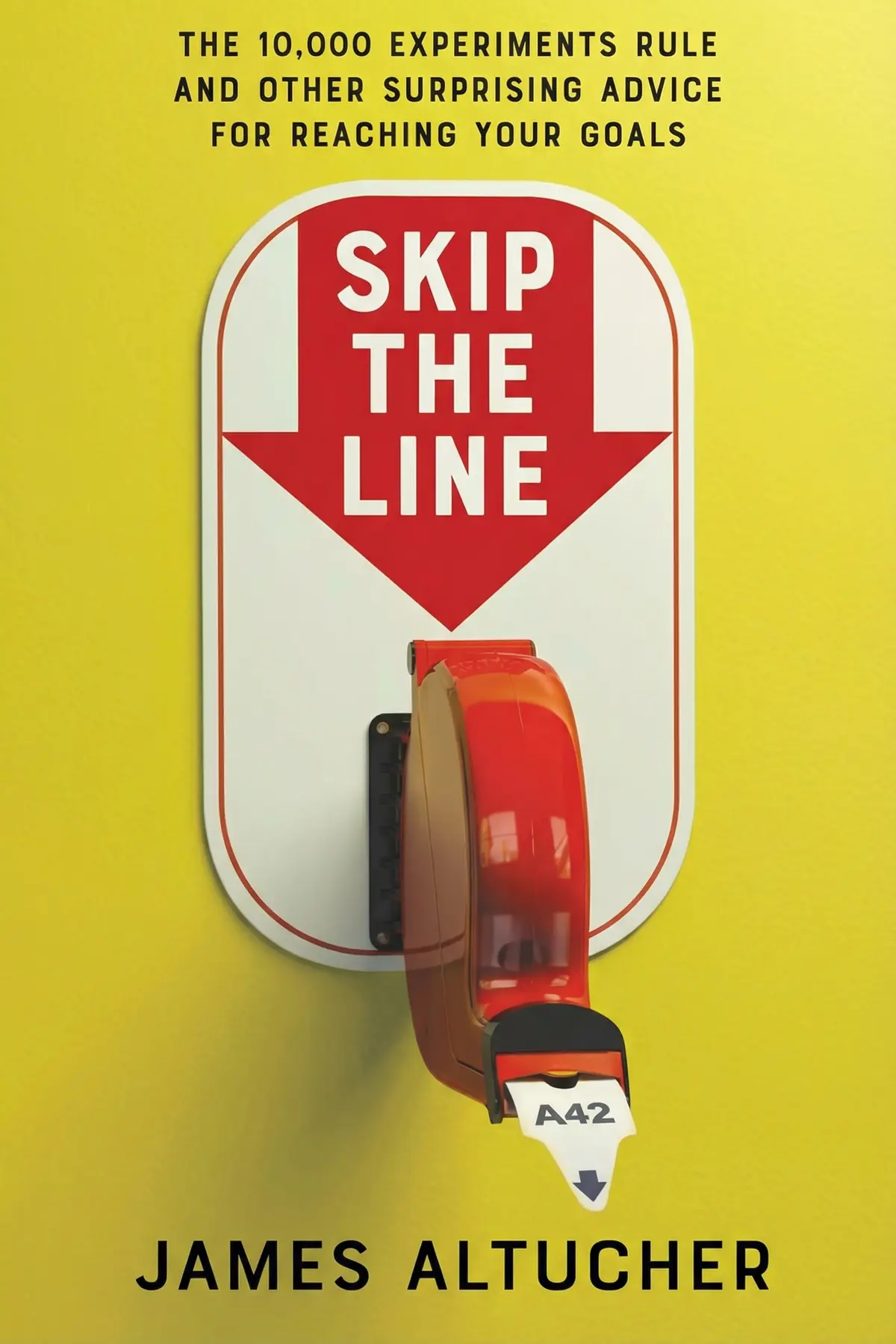
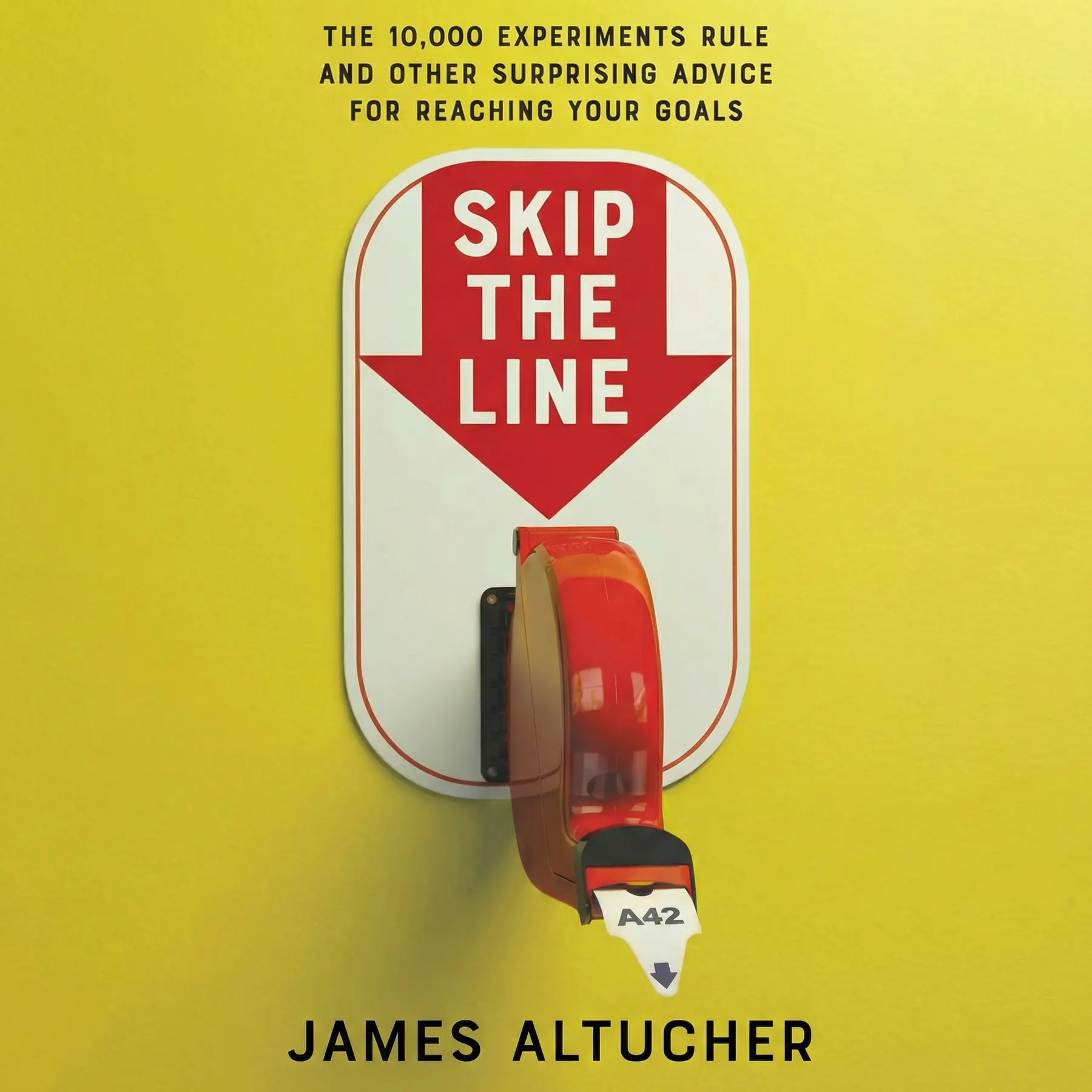
If you have lost a job, hit a dead end or simply want a different career, the usual advice is discouraging: real mastery takes 10,000 hours. In Skip the Line, investor, writer and serial founder James Altucher argues for a faster route that he calls the 10,000 experiments rule. Run many small, cheap tests and learn from each one. That way you can get good enough at something you love to earn from it long before the hours add up.
Altucher has tested this on himself. In 2002 he was broke, with no job and no career, but he knew he wanted to invest and to write. He resolved to improve at something by just 1 percent a day. Two years on, he ran a hedge fund with millions under management, and he was writing his first book.
His case is that change comes from doing many small things quickly and learning from each one. Along the way, he offers tools for producing ideas, picking the right one, earning from it in several ways and treating fear as a guide.
1 min 58 sec
An Olympic champion and a terrified beginner comic both skipped years of patient practice. What they tried instead broke with the usual approach, Fosbury’s coach even banned his jump at first, and both experiments paid off without anything close to 10,000 hours.
1 min 41 sec
One of the most loved soccer players in history started serious training at an age when rivals had a decade behind them. His head start came from a game most people overlook.
2 min 06 sec
Broke, depressed and about to lose his home, Altucher found his way back with a pen and a daily list. The techniques behind those lists turn existing products into new ones.
1 min 29 sec
Some days the ideas pour out and nothing gets done. A single counting question shows which plans depend on too many people saying yes, and where a faster version hides.
1 min 40 sec
A Hollywood screenwriter walked away from his dream job and nearly lost everything. A childhood hobby took him somewhere better, and a race car driver’s prompts help you find your own version.
1 min 36 sec
Amazon and Marie Kondo look nothing alike, yet both built fortunes from the same shape. Once you see it, one modest skill starts to look like several businesses.
1 min 36 sec
Before every launch, Altucher still imagines flops, online attacks and friends walking away. He has learned to read that dread differently, and now refuses projects that fail to scare him.
55 sec
Skip the Line adds up to a different picture of how people change direction. Fosbury going over the bar backward, Pelé bringing futsal footwork to soccer and Matt Berry blogging about fantasy sports for a measly income all acted before they knew how things would end. Each small attempt taught them something that no amount of planning could.
Altucher’s closing advice is to build a plan B before you need one. The pandemic showed how quickly jobs can vanish, so pick one skill you could someday turn into income and improve it a little every day, even when progress feels slow. Fill a short list with ideas each morning. Start with the version that has the lowest conspiracy number. And when the next step scares you, ask whether it is the chance you have been waiting for.
You cannot think your way across the gap. You can test your way across it, one small experiment at a time.
Losing a job, hitting a career wall or wanting to do something you love can all run into the same discouraging rule: real mastery takes 10,000 hours. James Altucher, who has been broke several times and rebuilt his career again and again, argues that most people don't need to wait that long. His alternative is the 10,000 experiments rule. Run many small, cheap tests, learn from each one and get good enough to earn money long before the hours pile up. He backs it with stories from Dick Fosbury's backward high jump, Pelé's childhood futsal games, a fantasy sports blogger who landed at ESPN and Marie Kondo's many income streams, along with his own turn from bankruptcy to running a hedge fund. Readers get a set of practical tools. Borrowing hours carries skills from one field into another, idea calculus generates options every day and the conspiracy number shows which idea to try first. The spoke and wheel turns one skill into several sources of income. Altucher also offers two questions that turn fear into a reason to keep going. Underneath it all is his advice to build a plan B before you need one.
Career switchers and people recently laid off who need to get good at something new without years of retraining.
Would-be founders and side-project builders with too many ideas and no way to pick one.
Creatives held back by fear of how their work will be received.
James Altucher is an author, blogger, hedge-fund manager and former angel investor who has founded or cofounded more than 20 companies. He is also a chess master. His blog, started in 2010, began as a record of his fall from wealth to rock bottom and his climb back. His writing has appeared in The Wall Street Journal, The Financial Times and TechCrunch, and he hosts The James Altucher Show podcast. The Power of No and Choose Yourself were both Wall Street Journal bestsellers.
James Altucher
James Altucher
Listeners find the book insightful; one listener specifically notes that it delivers numerous fresh concepts for building positive habits. In addition to valuing the quality of the writing, humor, and readability, one listener mentions that the prose is both informative and entertaining. The text is also well-received for its inspiring material and take on creativity, with one listener emphasizing the author's genuine focus on helping others achieve success.
James Altucher has a way of making you feel both incredibly behind and wildly capable at the exact same time. This book is a total adrenaline shot for anyone stuck in the 10,000-hour mastery trap. I loved the emphasis on the 1% rule and the idea that we don't need to be beholden to a single career path. His '10 ideas a day' habit is something I started immediately, and it has already cleared some mental fog. The writing is punchy, funny, and incredibly sincere. It isn't just a business book; it’s a manual for living a more curious life. If you want to stop waiting for permission to succeed, read this.
Show moreThis book is a total masterclass in iconoclastic thinking for the modern era. I first found James through 'Choose Yourself' years ago, and this feels like the natural, more aggressive evolution of those ideas. The concept of 'idea sex'—combining two unrelated fields to create something new—is brilliant in its simplicity. I really appreciated how he tackles the fear of failure by framing everything as an experiment where the only bad result is not learning. The prose is fluid and full of humor, making it a quick read despite the depth of the concepts. It is an uplifting guide for anyone looking to reinvent themselves.
Show moreWow, I didn't expect a business book to be this entertaining while simultaneously making me rethink my entire career strategy. The 'Incerto' technique and the focus on anti-fragility were exactly what I needed to hear after a rough year. Altucher’s voice is so distinct—he’s like that eccentric uncle who also happens to be a genius investor. He makes a compelling case for why we should stop waiting in line and start creating our own shortcuts. The book is packed with new habits that are easy to implement but have a huge compound effect. It is honestly one of the most uplifting things I’ve read lately.
Show moreIt’s rare to find an author who is so transparent about their failures while providing a clear roadmap to success. Having followed James’s journey, seeing how he applies the 'Skip the Line' principles to his own life as a stand-up comedian and chess player is fascinating. This book gave me the courage to finally pursue a side project I’ve been sitting on for a decade. The advice on building micro-skills is particularly useful for anyone in a creative field. It’s a sincere, high-energy guide that ignores traditional gatekeepers. Every page feels like it’s pushing you to just go out and try something new already.
Show morePicked this up after hearing James on a podcast, and I have to say the '10,000 experiments' rule is a game-changer for my creative process. It moves the needle from passive learning to active doing. While I found the content incredibly motivating, be prepared for some heavy repetition. James loves to circle back to the same stories about his losses and wins, which can feel a bit like a 'greatest hits' reel if you have followed his work for a while. However, the sincerity of his prose makes the redundant bits easier to swallow. It is an entertaining, fast-paced read that prioritizes action over dry theory.
Show moreEver wonder why some people seem to leapfrog over everyone else while you are stuck grinding out the standard path? Altucher’s breakdown of 'micro-skills' explains exactly how that happens. I found the Plus, Minus, Equal framework to be the most practical part of the book for my own career growth. It’s a very readable, conversational text that doesn't take itself too seriously. My only gripe is that the 'experiment' examples sometimes feel a bit haphazardly thrown together. Still, the overarching message about diversifying your income and being an outsider is deeply insightful and necessary for today’s economy. Definitely worth your time.
Show moreFrankly, the core advice is fantastic, but the execution feels a bit like a compilation of James’s previous blog posts and newsletters. If you are new to his world, you will find this mind-blowing and revolutionary. If you are a long-time listener or reader, you might find yourself skimming through the recycled anecdotes about chess and hedge funds. That said, the new material on the 'Spoke and Wheel' approach to income is worth the price of admission alone. It’s a sincere attempt to help people navigate a world where the old rules of work are completely broken. I'd recommend it with that one caveat.
Show moreAfter hearing so much buzz about the '10,000 experiments' rule, I finally dove into this and found it surprisingly practical for my small business. The 50/1 rule helped me cut down on useless meetings almost instantly. James writes with a level of vulnerability that you just don't see in most business gurus, which makes his advice feel more attainable. I did find some of the 'skipping the line' tactics a bit aggressive for my taste, but the underlying philosophy of being a lifelong beginner is gold. It’s a refreshing take on success that focuses more on curiosity than on sheer, mind-numbing grit.
Show moreThe actual strategies here are brilliant, but I really have to warn potential buyers about the audio version of this book. James reads it himself, and while his enthusiasm is contagious, the production is a bit distracting. He has these strange, hurried pauses and a very specific way of pronouncing 'experiment'—it sounds like 'experrment'—that started to grate on my nerves after a few hours. Beyond the performance, the content is a solid mix of his '10 ideas a day' philosophy and newer concepts. It’s definitely helpful, but maybe stick to the physical copy to avoid the auditory quirks and the repetitive storytelling.
Show moreTo be fair, I struggled to get through the scatterbrain writing style that dominates most of these chapters. It feels like a stream-of-consciousness brain dump rather than a structured guide for professional development. I found it difficult to credit some of his more wild claims because the narrative leaps around so much. While there are a few decent tips buried in the mess, they are few and far between. It felt sloppy compared to his earlier, more focused work. If you prefer linear, evidence-based business books, this chaotic approach will likely drive you crazy within the first fifty pages. Not for me.
Show moreAltucher argues that you don’t need 10,000 hours of practice to get good at something and earn from it. His alternative, the 10,000 experiments rule, means running many small, quick tests and learning from each one. Combined with borrowing skills from other fields, generating ideas daily and choosing ideas with few obstacles, it lets people change direction fast, as Altucher did when he went from broke in 2002 to running a hedge fund two years later.
The conspiracy number is how many things must go right for an idea to become real. Writing a book for money scores five: you write it, an agent likes it, a publisher buys it, bookstores display it and readers buy it. Altucher suggests listing every form an idea could take, such as a podcast, course, video or newsletter, then starting with the version that has the lowest number.
Borrowing hours means taking skills built in one field and applying them in another to learn faster. Altucher’s example is Pelé, who grew up playing futsal, a fast game with a small ball and small court that demands lots of footwork and passing. That background helped him reach Brazil’s national team within a year of starting serious soccer at 15. Learning Italian after Spanish works the same way.
Start a plan B now: choose one skill you could later turn into income and improve it a little each day. Write a list of ideas every morning using techniques like addition or subtraction. Test changes in small experiments, pick ideas with the fewest people who must say yes, and map every way one skill could earn money using Altucher’s spoke and wheel.
It suits people facing a career change, a layoff or a stalled path who want to get good at something quickly rather than retrain for years. It also helps aspiring founders who have plenty of ideas but struggle to choose, and writers or performers held back by fear of failure, since Altucher shares how he turns that fear into a reason to go ahead.





William B. Irvine


Andrew D. Thompson


Deepak Chopra

AUDIO SUMMARY AVAILABLE
Get the key ideas from Skip the Line by James Altucher, plus 5,000+ more nonfiction titles.









