Reinvent Yourself
James Altucher
 English
 ไทย
Shows why waiting for a boss, publisher or executive to pick you no longer works, and how daily habits, direct selling and honesty let you build work and a life on your own terms.
59 sec
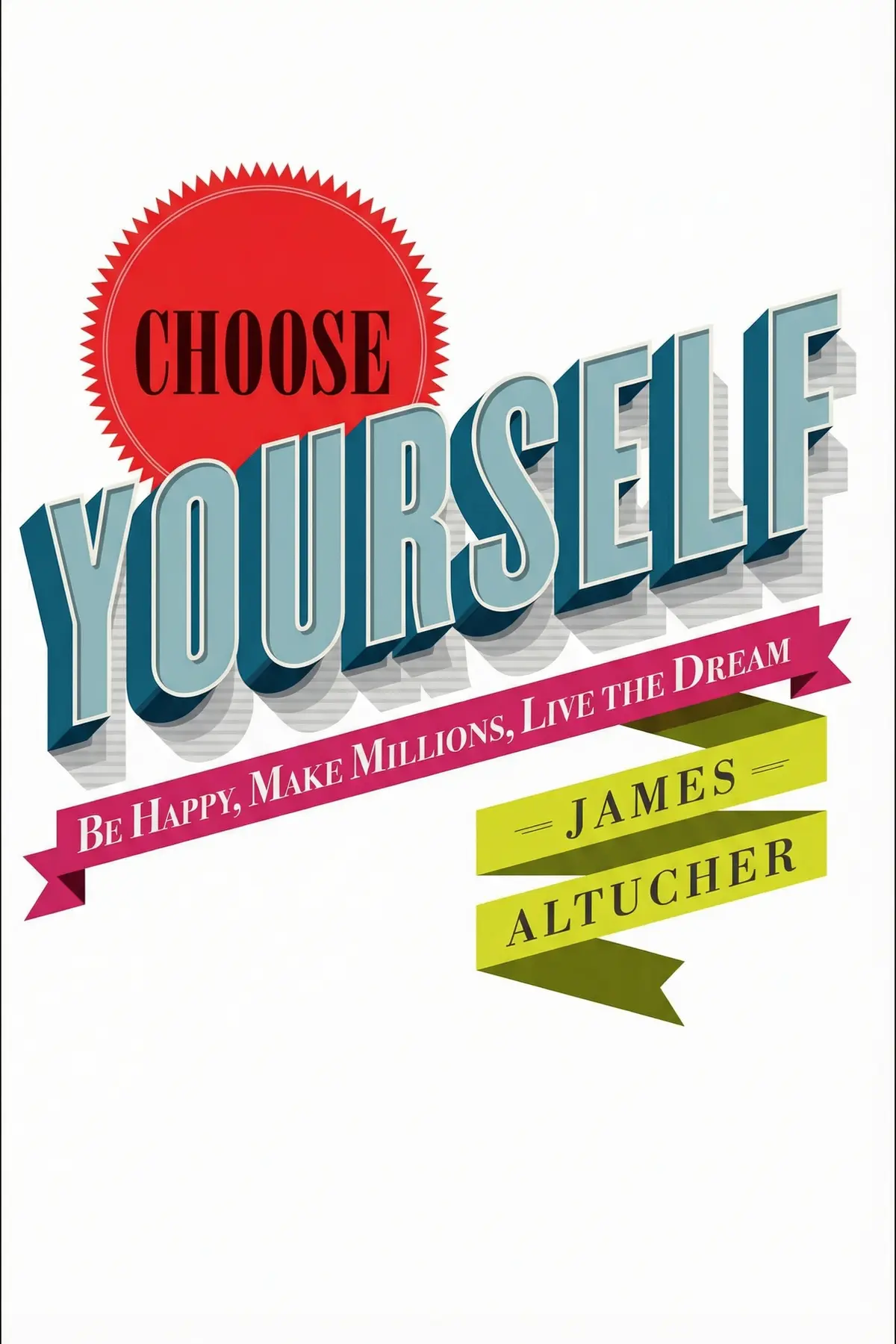
If your next step at work depends on a manager noticing you or an executive saying yes, James Altucher thinks you are waiting for a deal that has already been withdrawn. In Choose Yourself, the author, blogger and hedge-fund manager argues that the steady job and the spending that came with it ended with the 2008 financial crisis, and that the gatekeepers who once picked winners matter less every year. The people who thrive now, he says, are the ones who pick themselves.
That takes more than nerve. It takes a daily foundation that keeps your body, mind, emotions and attention healthy enough to absorb rejection, and a way of earning that rests on selling your own work honestly. Along the way come a subway experiment, a TV pitch killed by one no, a recipe that paid off at 65 and a $65 billion fraud, plus a handful of morning habits you can start before the week is out.
2 min 01 sec
Your parents’ plan of study, steady job and a house of your own once worked for millions. Altucher explains what broke it, and why he thinks the breakage is the best news in decades.
1 min 27 sec
Most passengers on a subway gave up their seats to a stranger who simply asked. That small experiment exposes the habit that keeps talented people waiting years for someone else’s approval.
1 min 38 sec
Overthinking feels like effort but produces nothing except exhaustion. Altucher’s answer involves four books, a notebook and a daily quota that sounds almost silly until you try it.
1 min 22 sec
Some relationships leave you angry every time, and some thoughts pull you backward or forward in time all day. Altucher offers a gentle way out of both that costs no friendships and no money.
1 min 28 sec
Most people try to fix their lives by changing jobs or cities. Altucher starts somewhere much smaller, and his favorite example involves a bag of chocolate on Wall Street during a market crash.
1 min 30 sec
The fear of having no calling keeps many capable people anxious and stuck. A fried chicken recipe and a famous reference book suggest the clock is far less urgent than it feels.
1 min 30 sec
A salesman who hated his job did the exact same work for himself and built a company worth millions. Altucher also explains why he once charged a famous studio a tiny fraction of his usual rate.
1 min 35 sec
A fraud worth billions convinced many people that cheating is the fast road to wealth. Altucher argues the math now runs the other way, and he names two everyday habits that wear honesty away: anger and gossip.
1 min 04 sec
Choose Yourself rests on a simple trade. The old life offered security in return for waiting: on the boss, the publisher, the executive whose single yes decided everything. Altucher argues that security is gone, and that what remains is better for anyone willing to carry the weight alone. That explains why so much of his advice concerns sleep, friends, attention and anger. Picking yourself means hearing no more often, and only a steady person can take that every day and keep going.
So begin close to home. Tomorrow morning, skim four books and fill a page with 10 ideas. Greet the person who drains you warmly, and leave it at that. Do one useful thing for someone, the way Altucher handed out chocolate on Wall Street in the middle of a crash. And deal honestly, because trust is the asset that keeps growing even after a failure.
His last piece of advice is a mantra to repeat every day: that you love yourself. Nobody else is coming to choose you, so make the choice a kind one.
For decades the plan was simple: get an education, find a steady job, buy a house and keep spending. James Altucher argues that this arrangement ended with the 2008 financial crisis, as jobs moved abroad, gave way to technology or turned temporary. Millions who followed the rules are now unemployed or underpaid. Altucher sees opportunity in the wreckage. The old system depended on someone else choosing you. Today a laptop and an internet connection let you publish, launch and sell without permission. What holds most people back is fear of rejection, so his method starts with a foundation: care for four bodies, the physical, mental, emotional and spiritual, kept healthy through small daily routines. Readers get concrete practices, from writing 10 ideas every morning to stepping back from draining people and imagining a fresh start, along with Altucher's case for cutting out the middleman, selling for value and treating honesty as the trust that compounds over a career.
Professionals whose steady job turned temporary or never arrived, and who want to build something of their own.
Writers and creators tired of waiting for an agent, studio or executive to say yes.
Anyone stuck in worry, draining relationships or the search for a life purpose.
James Altucher is an author, blogger, hedge-fund manager and former angel investor who has founded or cofounded more than 20 companies. He is also a chess master. His blog, launched in 2010, began as a record of his fall from wealth to rock bottom and his climb back. His writing has appeared in The Wall Street Journal, The Financial Times and TechCrunch, and he hosts The James Altucher Show podcast.

Listeners characterize this book as a swift, accessible resource that provides actionable guidance and significant perspectives. They value the chatty narrative voice and comedic touch, with one listener highlighting how the author frequently mocks himself. Listeners view it as a captivating and encouraging guide that holds their concentration from beginning to end.
Finally got around to reading Altucher's manifesto, and it’s a total breath of fresh air. He isn’t some untouchable guru yelling from a mountain; he’s a guy who has lost everything multiple times and had to figure out how to stand back up. The focus on the four bodies—physical, mental, emotional, and spiritual—provided a grounded framework that I actually started implementing immediately. Most business books are dry, but this felt like a late-night conversation with a friend who is brutally honest about their own screwups. His self-deprecating humor makes the advice on becoming an 'idea machine' feel attainable rather than intimidating. If you are feeling stuck in the cubicle grind, this is the wake-up call you need.
Show moreWow. This isn't your typical boring business book where some CEO brags about their perfect life. Altucher is painfully transparent about his failures, which makes his advice on choosing yourself feel earned rather than preached. The concept of becoming an 'idea machine' by forcing yourself to list ten ideas every day is a game changer for anyone feeling stuck. I loved the self-deprecating humor and the way he pokes fun at his own quirks. It’s motivating, weird, and exactly what I needed to hear. In a world where everything feels automated, his focus on human connection and giving back is a much-needed reminder of what actually matters.
Show moreJames Altucher has this uncanny ability to make you laugh while he’s telling you your job is basically a slow-motion car crash. His brutal assessment of the changing business climate is terrifying but feels honest. I really connected with the idea that we can no longer rely on employers and must 'choose ourselves' instead. The book is packed with practical tips, from improving your sleep to the importance of gratitude and giving back. It’s an engaging, high-energy read that doesn't feel like work to get through. I’ve recommended it to several friends who are feeling burnt out. If you want a book that is part memoir, part business strategy, and part survival guide, this is the one for you.
Show moreAs someone who has spent a decade trapped in the corporate grind, this book hit me like a ton of bricks. Altucher doesn't sugarcoat the reality that the middle class is shifting and the old 'safe' path is basically dead. The writing style is definitely conversational and a bit chaotic, which might annoy people looking for a formal textbook, but I found it engaging. I especially appreciated his 'Daily Practice' of prioritizing sleep and eliminating negative people. Not every chapter landed—some of his opinions on the future of robots were a bit out there—but the core message of not waiting for a boss to pick you is vital. It’s a quick read that keeps your attention throughout.
Show moreLook, I’m usually the first person to roll my eyes at self-help books, but James Altucher is a different breed of weirdo. He’s raw, vulnerable, and surprisingly funny. Instead of giving you a 10-step plan to millions, he tells you how to survive when you've been scraped off the floor. The idea of writing down ten ideas every day to exercise the 'idea muscle' is brilliant in its simplicity. I’ve been doing it for a week and I can already feel my brain working differently. The book is a bit disorganized and feels like a collection of expanded blog posts at times, but the gems of insight hidden in the rants are worth the price of admission.
Show moreIn my experience, most career advice is outdated the moment it hits the shelves, but Altucher captures the current economic anxiety perfectly. He argues that the traditional safety net is gone and that we have to become our own entrepreneurs, artists, and investors. I loved his emphasis on physical health—especially the 8 hours of sleep—as a prerequisite for professional success. However, the Kindle version I read was riddled with typos and poor editing, which was a bit distracting. Despite the sloppy presentation, the content is punchy and practical. He has a way of making you feel like you aren't alone in your struggles, which is a rare quality in this genre. Definitely worth a look.
Show morePicked this up after seeing Altucher on a Reddit AMA, and the book expands on his core philosophy in a way that’s both manic and inspiring. The way he 'opens the kimono' about losing millions of dollars makes his success stories feel more authentic. I’ve already started the practice of writing 10 ideas a day, and even though most of them are terrible, it’s helping me think more creatively at work. Some sections felt like add-ons that didn't quite fit the theme, and his rants against the education system are a bit polarizing. Still, the underlying message of taking control of your own life is powerful. It’s a very fast read that actually leaves you with actionable steps to improve your daily routine.
Show moreThe chapter on the Daily Practice was definitely the highlight for me, but the rest of the book felt a bit hit-or-miss. I appreciate Altucher’s honesty regarding his massive financial failures, yet I struggled with the lack of structure. One minute he’s talking about Gandhi, and the next he’s explaining why you shouldn't send your kids to college. It’s all very random. To be fair, his advice on keeping the four pillars of health in check is solid common sense that many of us ignore. I didn't agree with his extreme stance that bosses 'hate' their employees, but I did find the 'idea machine' exercise valuable. It’s an okay read if you can filter out the filler.
Show moreTo be fair, I can see why people who are 'scraping themselves off the floor' might find value here, but it felt like a disorganized blog dump to me. The writing is all over the place, leaping from Woody Allen to robots without much of a coherent bridge between the two topics. While the advice to write 10 ideas a day is interesting, it’s not exactly revolutionary. Frankly, his extreme opinions on 'uneducation' and the death of the middle class felt like hyperbole meant to shock rather than inform. It’s a quick read, but I didn't walk away with the epiphany I was hoping for. It feels like a series of emails that were never edited into a book.
Show moreHonestly, the title promised a lot more than the actual content delivered. It felt like a series of loosely connected blog posts rather than a cohesive guide for navigating the modern economy. There are moments of brilliance, sure, like the emphasis on the 4 pillars of health and getting eight hours of sleep, but they are buried under long rants and redundant stories. The Kindle version was also full of typos, which made the whole thing feel a bit rushed and unprofessional. If you’re already a fan of his blog, you’ve probably heard all of this before. I was looking for something more structured and found this to be way too random for my taste.
Show moreAltucher argues that the post-war model of a steady job and rising spending ended with the 2008 financial crisis. Instead of waiting for a boss or gatekeeper to pick you, you now have to pick yourself, using tools as simple as a laptop and an internet connection. To handle the rejection that comes with it, he recommends caring for your physical, mental, emotional and spiritual health, then earning money by selling your own work honestly.
Altucher describes four areas to look after. The physical body needs seven to nine hours of sleep, two meals a day and exercise. The mental body needs the idea muscle: skim four works daily and write at least 10 ideas. The emotional body needs distance, kindly kept, from people who make you angry. The spiritual body needs attention to the present instead of regret about the past or worry about the future.
Altucher says people let others make choices for them because they dread rejection, and he cites a Milgram subway study where roughly 70 percent of riders surrendered their seats when someone asked. His answer is to stop depending on a single yes, as his own HBO project did, and to build a daily foundation of routines, ideas and healthy relationships strong enough to absorb a no and keep working.
Start with one project you have been holding back for someone’s approval and find a way to release it yourself. Consider cutting out the middleman, as Bryan Johnson did when he left a card processing firm to found Braintree. Judge deals by long-term value, not only price. And protect your reputation through honesty, since Altucher argues trust is what helps you recover after a failure.



William B. Irvine

Duncan Clark



Andrew D. Thompson


Deepak Chopra

AUDIO SUMMARY AVAILABLE
Get the key ideas from Choose Yourself by James Altucher, plus 5,000+ more nonfiction titles.