

A Short History of Nearly Everything
Bill Bryson
 English
 ไทย
Traces how English grew from a Stone Age ancestor into a flexible language by absorbing invaders' words, inventing new ones and shifting its meanings and taboos, so everyday words reveal the history behind them.
1 min 01 sec
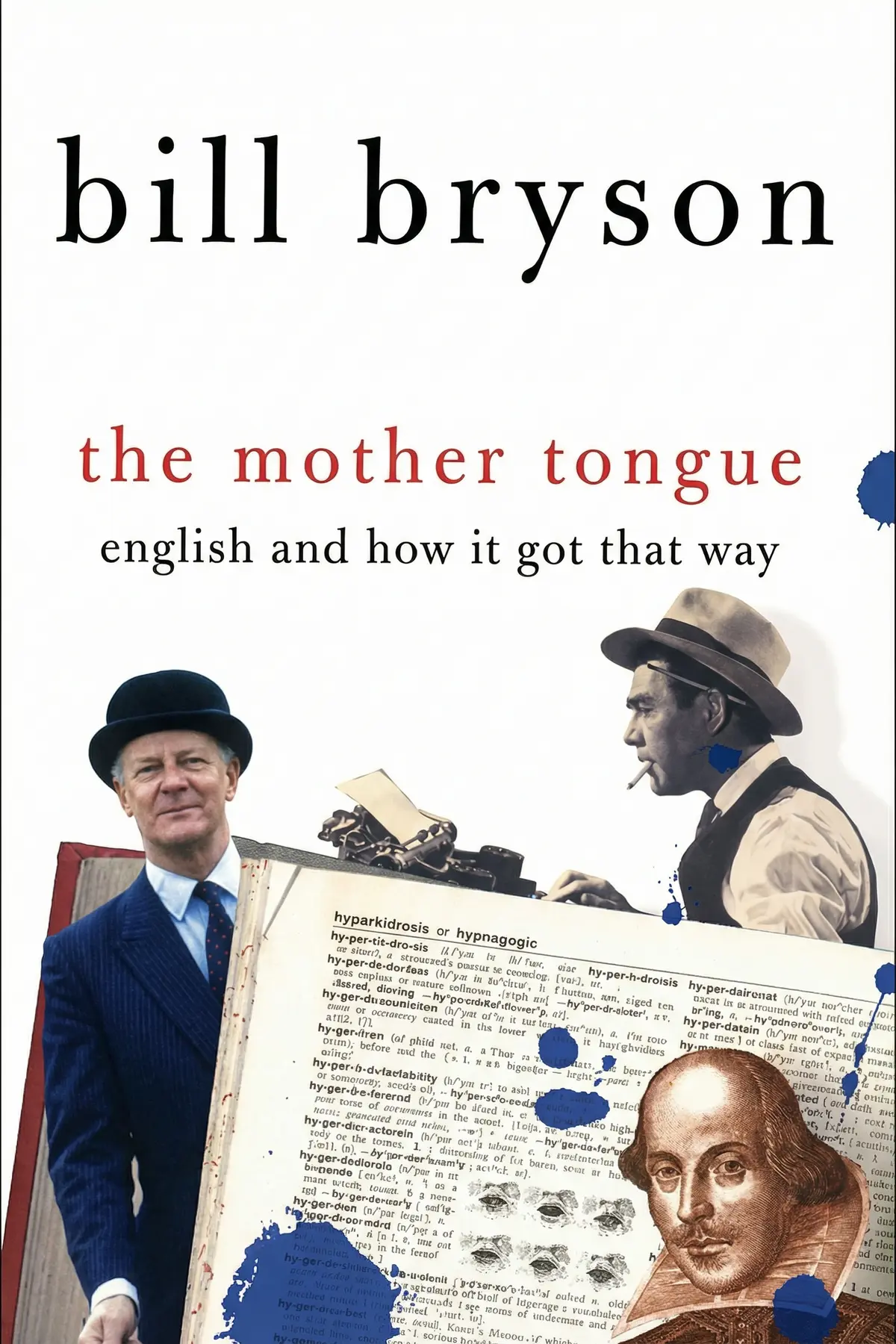
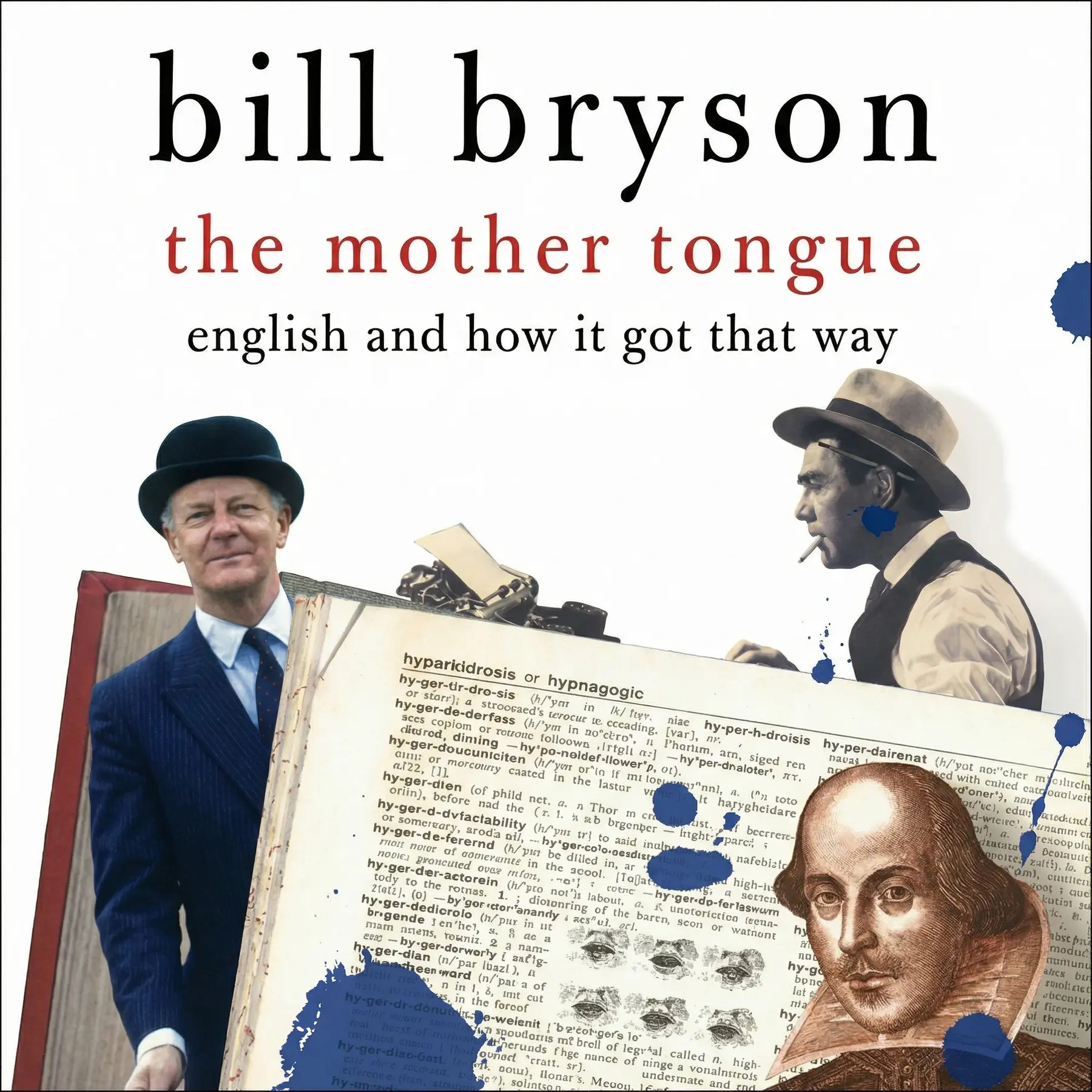
Most people speak English all day without hearing the history packed inside it. Order beef rather than cow, and you echo a social split from the centuries when French-speaking Normans ruled England. In The Mother Tongue, Bill Bryson, the Iowa-born writer who made Britain his home, traces how English got that way. His argument is that English became so rich and flexible because it never stopped absorbing: the words of invaders, the borrowings of settlers, the coinages of writers and scientists, and the shifting rules about which words are polite.
That story begins in the Stone Age and runs through Viking warships, a mapmaker’s mistake and nineteenth-century censors with a pen. Follow it, and ordinary words start to carry stories. You will be able to explain why window began as wind eye, what a surname like Fletcher says about a family, and why the meaning of a word today is no promise about tomorrow.
2 min 00 sec
An English judge in India picked up a dead language as a hobby and noticed something odd. His discovery let scholars describe a people who left no writing at all.
1 min 52 sec
Three waves of newcomers crossed the sea to Britain, and each left more than ruins. The traces still sit in your kitchen, on road signs and on the menu at dinner.
1 min 32 sec
A word that once meant made by hand now means made by machine, and another once sat close to cowardly. Over half of the Latin borrowings in English have wandered somewhere unexpected.
1 min 43 sec
In a century and a half, English gained more than ten thousand words, a thousand of them from one playwright. Most were assembled with tools any speaker can still pick up today.
1 min 51 sec
Settlers in the Americas met animals and plants with no English names. Their solutions were borrowed, stitched together and sometimes simply wrong, and one error now sits on every map.
1 min 46 sec
Smith, Schmidt, Kovacs and Ferraro probably share an ancestor’s trade. Surnames carry clues about work, home and family, and a single change in 1413 fixed them in place.
1 min 38 sec
Calling someone a puppy could once earn you a slap, and a word now kept out of family films once named a London street. The line between clean and dirty keeps moving.
1 min 09 sec
English, in Bryson’s telling, is a record of everyone who ever spoke it. A Stone Age people with no word for sea, Viking crews in the Danelaw, Norman lords at the dinner table, Shakespeare at his desk, settlers borrowing from the Algonquin, a German mapmaker who guessed wrong. Each left something behind, and every upheaval made the language richer. Its strength is that openness: it absorbs foreign words, reshapes its own, and now lends them to other tongues.
That history changes how ordinary speech sounds. Pick one word you used today and find out where it came from; window, mob or manufacture are good places to start. Read your own surname, or a colleague’s, for the place, nickname, father or trade inside it. When a word’s meaning or its politeness seems settled, remember brave and puppy, which both turned around. And when you need a term that does not exist yet, the prefix and the clipped word are still there for the taking.
Every time someone asks for beef, a Norman lord is still sitting at the table.
English speakers use thousands of words a day without wondering where any of them came from. Bill Bryson argues that each one carries a piece of history, and that following those pieces explains much of Western civilization along the way. His story begins with Sir William Jones, an English judge in India whose study of Sanskrit revealed a lost parent language, Indo-European. From there Bryson follows English through the Angles and Saxons, the Viking settlement of the Danelaw and the Norman conquest, which split society into French-speaking rulers and English-speaking workers and left us beef on the plate and cows in the field. He shows how words drift in meaning, how Shakespeare coined more than a thousand of them, how settlers in the Americas borrowed names from Native American, Spanish and French speakers, and how a mapmaker's error gave a continent its name. Readers also learn what surnames reveal about ancestors and why words move in and out of respectability, from fines for saying hell in 1623 to censors cutting damned from Shakespeare. The result is a lively case for English as a language made strong by everything it has absorbed.
Second-language English speakers curious why English words carry so many origins and meanings.
Writers, editors and word lovers who want the stories behind everyday vocabulary and surnames.
History readers who want to see invasions, empires and settlement through the words they left behind.
Born in 1951 in Des Moines, Iowa, Bill Bryson relocated to Britain in his twenties, where he spent most of his adult life, and he took British citizenship in 2014. He was a journalist before writing full-time, and from 2005 to 2011 he was chancellor of Durham University. His books include Notes from a Small Island and A Short History of Nearly Everything, winner of both the Aventis and Descartes prizes. He retired from writing books in October 2020, with more than 16 million copies sold worldwide.
Bill Bryson
Bill Bryson
Bill Bryson
Bill Bryson
Bill Bryson
Listeners find this book incredibly educational and thoroughly researched, possessing a charming wit that frequently results in audible laughter. The narrative is both approachable and enjoyable, serving as an excellent pick for language enthusiasts. Listeners value its instructional merit, particularly for educators and English majors, and consider it a compelling investigation into English history, with one listener noting how it covers the entire history of human language.
Bill Bryson has this incredible knack for making even the most dry, academic subjects feel like a chat over a pint at the local pub. I found myself laughing out loud at the ridiculous hotel signs he included, like the Yugoslavian one about the 'flattening of underwear with pleasure.' It is a fascinating study of how a minor Germanic tongue managed to conquer the world despite its illogical spelling and bizarre booby traps. The chapter on swearing was particularly enlightening and made me realize how colorful our collection of curses truly is. While some critics point out small errors, the sheer entertainment value and the way he weaves together the history of human language is masterclass. It’s an accessible, funny, and deeply engaging read for anyone who uses words for a living. This book turned me into that person who constantly interrupts dinner conversations with 'Did you know...?'
Show moreIf you want to be the person at the party with the best trivia, this is your holy grail. I never realized how much of a linguistic melting pot English truly is until I finished this. Bryson takes us on a fabulous journey from the obscure origins of the alphabet to the differences between British and American dialects. Look, I’m a writer, and I found his defense of splitting infinitives to be absolutely liberating. Why should we follow rules created by 18th-century grammarians who just wanted to sound elite? The book is extensively researched and packed with the signature wit that makes Bryson a household name. He turns the history of words into a high-speed adventure. From the development of dictionaries to the reason we spell 'debt' with a silent 'b', every chapter offered something new and surprising. Truly a must-read for language lovers.
Show moreWhy do we spell 'often' with a 't' when most of us don't pronounce it? This book answers questions I didn't even know I had. Bryson explores the evolution of our mother tongue with a sharp eye and a humorous touch. He argues that language is more fashion than science, wandering around like hemlines, and I find that perspective incredibly refreshing. The stories about Shakespeare’s vocabulary and the way Americanisms like 'gotten' are actually older than the current British versions were highlights for me. Personally, I was fascinated by the chapter on how names and places get their titles. The book is a hilarious, educational journey through the history of how we communicate. Even with its age, the wit remains sharp and the passion for the subject is infectious. I’ve recommended it to everyone in my book club.
Show moreWow. Not what I expected at all, but in the best possible way. I thought a book about linguistics would be a total slog, but Bryson’s wit makes it a page-turner. He manages to cover the entire history of human language while keeping the tone light and funny. The examples of 'English as she is spoke' from foreign manuals had me in stitches. It's an extensively researched look at how we ended up with such a complicated mess of a language. I particularly appreciated his take on the arbitrary rules we all learned in school—the idea that you can't end a sentence with a preposition is finally debunked. This book is a fabulous journey through the words we use every day without thinking. It made me appreciate my mother tongue in a whole new way. Highly recommended for any bibliophile's shelf.
Show morePicking this up decades after its initial 1990 release is a bit like looking through a linguistic time capsule. To be fair, some of the information is a product of its time, particularly regarding the lack of internet influence on modern slang. However, Bryson’s exploration of the arbitrary nature of grammar conventions is still incredibly relevant today. He brilliantly skewers those stuffy pedants who insist on rules that have no basis other than a desire to emulate Latin. I especially loved the section on the versatility of the word 'O.K.' and how it became America’s greatest gift to global discourse. The writing style is engaging and research-heavy, even if it leans into anecdotes more than a formal textbook would. It’s a wonderful resource for teachers or English majors who want to see the 'fashion' behind the science of our speech.
Show moreAs a high school English teacher, I found this to be a goldmine of anecdotes to keep my students engaged during grammar lessons. Bryson has a way of explaining the intricacies of human language that makes it feel vital and alive rather than a chore. The way he discusses the 'booby traps' of English—like how 'fly' can mean an insect, a travel method, or a zipper—is just brilliant. I did notice a few outdated attitudes and some generalizations about other cultures that wouldn't pass muster today, but the core history is solid. His breakdown of the Great Vowel Shift helped me understand why our spelling is so disconnected from our pronunciation. It’s an educational look at our wacky language that managed to be informative without ever feeling like a boring lecture. It's a great companion piece to more scholarly works.
Show moreEver wonder why certain four-letter words became so taboo while others just faded into obscurity? Bryson’s exploration of swearing is worth the price of the book alone. He captures the wacky, wonderful, and way complicated nature of English perfectly. I loved the section on how 'gyratory circuses' became roundabouts and the circularity of American versus British slang. The writing is accessible and entertaining, making it a great read for anyone who enjoys a good story about where we came from. While some of the phonetic descriptions felt a bit dated, the overall narrative of English as a resilient, flexible survivor is compelling. It’s not a textbook, and it doesn't try to be; it’s a love letter to the quirks of our speech. I finished it in two sittings and immediately wanted to read more about linguistics.
Show moreFrankly, the chapters on global dialects are where the book starts to show its cracks and a bit of an Anglo-American bias. As an Australian, I was annoyed to see him claim we use the word 'cookie' when we almost exclusively say 'biscuit.' He also gets several other regionalisms wrong, which makes me doubt his observations about other countries. That said, the sections on the ancient roots of English and the development of the first dictionaries are genuinely fascinating. He is a master of the narrative tangent, taking us from the evolution of the larynx to the strange habits of 18th-century lexicographers. It is a mildly amusing and informative read, but you have to take his 'facts' with a grain of salt. It’s fine for a casual diversion, but don't use it as a primary source for a thesis.
Show moreCan we talk about the 'fifty words for snow' myth for a second? It is one of the most famous linguistic half-truths in history, yet Bryson presents it as a foundational fact here without a hint of irony. When he followed that up by claiming Italians have 500 names for macaroni—clearly meaning pasta—I started to lose heart. I love his travel writing, but his approach to non-fiction feels a bit fast and loose with the truth. The prose is witty and the 'titbits' of history are fun, but a book about the evolution of language needs a higher level of scholarship. I found the tone regarding non-English speakers to be occasionally condescending, which felt unnecessary. It’s a shame because the topic is genuinely interesting, but I kept finding myself wanting to fact-check every single paragraph on Google. If you want a fun story, read it; if you want actual linguistics, look elsewhere.
Show moreRarely have I been so frustrated by a book that started off with such promise. The writing is undoubtedly breezy, but the factual errors are simply too egregious to ignore if you have even a passing interest in linguistics. Bryson claims Finnish speakers use 'ravintolassa'—which simply means 'in the restaurant'—as a primary swear word, which is patently absurd and easily debunked. He also dismisses the Welsh language as unpronounceable and irregular, when in reality, its orthography is remarkably consistent compared to the mess that is English. Once you realize he is prioritizing a cheap punchline over actual research, the whole foundation of the book crumbles. I stopped reading halfway through because I didn't want to accidentally internalize any more of these 'facts' and repeat them to others. It is more a collection of linguistic urban myths than a serious history.
Show moreBryson argues that English became rich and flexible because it kept absorbing and reshaping words through every upheaval it faced. Anglo-Saxon settlers, Viking invaders and Norman rulers all shaped its vocabulary, Shakespeare alone coined over a thousand words, settlers in the Americas borrowed names from Native American, Spanish and French speakers, and ideas about polite language kept shifting. Each everyday word, in his view, carries a piece of that history.
After 1066 the Normans, Vikings who had settled in northern France, ruled England for three centuries and added more than 10,000 words. Society split by language: French for the rulers, English for the workers. Laboring jobs like baker and miller kept Anglo-Saxon names, while skilled trades like painter and tailor took French ones. Animals in the field stayed cow and pig, but on the table became beef and bacon.
It honors Amerigo Vespucci, a fifteenth-century Italian explorer who crossed the Atlantic four times but never saw North America. A German mapmaker, believing Vespucci had discovered the whole continent, named the new land Americus Vespucius. By the time the mistake was noticed, the name was already in wide use, and Vespucci’s own proposal, Mundus Novus, never caught on.
Bryson sorts surnames into a few groups. Some name a place, as James of Preston became James Preston. Some began as nicknames, like Armstrong, Tolstoy or Gorky. Patronymics such as Johnson record a father. Trade names like Smith, Fletcher, a maker of bows and arrows, and Bateman, from boatman, record a job. From 1413, English legal papers required people to settle on one surname.
It suits anyone who uses English daily and wants to know why it looks and sounds the way it does, especially second-language speakers puzzled by its many origins. Writers and editors get the stories behind familiar words and names. History readers get the Viking and Norman invasions, the settlement of the Americas and centuries of changing taboos, all told through the vocabulary they left behind.

Ron Chernow

Philip Freeman

Michael Axworthy
Tom Standage

Ishmael Beah


AUDIO SUMMARY AVAILABLE
Get the key ideas from The Mother Tongue by Bill Bryson, plus 5,000+ more nonfiction titles.









