

A Short History of Nearly Everything
Bill Bryson
 English
 ไทย
An American who spent 20 years in Britain tours its towns, hills and habits. He shows how a tiny, crowded island stays lovable through history, landscape and the everyday courtesy of its people.
59 sec
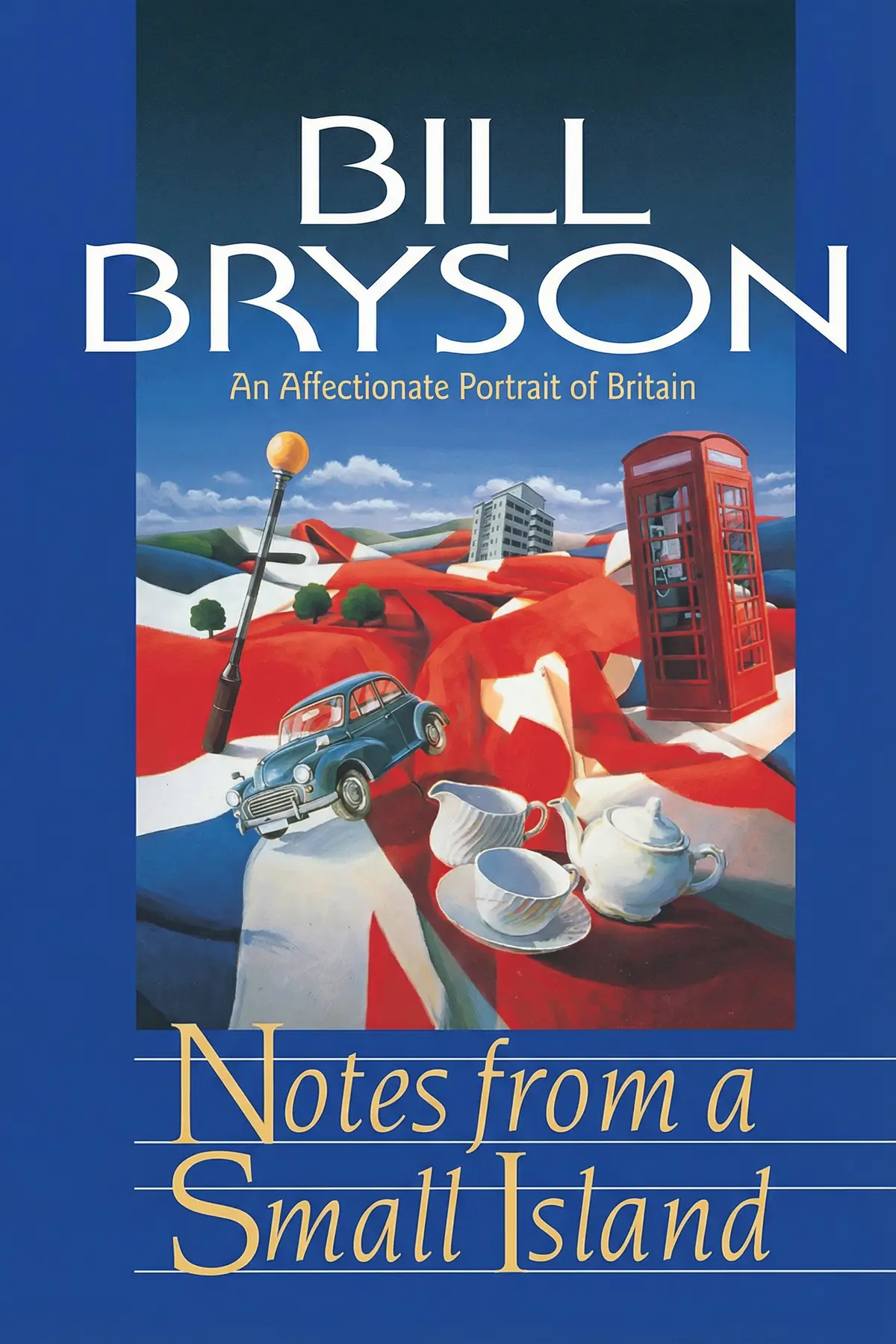
Many people know Britain as a list of famous sights and miss what gives it character. Bill Bryson’s Yorkshire hamlet has fewer than 100 residents, yet it holds more seventeenth-century buildings than the whole of North America. In Notes from a Small Island, Bryson, an American who spent 20 years in Britain, takes a farewell tour before moving his family back to the United States.
What he finds is a country where the remarkable sits beside the ordinary without fuss. His affectionate argument is that Britain’s charm lives in the everyday care of its people, from farmers mending walls to strangers keeping a queue. He also finds that the state often neglects what those people protect. Along the way come London cabdrivers, a robber undone by bad manners and miners who became painters. There is also a way to travel that mixes a firm plan with room for chance.
1 min 41 sec
Two men known around the world lie in the same small cemetery under plain stones. To an American visitor, that modest company says something surprising about how the British live alongside their past.
1 min 49 sec
A country with hundreds of thousands of protected buildings should be the safest place on Earth for heritage. A developer’s penalty in one English town suggests otherwise, while a Norman cathedral shows the alternative.
1 min 46 sec
Eight years of living in a city should be enough to know it. Bryson discovered otherwise, and he found two very different guides who make the impossible capital feel manageable.
1 min 44 sec
A miserable first hike nearly put Bryson off walking forever. Years later he climbed through an ice storm to a foggy summit, and what he found waiting at the top explains a whole national habit.
1 min 57 sec
A farmer stood in the pouring rain repairing a wall that separated nothing from nothing. His one-line explanation captures a national attitude, and the fate of Britain’s ancient hedges shows its limits.
1 min 47 sec
Somewhere under ivy in the Cotswolds lies a Roman floor that locals protect in a most unexpected way. Finding places like it takes one ordinary tool and a willingness to follow a track downhill.
1 min 43 sec
An armed man demanded cash in a London bank, and a customer sent him away empty-handed. What angered that customer reveals the unwritten rules every visitor to Britain should learn.
1 min 50 sec
In a northern pit village where children once worked in darkness, men with no training picked up paintbrushes and caught the whole country’s attention. Their story shows what a hard life could not take away.
1 min 10 sec
Bryson set out to say goodbye, and the farewell became a portrait of a country held together by small, stubborn acts. A farmer rebuilds a wall in the rain, a customer scolds an armed robber, villagers guard a Roman floor with fertilizer bags and miners paint on Monday nights. All of them show the same thing. Britain’s treasures last because ordinary people decide they are worth the trouble. Where that care runs out, as with the lost hedgerows or the five buildings in Reading, official protection too often fails to step in.
The habits worth borrowing reach well beyond Britain. On your next trip, fix the major stops and leave the rest to chance. When ideas run dry, open a detailed map or a history book, the way a map led Bryson to his villa. Read the plain gravestones and plaques, since the famous may be lying right beside you. And notice the courtesies, the apology before the request and the line nobody jumps.
A small island holds a great deal, mostly because its people keep putting the wall back up.
Bill Bryson lived in Britain for 20 years. Before moving his family back to the United States, he set off on one last tour of the island that had won him over. The result is an affectionate portrait of a country that is small on the map and crowded with history, scenery and character. Bryson's angle is that of a curious outsider who became an insider. He measures Britain against American scale and is struck by how much it holds: hundreds of thousands of historic buildings, famous names resting in village churchyards and a capital whose street atlas lists, at a rough guess, more than 45,600 street names. He is just as struck by its people. Farmers tend the land without being asked, strangers apologize before they make a request, and a queue can stop a bank robber. He is frank about the neglect too, from lost hedgerows to underfunded parks. Readers come to see what gives Britain its character. They also pick up a way of traveling anywhere: plan the big stops and let a good map lead you to the rest.
Travelers planning a first or return trip to Britain who want more than a sightseeing checklist.
Newcomers and expats trying to make sense of British manners, queues and apologies.
Walkers and history lovers curious why such a small country feels so full.
Bill Bryson was born in Des Moines, Iowa, in 1951. He moved to Britain in his twenties, spent most of his adult life there and became a British citizen in 2014. A former journalist, he served as chancellor of Durham University from 2005 to 2011. His books include The Mother Tongue and A Short History of Nearly Everything, which won both the Aventis Prize and the Descartes Prize. He retired from writing books in 2020, having sold over 16 million copies worldwide.
Bill Bryson
Bill Bryson
Bill Bryson
Bill Bryson
Bill Bryson

Listeners find the book incredibly humorous, with one describing it as "funny to the point of tears." Moreover, the writing style gets high marks, as one listener points out it is written by an American with dry British wit. It also features many fascinating observations about British culture and history, serves as a solid guidebook, and encourages listeners to travel across Britain. Conversely, the readability gets mixed feedback; some find it easy to navigate, while others mention that it becomes boring.
There is something utterly infectious about Bill Bryson’s prose that makes even a rainy afternoon in a drab seaside town seem like a comedic masterpiece. This isn't just a travelogue; it's a love letter written by a man who has spent two decades absorbing the peculiar rhythms of British life. I found myself laughing out loud at the 'pants on head' anecdote, but it’s the smaller observations about the English language that really stick. Bryson has this incredible ability to weave dry, sardonic wit with genuine historical curiosity. While some might find his constant grumbling about public transport and ugly architecture a bit much, it feels authentic to the experience of living in the UK. He captures that 'mustn’t grumble' attitude perfectly even while he is, in fact, grumbling quite a bit. It’s a wonderful, hilarious journey that makes you want to hop on the next train to a place with a ridiculous name like Chipping Norton.
Show moreEver wonder what it looks like when an American spends twenty years becoming more British than the Brits? Notes from a Small Island is the hilarious result of that transformation, blending an outsider's perspective with an insider's deep affection. Bryson’s mastery of the English language is on full display here, using phrases that are as colorful as they are accurate. I was fascinated by the potted histories he includes, especially the bits about the founder of Sainsbury’s and the Roman mosaics. He perfectly captures the 'frisson of excitement' of riding a double-decker bus while simultaneously mocking the absurdity of Marmite. It’s a book that celebrates the quirks of a nation—the queuing, the self-deprecation, and the weird place names—with a sharp, satirical edge. Even when he’s being incredibly condescending toward a McDonald’s cashier, you can’t help but chuckle at the sheer audacity of his internal monologue. It’s a brilliant, quintessentially British-American hybrid.
Show moreBill Bryson managed to make me cry with laughter while simultaneously teaching me more about British history than my school ever did. This book is a masterpiece of observational comedy, capturing the 'pure nightmare' of Marmite and the joy of a hot beverage with equal fervor. His enthusiasm for the British landscape is genuinely moving, especially during his hike through the Cotswolds or his visit to a Roman mosaic. I loved the way he describes the English weather as a single pithy sentence that is always right because it’s so vague. It’s a book that reminds you to look up and notice the beauty in the mundane, from the pattern on a carpet to the top of someone's head on a bus. Despite his occasional outbursts and questionable behavior in McDonald's, his love for his adopted home shines through every page. It’s a comfort read that I know I’ll return to whenever I need a reminder of why Britain is so uniquely wonderful.
Show morePicked this up right before a trip to the Cotswolds, and it functioned as the most entertaining, if slightly unreliable, guidebook I’ve ever used. Bryson’s obsession with hedgerows and the Duke of Portland provides a quirky backdrop to his journey from Dover to John O’Groats. The truth is, his writing is at its peak when he’s being a 'grumpy middle-aged codger' complaining about the lack of decent sandwiches on British Rail. You get a real sense of the 1990s landscape before the total takeover of globalized high streets. I particularly appreciated the way he highlights the absurdity of British directions and the local obsession with hot beverages. Some parts feel a bit dated now, especially his rants about modern urban planning, but the core humor remains timeless. It’s an easy read that manages to be informative without ever feeling like a textbook. Definitely a must-read for any Anglophile looking for a bit of a laugh.
Show moreThe chapter on Liverpool completely changed how I view the city, highlighting a romantic side of the maritime history I hadn't considered. Bryson has a knack for 'taking the piss' out of everyone and everything, himself included, which keeps the tone from becoming too arrogant. I loved his descriptions of the 'mid-face snack dispenser' and other vivid mental pictures that only he could conjure. The book serves as a time capsule of 90s Britain, capturing a specific moment before smartphones and GPS changed travel forever. However, I noticed he tends to ignore certain regions—my home in Norwich barely gets a mention beyond a train switch! Despite the geographical gaps, the writing is so crisp and the humor so dry that it’s hard to stay annoyed for long. It’s the kind of book you read slowly to savor the wordplay. If you enjoy observational humor that leans into the grumpy side of life, this is definitely for you.
Show moreAfter hearing so much about Bryson’s legendary travelogues, I finally dove into this 90s classic and found it surprisingly relatable. The way he navigates the UK using nothing but public transport and his own feet is both admirable and clearly a recipe for disaster. There’s a certain charm to his 'tedious bleating' about the lack of trains in remote areas, mostly because he’s usually right. The book moves at a brisk pace, leaping from one village to the next with the energy of a man who’s had a few too many ales in a local pub. I found the sections on the differences between American and British soaps to be particularly insightful and funny. Some of the statistics are obviously outdated now, but the spirit of the journey remains intact. It’s a great companion for a long commute, provided you don’t mind looking like a crazy person when you start laughing at the descriptions of Mrs. Smegma. A solid 4-star experience for me.
Show moreNot what I expected from a typical travel book, but in the best way possible. Instead of dry lists of monuments, Bryson gives us a soulful, biting, and often hilarious look at the character of a nation. His ability to find the 'infinite romance' in a rainy ferry crossing or a dingy guesthouse is what sets him apart. I found the discussion about why the British would have thrived under Communism to be one of the funniest things I’ve read all year. To be honest, the book is at its strongest when he’s riffing on the oddities of British culture rather than just describing the scenery. He manages to be both a sentimentalist and a cynic, which is a very difficult balance to strike. You can feel his genuine heartache at the loss of traditional family shops to characterless chains. It’s a book that makes you want to explore the back lanes of England yourself, hopefully with a better attitude than Bill.
Show moreTo be fair, I wanted to love this more than I actually did, given its reputation as a modern classic. While Bryson’s dry wit is occasionally brilliant, the constant repetitious moaning about hotels and stations eventually started to grate on my nerves. It’s a curate’s egg of a book where the excellent parts—like the riffs on British Communism—are buried under long-winded tangents. He seems to be in a perpetually foul mood, especially when dealing with service workers, which makes him a bit of a difficult travel companion. Also, the total lack of a map or index is a massive oversight for a book that is essentially a tour of a country. I did enjoy the bits of trivia, like the invention of the bicycle pedal, but I found myself skimming through his endless descriptions of boring meals. It’s worth a read for the highlights, but be prepared for some eye-clawing frustration along the way.
Show moreFrankly, the middle section of the book drags quite a bit as the novelty of his 'grumpy old man' persona starts to wear thin. He visits so many similar-sounding villages that the descriptions of high streets and rainy windows eventually blur into one. While his dry British wit is a highlight, some chapters feel like they needed a much more aggressive editor to cut the repetitive moaning. I did enjoy the bits about Manchester and the absence of a city motif, even if locals might disagree with his assessment. The book is definitely written for people who already have a fondness for the UK, as some of the references might go over an outsider's head. It’s an interesting historical snapshot of the mid-90s, but it’s not without its dull moments. I’d recommend it for the funny anecdotes, but maybe don’t feel obligated to read every single word of his hotel reviews.
Show moreLook, I get that he’s supposed to be funny, but the constant rudeness to service workers really put me off this journey. Bryson often comes across as an obnoxious tourist who expects the entire world to cater to his very specific, often unrealistic expectations. One moment he’s extolling the virtues of a 'comely' countryside, and the next he’s aching to kick a small dog just for existing. That kind of mean-spirited humor hasn't aged well at all, and it made it difficult to enjoy his otherwise clever observations about architecture. He spends so much time on long-winded tangents about the fifth Duke of Portland that he forgets to talk to actual people. While I did appreciate his love for the English language, the lengths he goes to be 'clever' are often just tiring. It felt more like listening to a hypoglycemic uncle ranting in a pub than a professional travel writer. I finished it, but I won’t be revisiting this one anytime soon.
Show moreBill Bryson, an American who lived in Britain for 20 years, takes a farewell tour before moving back to the United States. He shows a small, crowded island packed with history, from famous graves in village churchyards to a Norman cathedral in Durham. He argues that its charm comes above all from its people, whose everyday care and courtesy keep the country lovable even where governments neglect it.
Bryson calls the British reputation for courtesy fully deserved. People open conversations with apologies, as when a hotel guest in Edinburgh said sorry before reporting a broken television. They queue in single orderly lines, even in busy stations. In 1987 a London bank customer told armed robber Douglas Bath to wait his turn, and Bath left with nothing and was arrested outside.
Bryson suggests planning the major parts of a trip, such as which cities to visit, and then letting chance guide you once you arrive. When ideas run short, browse a detailed map or a history book. He also recommends trains over cars and walking once you arrive. Britain has around 120,000 miles of footpaths, and an Ordnance Survey map led him to a hidden Roman villa.
It is affectionate but frank. Bryson criticizes weak planning rules, citing a 1992 case in Reading where a developer destroyed five important buildings and was fined £675. He notes low spending on railways and national parks, and the loss of 96,000 miles of hedgerow between 1945 and 1985. In his view, individuals care for the country better than its institutions do.

James Shapiro


Ben Macintyre


Jacinda Ardern
Ron Chernow
James Comey
Philip Freeman

AUDIO SUMMARY AVAILABLE
Get the key ideas from Notes from a Small Island by Bill Bryson, plus 5,000+ more nonfiction titles.









