

A Short History of Nearly Everything
Bill Bryson
 English
 ไทย
Follows two old friends on the Appalachian Trail to show how rich, fragile and risky America's eastern wilderness is, and what the walk teaches about weather, forests, history and knowing when to stop.
57 sec
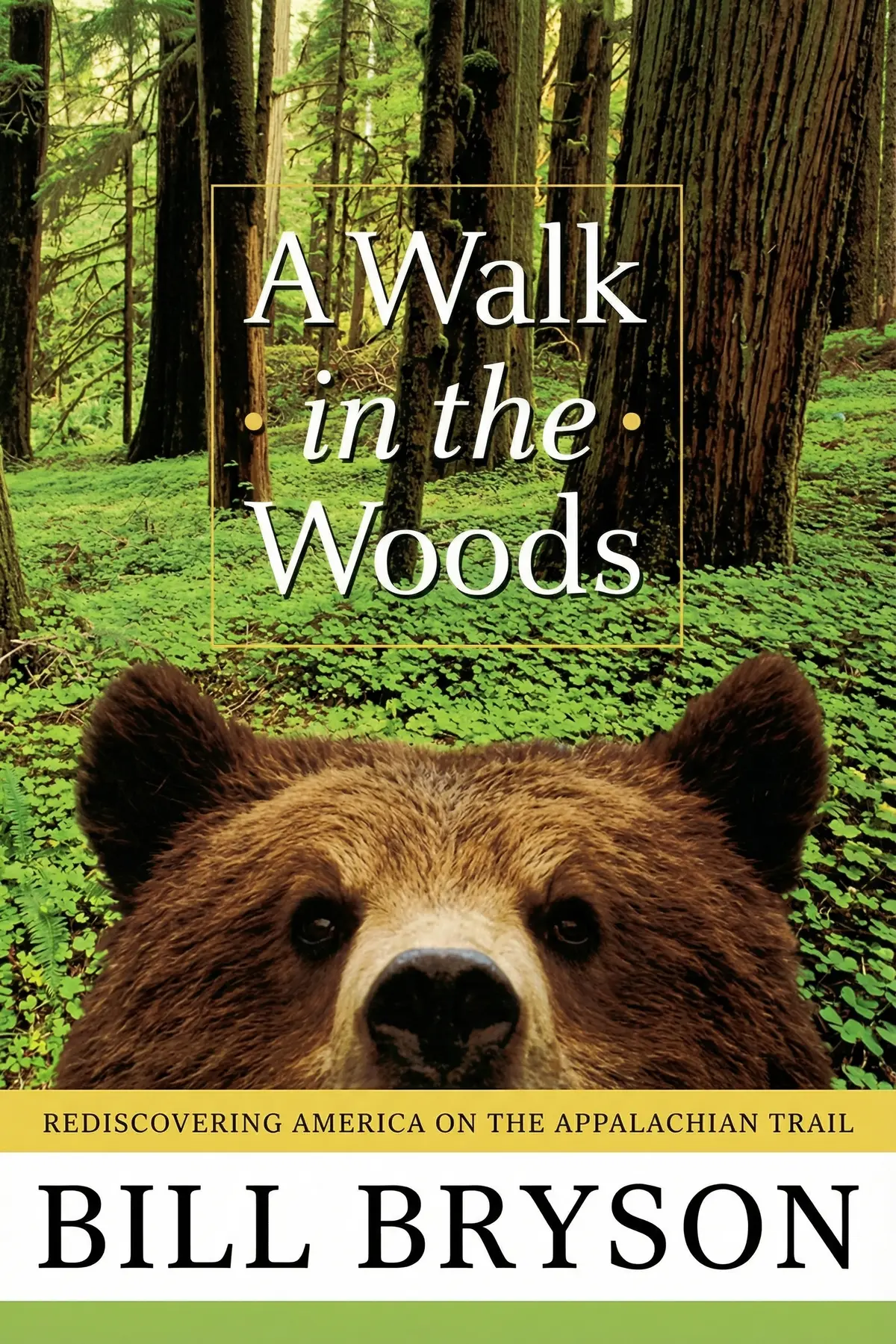
If the outdoors is mostly something you see through a car window, A Walk in the Woods shows what you are missing, and what can go wrong once you step out. Bill Bryson sets off in March 1996 to walk the Appalachian Trail, roughly 2,100 miles from Georgia to Maine, a path laid out by volunteers less than a century ago. His partner is Stephen Katz, an old school friend from Des Moines who struggles to keep up.
Their misadventures carry a serious point. The trail is astonishing and fragile at once: crowded with rare species, damaged by the agencies meant to guard it, and dangerous to anyone who underestimates it. Walking with the two friends teaches you to read a forest as living history, to take mountain weather seriously, and to measure a long effort by what you saw and survived, not by whether you reached the top.
1 min 47 sec
One of America’s most famous footpaths feels as old as the hills, yet it began as one man’s idea and a crowd of weekend helpers. Bryson’s own reason for walking it was even more casual.
1 min 50 sec
A blizzard on a ledge 15 inches wide is frightening, but it is not what kills most people in the mountains. The deadlier threat arrives on pleasant days, and Bryson nearly fell for it himself.
1 min 47 sec
One national park holds more tree species than all of Europe and a third of the world’s mussels. You would expect it to be guarded closely. What Bryson found there, and in the town beyond it, is less comforting.
1 min 44 sec
Trees lift hundreds of gallons of water and poison the insects that bite them. Yet one tree in four across these mountains vanished, and the agency named after forests spends most of its energy on something else.
1 min 42 sec
Two hikers walking into a small Virginia town asked a simple question and got looks of pure disbelief. The reason says a lot about daily life, and about a beloved park that is falling apart.
1 min 52 sec
A raid by John Brown and his 21 men on a federal arsenal helped set off a civil war, and the mountains a little further north were formed when continents collided. Knowing either changes how a tiring climb feels.
1 min 35 sec
A hundred miles of forest with no shops, a friend who throws away his water bottle and a night spent searching in the dark. The ending Bryson chose is not the one most adventure stories offer.
1 min 03 sec
What Bryson brings home is a way of looking. A path that seems timeless was marked out by hiking clubs in the 1930s. A forest that feels endless is a remnant, cut by logging roads, its chestnuts and parakeets gone and half the Smokies’ mussels endangered. Even the mountains are wearing away, a fraction of a millimeter each year. Beauty and fragility, on his evidence, travel together.
His trail supports a few habits for anyone heading outdoors. Pack for the worst the weather can do, and turn back when cold starts to fog your thinking. Know your bears: with a grizzly, which climbs poorly, the advice is to get up a tree, avoid eye contact and, if grabbed, play dead, since they supposedly lose interest in limp bodies. A black bear climbs well and keeps chewing, so run. And walk the short trips you now drive.
Bryson and Katz never stood on Katahdin. They still came home knowing a country most people only see through a windshield.
Soon after moving to New Hampshire, Bill Bryson noticed that one of the world's great walking routes ran close to his home. He decided to hike it, and an old school friend, Stephen Katz, agreed to come along. In March 1996 the two set out from Georgia toward Maine on a trail of roughly 2,100 miles. Their misadventures are only half the story. Along the way Bryson looks hard at what he is walking through: a path marked out by hiking clubs in the 1930s, a national park holding a third of the world's mussels, forests crossed by logging roads, chestnut trees wiped out by a fungus, a Civil War flashpoint and mountains slowly wearing away. Readers get a vivid account of one of America's best-known trails, plain warnings about mountain weather and hypothermia, and a clearer sense of how beautiful and how vulnerable wild places are. They also get a humane lesson about effort: stopping short of the summit can still count as success.
Desk workers who dream of a long hike but have never left the car park.
Walkers and campers who want plain warnings about mountain weather, hypothermia and bears.
Curious readers who enjoy nature, American history and geology told through one funny, honest trip.
Bill Bryson was born in Des Moines, Iowa, in 1951, moved to Britain in his twenties and became a British citizen in 2014. A former journalist, he wrote Notes from a Small Island, The Mother Tongue and A Short History of Nearly Everything, which won both the Aventis Prize and the Descartes Prize. He served as chancellor of Durham University from 2005 to 2011, has sold over 16 million books worldwide and retired from writing books in October 2020.
Bill Bryson
Bill Bryson

Bill Bryson

Bill Bryson

Bill Bryson

Listeners find this work immensely enjoyable, highlighting the superb humor that leads to many laugh-out-loud moments. They also value the educational depth regarding trail history and facts, paired with a clear, captivating narrative style. The writing is highly evocative and fluid, providing a pleasant vicarious expedition. However, the pacing gets varied feedback; some listeners consider it a bit aimless, while others think it possesses suspenseful qualities.
Picked this up on a whim before a camping trip, and I haven't laughed this hard at a book in years. Bryson captures the sheer absurdity of the human spirit attempting something as grueling as the Appalachian Trail without any real preparation. His description of the "waddlesome sloth" phase is relatable to anyone who has ever overestimated their fitness levels. While the pacing slows down a bit when he dives into the botanical history of the region, his wit always brings the narrative back to life. I felt like I was right there with him and Katz, shivering in the cold and eyeing every bush for a potential bear attack. It’s an easy, breezy read that makes you want to explore the wilderness from the safety of your living room couch. Highly recommended for anyone needing a good chuckle and a bit of a history lesson on the American landscape.
Show moreEver wonder what it’s like to realize you are completely unprepared for a 2,000-mile hike? This book is a masterclass in self-deprecating humor and vivid travel writing. I was literally in tears laughing during the scene where Katz starts hollowing out his pack and throwing away expensive gear just to make it up a hill. It's hilarious. Bryson manages to balance these moments of pure comedy with sobering facts about the decline of American forests and the mismanagement of our public lands. It’s rare to find a book that can educate you on the chestnut blight one minute and have you cackling about a "cow drawn by a three-year-old" moose the next. Some might find his tone a little biting, but I think it’s just his signature wit. This is easily one of the most entertaining non-fiction books I’ve ever picked up.
Show moreFinally got around to reading this classic travelogue, and I can see why it’s so highly regarded. Bryson’s prose is incredibly easy to read, pulling you into his journey from the very first page. He has this wonderful way of making the mundane aspects of hiking—like filtering water or setting up a tent—seem both monumental and ridiculous. The book is packed with fascinating facts about the geology and biology of the Appalachian range, making it a great pick for trivia lovers. I appreciated his honesty about why he couldn't finish the whole thing; it made the book feel more authentic and less like a standard "hero’s journey." It’s a delightful mix of comedy and environmentalism that left me with a profound respect for the scale of the world. I’ll definitely be looking into his other books after this.
Show moreAs a casual hiker, I found Bryson’s journey to be both inspiring and deeply cautionary. The way he details the grueling nature of the trail—where a mile suddenly feels like ten—really hits home for anyone who has ever stepped off a paved path. I particularly enjoyed the inclusion of historical tidbits regarding the National Park Service and the creation of the AT. It adds a layer of depth that keeps it from being just another "travel diary" style book. However, I’ll admit that Bryson can come across as a bit cynical toward the people he encounters, particularly the poor woman Mary Ellen. It’s funny, sure, but sometimes the "smarter-than-thou" attitude is a bit much. Still, the chemistry with his friend Katz is undeniable and provides the heart of the story. It’s an informative and largely entertaining read that I’d suggest to anyone interested in the Great Outdoors.
Show moreBill Bryson has a knack for turning a fairly monotonous activity like walking into a page-turning adventure. His descriptive writing style makes the dense forests of the East Coast come alive, even when he’s just talking about the different types of dirt. I found the sections on the history of the trail to be the most engaging part, surprisingly. It’s not just a memoir; it’s a love letter to a disappearing version of America. The pacing is a bit erratic, with the middle section dragging as he explores different New England towns without his companion, Katz. But when those two are together, the dialogue is hysterical. You can really feel their exhaustion and the growing tension as they realize just how long 2,100 miles actually is. It’s a solid 4-star read that offers plenty of laughs and a surprising amount of knowledge.
Show moreThe dynamic between Bryson and Katz is pure gold and serves as the primary reason to read this book. Their bickering and shared misery provide a grounded, human element to the vast, intimidating backdrop of the Appalachian wilderness. I loved the "unfriendly terrain" descriptions and the constant, looming fear of bear attacks that Bryson describes so vividly. It makes for a very suspenseful, yet hilarious, reading experience. My only real gripe is that the narrative structure gets a little disjointed in the latter half. When Bryson starts section-hiking alone, the book loses some of that initial spark and momentum. To be fair, though, his observations about the towns along the trail are still quite sharp and insightful. It’s a wonderful vicarious adventure for those of us who would never dream of actually sleeping on the ground.
Show moreWhile I’m more of an indoor person who prefers hotels to hammocks, I found myself completely swept up in this story. Bryson captures the specific terror of being alone in the woods with such humor that it makes the reader feel brave by association. His descriptions of the scenery are lush and transportive, making me want to see the Presidential Range for myself. However, the middle section of the book definitely felt like a bit of a slog, much like the trail itself must have been. I missed the banter with Katz during those chapters. The ending was a bit abrupt, but the emotional payoff between the two friends was worth the journey. It's a simple yet engaging narrative that doesn't try to be more than it is: a funny, honest account of a very long walk.
Show moreThis book provides a fascinating look at the AT history while maintaining a lighthearted, comedic edge. I was surprised by how much I actually learned about the formation of the trail and the various threats to its ecosystem. Bryson’s simple narrative style works well here, preventing the more educational segments from feeling like a dry lecture. He manages to weave in humor even when talking about serious subjects like extinction or park funding. Some of his remarks about the locals he encounters are definitely on the rude side, which might put some readers off. Personally, I found it to be part of his "grumpy traveler" persona. It’s a thoroughly entertaining read that offers a great balance of laughs and learning. Perfect for anyone who loves nature but enjoys their creature comforts.
Show moreTo be fair, the first half is much stronger than the second. I loved the initial setup of two out-of-shape guys tackling the woods, but the book meanders quite a bit once they deviate from their original plan. Bryson includes a lot of technical information about trees and park boundaries that, while informative, really slowed down the narrative for me. I wanted more stories about the "freaks in the shelters" and less about the history of the Forest Service. He’s a talented writer, no doubt, but his attitude towards other hikers can be quite condescending at times. It felt like he was more interested in writing a series of essays than a cohesive story about a thru-hike. It’s a decent read if you have a lot of patience, but it didn't quite live up to the hype for me.
Show moreNot what I expected at all, and frankly, I’m disappointed. I went in hoping for a soulful exploration of nature and instead got 300 pages of a middle-aged man complaining about everything. Bryson sounds incredibly smug throughout the book, looking down on "weekend hikers" and locals alike while he himself barely hikes half the trail he set out to conquer. The jokes about the people he meets in the South felt lazy and mean-spirited rather than genuinely funny. I was bored by the lengthy, dry sections on forest management that read like they were pulled straight from a textbook. If you’re looking for a book that actually respects the Appalachian Trail and the people who live near it, look elsewhere. He spends more time in motels and diners than actually in the woods. I finished it only because I hate leaving things half-done, unlike the author.
Show moreIt follows Bryson and his old school friend Stephen Katz as they attempt the Appalachian Trail, about 2,100 miles from Georgia to Maine, starting in March 1996. Along the way Bryson describes the snow, the parks and the towns they pass, and explains the trail’s origins, its wildlife, the threats to its forests, a Civil War site at Harpers Ferry and how the Appalachian Mountains formed.
No. Bryson and Katz walked long sections together, and Bryson hiked other stretches alone or with a neighbor, but they never reached Mount Katahdin, the northern end. In Maine’s Hundred Mile Wilderness, Katz threw away his water bottle and then got lost for a night. After that scare they stopped, and Bryson concludes they had plenty to be proud of.
Bryson explains that most hypothermia victims die not in extreme cold but in mild weather, after poor preparation or a bad decision. Confusion sets in as the body cools, and victims may even feel burning heat. He describes hiker Richard Salinas, who became disoriented in 1990, and his own close call on Mount Lafayette after leaving his spare clothes at home.
He says to know which bear you face. With a grizzly, which climbs poorly, try to get up a tree, avoid eye contact and, if it grabs you, play dead, since grizzlies supposedly lose interest in limp bodies. Black bears climb well and will keep chewing whether or not you play dead, so running is the better choice. Grizzlies live mostly far west, around Yellowstone.
It suits people tempted by a long hike but unsure what it involves, walkers who want honest warnings about weather and wildlife, and readers who enjoy nature and history told with humor. It also speaks to anyone working toward a big goal, since its ending shows that stopping short can still be a reasonable and proud decision.


Carl Safina

Mark Kurlansky

Richard A. Oppenlander

William McDonough


James Salzman

Sandrine Dixson-Decleve

Jonathan Safran Foer
AUDIO SUMMARY AVAILABLE
Get the key ideas from A Walk in the Woods by Bill Bryson, plus 5,000+ more nonfiction titles.









