

A Life Decoded: My Genome: My Life
J. Craig Venter
 English
Follows Alexander from the horse he tamed at 13 to an empire reaching into India. It shows how bold tactics and a shrewd read of people built that empire, where ambition overreached and what outlived it.
51 sec
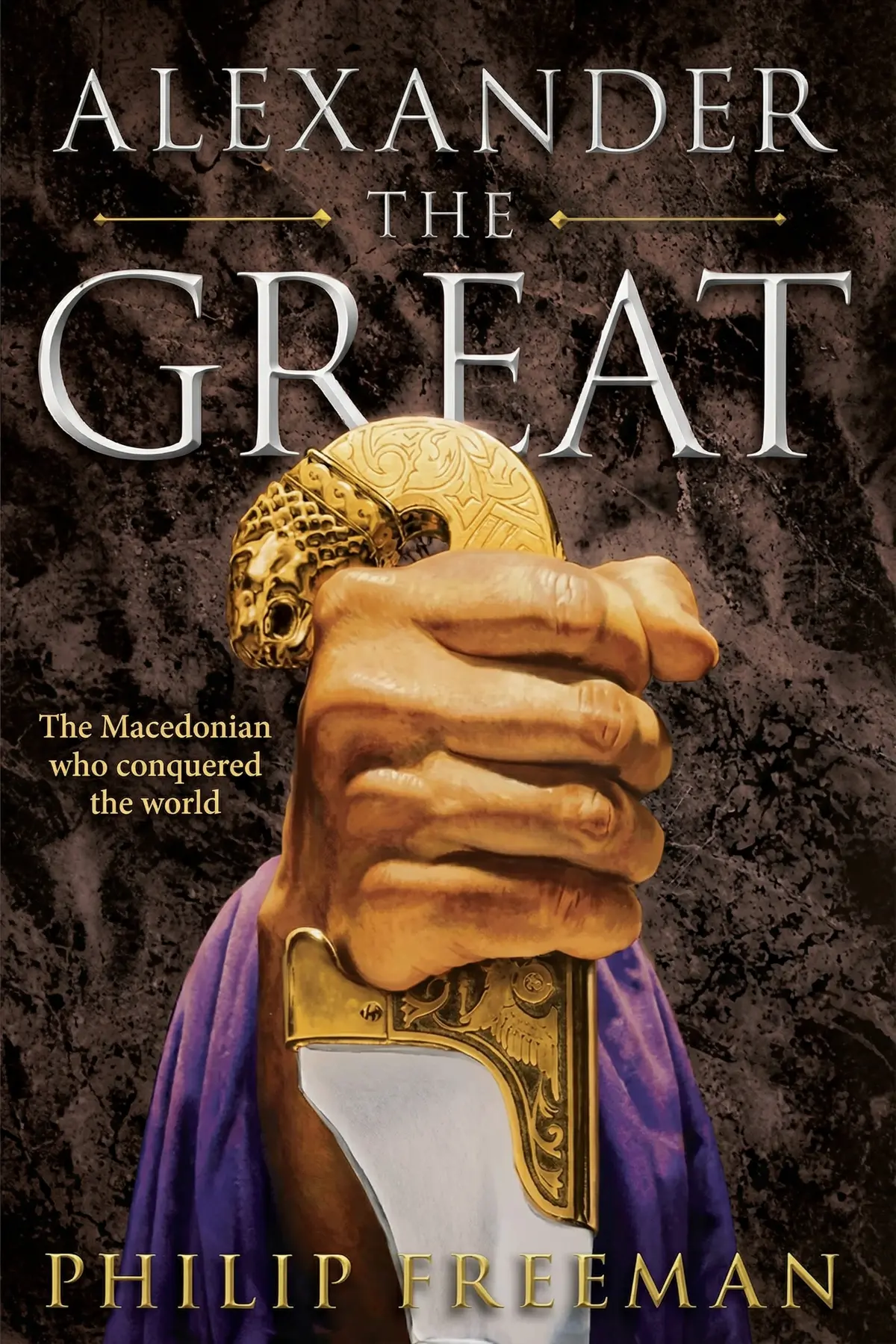
Most people know Alexander the Great as a famous name, not as a set of decisions they could learn from. In Alexander the Great, classicist Philip Freeman follows a Macedonian prince who became king at 20. In about ten years he built the largest empire the world had yet seen, stretching from Macedonia to Afghanistan and on into India.
Freeman’s account shows that courage alone did not do it. Alexander paired military daring with a sharp reading of people and situations, and the same restless drive that built the empire also set its limits. Follow him from a horse corral to the banks of the Ganges and the picture becomes clear. You see how ambition wins and where it overreaches. You also see why a dead king’s language helped carry Christianity across the Mediterranean.
1 min 43 sec
A horse nobody could ride, a price the king refused to pay and a boy of 13 who saw something the grown men had missed. The same talent later turned his father’s pride into fear.
1 min 47 sec
His most seasoned general warned him off a river battlefield, then read an omen one way while Alexander read it another. A string of early victories turned on whose judgment the young king chose to trust.
2 min 02 sec
A dying enemy general, a fever that nearly killed him and a doctor accused of poison all came within months. Then a peace offer arrived that his own advisers wanted to accept, and Alexander made sure they never saw it.
1 min 54 sec
Two great cities let him in without a single battle, and a desert oracle told him what he hoped to hear. Between them stood the most dangerous gamble of his career, made on open ground against elephants.
1 min 57 sec
The fall of the Persian capital should have been the high point. Instead it brought looting he did not stop, a fire he lit himself and an army that wanted to go home just as he wanted to push on.
2 min 09 sec
In India he lost the horse that had carried him since boyhood, and then he lost something harder to replace. At the Ganges, the kind of speech that had always worked could no longer inspire his men.
1 min 35 sec
His empire began breaking up almost as soon as he died. Yet traces of his campaign appear in the face of the Buddha, in a holy book and in the way a new faith reached the world.
58 sec
Alexander’s story is usually told as a chain of battles, but Freeman’s version reads more like a study of judgment under pressure. The boy who spotted a horse’s shadow became the general who read an eagle differently from his best adviser. He gambled on a gap in the Persian line and trusted a doctor accused of poisoning him. The same man forged a letter to fool his own advisers and set a palace alight while drunk. His feel for people opened Egypt and Babylon without a fight. His hunger for more marched tired soldiers all the way to the Ganges.
Two habits are worth keeping. Before calling a problem impossible, look for the one cause others have stopped seeing. And listen for the moment your words stop moving the people who carry out your plans. The empire broke apart within years. The Greek language he spread lasted far longer. What we build may fall, but what we spread can keep traveling.
Most people can name Alexander the Great, yet few could say what he actually did or why it worked. Philip Freeman, a classicist, tells the story of a Macedonian prince who became king at 20. In about ten years he extended a small kingdom from Greece to India and built the largest empire the world had yet seen. Freeman shows that the conquest came from more than courage. Alexander kept reading situations differently from the people around him, from a horse frightened by its own shadow to an omen his best general misread. Egypt and Babylon both received him without a fight, their people apparently glad to be free of Persian rule. The book is just as clear about the costs: the destruction of Thebes, a drunken fire at Persepolis, and an exhausted army that finally refused to go past the Ganges. Readers get a vivid account of one of history's great campaigns, from the battles of Issus and Gaugamela to Alexander's death at 32. They also see why his legacy ran so far, shaping Buddhist sculpture, Islamic philosophy, Roman culture and the early spread of Christianity.
History lovers who know Alexander's name but not how his campaign actually unfolded.
Managers and founders curious how bold decisions, trust and overreach play out in a real story.
Students of the ancient world who want one clear account from Macedonia to India.
Philip Freeman earned his doctorate at Harvard University and has taught Classics and Celtic studies at several US institutions, including Boston University, Washington University in St. Louis, Luther College and Pepperdine University. He retired from Pepperdine as the Fletcher Jones Chair in Humanities. He describes his writing as an extension of his teaching, and his books include biographies of Alexander the Great, Julius Caesar and St. Patrick of Ireland.
Listeners regard this work as one of the top three Alexander the Great biographies, praising its accessibility and how it makes history feel engaging. The prose offers a fluid narrative, and listeners admire the superb pacing and detailed accounts of Alexander's major battles. They value the historical accuracy, with one listener noting it's anchored in historical facts, while another emphasizes how it allows listeners to follow Alexander's great achievements.
Finally found a history book that doesn’t feel like a chore to get through. Philip Freeman has a gift for narrative flow, turning the life of Alexander into something that reads more like an epic adventure novel than a dry academic text. I particularly loved the inclusion of smaller, humanizing anecdotes, like the story of Alexander’s tutor Leonidas and the incense. It’s these touches—the young prince being rebuked for wasting spices only to send a massive shipment years later—that make him feel real. The book moves at a breakneck speed, much like Alexander’s own campaigns, yet it never loses sight of the sheer scale of his ambition. It is a fantastic entry point for anyone who wants to understand why this man’s name is still whispered with awe millennia later.
Show moreImagine conquering the known world before your thirty-third birthday without the help of modern GPS or medicine. This book captures that staggering achievement perfectly. Freeman balances the dual nature of Alexander—the enlightened pupil of Aristotle who carried a copy of the Iliad everywhere, and the ruthless warlord who could raze a city to the ground without blinking. The author’s choice to represent Alexander as a man of his own time, rather than judging him by 21st-century morals, is refreshing and vital for historical accuracy. It’s a compelling read that emphasizes the magnetic personality required to lead an army across three continents. This is easily one of the top three books on the subject for a general audience. I couldn't put it down.
Show moreFew figures loom as large in the human imagination as Alexander, and Philip Freeman has done a masterful job of distilling that massive legacy into a single, vibrant volume. The research feels deep and grounded in the ancient sources, yet the writing never feels heavy. I loved the detail about Alexander using Herodotus as a travel guide during his conquests; it adds such a specific layer of character to the man. The book successfully depicts him as a brilliant strategist who was never known to lose a battle, while also acknowledging his superstitious and sometimes vindictive nature. It’s a balanced, thrilling, and ultimately tragic look at a life that burned out far too quickly. Highly recommended for anyone interested in the foundations of the Hellenistic world.
Show moreDoes the world really need another Alexander biography? After reading Freeman’s take, the answer is a resounding yes. This book is perfect for the casual reader who wants the 'greatest hits' of Alexander’s life without getting bogged down in dense historiographical debates. From his training with Aristotle to his sudden, mysterious death at 32, every chapter feels essential. The author manages to make the ancient world feel immediate and relevant, focusing on the human ambition that drove the creation of an empire spanning three continents. It’s a smart, complete, and impartial account that doesn't pass judgment on the more brutal aspects of his reign. If you only read one book on Alexander, this should probably be it.
Show moreFreeman’s prose is as fluid as any modern thriller, making the complex maneuvers of 4th-century BC warfare surprisingly easy to follow. He does an excellent job detailing the major battles, providing just enough strategic context so you understand why the Macedonian phalanx was such a terrifying force. The pacing is a highlight; the book never bogs down in the minutiae of court politics for too long before heading back out on the march. To be fair, I would have appreciated a bit more depth regarding the various companions and generals who surrounded the King. Men like Ptolemy and Hephaestion often feel like mere names on a page rather than the vital figures they actually were. Despite that, it remains one of the most engaging historical biographies on my shelf.
Show moreThe pacing here is absolutely brilliant, capturing the frantic energy of a man who seemed to be running a race against time itself. Freeman does a wonderful job showing how Philip laid the groundwork for his son, even if the author's claim that Philip doesn't get enough credit feels a bit outdated to regular history readers. The transition from the Macedonian court to the heart of the Persian Empire is handled with great skill, highlighting the cultural shifts Alexander encountered. I found the sections on the Persian civilization particularly enlightening, as they provide necessary context for why Alexander was so impressed by the people he conquered. My only minor gripe is the occasional lack of detail regarding the political aftermath in the Levant, but for a one-volume biography, it covers a massive amount of ground effectively.
Show moreAs someone who usually finds military history a bit dry, I was pleasantly surprised by how much I enjoyed this biography. It focuses heavily on the grandiosity of Alexander’s dream and his almost supernatural force of will. The way the author describes the multiculturalism of the later empire is fascinating, especially considering how far it deviated from the ethnocentric teachings of Aristotle. Frankly, it’s amazing that his men followed him as far as they did. The book includes some lovely color photographs that really help bring the ancient geography to life. While some of the source choices are questionable—particularly the bit about Roman envoys paying homage—the overall narrative is anchored in historical fact. It’s a very pleasant reading experience that manages to be informative without being overwhelming.
Show morePicking this up after reading Freeman’s Caesar biography, I had high expectations for a narrative that could breathe life into the dusty corridors of history. For the most part, he succeeds. The writing style is incredibly accessible, moving from the mountains of Macedonia to the plains of India with a sense of urgency that mirrors the king’s own restless spirit. The account of the Delphi oracle, where Alexander basically forced a prophecy out of the priestess, was a highlight for me. However, the author does occasionally skip over the nuances of the people closest to Alexander. I wanted more about his relationship with his mother, Olympias, and his various generals. Still, the way Freeman details the logistical nightmares of moving an army across three continents is genuinely impressive. It is a fantastic bridge between academic texts and popular non-fiction.
Show moreWhile this serves as a solid introductory work for newcomers, it lacks the interpersonal depth I was hoping for in a modern biography. I appreciated the early chapters detailing how King Philip II essentially built the machine that Alexander would later drive, but the supporting cast is almost entirely ignored. Hephaestion is frequently called a 'best friend' without any real exploration of their complex bond, which makes the subsequent descriptions of Alexander’s grief feel hollow. Even his time with Aristotle feels rushed, like a checklist item the author needed to clear before moving on to the next battle. The military descriptions are vivid and the pacing is brisk, yet I finished the book feeling like I knew the conqueror but not the man. It is a capable overview, but it fails to capture the human heart behind the legend.
Show moreLook, I wanted to love this, especially after hearing it was one of the definitive modern accounts, but the lack of formal citations is a dealbreaker. Freeman presents every legend—like the famous slicing of the Gordian knot—with the same authoritative weight as documented troop movements, which is misleading for a general audience. Without in-line references or endnotes linked to specific sentences, it is impossible to distinguish between historical consensus and dramatic embellishment. The bibliography at the end feels like an afterthought rather than a tool for serious study. If you just want a ripping yarn, this works fine, but if you actually care about the historiography and the 'why' behind the claims, you will find it frustratingly shallow. I shouldn't have to search external sources just to see if a specific anecdote is a myth or a fact.
Show moreIt follows Alexander from his birth in Macedonia in 356 BC to his death at 32 in Babylon. He took the throne at 20 and spent ten years campaigning from Greece through Persia, Egypt and Babylon to India. Freeman argues that he combined military genius with political skill to build the largest empire the world had yet seen, and he shows how that empire’s cultural effects outlived it.
When he was about 13, a dealer offered his father, Philip II, a horse said to be untameable. Alexander noticed that it panicked only when it saw its own shadow. He turned it to face the sun, waited for it to calm down and mounted it. His impressed father told him Macedonia was not big enough for him.
After seven years away from home, his army no longer responded to his speeches. One of his generals told him the men were proud of what they had achieved but longed for their families, and the troops cheered loudly. The general advised going home to raise a fresh Macedonian army. After days of thinking it over, Alexander agreed.
Freeman traces it across regions. Greek styles transformed Indian art, including statues of the Buddha modeled on Apollo. The Qur’an remembers him as a philosopher-king, and Greek philosophy influenced the Islamic age. Rome adopted Greek as a language of learning. Because Greek had become the Mediterranean’s common language, the Gospels found a ready audience, which Freeman suggests helped Christianity spread beyond Roman Palestine.
The book does not spell out lessons, but a reader can draw a few from the story. Look for the simple cause behind a problem others call impossible, as Alexander did with Bucephalus’s shadow. One might be to weigh expert advice against your own reading of the situation, as he did against Parmenion. Another might be to make clear you will respect people’s way of life, as he did in Egypt. And a last one might be to notice when your words stop moving the people you lead, as happened at the Ganges.
J. Craig Venter

James Herriot

William J. Bernstein

Ishmael Beah


Pankaj Mishra

Barack Obama


Masaji Ishikawa
AUDIO SUMMARY AVAILABLE
Get the key ideas from Alexander the Great by Philip Freeman, plus 5,000+ more nonfiction titles.









