
15 min 49 sec
Available in: English
 ไทย
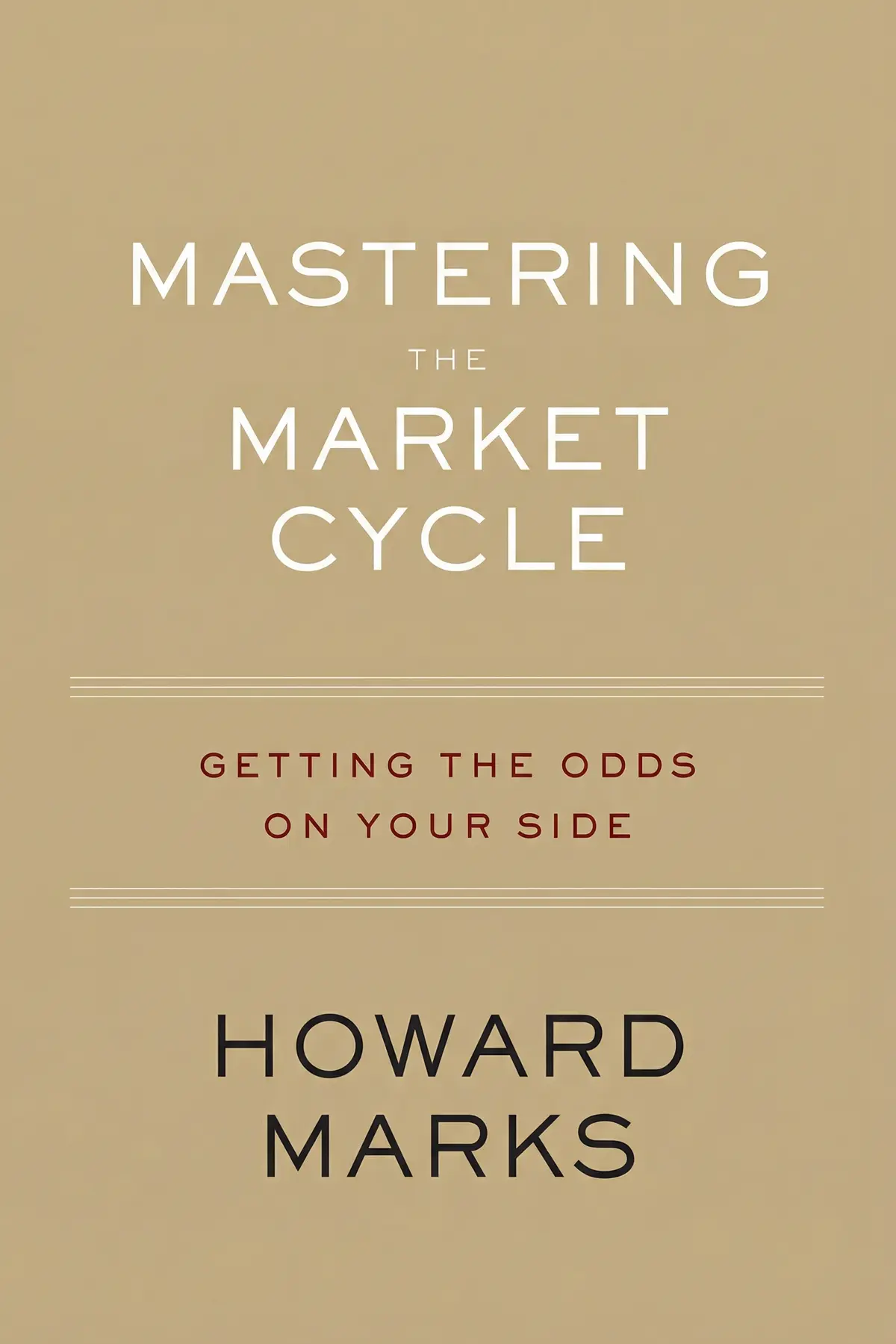
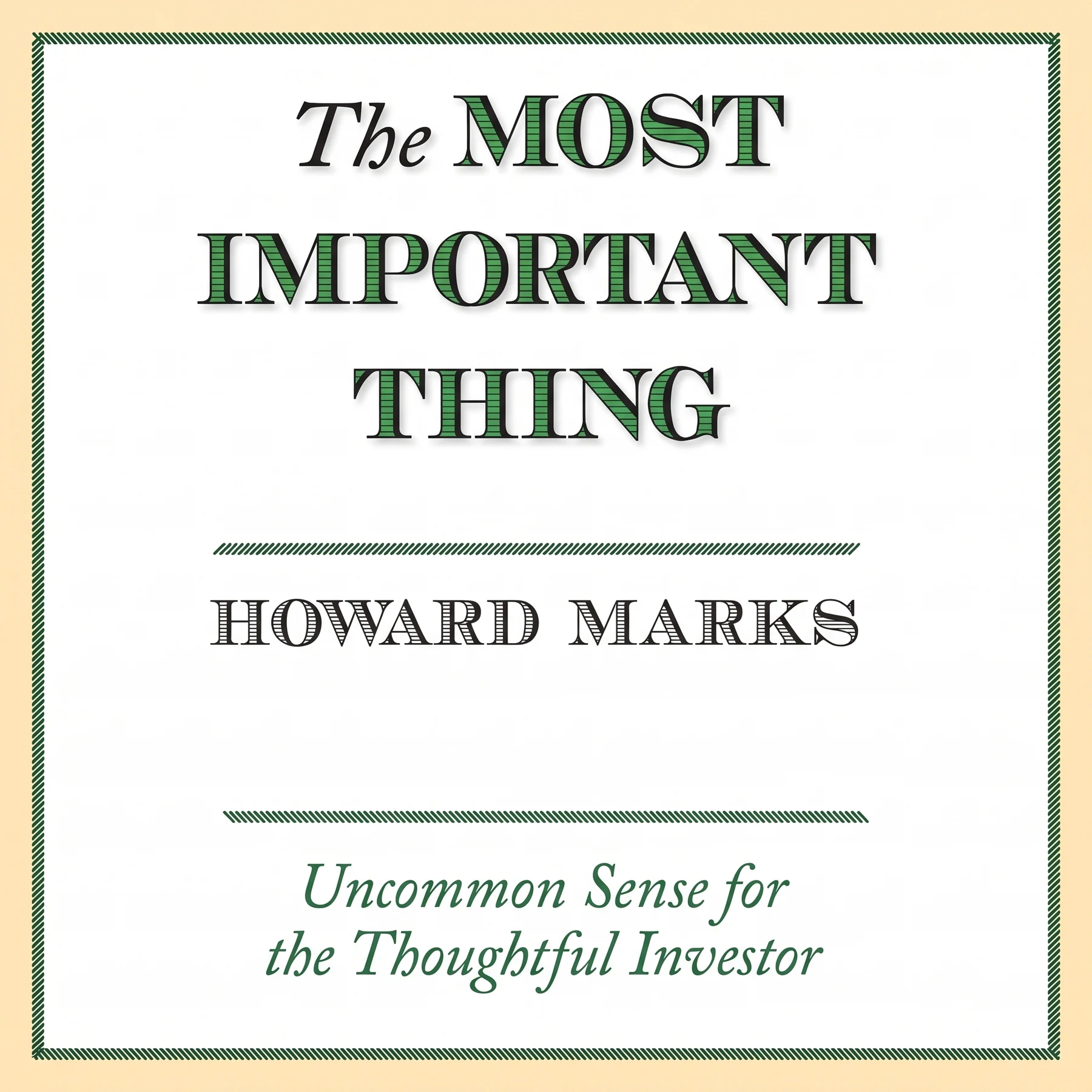
EnglishไทยThe Most Important Thing: Uncommon Sense for the Thoughtful Investor
By Howard Marks
Shows how to think past the crowd when investing: compare price with true value, spot risk when it looks lowest, read the mood of market cycles and avoid errors driven by greed, fear and luck.
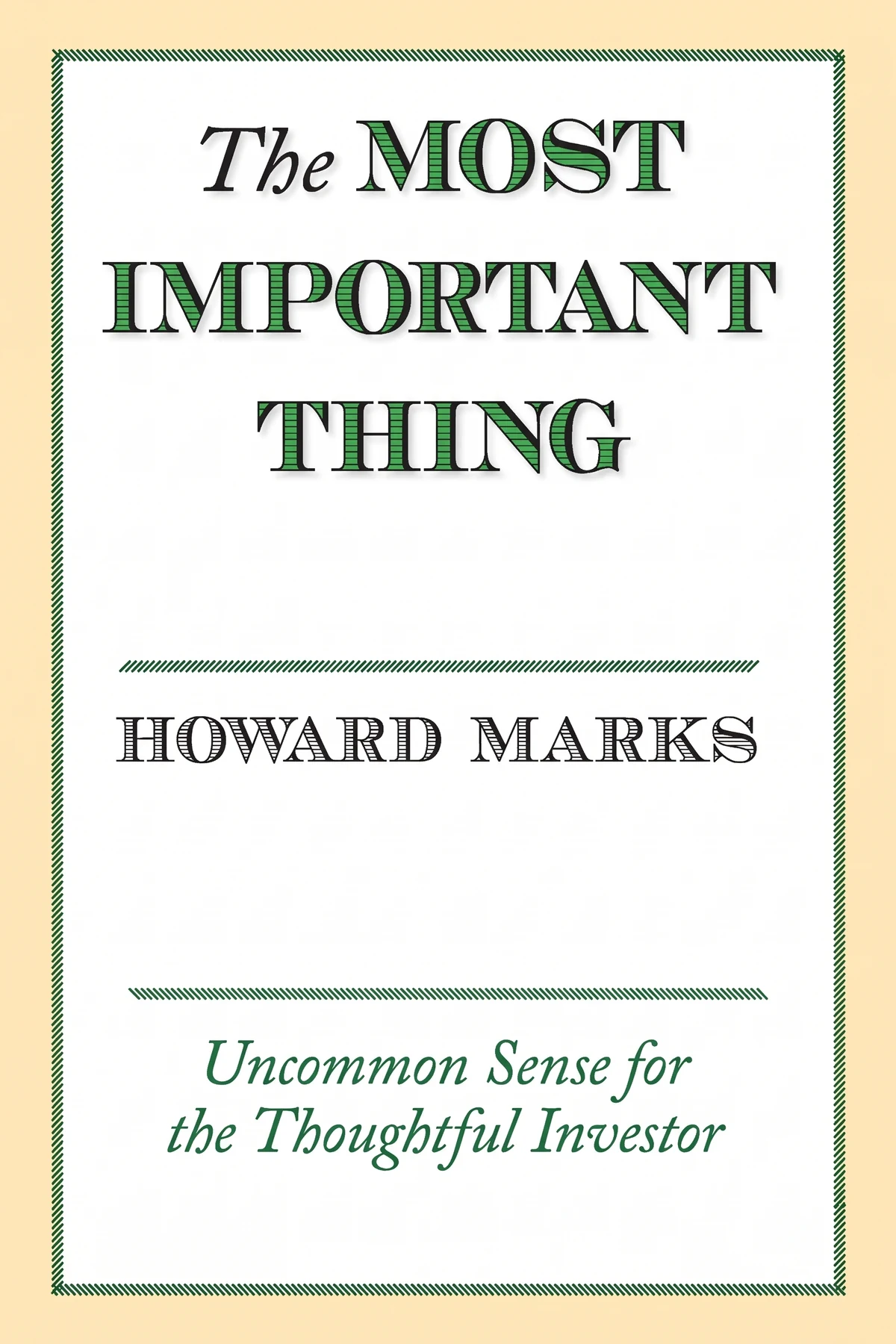
Table of Content
1. Introduction
55 sec
Most people invest by picking companies they admire and hoping the forecasts are right. In The Most Important Thing, Howard Marks, co-founder of Oaktree Capital Management, argues that both habits leave you exactly where the crowd is, which is the one place you cannot beat it. A fine company can be a poor purchase if everyone already loves it, and forecasts tend to fail precisely when the market changes direction.
Marks’s case is that better-than-average returns come from thinking differently, and more carefully, than other investors. That means knowing what an asset is truly worth, sensing risk when it seems absent, reading the emotional swings of market cycles and keeping a portfolio that can absorb bad luck. What you get here is a set of questions to ask before any purchase, and a simple way to tell whether the market around you is running hot or cold.
2. Think one step past the crowd
1 min 50 sec
A company can be excellent and still be a bad thing to buy. A stock that fell from $237 to $11 in a few months shows how wrong prices can get, and what kind of thinking catches it.
3. Know an asset's worth before you pay
1 min 43 sec
Everyone agrees with the oldest rule in investing, yet few can say what it actually means in practice. Marks offers a fixed reference point, and two forces that can push prices far away from it.
4. Treat calm markets as the riskiest ones
1 min 36 sec
The moment investors feel safest may be the moment they are most exposed. A house on earthquake ground explains why danger stays hidden until it is too late, and why profits prove nothing.
5. Profit from the swings every cycle brings
1 min 47 sec
Banks lend freely, then refuse to lend at all, then lend freely again. Marks traces that loop to human nature, and shows who ends up selling at any price when it turns.
6. Find bargains where others refuse to go
1 min 45 sec
Rising prices attract more buyers, who push prices higher still, until one sale ends it. Marks explains where that leaves the best opportunities, and why reaching them feels so uncomfortable.
7. Read the market's temperature, not forecasts
1 min 34 sec
Forecasts are often right, and Marks still calls them nearly useless. The reason lies in which moments they miss, and it points to a simpler check anyone can run before investing.
8. Keep greed and fear out of decisions
1 min 47 sec
Two investors can reach the same conclusion from the same facts and still do opposite things. Marks names the feelings that split them, and the kind of mistake that care alone cannot prevent.
9. Build a portfolio that survives luck
1 min 38 sec
An investor’s prediction fails completely, yet her stock rises and she looks like a genius. Marks uses cases like hers to argue for a portfolio that does not depend on guessing right.
10. Conclusion
1 min 14 sec
Marks’s thoughtful investor is someone who stays steady while the crowd swings between greed and fear. Prices drift from value because people drift with their feelings, and cycles repeat because human nature does. What protects you is the habit of asking what others believe, what something is truly worth and how much could go wrong, then acting with a fixed blend of boldness and caution.
In practice, before any investment decision, take the market’s temperature: notice whether people sound optimistic or gloomy, and whether the headlines urge buying or staying away. Settle on an asset’s value before you check its price, and weigh its risk as a separate question, hardest of all when everyone calls it safe. When an asset is feared or ignored, or its owners are being forced to sell, look closely before you look away.
Remember Yahoo, priced at $237 a share in January 2000 and at $11 by April. At least one of those prices was wrong. The investor with the best chance of knowing which was the one who had asked, before buying, what the company was actually worth.
About this book
What is this book about?
Most investors buy what looks good, follow the forecasts and hope. Howard Marks argues that this leaves them doing exactly what the crowd does, and the crowd is precisely what you cannot beat by copying it. Prices sit close to fair value most of the time, so real opportunity appears only when collective emotion pushes them too far up or down. Marks builds his case around a handful of habits that work together. Second-level thinking asks what everyone else already believes. Careful estimates of intrinsic value give a yardstick for price. Risk deserves the most respect when it feels smallest, and the credit cycle shows why markets swing again and again. Bargains hide in assets people fear or ignore, and taking the market's temperature is more useful than any forecast. He closes with the forces inside the investor: greed, fear, ego, envy and the luck that can make a poor decision look brilliant. Readers come away with practical questions to ask before any purchase and a balanced way to hold a portfolio through good and bad conditions.
Book Information
Who it's for
Individual investors following trends
Individual investors who buy what is popular and want a sounder way to judge price and risk.
Skeptical of market forecasts
Founders and professionals managing savings who distrust market forecasts and hype.
Curious about market cycles
Young investors who want to understand market cycles before their first crash tests them.
About the Author
Howard Marks
Howard Marks, born in 1946, is an American investor who co-founded Oaktree Capital Management in 1995 and serves as its co-chairman. From 1985 to 1995 he led the groups at The TCW Group handling distressed debt, high yield bonds and convertible securities, after 16 years at Citicorp Investment Management that began in equity research. He studied finance at Wharton and holds an MBA from the University of Chicago's Booth School of Business. His memos on investment strategy are posted publicly by Oaktree.
Ratings & Reviews
Ratings at a glance
What people think
Listeners find this work to be a superb explanation of fundamental investing concepts, highlighting enduring insights while addressing the emotional side of finance. It acts as a thorough manual that remains accessible without being oversimplified, establishing it as essential reading for anyone in the market. They value the added perspectives from prominent financial figures along with a prose style that relies on clear, straightforward language.
Top reviews
Sai
Picked this up after following Oaktree’s memos for years. Marks has this incredible knack for taking the dense, jargon-heavy world of high finance and distilling it into something your neighbor could understand. The concept of "second-level thinking" is worth the price of admission alone because it forces you to question the consensus view in a way that feels actionable. While some might find his style a bit repetitive across the chapters, I see it as necessary reinforcement for the most vital lessons. It’s less about a specific formula and more about developing a robust psychological framework for the market. Truly a masterclass in risk management and patience.
Show moreRod
Ever wonder why some investors survive for decades while others blow up in their first bear market? This book provides the answer by focusing on the defensive side of the ball, emphasizing that avoiding losers is more important than finding winners. Howard Marks isn't selling you a get-rich-quick scheme; he's teaching you how to stay in the game long enough for compounding to work its magic. I found his breakdown of the "pendulum" of investor psychology particularly brilliant because it explains why markets overreact so violently. It’s a dense read in terms of wisdom but written in very simple, accessible English. Definitely a must-read for anyone serious about capital preservation.
Show moreCarlos
Marks manages to turn 21 different "most important things" into a cohesive guide that focuses on the human element of finance. The truth is, most investing mistakes aren't analytical; they're psychological, born from greed, fear, or the simple desire to run with the herd. I loved the section on "patient opportunism," which argues that sometimes the best thing an investor can do is absolutely nothing at all. Waiting for the market to offer you a bargain is harder than it sounds, but this book gives you the mental fortitude to actually do it. It’s not just an investing book; it’s a study in discipline and emotional control.
Show moreSomboon
Finally got around to reading this and I’m kicking myself for waiting so long. The way Marks describes "investment asymmetry"—the ability to capture more of the upside than the downside—is the clearest explanation of professional skill I’ve ever seen. It’s refreshing to read an author who admits that the future is inherently unknowable and that we should focus on responding to current realities instead. The book is short enough to finish in a weekend, but the lessons on "second-level thinking" will likely stay with me for the rest of my career. It's an absolute staple for any financial library.
Show moreMay
Not what I expected. I thought this would be a textbook on valuation, but it’s actually more of a philosophical treatise on how to think about uncertainty. Marks treats the market like a living, breathing organism driven by human emotion rather than just a collection of numbers and spreadsheets. His focus on "buying when no one likes it" is the ultimate contrarian advice, and he backs it up with a career's worth of success. If you want to understand the "why" behind market cycles rather than just the "how," this is your book. It’s a short, powerful read that simplifies the complex.
Show moreWipawan
After hearing so many professional traders rave about this, I finally dove into the "Illuminated" edition. The annotations from guys like Joel Greenblatt and Seth Klarman add a nice layer of depth, though Marks’ own words are usually enough to carry the weight. My favorite part was the visualization of risk as a distribution of possibilities rather than just a single sloping line; it really changed how I view potential losses. I’ll admit the text gets quite circular in the middle sections, repeating the same points about market cycles over and over. If you can get past the redundancy, the wisdom here is timeless and incredibly grounding.
Show moreHenry
This book is essentially a curated collection of Marks’ best memos, and that’s both its greatest strength and its minor weakness. The writing style is witty and clear, making complex ideas like "alpha" and "beta" feel intuitive even for someone who hates math. I particularly appreciated the distinction between risk and volatility, as most of Wall Street gets that wrong by focusing only on price fluctuations. My only gripe is that the layout of the "Illuminated" version can be a bit distracting with the constant interruptions from guest commentators. Still, the core message about buying when price is below intrinsic value is something every retail investor needs to hear.
Show moreSuphan
As someone who usually finds financial texts incredibly dry, I was pleasantly surprised by how engaging this was. Marks uses great analogies, like the "fish at the poker table," to illustrate why you need an edge if you’re going to play in inefficient markets. He spends more time talking about how to limit risk than how to generate returns, which is exactly the kind of sober advice most people need. I did find the repetitive nature of the "21 things" a bit tedious toward the end of the book. However, the quality of the insights is so high that I’m willing to overlook the structural issues.
Show moreKavya
To be fair, if you’ve already read Graham, Buffett, and Munger, you might find a lot of this material familiar. Marks essentially synthesizes the best of value investing into his own "Oaktree" philosophy, which is great for a primer but felt a bit thin for a seasoned pro. I was hoping for more technical analysis or specific case studies from his career rather than generalities about "being a contrarian." The book is only about 180 pages, yet it somehow feels longer because the same themes are hammered home in every single chapter. It’s a solid read for those needing a refresher, though likely basic for an expert.
Show moreLek
Frankly, I think reading his original memos on the Oaktree website provides a bit more context than this book does. The book tries to organize his thoughts into a structured format, but in doing so, it loses the "real-time" feel of his historical market calls. Don't get me wrong, the principles are 100% correct—especially the parts about market efficiency and the danger of following trends. But after a few chapters, I felt like I was reading the same essay rewritten with slightly different headings. It’s an okay summary if you’re short on time, but it lacks the depth of his more specific writings.
Show moreQuestions about this book
What is the main idea of The Most Important Thing by Howard Marks?
Marks argues that above-average investment results require thinking differently and better than the crowd, which he calls second-level thinking. Since most prices sit near fair value, opportunity appears only when emotion pushes them too high or too low. Success depends on several habits working together: estimating intrinsic value, respecting risk, understanding market cycles, acting as a contrarian and guarding against greed, fear and luck.
What is second-level thinking in investing?
First-level thinking sees a good company and buys its stock. Second-level thinking notices that everyone already considers it a good company, concludes the stock is probably overpriced and sells. Because the market is the sum of all investors, Marks argues that beating it means taking into account what others believe and whether that belief is already reflected in the price.
Why does Howard Marks say market forecasts are useless?
Forecasts mostly project the recent past forward, which is usually fine but adds little value. The predictions that matter are those that catch real turning points, where the big gains and losses happen, and forecasts are least likely to get those right. Few forecasters foresaw the 2008 credit crisis, and a year later most were surprised again by the first signs of recovery.
How can I apply The Most Important Thing to my own investing?
Before any decision, take the market’s temperature: ask whether investors feel optimistic or pessimistic and whether the media urges buying or avoiding stocks. Estimate an asset’s value before looking at its price, and judge its risk separately. Look for bargains among assets others fear or ignore, and hold a steady mix of offensive and defensive positions, since few people can switch between them at the right time.
Who should read The Most Important Thing?
It suits investors who want principles more than stock tips: people who have bought into popular trends and regretted it, savers unsure how to judge risk, and anyone who wants to understand why markets swing between excess and panic. Its lessons are framed around thinking and behavior, so they apply whether you hold a few shares or manage larger sums.
Readers also enjoyed



AUDIO SUMMARY AVAILABLE
Listen to The Most Important Thing in 15 minutes
Get the key ideas from The Most Important Thing by Howard Marks, plus 5,000+ more nonfiction titles.
- 5,000+ titles
- Listen as much as you want
- 7-day free trial
- Cancel anytime









