
14 min 44 sec
Available in: English
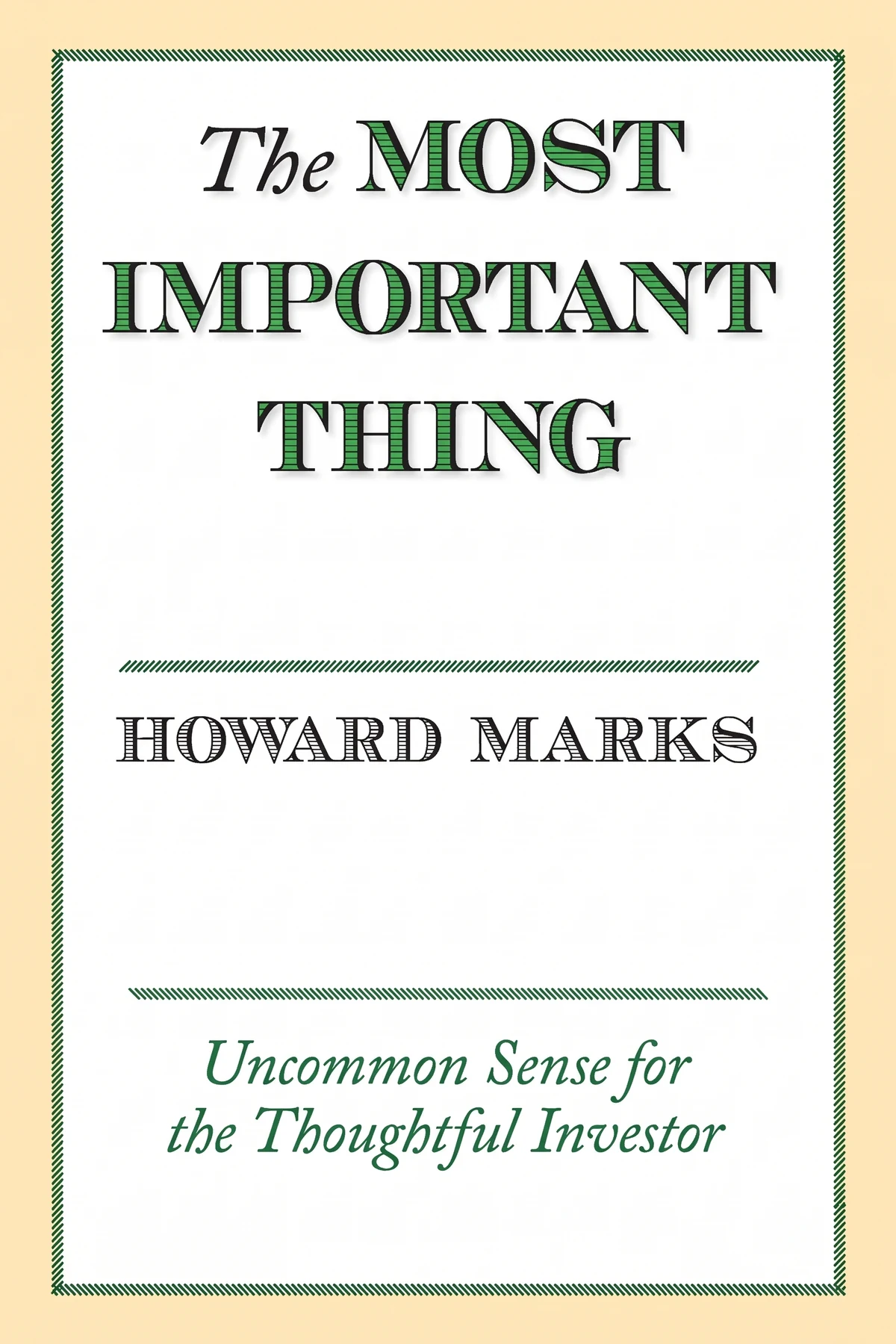
Mastering the Market Cycle: Getting the Odds on Your Side
By Howard Marks
Howard Marks explains why investors cannot predict markets but can judge where a cycle stands. He shows how standing against the crowd's greed and fear improves the odds of a good outcome.
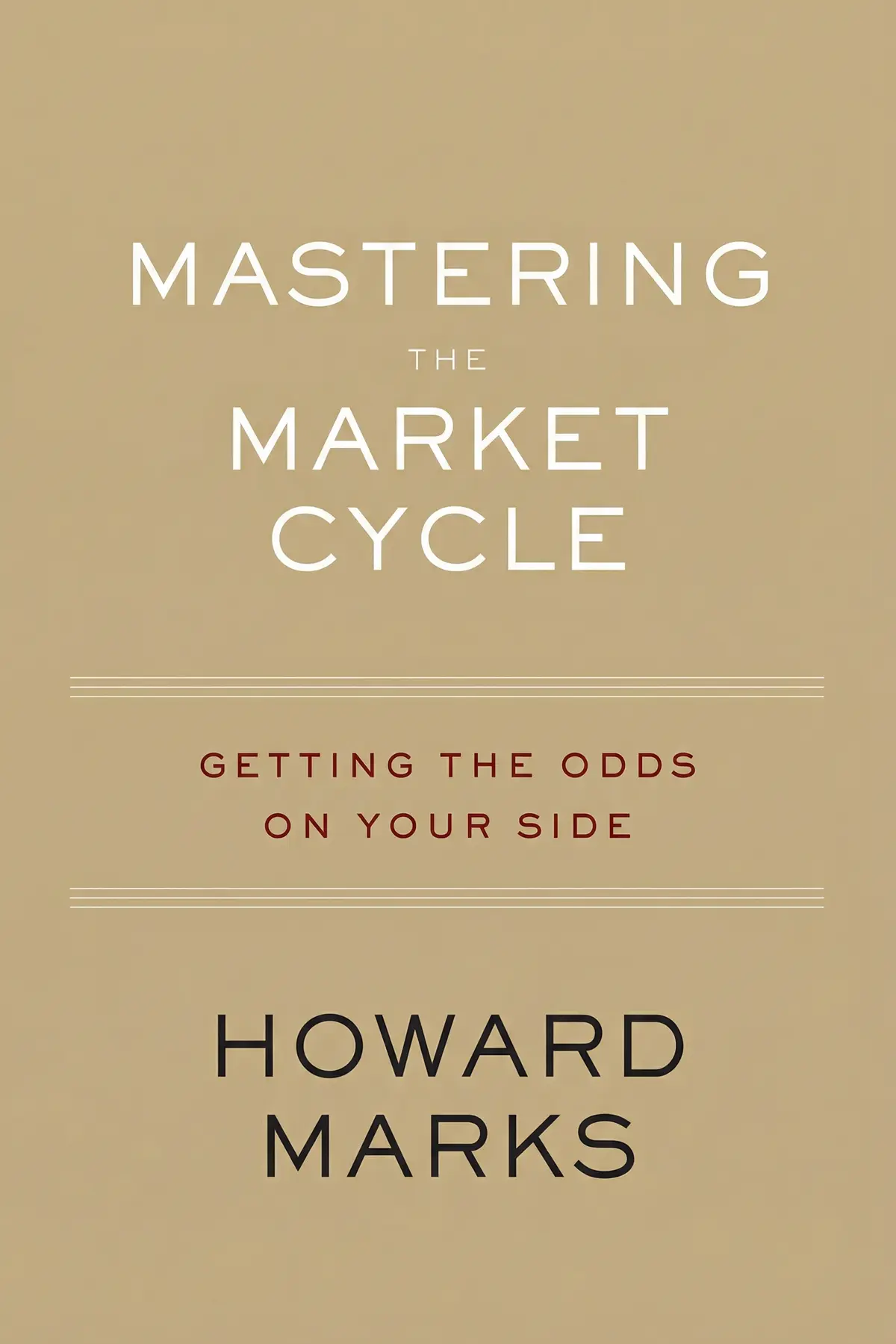
Table of Content
1. Introduction
1 min 03 sec
Most people who invest try to guess what the economy will do next year, and most of them guess no better than anyone else. In Mastering the Market Cycle, Howard Marks, co-founder of Oaktree Capital Management, argues that the real edge is somewhere else: knowing where you stand within a market’s swings. He has managed money for more than four decades, and he says that is the question his clients ask him most often. They want to know whether the market is rising or falling, and how the current stretch will play out.
Marks’s answer is that markets grow slowly over the long run but swing far above and below that path in the short run, pushed mostly by greed and fear. You cannot predict the turns. You can notice when the crowd has stopped believing in risk, and then bet against it. The cases include Isaac Newton’s ruinous second bet on a bubble, the cathedral spire the dot-com years left on a chart, and a homebuilder bought at a time when nobody wanted houses.
2. Forecast less and price what you can know
1 min 56 sec
Every serious investor is trying to see the future, and almost none of them see it better than the rest. Marks points to a humbler kind of knowledge that actually gives an investor an advantage.
3. Read market cycles as odds you can weigh
1 min 51 sec
Day and night arrive on schedule, and markets clearly repeat too. So why does every attempt to time the next turn fail? Marks offers a strange picture of the Earth to explain it.
4. See the steady trend beneath the wild swings
2 min 08 sec
The internet boom of the late 1990s made fortunes and then wiped many of them out. Draw the whole episode on a chart and a shape appears that, according to Marks, nearly every market traces.
5. Resist the crowd that beat Isaac Newton
2 min 15 sec
One of the greatest scientists who ever lived saw a bubble coming and got out in time. Then he watched his neighbors get rich, and what happened next is a warning to every investor.
6. Buy when everyone else feels the danger
2 min 15 sec
After the 2008 crisis, almost everyone believed the housing market was finished. Marks looked at one key number and, with his colleagues, bought North America’s largest private homebuilding company.
7. Stop relying on the long-term trend to save you
2 min 04 sec
If markets rise over the long run, it seems you could simply buy and wait. Marks explains why that comfortable plan rests on something less steady than it looks.
8. Conclusion
1 min 12 sec
Marks’s book makes a case for humility combined with close attention. He gives up on forecasting the future and asks something more modest: where are we now, and are the odds with me or against me? He finds the answer in three comparisons: price against value, today’s prices against their long-term trend, and the crowd’s mood against the actual risk. Newton got the analysis right and still lost a fortune, because he could not resist the crowd. Marks bought into homebuilding when the crowd had given up on houses.
Mostly, what this asks of you is discipline. When friends talk as if a market cannot fall, treat their confidence as the risk. When everyone around you has stopped buying, look for assets whose prices have fallen well below the lasting demand behind them. And read beyond financial news and market reports. Marks recommends history books, such as the long rise and fall of the Roman Empire, and even novels, because cycles appear wherever people do.
Markets will keep rhyming. Investors who hear the rhyme early are the ones who get the odds on their side.
About this book
What is this book about?
Most investors spend their energy guessing what comes next: the next crash, the next boom, the next big technology. Howard Marks, co-founder of Oaktree Capital Management, argues that such forecasts rarely beat anyone else's, because everyone reads the same news and studies the same data. What an investor can do is understand cycles. Over the long run, markets, economies and companies tend to grow slowly along what Marks calls the secular trend. In the short run they swing well above and below it, pushed mostly by greed in good times and fear in bad ones. Marks follows that pattern through the dot-com boom and bust, through Isaac Newton's costly second bet on the South Sea Company and through his own firm's purchase of a homebuilder at a time when almost no new homes were being built. The practical lesson is to compare price with real value, notice how far the market sits from its trend and treat the crowd's mood as information. When everyone feels safe, risk is at its highest. When everyone is afraid, the odds tilt in your favor. Readers come away with a way to think about timing that does not rely on prediction.
Book Information
Who it's for
Investors who buy high
Individual investors who keep buying near the top and selling after the fall.
Founders and finance pros
Finance professionals and founders who want to judge market timing without relying on forecasts.
Curious why booms bust
Readers who want to know why booms like the dot-com bubble so often end in a bust.
About the Author
Howard Marks
Howard Marks, born in 1946, is an American investor and writer. In 1995 he co-founded Oaktree Capital Management, where he is co-chairman. From 1985 to 1995 he ran TCW Group teams focused on high yield bonds, convertible securities and distressed debt. Before that he spent 16 years at Citicorp Investment Management, where he started as an equity research analyst. He studied finance at Wharton and earned an MBA from the University of Chicago's Booth School of Business. Oaktree publishes his investment memos openly. This is his second book, after The Most Important Thing.
Ratings & Reviews
Ratings at a glance
What people think
Listeners find the text thought-provoking and filled with useful market expertise, making it a required read for those new to investing. Additionally, the writing is clear and to the point, and listeners deem it a highly useful tool. That said, opinions are divided on how easy it is to digest; while some find it simple to follow, others label it as simplistic. Several listeners also point out that the information can be quite repetitive.
Top reviews
Ubolwan
Is it possible to actually time the market? Howard Marks argues that while you can’t predict the future with precision, you can certainly prepare for it by understanding where we are in the cycle. This book is a masterclass in market temperament. Truth is, most people try to find a crystal ball when they should be looking at a compass. The recurring theme that 'history doesn't repeat but it rhymes' is hammered home here, which might feel repetitive to some, but it’s a vital reinforcement for disciplined investing. I particularly enjoyed the breakdown of the credit cycle—it’s often the most overlooked part of the mosaic. While the prose is simple, the implications for your portfolio are massive. You won’t find complex math here, just high-level wisdom from a man who has successfully navigated five decades of market insanity.
Show moreLucas
Wow. Marks has a way of making the most complex financial concepts feel like common sense. I loved The Most Important Thing, and this feels like a perfect companion piece that goes deeper into the timing aspect. The core idea that we can't predict but we can prepare is exactly what every retail investor needs to hear right now. It's not about catching the exact bottom, but about knowing when the odds are in your favor versus when you're just gambling with the crowd. Some parts are definitely repetitive, but I think that’s intentional to make sure the cause-and-effect logic sticks in your brain. It is simply a superb guide on temperament and discipline.
Show moreKek
Directly addressing the elephant in the room: yes, this book repeats itself quite a bit. But in the world of investing, where we are bombarded with noise daily, maybe we need to hear the fundamentals on a loop. Marks explores the interrelatedness of the profit, risk, and economic cycles with incredible clarity. It’s fascinating to see how one stage doesn't just precede the next, but actually causes it. The book feels timeless because it focuses on human nature, which never changes. Even if the graphs are just conceptual illustrations, the logic behind them is sound and battle-tested over fifty years of professional experience.
Show moreNongnuch
The chapter on 'Taking the Temperature' changed how I view my weekly watchlist entirely. Instead of looking for 'cheap' stocks, I’m now looking at the environment: is there too much capital chasing too few deals? Are investors acting with prudence or FOMO? Marks highlights that the biggest risk is often the belief that there is no risk. His reflection on the 2008 bailout was a humble touch, acknowledging that even the best-laid plans involve a degree of external luck. It's a sophisticated, philosophical take on money that moves way beyond the spreadsheets. This is investment thinking on the highest level, even if it feels a bit familiar to long-time fans.
Show moreNitaya
This book serves as a fantastic bridge between basic economic theory and the gritty reality of institutional investing. Marks focuses on the 'why' behind market swings, specifically targeting investor psychology and the pendulum of risk. Look, you aren't going to get a step-by-step 'how-to' guide for day trading in these pages. Instead, you get a framework for understanding whether the market is currently in a state of euphoria or despair. It gets a bit dry toward the middle when he goes through every sub-cycle, like the profit and distress cycles, but the cumulative effect is a much deeper respect for market forces. It’s an intermediate-level read that requires some patience to get through the slower chapters, but the payoff is worth the effort.
Show moreLena
Finally got around to finishing this, and I have to say, the chapter on the credit cycle alone is worth the price of admission. Marks explains how the availability of 'easy money' fuels the booms and sets the stage for the inevitable busts in a way that is very easy to visualize. It’s an eye-opening look at how human greed and fear drive the numbers we see on our screens every day. Personally, I found the writing style very accessible, almost like a conversation with a mentor. While it lacks the dense data some quants might want, the qualitative insights are what really matter for long-term survival. Definitely a must-read for anyone serious about portfolio management.
Show moreTantipat
As someone who is relatively new to the world of finance, I found this to be an invaluable resource. It’s rare to find a legendary investor who can explain things without hiding behind jargon or complex formulas. The book is thought-provoking because it forces you to look at the market as a series of human reactions rather than just a line on a graph. I feel much better equipped to handle the next downturn without panicking now. The truth is, most of us are our own worst enemies when the cycle turns, and Marks provides the psychological armor needed to stay rational when everyone else is losing their heads.
Show moreWoravit
After hearing so many rave reviews for his first book, I found myself a bit underwhelmed by the actual content here. To be fair, if you haven't read his Oaktree memos, this will be life-changing stuff. However, for those of us who have followed Marks for years, it feels like a recycled collection of his previous writings stitched together. The book is incredibly repetitive, often saying in twenty pages what could have been said in five. He spends a lot of time on 'conceptual' graphs that lack any real data or values along the axes, which makes the advice feel a bit too abstract for my taste. It’s a decent primer on market psychology, but I expected much more new material and perhaps some quantitative substance.
Show morePlernpiriya
Not what I expected given the hype, but still a solid addition to the library for those who need a refresher on market history. The book definitely leans heavily on his past memos, which gives it a 'best of' compilation vibe rather than a cohesive new thesis. Not gonna lie, I caught myself skimming through some of the later chapters because the point had already been made three times in the first hundred pages. However, the sections on capitulation and the 'fool doing at the end what the wise man does at the beginning' are pure gold. It’s a good book that could have been a great one if it was edited down by about 50 pages.
Show moreNarongrit
Picked this up hoping for a masterclass, but it felt more like a firm grasp of the obvious. I’ve been in the financial services field for over a decade, and I struggled to find anything that wasn't covered in a 101-level economics course. The author spends far too much time quoting himself and patting himself on the back for his 2008 calls while admitting that a lot of it was dependent on government intervention. Frankly, the lack of quantitative substance is frustrating. There are almost no numbers, just vague descriptions of cycles 'causing' one another. It feels like an extended memo that was forced into a book format just because the general consensus was that we were due for a recession.
Show moreQuestions about this book
What is the main idea of Mastering the Market Cycle?
Howard Marks argues that nobody can reliably predict when markets will turn, but investors can judge where the current cycle stands. Markets tend to grow slowly over the long run and swing above and below that trend in the short run, driven mostly by greed and fear. When you compare price with value and read the crowd’s mood, you can position a portfolio so the odds work for you.
What does Howard Marks mean by the secular trend?
The secular trend is the slow average growth that markets, economies and companies show over long periods. Prices swing above and below it in the short run. Marks uses the dot-com era as an example: venture investment soared to a peak in 2000 and fell to a low in 2002, yet it later recovered to about half of that peak, so it grew overall across 20 years.
Why does Marks say investing is riskiest when it feels safe?
When greed takes over, investors stop believing in risk and keep buying at unreasonable prices, just when a crash is most likely. Sellers can then charge high prices and offer little extra return for the risk. After a crash, frightened investors stay out of the market, so rewards for taking risk and the chance of a recovery are at their highest. Marks applied this in 2010 by buying a homebuilder.
What happened to Isaac Newton in the South Sea bubble?
In 1720, while he was master of England’s mint, Newton saw that speculation was driving up South Sea Company shares and sold his 7,000 pounds of stock. The price went on to reach 1,050 pounds in June. After watching others grow rich, he bought back in near the top and lost more than 20,000 pounds in the crash. Marks uses the story to show how hard it is to resist the crowd.
How can I apply the ideas in Mastering the Market Cycle?
Before buying anything, estimate what it is truly worth and compare that with its price. Sketch the long-term trend under any exciting chart and see how far today’s price sits from it. Treat phrases like this time it’s different as warnings. Look for depressed assets with lasting demand behind them, as Marks did with housing in 2010. And, as Marks recommends, read widely, including history and novels.
Readers also enjoyed

A Splendid Exchange: How Trade Shaped the World
William J. Bernstein




Adults in The Room: My Battle With Europe’s Deep Establishment
Yanis Varoufakis





1929: Inside the Greatest Crash in Wall Street History--and How It
Andrew Ross Sorkin
AUDIO SUMMARY AVAILABLE
Listen to Mastering the Market Cycle in 15 minutes
Get the key ideas from Mastering the Market Cycle by Howard Marks, plus 5,000+ more nonfiction titles.
- 5,000+ titles
- Listen as much as you want
- 7-day free trial
- Cancel anytime









