
14 min 07 sec
Available in: English
The Magic of Mindful Self-Awareness: How to Stop Overthinking, Clear Your Mind, and Be Happy (Almost) All the Time
By Matt Tenney
Shows how to stop overthinking and find steady contentment by observing thoughts, feelings and desires instead of identifying with them, using simple body-based practices that fit into brushing your teeth or the minutes before sleep.
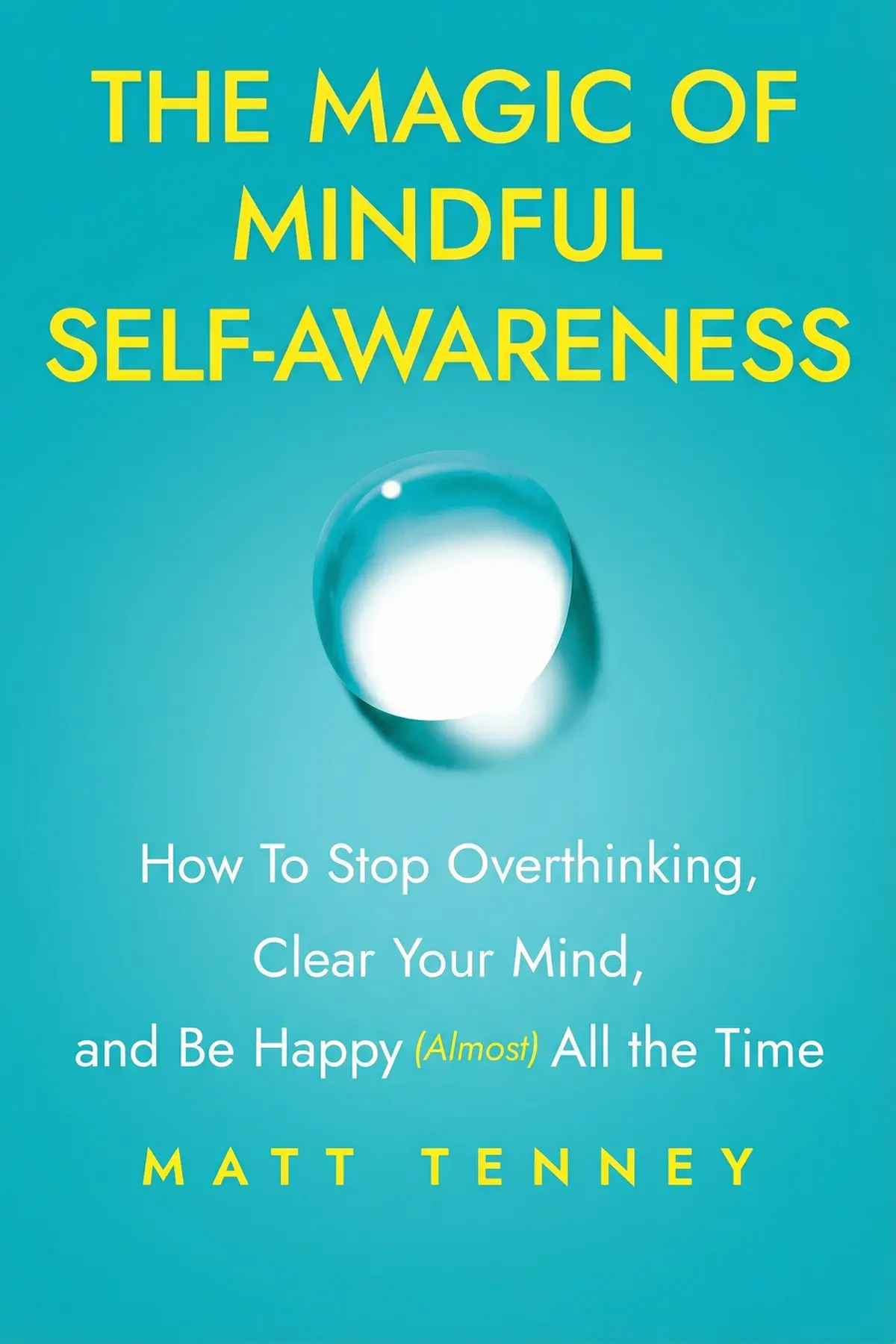
Table of Content
1. Introduction
1 min 03 sec
If your mind keeps running ahead to the next promotion, the weekend or the next worry, you may be putting off your own happiness without noticing. In The Magic of Mindful Self-Awareness, mindfulness teacher Matt Tenney argues that happiness can be cultivated whatever your circumstances, beginning with how you relate to your own thoughts. The trouble, he says, is comparison. We hold each moment up against the past, the future, our expectations or other people’s lives, and the moment loses.
Tenney’s case is that steady peace comes from observing thoughts, feelings and desires instead of identifying with them. He builds the skill in stages, from feeling your feet on the floor to recognizing the awareness that watches everything. Expect a farmer who refuses to judge his luck, a hypnotized actress, a snow globe and a five-minute practice you can begin in bed tonight.
2. Find happiness in your most ordinary minutes
1 min 40 sec
A simple thought experiment suggests most of a life is spent on chores, commutes and inboxes. If that is true, the usual way people chase happiness may be costing them almost everything.
3. Unwind negative thoughts before trying to think positive
1 min 41 sec
A farmer refuses to celebrate or mourn as his luck swings wildly back and forth. His stubborn calm exposes why the popular advice to think positive can leave a troubled mind no better off.
4. Steady your mind by feeling your body first
1 min 49 sec
A king travels far to learn how a teacher’s students became so radiantly happy. The answer disappoints him at first, and it points to something every listener already carries everywhere.
5. Let racing thoughts settle on their own
1 min 40 sec
Many people fear that a quiet mind means losing their edge at work. A child’s toy offers a better picture of what busy thoughts need, and it asks for much less effort than you might expect.
6. Feel pain without adding suffering
1 min 48 sec
Burn your hand and the pain arrives no matter what you believe. What follows the pain is another matter entirely, and a hypnotized actress shows how easily people get stuck there.
7. Watch your thoughts instead of becoming them
1 min 37 sec
Criticism stings, success inflates and the inner critic never stops talking. Tenney claims something in you is untouched by all of it, and he offers a short test you can try with your eyes closed.
8. A five-minute rest you can take every night
1 min 43 sec
Expensive holidays often send people home more tired than before they left. A five-minute practice offers a different kind of rest, and Tenney says its effects reach far beyond the bedroom.
9. Conclusion
1 min 06 sec
Tenney’s book relocates happiness. The promotion, the new car, even falling in love bring a satisfaction that fades, he argues, because we keep measuring each moment against something else. On his account, happiness is something you uncover. It appears when you stop treating thoughts, feelings and wants as orders and start seeing them as weather moving through a steady awareness.
That idea turns practical in very small places. Tomorrow morning, brush your teeth as though it were the main event of the day. When a craving or an irritation shows up, name it plainly as wanting happening, and let it sit there before you act. When the anxious neighbor in your head declares something a disaster or a triumph, remember the farmer and wait to see what follows. And tonight, give yourself five minutes in bed with nothing to fix.
None of this asks you to change your circumstances first. The film keeps playing, sometimes loudly. The screen was never damaged, and Tenney’s invitation is to notice that you are the screen.
About this book
What is this book about?
Most people eventually notice that the new car, the promotion and even falling in love bring a lift that soon fades. Matt Tenney argues that the problem is not a lack of good things but a habit of mind: constant comparison of this moment with the past, the future, our expectations or other people's lives. His remedy is mindful self-awareness, meeting each moment as it is without judging or resisting it. Tenney builds the skill in stages. First comes awareness of the body, which can only exist in the present. Then come watching thoughts settle like snow in a shaken globe, separating unavoidable pain from optional suffering, and noticing the calm awareness behind every thought. Along the way he uses a farmer who will not judge his luck, a king puzzled by a teacher's ordinary answer and a hypnotized actress trapped in a role. Readers get short exercises they can use the same day: a body scan, a mindful way to brush their teeth, a phrase for handling cravings and a five-minute rest in bed each night.
Book Information
Who it's for
Replaying meetings at night
Professionals who replay meetings at night and want a simple way to stop overthinking.
Waiting to be happy
People who keep waiting for the next goal to finally make them happy.
New to mindfulness
Beginners curious about mindfulness who want short exercises they can fit into brushing their teeth or going to bed.
About the Author
Matt Tenney
Matt Tenney is a bestselling author and mindfulness teacher whose own path ran from prison to life as a monk and then to social entrepreneurship. He has taught mindfulness to people ranging from children in hospitals to Fortune 500 leaders, aiming to ease stress, build happiness and help them live more meaningfully. He also advises companies on leadership through his books, consulting and his company's leadership development and employee engagement platform, PeopleThriver, and he gives keynote talks at company meetings, association events and large conferences.
Ratings & Reviews
Ratings at a glance

What people think
Listeners find that this work provides an education on mindful self-awareness while giving advice on how to purge intrusive thoughts, resulting in an accessible experience. They value the useful techniques, with one listener highlighting the inclusion of easy-to-do drills in each chapter, and describe the content as both absorbing and inspiring. The writing offers significant perspective, as one listener points out its role in helping them stay in the moment, while another observes that improvements arrive more quickly than anticipated.
Top reviews
Fon
The metaphor of the movie screen completely changed how I view my internal dialogue. Matt Tenney explains that our thoughts and emotions are just projections, while our true self is the unaffected screen behind the drama. This book offers a profound exploration of how we can find lasting contentment without relying on external achievements or new possessions. I loved the farmer parable about how we label events as 'good' or 'bad'—it really highlights how our judgments create our reality. Instead of trying to force positive thinking, Tenney teaches us to observe our thoughts with detachment and use body awareness as an anchor. By noticing the weight of my body in a chair or the texture of my sheets, I’ve found I can access stillness even during a chaotic day. It’s not just a book you read; it’s a practice you live. Truly, this is the most nourishing 'vacation' I have ever taken.
Show moreLena
As a mother of two, finding even five minutes of silence is a luxury I rarely get to enjoy. This book gave me the motivation to stop viewing my busy life as an obstacle to peace and instead see every moment as an opportunity for practice. I love the idea of a 'meta habit' like lying in bed and tuning into the breath before falling asleep. It’s a short ritual, but it has completely changed the way I end my days. Tenney’s writing is gentle and encouraging, making it feel like he’s right there with you on the path to self-love. I’m finally learning how to quiet the noise and be present with my family without the constant hum of anxiety in the background. If you feel like motherhood or work is drowning out your sense of self, please read this. It’s a beautiful reminder that contentment is woven into the fabric of the mundane.
Show moreRungtip
This book provides a level of clarity I didn't expect from a standard self-help title. The way Tenney explains that our identity isn't the restless narrator in our heads but the stillness beneath it is just brilliant. I’ve struggled with 'monkey mind' for years, but the recommendations here for body awareness actually worked where other methods failed. Instead of suppressing my thoughts, I’m learning to let them dissolve on their own, like snow settling in a shaken globe. It’s an engaging and uplifting guide that doesn't overwhelm you with useless details or academic jargon. Every chapter felt like a gentle invitation to stop running and start being. I’ve already recommended it to several friends who are dealing with burnout. If you are looking for a way to break free from the cycle of self-doubt and find a source of happiness that is entirely within reach, this is the book for you.
Show moreJai
Picked this up during a particularly stressful week and found the practical exercises in every chapter to be a lifesaver. Look, we all struggle with overthinking, but Tenney provides a very specific roadmap for shifting from 'I have an itch' to 'There is an itch.' This tiny linguistic shift creates so much space between our impulses and our reactions. I found the section on 'ordinary moments' especially convicting because I realized I’ve been postponing my happiness for future milestones. Why wait for a promotion or a vacation to feel good when you can find peace while washing the dishes? The book is an engaging guide that makes mindfulness feel approachable rather than some mystical, unattainable goal. Some of the personal anecdotes felt a bit long-winded, but the core message is incredibly uplifting. Results came faster than I expected, and I’m already sleeping better after trying the bedtime breathing rituals.
Show moreUbolwan
Ever wonder why we spend so much time chasing external validation only to feel empty a week later? Tenney argues that our pursuit of things like new jobs or travel actually blinds us to the reliable happiness already inside us. I was particularly struck by the king’s story, where the wise teacher explains that joy comes from simply knowing you are walking when you walk. It sounds almost too simple to work, but practicing that level of presence during my morning routine has been transformative. The book is well-structured and moves quickly, providing great clarity on how to stop identifying with every passing thought. I did find the chapter on the election and politics a bit jarring and out of place, but the rest of the advice is stellar. It’s a helpful guide for anyone who feels like their brain is constantly running a marathon they didn't sign up for.
Show moreYothaka
Finally got around to finishing this, and I’ve got to say, the distinction between pain and suffering was the biggest takeaway for me. Tenney uses the story of a hypnotized actress to show how we often play the role of a 'suffering person' without even realizing it. While physical pain might be unavoidable, the mental story we tell ourselves about it is totally optional. The book is packed with simple but effective exercises that help you realize you are the observer, not the thoughts themselves. Personally, I found the section on 'who is aware of these thoughts?' to be the most powerful part of the whole read. It’s a small book, but it packs a punch if you actually do the work he suggests. My only gripe is that it feels a bit like a sales pitch for his other books in certain sections. Regardless, the tools provided are genuinely useful for anyone looking to clear their mind.
Show moreFelix
Matt Tenney has a wild backstory, and while some critics might find it boastful, I thought his journey from prison to monkhood added a layer of authenticity to the book. He’s not just theorizing; he’s someone who had to find peace in the most restrictive environment possible. The way he breaks down mindful self-awareness into a step-by-step process makes it feel much more 'doable' than other meditation books I’ve tried. I particularly appreciated the focus on ordinary moments, like brushing your teeth or feeling the weight of your body. These small anchors help you return to the present moment without needing a quiet mountain retreat to find your zen. The writing style is casual and easy to digest, which makes it a great choice for a quick afternoon read. It’s a solid 4-star book that offers a lot of clarity for those of us struggling with the modern world's constant distractions.
Show morePridi
To be fair, this isn't exactly reinventing the wheel when it comes to the self-help genre. If you have read a lot of mindfulness literature, many of these concepts like the 'monkey mind' or living in the present will feel very familiar. I did appreciate Tenney’s honesty regarding his journey from prison to monkhood, though some parts felt a bit repetitive. The exercises at the end of the chapters are helpful, but I wonder how applicable this is to people who aren't financially stable. Can you really find 'blissful contentment' in 95% of your life if your basic needs for food and shelter are a constant worry? That said, the writing is clear and the steps are easy enough for a beginner to follow without feeling overwhelmed. It’s a solid, straightforward guide if you need a refresher on clearing mental clutter, but don't expect a life-altering revelation if you're already a veteran meditator.
Show moreFatima
Listening to the audiobook was a bit of a mixed bag for me. On one hand, Tenney has a very relaxing, calm voice that helps you settle into the right headspace for the material. On the other hand, it’s almost *too* soothing—I found myself getting a little sleepy during my morning commute! Truth is, the content is great for anyone struggling with a restless mind, but the narrative can feel a bit self-centered at times. He spends a lot of time talking about his businesses and his monk training, which might rub some people the wrong way if they are looking for pure instruction. However, the recommendations for overcoming persistent thoughts were genuinely informative and applicable to my daily routine. It’s not a perfect book, and it has some fluff, but the core exercises on body awareness and mindful attention are worth the price of admission. Just maybe don't listen to it while operating heavy machinery!
Show morePaiboon
I really wanted to like this, but the author’s tone felt incredibly boastful from the very first chapter. Frankly, claiming to be a monk after only four years feels like a stretch, especially when the rest of the book focuses so heavily on his various business ventures and book deals. I found the section where he mentions feeling the 'suffering' of millions after reading a census report to be performative and unnecessary. Why bring politics into a guide about internal self-awareness? To be fair, the prison backstory could have been a powerful tool for teaching redemption, but instead, it felt like he was justifying manipulative behavior toward guards and other inmates. I read several chapters hoping for practical tips on overthinking, yet I walked away with nothing but a bad taste in my mouth. It feels more like a marketing tool for his brand than a genuine attempt to help people find peace. I definitely wouldn't recommend this to anyone looking for actual mindfulness techniques.
Show moreQuestions about this book
What is the main idea of The Magic of Mindful Self-Awareness?
Matt Tenney argues that happiness does not depend on circumstances and can be cultivated. Unhappiness grows from constant comparison with the past, the future, expectations or other people. The remedy is mindful self-awareness: observing thoughts, emotions and desires as passing events instead of identifying with them, starting with awareness of the body, until you recognize a calm awareness underneath that stays steady whatever happens.
Why does Matt Tenney say positive thinking is not enough?
Tenney compares replacing negative, comparing thoughts with positive ones to putting a bandage over an infected wound. The underlying pattern stays in place. He suggests first loosening those negative habits by learning to watch thoughts as objects in the mind, grounded in body awareness, and only later building positive thinking on top. The parable of the farmer who will not call events good or bad shows why the labels themselves are the problem.
What is the difference between pain and suffering in the book?
Pain, in Tenney’s account, is objective and unavoidable: touch something hot and your nerves send the signal regardless. Suffering is subjective and optional. It comes from wanting something other than what is happening now. Tenney suggests noticing a sensation with a neutral phrase, such as there is an itch happening, or there is wanting happening, which creates space to choose a response instead of obeying the impulse.
How can I apply mindful self-awareness in daily life?
Tenney offers short practices. Scan your body from feet to head, noticing contact points and sensations. Pick one routine task, such as brushing your teeth, and give it full attention to taste, sound and touch. Sit and let thoughts settle like snow in a still globe. Each night in bed, spend five minutes feeling your breath and the mattress with nothing to fix, a ritual he believes spreads calm into the rest of your day.
Who should read The Magic of Mindful Self-Awareness?
It suits people who overthink, feel stressed or keep postponing happiness until the next achievement, and who want simple exercises over theory. Beginners to mindfulness will find the steps easy to start, from a one-minute body scan to a nightly five-minute rest. Readers interested in the idea of a true self that observes thoughts without being disturbed will find a direct, testable practice for exploring it.
Featured in
Readers also enjoyed

A New Earth: Awakening to Your Life’s Purpose
Eckhart Tolle


Aflame: Learning from Silence
Pico Iyer
Aware: The Science and Practice of Presence
Daniel Siegel
Be Here Now
Ram Dass
AUDIO SUMMARY AVAILABLE
Listen to The Magic of Mindful Self-Awareness in 15 minutes
Get the key ideas from The Magic of Mindful Self-Awareness by Matt Tenney, plus 5,000+ more nonfiction titles.
- 5,000+ titles
- Listen as much as you want
- 7-day free trial
- Cancel anytime









