

14 min 45 sec
Available in: English
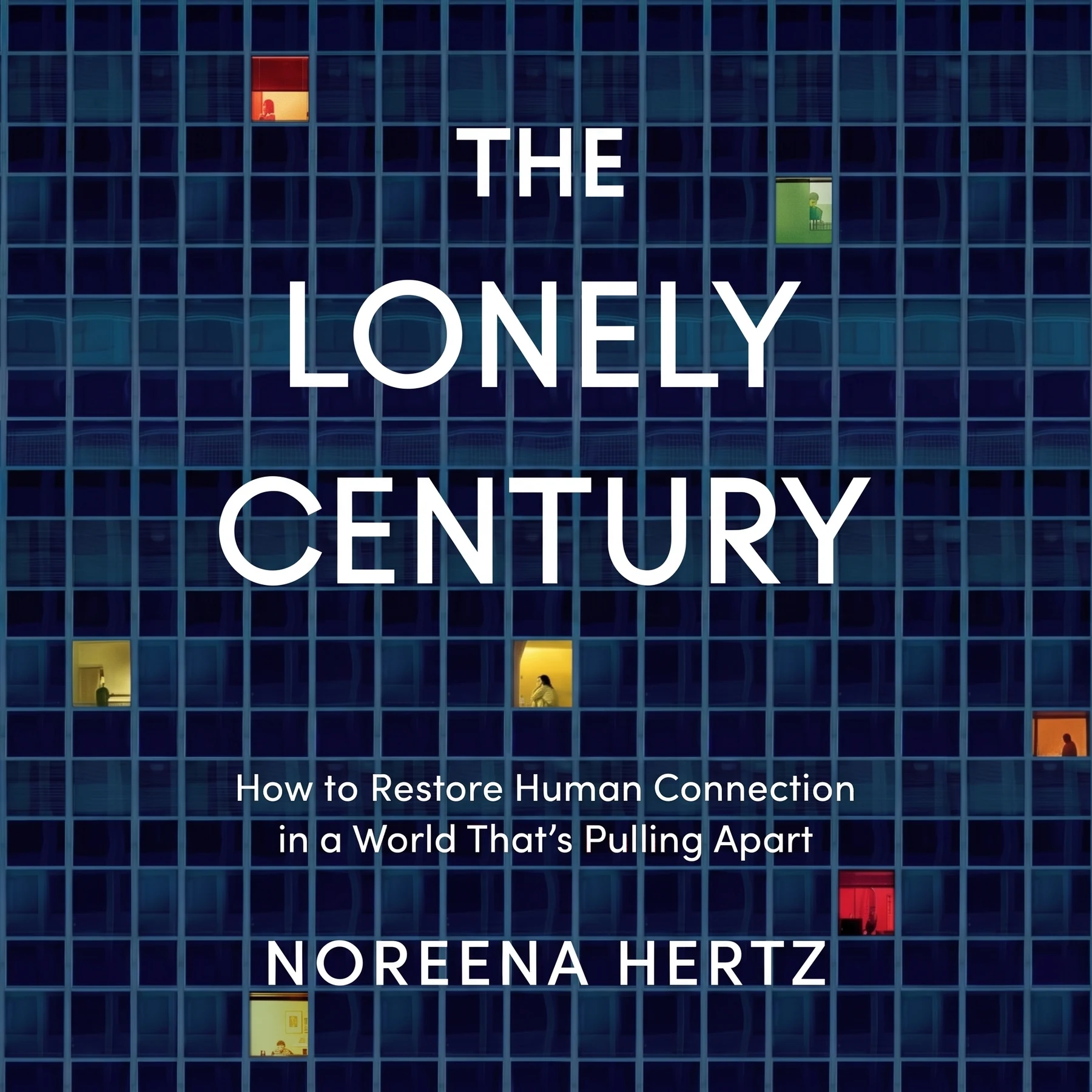
The Lonely Century: How to Restore Human Connection in a World That's Pulling Apart
Shows why loneliness has become a shared, political problem. It traces how economics, cities and screens drive people apart, what that does to health and democracy, and which public and personal steps help reconnect.
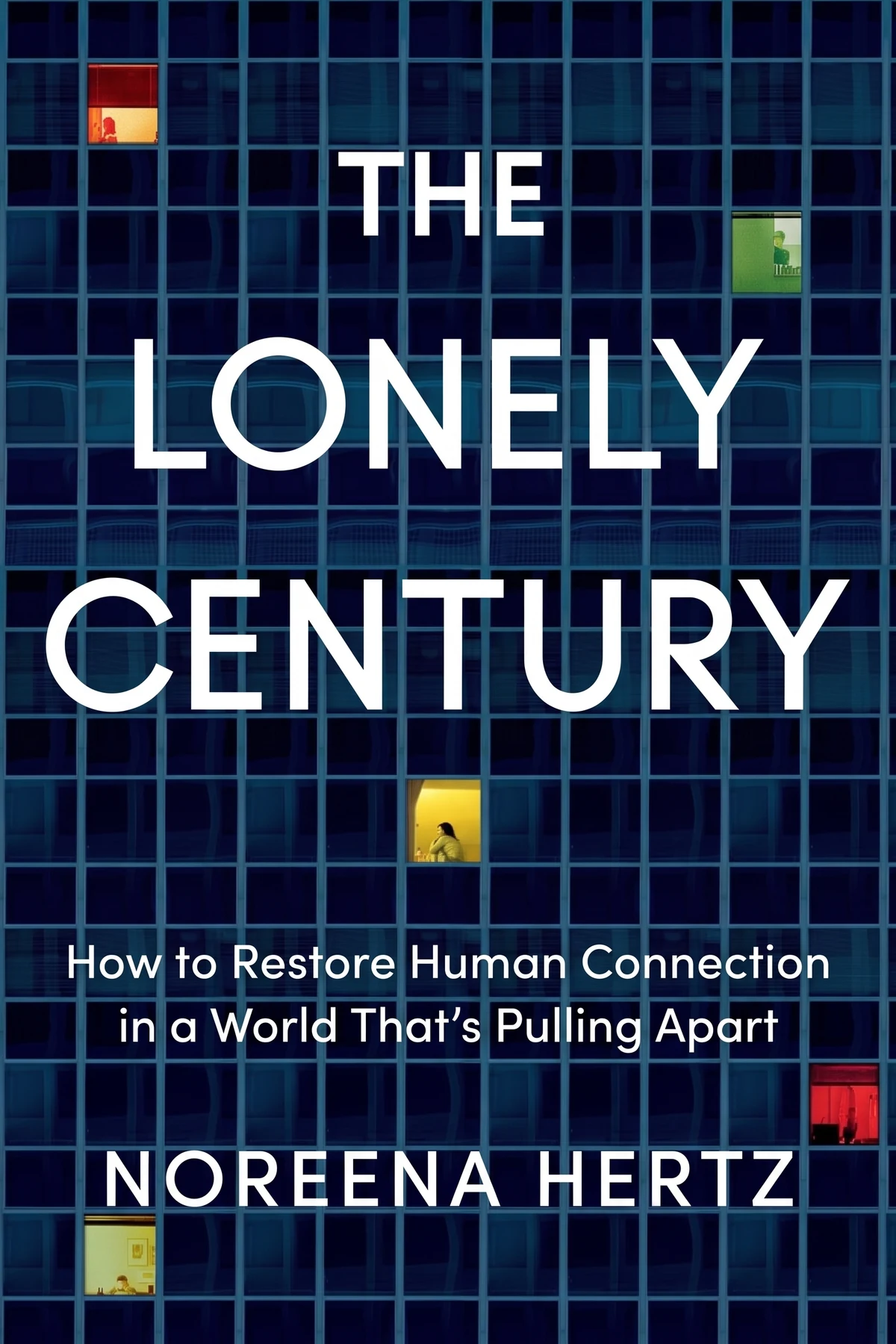
Table of Content
1. Introduction
55 sec
If you feel more alone than you expected, with plenty of contacts but few people who would show up, economist Noreena Hertz says the cause is bigger than you. In The Lonely Century, she argues that loneliness is a condition our societies built, through decades of politics that ranked self-interest above the common good, a mass move into cities and a deepening reliance on screens.
She treats it as shared and political, and follows it from the body to the ballot box. It raises the risk of stroke and dementia, feeds populist movements and has created a market for rented friends and robot companions. Her case is that what society broke can be repaired, through policy and through habits as small as chatting with the person who makes your coffee. What you get is a way to read your own isolation, and a set of small moves against it.
2. Trace your loneliness back to its political roots
1 min 45 sec
Older women in one Japanese prison have been breaking the law on purpose. Their reason points to a change that began decades ago and now touches teenagers, young professionals and pensioners alike.
3. Community can protect you even with a poor diet
1 min 33 sec
One community in Israel eats rich food, earns little and is far more prone to obesity than its neighbors. By every usual measure its members should die younger. They do not, and the reason reaches into the body.
4. Spot how loneliness feeds angry politics
1 min 46 sec
Supporters of one presidential candidate were twice as likely as backers of his main party rival to say they rarely or never took part in groups like sports teams or parent-teacher organizations. A political thinker who fled Hitler’s Germany had already explained why that matters.
5. Know what rented company can and cannot give
1 min 38 sec
An afternoon of easy conversation in New York turned out to be a paid booking. Across the world, lonely city dwellers are buying company by the hour and by the meal, and it costs more than money.
6. Talk to the barista and feel better
1 min 30 sec
Shops without cashiers and meals without restaurants are spreading fast. A simple experiment outside a coffee shop shows what disappears along with those everyday exchanges, and how cheaply you can win it back.
7. Protect children from screens built to hook them
1 min 28 sec
A former Facebook president has admitted what the site was designed to do. Research on toddlers and young children suggests the price is being paid in the very skills that keep people connected.
8. Judge when a robot companion truly helps
1 min 37 sec
Families refused replacements for their broken robot vacuums because they wanted their own one back. That attachment is now being designed on purpose, for lonely seniors and for far more intimate customers.
9. Rebuild connection from government down to your desk
1 min 26 sec
An island where 200,000 residents regularly tell their government what they think offers one model for repair. The other half of the answer is small enough to fit in a lunch box.
10. Conclusion
1 min 07 sec
The Lonely Century pulls loneliness out of the private sphere. The older woman who prefers a Tochigi cell to an empty home, the professional renting an afternoon of conversation and the voter who finds fellowship only in a rally hat are, for Hertz, symptoms of one society. Decades of putting self-interest first, cities full of single households and technology that removes the need for contact have made isolation ordinary. We pay for it in strokes and dementia, in health budgets and in political anger.
Seeing it that way also makes it fixable. Conditions that were built can be rebuilt, by governments that fund care and actually listen, as Taiwan’s does, and by people who treat community as something they practice. Your share can begin small. Have a real exchange with the barista, keep the phone down when someone is talking to you, and notice when a movement offers belonging by pointing at someone to shut out.
Loneliness turns out to be something we hold in common, and so is the way back.
About this book
What is this book about?
Loneliness usually gets treated as a private misfortune, something to fix with more effort or a better social calendar. Economist Noreena Hertz argues it is much bigger than that. In her account, the twenty-first century has become a lonely century because of forces that affect everyone: decades of politics that put self-interest ahead of the common good, a mass move into cities where many people live alone, and technology that removes the need to deal with other people at all. Hertz follows the consequences from the body to the ballot box. She connects loneliness to higher rates of stroke, heart disease and dementia, and to the appeal of right-wing populist movements that offer belonging through exclusion. She also looks at the businesses that have grown up to serve lonely people, from rented friends and online eating shows to robot companions. The book does not stop at diagnosis. Hertz points to models such as Taiwan's large-scale public consultations and to small habits anyone can adopt, like chatting with the person who serves you coffee. Readers get a clear explanation of why they or the people around them may feel isolated, and practical ideas for building connection back.
Book Information
Who it's for
Busy yet isolated professionals
Professionals who feel isolated despite busy lives and want to understand why.
Team and community leaders
Managers and community builders looking for ways to strengthen connection at work and beyond.
Observers of modern society
Readers curious how economics, technology and populist politics shape everyday wellbeing.
About the Author
Noreena Hertz
Noreena Hertz is an English economist, academic and author, born in London. She earned her doctorate at Cambridge and an MBA at the Wharton School of the University of Pennsylvania, and has been an honorary professor at University College London since 2014. Her earlier bestsellers, including The Silent Takeover, The Debt Threat and Eyes Wide Open, have been published in more than twenty countries. She has written for The New York Times, The Guardian and the Financial Times, hosted a show on SiriusXM and spoken at TED.
Ratings & Reviews
Ratings at a glance
What people think
Listeners find the material very accessible, with one listener describing it as a fantastic read for policy wonks. They value the book's perspectives, and one listener highlights its great stats on the new world. The concepts presented elicit mixed reactions from listeners.
Top reviews
Rod
Hertz has written a definitive guide to the modern era's most quiet and devastating epidemic. I was particularly struck by her exploration of the 'loneliness economy' and how companies capitalize on our isolation. The narrative flows seamlessly between heartbreaking personal anecdotes and rigorous academic research, making it a true page-turner for a non-fiction book. Not gonna lie, the chapter on the elderly and their reliance on AI companions actually made me tear up. It’s a wake-up call for anyone who spends more time scrolling than talking to their actual neighbors. The book doesn't just complain; it provides a roadmap for rebuilding the social fabric at a community level. Frankly, this should be required reading for every city planner and politician out there today. It is truly a fantastic read for those concerned about the new world.
Show moreWoramet
Ever wonder why the world feels so fractured lately? Hertz provides a chillingly clear explanation by tracing the decline of 'third spaces' where we used to interact with people unlike ourselves. This isn't just a book about feeling sad; it’s an investigation into how our entire society has been redesigned for efficiency at the cost of humanity. I loved the global perspective she brings, moving from the 'rent-a-friend' industry in Japan to the rise of right-wing populism in Europe. It’s fascinating to see the direct link between personal isolation and the breakdown of civic life. Look, the book is a bit long in places, but the insights into how we can reclaim our communities are invaluable. It made me want to go out and join a local co-op or at least say hi to the person living next door. Essential reading.
Show moreSienna
This book cuts to the quick of what ails the Western world today. Hertz doesn’t just identify the problem; she dives deep into the causes, from the way we work to the way we shop and vote. It’s an in-depth and fascinating look at how we’ve traded our social capital for convenience, leaving us richer in goods but poorer in spirit. The solutions she offers at the individual and national levels are both practical and inspiring, making this more than just a list of grievances. I’ve read a lot of books on social issues this year, and this is the one that has stuck with me the most. It’s an essential read for anyone who wants to understand why our society feels so fragile right now. Highly recommended for anyone looking for a way out of the 'lonely century' through community and civic action.
Show moreTee
As someone who once survived a 'fun' startup environment that felt more like a cult than a career, this book resonated deeply. Hertz perfectly captures how modern offices use perks like free breakfast and game rooms to keep workers trapped in a cycle of isolation. We think we are being social at these events, but the reality is often a competitive, clique-driven atmosphere where you’re hounded for not being a 'team player.' The section on how even charity drives can become tools for exclusion was incredibly relatable to my own professional history. While some of the chapters on digital transformation felt a little repetitive of things I’ve read elsewhere, the overall message is powerful. It’s a compelling look at why we feel so alone despite being more 'connected' than ever before. To be fair, it’s a vital contribution to the conversation.
Show moreSamuel
Finally got around to this after seeing it on several 'best of' lists, and it mostly lived up to the hype. The most fascinating part for me was the discussion on how formal credit markets actually destroyed social networks in rural villages. It’s a paradox: as we gain financial independence, we lose the 'social insurance' that keeps us tethered to our neighbors and family. This perspective added a layer of depth that most books on loneliness completely miss by focusing only on iPhones. Hertz writes with a clear, urgent tone that keeps you engaged through some of the denser economic sections. My only gripe is that the second half wanders a bit too much into tech-panic territory, which felt less original than the earlier chapters. Still, it’s a brilliant synthesis of why we’ve become so atomized and what it’s doing to our democracy.
Show moreEye
Watching my kids interact with their screens instead of the world around them has been a growing worry, and this book hit that nerve perfectly. Hertz captures the heartbreaking reality of parents staring at phones while their children beg for attention, creating a cycle of loneliness from the cradle. Her observations about the lack of social skills in today’s teenagers are spot on and backed by some truly alarming data. It’s a heavy read, but the author’s tone remains hopeful enough to keep you from falling into despair. I found the suggestions for individual action, like the '10-foot rule' for acknowledging strangers, to be simple yet potentially transformative if we all did it. The book loses a little steam toward the end with some generic political advice, but the core message regarding our social fabric is absolutely vital.
Show moreChloe
Picked this up on a whim and was surprised by how much it actually made me rethink my daily routine. It’s a very readable look at a complicated subject, avoiding the dry tone you often get with these kinds of sociological studies. Hertz is a fantastic writer who knows how to keep a narrative moving, even when she’s talking about things like neoliberalism or urban planning. I particularly enjoyed the chapter on 'the lonely office' and how we’ve traded real connection for superficial perks like ping pong tables. My only real complaint is that the book can feel a bit repetitive if you read it in one sitting. However, for anyone feeling a bit disconnected in this 'digital' age, it offers some really practical ways to start plugging back into the real world. A great set of stats on the new world.
Show moreYuki
The data presented here is undoubtedly impressive, offering a wealth of statistics that paint a bleak picture of our current social landscape. Hertz argues convincingly that neoliberalism has hollowed out our communities, but I found her diagnosis somewhat incomplete. She overlooks a fundamental shift: we simply don't need each other for survival anymore. Why borrow a cup of sugar when an app delivers it in ten minutes? The book treats loneliness as a political failure, which it is, but ignores the convenience trap that we all willingly stepped into. While the section on 'contactless' services was eye-opening, the solutions offered felt a bit like trying to put toothpaste back in the tube. To be fair, it's a necessary read for policy wonks, yet it left me wanting a deeper dive into the psychology of self-sufficiency rather than just another critique of capitalism.
Show moreLayla
The statistics here are undeniably great, but the way they are woven into the narrative felt a bit disjointed to me. At times, Hertz relies on very specific, almost extreme anecdotes—like the person living with a robot—to prove points that might be more nuanced in reality. While her critique of capitalism's role in our isolation is sharp, she sometimes ignores the benefits that digital connectivity has brought to marginalized groups. I appreciated the deep dive into the 'contactless' economy, yet the book felt like it was shouting into an echo chamber. It’s a solid read that offers plenty of food for thought for policy wonks but might feel a bit repetitive for the average reader. To be fair, her writing style is accessible and she does a good job of simplifying complex economic theories for the layperson.
Show moreSuthinee
Does this book bring anything new to the table for those of us already aware of the social media trap? Personally, I felt like the author spent way too much time blaming the usual suspects—neoliberalism and big tech—without offering truly radical alternatives. The first half is a dense collection of statistics that felt more like a lecture than a narrative. When she finally gets to the solutions, they feel incredibly idealistic and disconnected from the harsh realities of our fast-paced lives. I also found the tone to be a bit patronizing at times, as if the reader has never considered that staring at a phone might be bad for their health. Truth is, if you've read any long-form essay on the 'death of the high street' in the last five years, you’ve already heard most of these arguments.
Show moreQuestions about this book
What is the main idea of The Lonely Century?
Noreena Hertz argues that loneliness is a collective condition, not only a private feeling. She traces it to decades of politics that favored self-interest over the common good, to rapid urbanization and to contact-free technology. In her account, loneliness damages health, feeds right-wing populism and weakens democracy, yet it can be reversed through public policy and small everyday acts of connection.
How does loneliness affect health according to Noreena Hertz?
Hertz explains that loneliness triggers the same fight or flight hormones as a threat, raising blood pressure, cholesterol and cortisol. Over time this leads to inflammation and an overworked immune system. She reports that lonely people face a 32 percent higher stroke risk, 29 percent higher heart disease risk and 64 percent higher risk of clinical dementia.
What does The Lonely Century say about loneliness and populism?
Hertz builds on Hannah Arendt’s 1951 argument that totalitarian movements attract lonely people by offering purpose and self-respect. She cites a 2016 poll finding that Trump supporters had fewer close friends and were less involved in community groups. Populist leaders, she argues, offer fellowship through rallies and shared symbols, but build that belonging by excluding others, especially immigrants.
How can I apply The Lonely Century in daily life?
Hertz points to small acts that add up. A 2013 University of British Columbia study found that people who chatted warmly with a barista felt happier and more connected than those who kept it efficient. She also suggests putting your phone away with friends and family, bringing treats to share at work, limiting young children’s screen time and supporting inclusive candidates.
Who should read The Lonely Century?
It suits anyone who feels isolated and wants to understand the bigger forces behind it, as well as managers, parents and community organizers trying to build connection. Readers interested in politics, cities or technology will find links between loneliness and populism, living alone, social media and even robot companions, along with policy ideas such as Taiwan’s citizen consultations.
Featured in
Readers also enjoyed


Afropean: Notes From Black Europe
Johny Pitts


All About Love: New Visions
bell hooks


A Biography of Loneliness: The History of an Emotion
Fay Bound Alberti

A Force for Good: The Dalai Lama's Vision for Our World
Daniel Goleman


A Room of One’s Own
Virginia Woolf
AUDIO SUMMARY AVAILABLE
Listen to The Lonely Century in 15 minutes
Get the key ideas from The Lonely Century by Noreena Hertz, plus 5,000+ more nonfiction titles.
- 5,000+ titles
- Listen as much as you want
- 7-day free trial
- Cancel anytime









