
14 min 12 sec
Available in: English
The Joy of Work: 30 Ways to Fix Your Work Culture and Fall in Love With Your Job Again
Shows why constant interruptions and long hours drain you at work, and how protected mornings, walking meetings, shared breaks and a little laughter can make the job more productive and more enjoyable.
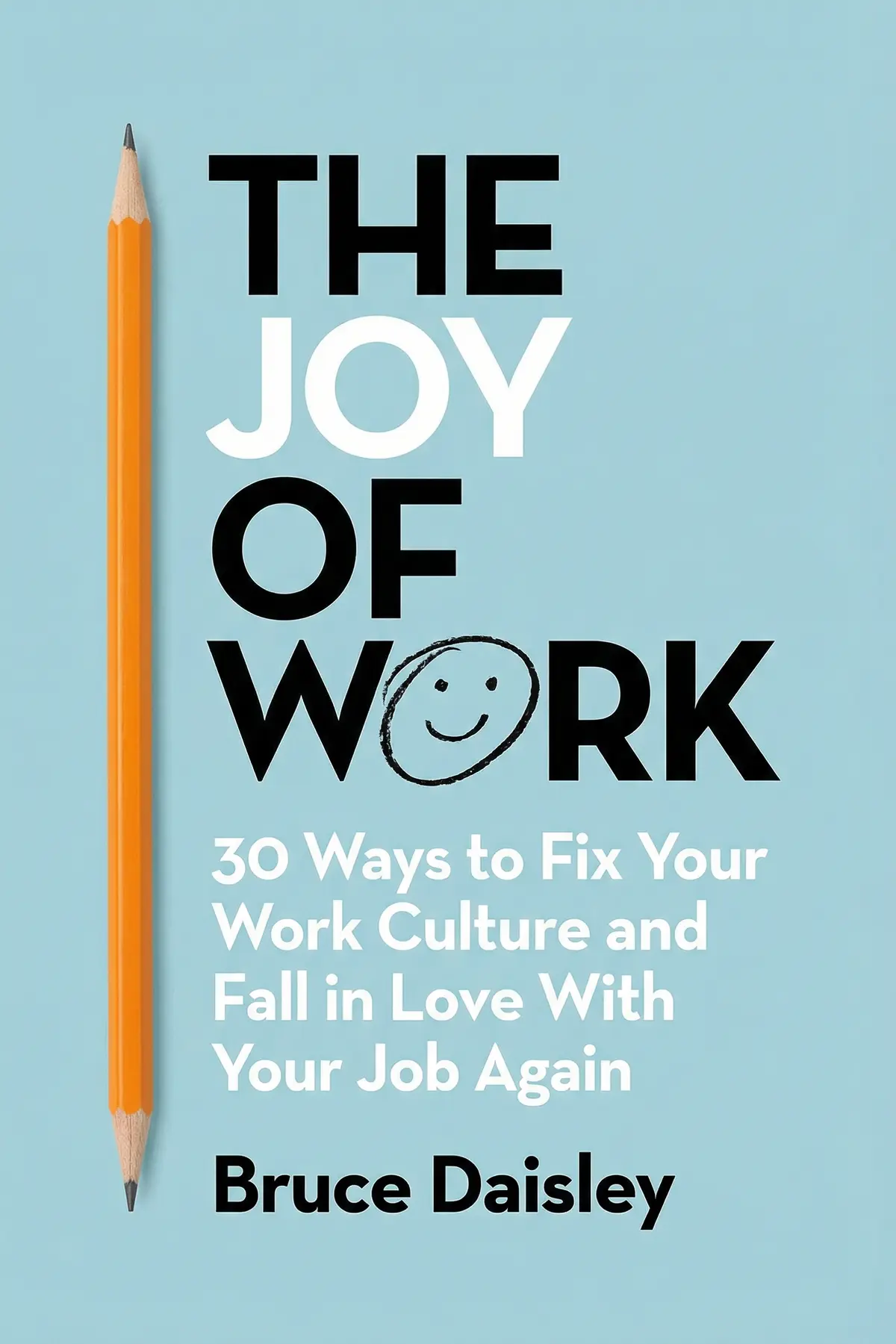
Table of Content
1. Introduction
1 min 03 sec
If your workday is a blur of interruptions, overflowing email and evenings spent too tired to think, Bruce Daisley offers a fix in two parts that sound almost contradictory. In The Joy of Work, the former Twitter executive argues that you should shut colleagues out for the first hours of the day, then go out of your way to talk with them when you stop. Focus and company, in his account, feed each other.
His evidence comes from open-plan offices where people are interrupted about once every three minutes, from a call center where a change in how staff took breaks lifted output by almost a quarter, and from an army hospital in a war zone where jokes kept people going.
His case comes down to one claim: work improves, and more gets done, when we guard our attention and our hours, and when walks, chats and laughter with coworkers count as part of the job. By the end you will have a plan for your next morning, your next meeting and your next coffee break.
2. Protect your mornings for work that needs focus
1 min 42 sec
Those bosses who disappeared behind closed doors for hours seemed cold to the people outside. A Danish office study and a software researcher’s numbers suggest they understood something most open-plan workplaces still ignore.
3. Walk your way out of a creative block
1 min 40 sec
Leaving your desk when a deadline is close feels reckless. Two Stanford psychologists asked people to imagine new uses for a strange key, and what happened between their answers says otherwise.
4. Doing nothing sharpens your problem solving and creativity
1 min 45 sec
Jabbing an elevator button that is already lit says more about your working life than you might think. The cure Daisley proposes will feel wrong to anyone who measures a good day by how busy it was.
5. Get more done by stopping at forty hours
1 min 51 sec
At one famous consultancy, people slept under their desks to log more hours. A former employee later went through the numbers and found a line beyond which extra effort stops paying off.
6. Turn hallway chats into your best source of ideas
1 min 36 sec
An MIT professor wired up offices with sensor badges to see how people really spend their days. When he looked at his own data first, the source of his best ideas surprised him.
7. Take breaks together to cut stress and lift results
1 min 51 sec
A bank’s call center made one small change to its break schedule, with no new software, no bonuses and no training. Sensors recorded what happened to stress and output, and the numbers were hard to ignore.
8. Share a laugh to ease pressure and build team strength
1 min 31 sec
Staff at a military field hospital faced death every week, yet an observer kept hearing them joke. What he learned there, and what a comedian’s routine did in a puzzle study, applies to ordinary offices too.
9. Conclusion
1 min 13 sec
The Joy of Work adds up to a picture of the working day with two kinds of time in it. One kind is private and protected: a morning without callers, a week that ends near forty hours, a pause with nothing in it. The other is shared: a walk with a colleague, a coffee machine between two teams, a Friday gathering, a joke in a hard week. A day spent rushing between meetings and email loses both, and Daisley’s evidence, from the call center to the field hospital, says that is a bad trade.
Some changes can start tomorrow. Keep calls and visitors away until 11, with headphones if you have no door. Take your next one-to-one on foot, each of you talking in turn. When your break comes, spend it with someone.
Daisley’s most basic advice comes before work even begins: sleep. He points to science showing that about eight hours a night sharpens concentration, weakens the pull of coffee and sweet snacks, and leaves fewer negative thoughts. So switch off the screen tonight, avoid anything too stimulating after 9 p.m., and wind down until you are ready to rest.
Joy at work, in this book, is built from the hours you guard and the people you share the rest with.
About this book
What is this book about?
Many working days are a blur of interruptions, unanswered email and evenings too tired for anything but the couch. Bruce Daisley argues that the usual response, longer hours and more effort, makes things worse. The fix he proposes has two sides that seem to pull against each other: shut people out while you do focused work, then seek them out when you stop. Daisley draws on a wide range of evidence: a Danish study of open-plan offices, a Stanford experiment on walking and creativity, a decision-fatigue study, MIT sensor badges that tracked office conversations, a Bank of America call center that changed how staff took breaks, and a field hospital in Afghanistan where humor helped staff cope. Readers get practical tools to try at once, including the Monk Mode Morning, walking meetings with turn-taking, time scheduled for doing nothing, a firm limit near 40 hours a week, paired breaks, weekly social gatherings and a case for getting enough sleep.
Book Information
Who it's for
Office workers wanting focus
Office workers drowning in interruptions and email who want a calmer, more focused day.
Managers and team leads
Managers and team leads looking for low-cost ways to lift morale and output.
Workers feeling cut off
Remote or isolated workers who feel drained and disconnected from colleagues.
About the Author
Bruce Daisley
Bruce Daisley was Twitter's vice president for Europe, the Middle East and Africa from 2012 to 2020. He has written for Harvard Business Review, the Wall Street Journal, the Washington Post, Wired and the Guardian. The Joy of Work became a Sunday Times bestseller, appeared in 15 international editions and was shortlisted for a Business Book of the Year award. He also hosts the podcast Eat Sleep Work Repeat, which shares its name with another of his books.
Ratings & Reviews
Ratings at a glance
What people think
Listeners note that although perspectives on the advice's complexity differ—as some feel certain pointers are superficial or need senior management's involvement—most value the book's practical system for improving workplace dynamics. They highlight the emphasis on "Monk mode" for focused tasks and the useful ideas for fostering team bonds through shared breaks. Furthermore, audiences like the entertaining mix of research-driven stories and case studies that simplify the theories. They also point out the effective organization, with one listener commenting that the "cheerful, readable prose" transforms it into a beneficial tool for those aiming to restore their efficiency.
Top reviews
Yanin
Finally got around to reading this and I’ve gotta say, it should be required reading for every manager on the planet. Daisley manages to blend serious academic research with self-deprecating humor in a way that makes the concepts stick. I loved the focus on sociometric badges and the data behind how teams actually interact; it moves the conversation away from 'vibes' and toward science. The book is structured brilliantly into three sections—recharge, sync, and buzz—which makes it easy to digest and revisit when you need a refresher. Whether you are leading a massive MNC or just trying to survive your own inbox, there is something here for you. It’s rare to find a business book that feels this human and urgent. I’ll be buying copies for my entire department this Christmas to spark some change.
Show moreTen
Wow. This book really hit home for me. After years of feeling like a cog in a machine, "The Joy of Work" gave me the language to talk about why I was so unhappy. The focus on social capital—smiling, remembering names, and being present—is so often overlooked in favor of "efficiency," but Daisley proves that these human connections drive real results. It’s a refreshing take that prioritizes the worker’s well-being as the primary engine of a company’s success. I’ve started using the SCUM methodology for our weekly syncs and the atmosphere has shifted almost immediately. The prose is lively, the research is solid, and the advice is actually actionable if you have the courage to try it. If you’re stuck in a rut, read this immediately.
Show moreJoy
Direct and insightful. This book is an essential ingredient for any team leader looking to boost performance without burning people out. I loved the way the author structured the book into specific, manageable chunks. It makes a complex topic like "workplace culture" feel approachable and solvable. The discussion on how unsatisfied workers eventually lead to unsatisfied customers is a lesson many CEOs need to learn. Everything starts with the worker enjoying their craft. Daisley’s mix of anecdotes and genuine research makes for a compelling case that joy isn't a "nice-to-have," it's a "must-have" for survival. Even if you only implement two or three of these tips, you’ll see a difference in your team's energy. A total joy to read and highly recommended for any business owner.
Show moreUraiwan
As someone who spends ten hours a day in an open-plan office, I found Daisley’s insights into ‘Monk Mode’ to be a total revelation. We often think that being busy is the same as being productive, but this book forces you to confront the reality of how much time we waste on trivialities. The section on social breaks was particularly eye-opening because it reframes office gossip as a necessary component of team cohesion and psychological safety. Personally, I’ve already started implementing the ‘no morning meetings’ rule and the results are tangible. The writing is accessible and avoids the typical corporate jargon that makes most business books a chore to get through. It’s not a perfect silver bullet, but it offers a practical framework for anyone tired of the daily grind. Definitely worth a look if you’re feeling burnt out and need a nudge.
Show moreSatit
The chapter on sleep alone was worth the price of admission. We live in a culture that prizes "the hustle," yet Daisley reminds us that without 8 hours of rest, our brains are basically non-functional. I appreciated how he wove in Victor Frankl’s concepts about finding a ‘why’ to help endure the ‘how’ of a difficult workday. It helped me reframe some of my more mundane tasks as part of a larger purpose. Look, some critics say the tips are simple, but sometimes simple is exactly what we need when we’re overwhelmed by modern work. I particularly liked the idea of the ‘pre-mortem’—imagining a project has failed before it even starts to catch potential pitfalls. It’s a well-written, engaging book that provides a much-needed antidote to the toxicity of current work culture.
Show moreKanokporn
Picked this up on a recommendation from a colleague after we both complained about meeting fatigue. Bruce Daisley is an engaging writer, and his background at Twitter gives him a lot of credibility in the tech space. However, I couldn’t help but feel that many of these chapters were just slightly tweaked transcripts from his podcast episodes. To be fair, having them all in one place is convenient, but the narrative flow felt a bit disjointed at times. The case studies are inspiring, yet they often focus on high-performing companies that already have the resources to change things. For those of us in more rigid industries, the path to implementation is less clear. It’s a good reminder to be more conscious of our workflow, but it’s more of a 4-star ‘taster’ than a deep-dive manual.
Show moreNing
Not what I expected given the hype surrounding Bruce Daisley’s podcast. While the tone is certainly cheerful, the actual advice felt frustratingly surface-level at times and lacked the depth I need for a serious career shift. It frankly read more like a series of expanded blog posts rather than a cohesive, transformative manual for modern office life. To be fair, some of the research into sleep and productivity is interesting, but none of it felt particularly groundbreaking or new to me. If you’ve already read Cal Newport or similar productivity gurus, you likely won’t find anything here that hasn’t been said better elsewhere. I struggled to see how a mid-level employee could implement half of these 'solutions' without a total overhaul from senior management. It’s a breezy read, sure, but I was looking for more substance than style.
Show moreThanit
Ever wonder why the office feels so draining even when you aren't doing much? Bruce Daisley attempts to answer this by looking at how our environments shape our output. The truth is, while I enjoyed the anecdotes and the cheery prose, I felt like many of the suggestions were a bit idealistic for a traditional corporate setting. How am I supposed to reclaim my lunch hour when my boss expects me at my desk at all times? A lot of the ‘buzz’ section requires buy-in from the very top of the organization, which makes it hard for an individual contributor to feel truly empowered. Still, the breakdown of how ideas are formed—gathering materials and then letting the unconscious mind take over—was a definite highlight for me. It’s a decent choice for a plane ride, but don't expect it to change your life overnight.
Show moreManee
Bruce Daisley makes many valid points about the state of our distracted, "always-on" culture. He correctly identifies that modern workplaces are designed for interruptions rather than output. My main gripe is that while he acknowledges the challenges of implementing these shifts, I still didn’t leave the book feeling fully empowered to change my boss’s mind. Frankly, some of it feels like it belongs in an era where everyone has total control over their schedule, which isn't the reality for most of us. That said, I did find the sections on 'Monk Mode' very helpful for carving out small windows of focus. It's a decent read with some inspiring moments, but it might leave you feeling a bit frustrated if your company culture is particularly stubborn or old-fashioned.
Show moreNutnicha
After hearing Bruce on a few podcasts, I had high hopes for a revolutionary take on office dynamics. Unfortunately, "The Joy of Work" didn't quite land for me. Much of the advice felt like common sense repackaged as "new" insights. Does anyone really need a book to tell them that sleep is important or that meetings can be a waste of time? Not gonna lie, I was expecting more radical solutions rather than a collection of surface-level tips that feel like they were pulled from a generic LinkedIn thought-leader's feed. While the writing style is friendly, the lack of original, deep-dive content made it a chore to finish. It’s probably great for someone new to the workforce, but for seasoned professionals, there’s just not enough new material here.
Show moreQuestions about this book
What is the main idea of The Joy of Work by Bruce Daisley?
Daisley argues that work becomes happier and more productive when we protect focused time and limit our hours, and also when we treat social contact as part of the job. He supports this with studies of open-plan offices, walking and creativity, decision fatigue and sensor badges, plus a Bank of America call center where paired breaks cut stress by 19 percent and raised productivity by 23 percent.
What is a Monk Mode Morning?
It is Daisley’s name for keeping calls and visitors away until 11 a.m. so you can do a few hours of uninterrupted work before meetings start. He suggests explaining the reason to colleagues so it is not seen as unfriendly. If you have no office door, wearing headphones until 11 can create the same boundary in an open-plan space.
Does The Joy of Work recommend working fewer hours?
Yes. Daisley draws on Kathleen Vohs’s 2008 study showing that mental fatigue from repeated decisions pushes people toward easy tasks. He also cites Scott Maxwell, who left the long-hours culture of McKinsey and, after studying data at his own venture capital firm, found that productivity routinely dropped once employees worked more than 40 hours a week.
How can a team apply the ideas in The Joy of Work?
Leaders can encourage staff to take breaks in pairs, hold walking meetings where each person talks in turn, and create places where informal chats happen, such as longer lunch tables or a coffee machine placed between two teams. A regular gathering helps too: Margaret Heffernan started one every Friday at 4:30 p.m., and her staff became much better collaborators.
Readers also enjoyed




AUDIO SUMMARY AVAILABLE
Listen to The Joy of Work in 15 minutes
Get the key ideas from The Joy of Work by Bruce Daisley, plus 5,000+ more nonfiction titles.
- 5,000+ titles
- Listen as much as you want
- 7-day free trial
- Cancel anytime









