
14 min 15 sec
Available in: English
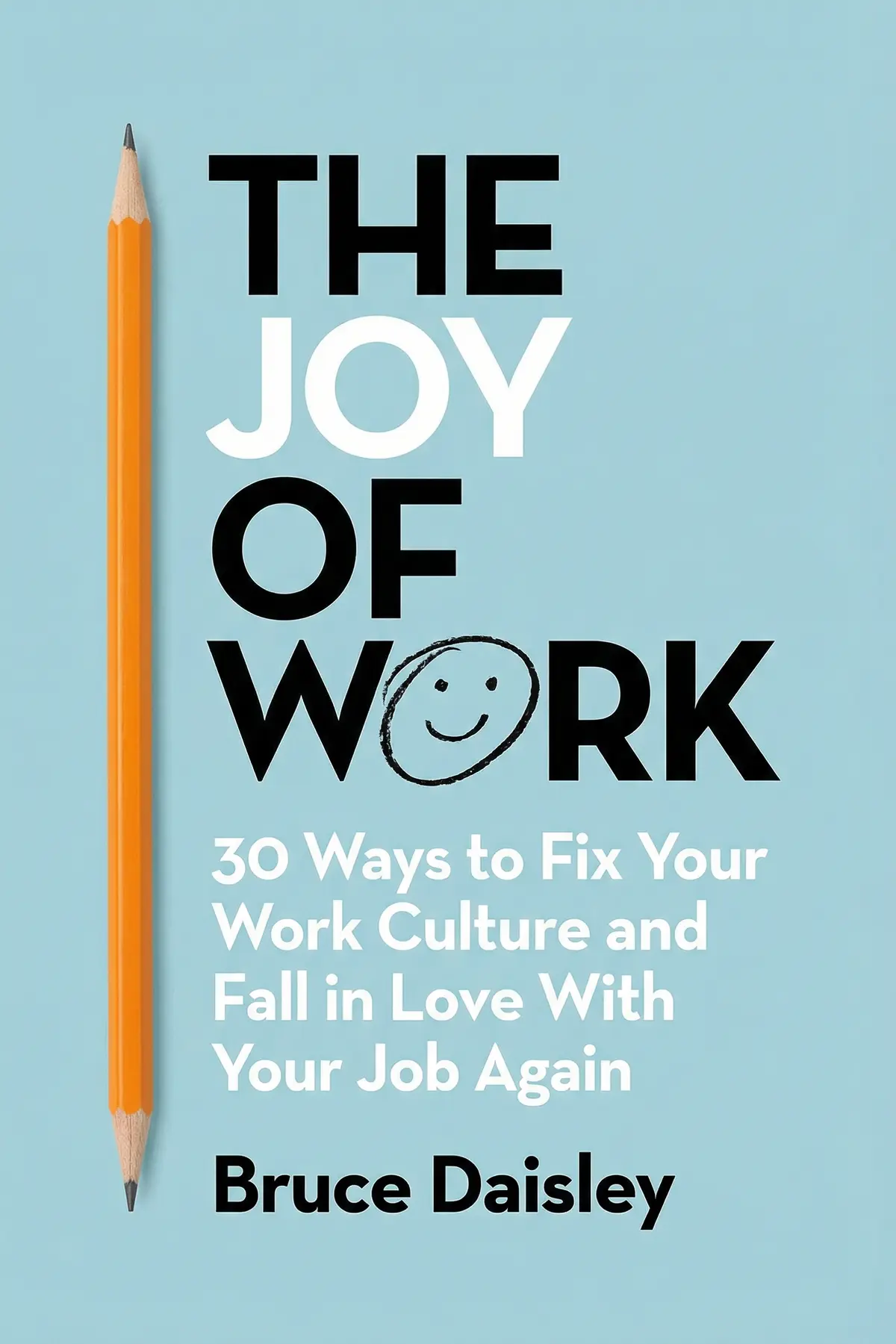
Eat Sleep Work Repeat: 30 Hacks for Bringing Joy to Your Job
Shows why so many jobs feel draining, and what to do about it. The fixes are small and practical: protect your breaks, set hours when no one can reach you, talk more with colleagues and bring play back into teamwork.
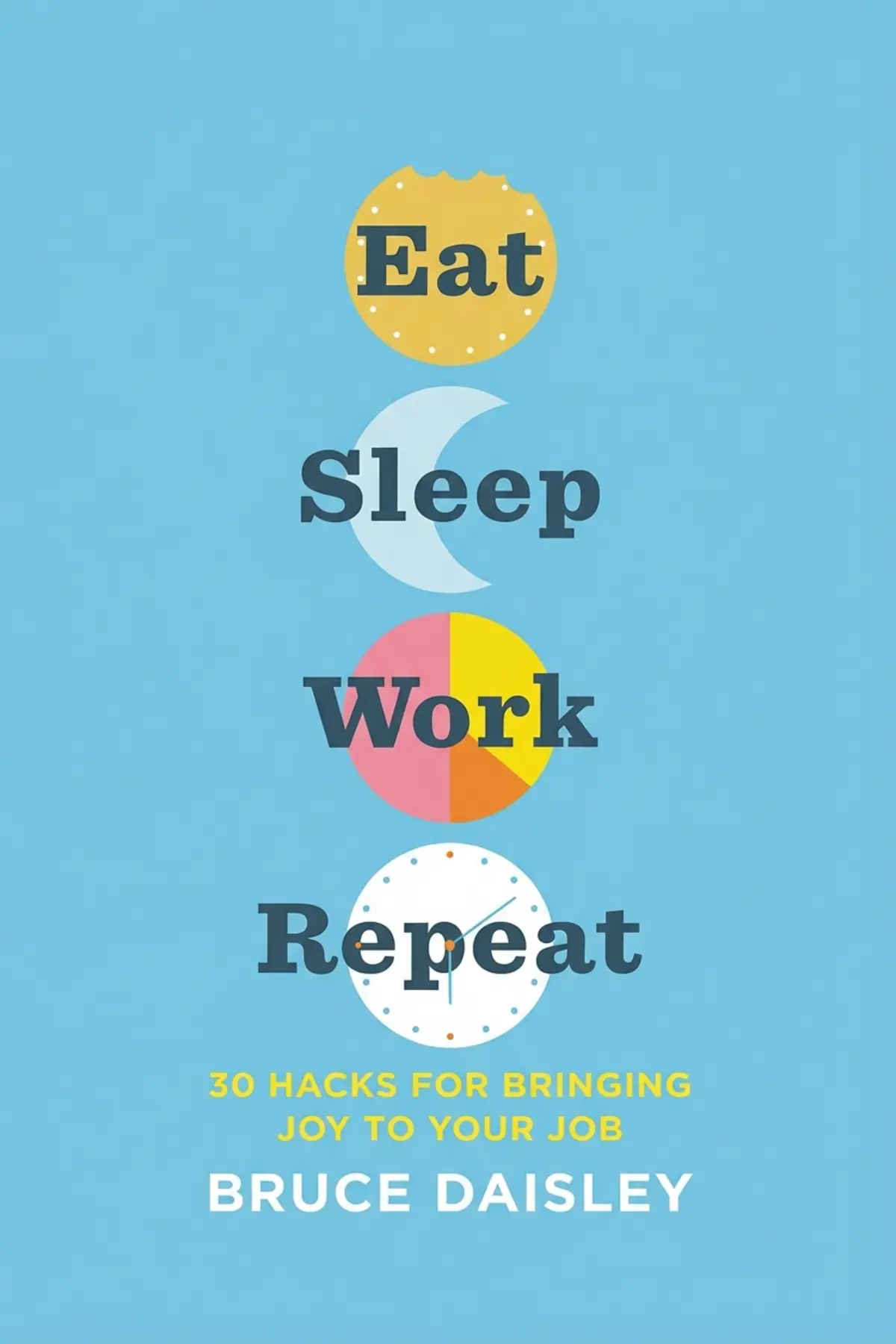
Table of Content
1. Introduction
1 min 00 sec
If your week feels like work, more work and a phone that never goes quiet, the problem may not be you. In Eat Sleep Work Repeat, Bruce Daisley, who led Twitter across Europe, the Middle East and Africa for eight years, argues that most workplace misery comes from how work is arranged, and arrangements can change. The surveys he draws on are stark. Asked to rank their daily activities, people around the world put being at work just one place above being sick in bed.
Daisley’s case is that unhappiness at work damages health, creativity and the business itself, and that it grows from a handful of fixable causes: overwork, endless connection, loneliness and offices with no life in them. Each cause has small, specific remedies. Some you can start alone tomorrow, and some need your manager to agree. By the end, you will know which habits drain a team, which ones refill it, and how to argue for change with the people who set the rules.
2. Count what an unhappy job really costs
2 min 02 sec
Most people treat a miserable job as a private problem to fix with a holiday. Daisley shows its costs reach the body, the error rate and the company’s profits, in numbers no manager can wave away.
3. Stop trusting deadlines to make you creative
1 min 44 sec
The rush of ideas you feel the night before a deadline seems like proof that pressure works. A Harvard diary study and a celebrated rock band suggest that feeling is fooling you.
4. Spot the signs of hurry sickness early
1 min 34 sec
Feeling guilty the moment you stop working is so common it has a name. Daisley traces it to the way modern offices are built, and to a number of connected hours that explains a lot.
5. Refill your energy with lunch, walks and silence
1 min 33 sec
The cheapest fixes for a draining day sound almost too simple to matter. Yet one of them, according to Oxford researchers, touches on the second biggest source of unhappiness they found.
6. Protect focus time your whole team respects
1 min 41 sec
Being unreachable sounds like a luxury few jobs allow. Research from Stanford and an experiment with Swedish public workers suggest that time away may be what keeps output high.
7. Turn a crowded office into real connection
1 min 41 sec
You can sit among hundreds of colleagues and still feel completely alone. Daisley argues the cure begins with the kind of talk most managers dismiss as wasted time.
8. Bring buzz back to a silent office with play
1 min 43 sec
Some offices feel like a library crossed with a morgue. Twitter’s answer involved setting normal tasks aside for hack weeks, and it led to improvements such as threaded conversations and tools against abusive users.
9. Conclusion
1 min 17 sec
Daisley’s book can sound like a set of office tweaks, but the argument underneath is bigger. The joy missing from many jobs was not lost to hard work. It was lost to the way work is arranged: alerts that never stop, lunches eaten alone at desks, weekends spent half on email and offices where nobody talks. Those arrangements were made by people, so people can remake them. His evidence suggests the rested, connected version of a team is also the more productive one. Swedish workers on six-hour days and bankers on fifteen-hour days sit at the two ends of that same scale.
Begin with what is yours to change. Turn off the email pings, choose fixed times to check your inbox, and eat lunch with someone instead of alone at the screen. Then take one bigger idea to your manager, such as a weekly monk mode morning or a protected weekend, backed by the Stanford finding that a seventh working day lowered output. If you lead a team, keep it small and give it regular reasons to play.
Eat, sleep, work, repeat describes a cycle. It does not have to describe a life.
About this book
What is this book about?
For many professionals, the week has shrunk to work and more work. Lunch gets skipped, messages arrive late at night and the office feels either frantic or dead. Bruce Daisley, who led Twitter across Europe, the Middle East and Africa for eight years, argues that this misery is common and costly, and that most of it can be fixed. He starts with the damage: stressed bankers showing more diabetes, heart problems and cancer by their fourth year, office workers who rate their rushed work as more creative than it is, and disengaged staff who do the minimum. Then he traces the causes to overwork, constant connection, loneliness and workplaces with no buzz. The remedies are concrete. Some you can start alone tomorrow, such as switching off email alerts, eating lunch with colleagues and taking walking meetings. Others need a team to agree, such as monk mode mornings, headphone hours, work-free weekends, Friday afternoon socials and themed hack days. Readers come away knowing which habits drain a team, which ones refill it, and how to make the business case for change.
Book Information
Who it's for
Always-on office workers
Office workers who feel always on, skip lunch and check email late at night.
HR and team leads
Team leads and HR people who need a business case and simple tools for a happier, more productive team.
In a lonely workplace
Anyone in a quiet, lonely workplace who wants practical ways to bring back energy and connection.
About the Author
Bruce Daisley
Bruce Daisley was Twitter's vice president for Europe, the Middle East and Africa from 2012 to 2020. He has written for Harvard Business Review, the Wall Street Journal, the Washington Post, Wired and the Guardian. His book The Joy of Work became a Sunday Times bestseller, appeared in 15 international editions and was shortlisted for a Business Book of the Year award. He also hosts the podcast Eat Sleep Work Repeat.
Ratings & Reviews
Ratings at a glance

What people think
Listeners find the work insightful, with one highlighting that it offers great hands-on advice. They enjoy the academic depth, while one listener notes its research-supported approach and valuable time management information.
Top reviews
Daranee
Bruce Daisley has managed to distill complex behavioral science into something incredibly digestible and, more importantly, actionable. Ever wonder why your best ideas come in the shower and never at your desk? This book explains exactly why our current office culture is a creativity killer. Not gonna lie, the section on 'monk mode' and disconnecting from the constant buzz of Slack changed my entire morning routine. The research-supported approach makes the advice feel much more credible than your average self-help fluff. It’s rare to find a business book that balances academic rigor with such a positive, motivational tone. Truly a must-read for anyone feeling the weight of the modern workday.
Show moreKob
The chapter on the 'sophomore slump' and how stress kills exploration was a total revelation for our creative department. We’ve been operating under the 'pressure creates diamonds' myth for years, but Daisley proves with neuroscience that it actually just makes us play it safe. Truth is, we’ve already started experimenting with his 'no-meeting Thursdays' and the vibe in the office has shifted noticeably. It’s scholastic yet accessible, which is a tough balance to strike. I found the section on 'syncing' with your team through shared meals and social 'buzz' to be particularly moving. If you’re a leader who actually cares about your team’s well-being, you need to read this. It’s an essential manual for the modern manager.
Show moreLek
Picked this up after a particularly grueling week of back-to-back meetings, and it was exactly the reset I needed. The concept of 'Hurry Sickness' hit me like a ton of bricks. We spend so much time performing 'busyness' that we forget how to actually produce quality work. I loved the practical suggestion of implementing hack weeks to foster connection in larger companies. It’s refreshing to hear a VP-level executive admit that open-plan offices are often a total disaster for productivity. While I can't control my office layout, I can definitely use the headphone trick to signal my need for focus. Highly recommended for anyone feeling burnt out.
Show moreKofi
As someone stuck in a soul-crushing open-plan office, the chapter on distractions was incredibly validating. Daisley uses his experience at Twitter to provide a lens that is both professional and deeply human. In my experience, most business books are dry, but this one has a genuine 'buzz' to it. The advice on taking a proper lunch break and the impact of fresh air on decision-making is something I started implementing immediately. It’s not just about working harder; it’s about working in a way that doesn't ruin your mental health. My only gripe is that some of the '30 hacks' felt a bit like filler toward the end. Still, it’s a very solid 4-star read.
Show moreFrida
Ever wonder why you feel like you're vibrating with anxiety by 2 PM every Tuesday? This book tackles that 'hurry sickness' head-on with some of the best time management insights I've come across recently. I especially liked the focus on the culture of small teams rather than worrying about the massive, untouchable company culture. It makes the prospect of change feel much more attainable for the average employee. The tone is encouraging without being overly 'kumbaya,' which I appreciated. I do think the author assumes a level of autonomy that not every worker has, which is a bit of a blind spot. Regardless, the actionable tips on reducing meeting fatigue are worth the cover price alone.
Show moreJan
Finally got around to reading this, and the timing couldn't have been better. Workplace unhappiness is such a widespread problem, and Daisley offers a realistic path out of the misery. The focus on 'recharging' is something we all pay lip service to but rarely actually do. I loved the specific detail about how the placement of chairs can change the entire energy of a room. It’s a very hands-on guide that doesn’t require a total career overhaul to be useful. I deducted one star because it is very much aimed at the 'knowledge worker' demographic. If you work in retail or a factory, these hacks won't do much for you. For office folk? It’s a winner.
Show moreBella
Is it worth the hype? Well, if you are relatively new to your career, you’ll likely find a goldmine of insights regarding time management and workplace boundaries. However, for those of us who have been in the trenches for a decade, many of these tips feel like the 'usual suspects' we’ve heard before. Look, I appreciate the scholarly depth and the extensive bibliography, but I struggled with the pacing. Some chapters felt like they could have been summarized in a single paragraph. It's a decent read with some solid takeaways about small team dynamics, but it didn't exactly reinvent the wheel for me. A bit of a mixed bag.
Show moreGun
Frankly, this felt like a high-end blog post stretched out into a full-length book. I listened to the podcast first and I’m not sure the book added a significant amount of new material beyond the deeper dive into the studies. The statistics are interesting, especially the stuff about how stress literally makes us less creative, but the writing gets a little circular. To be fair, Daisley is a great narrator of the modern work experience, and his passion for making work 'better' is obvious. It’s a good introductory text for a team lead, but seasoned pros might find it a little light on revolutionary ideas. It’s fine, just not life-changing.
Show moreThitima
To be fair, the research is solid and the bibliography is a great reading list in its own right. I just found the book to be quite boring and repetitive in the middle sections. It felt like I was reading the same argument about why meetings are bad in three different chapters. I did enjoy the bit about what a rock band can teach us about stress, which was a fun departure from the standard corporate examples. However, for a book with 'repeat' in the title, it took that concept a bit too literally with the phrasing. It’s an okay resource to keep on the shelf for reference, but not a page-turner by any means.
Show moreDuangjai
I really wanted to find specific solutions here, but I walked away feeling like this was strictly for the corporate drone. If you aren't working in a high-rise office with a big tech budget, many of these 'hacks' simply won't apply to your daily reality. To be fair, Daisley’s writing is engaging, yet the content felt heavily geared toward managers who already have the power to change things. I found the sections on statistics quite dense and, at times, a bit repetitive. It felt like the book was trying too hard to prove its point with data rather than offering universal advice. For a book promising to help everyone, it felt surprisingly narrow in scope.
Show moreQuestions about this book
What is Eat Sleep Work Repeat by Bruce Daisley about?
Daisley argues that unhappiness at work is widespread and costly, harming health, creativity and productivity. He traces it to overwork, constant connection, loneliness and offices with no buzz. For each cause he offers small, practical changes, from switching off email alerts and eating lunch with colleagues to monk mode mornings, social events during working hours and themed hack days.
What is hurry sickness?
Hurry sickness is Daisley’s term for the restless feeling that there is always more work to do, along with guilt whenever you are not busy. He links it to long hours, constant interruptions, around 200 emails a day, open-plan offices and endless meetings. By his account, 60 percent of professionals remain tied to their work for roughly 70 hours each week.
What is monk mode at work?
Monk mode means being unreachable during fixed hours agreed in advance, for example Wednesday and Friday mornings until 11:00. It gives you a few solid blocks of focus each week, and working from home during them helps. Because it affects colleagues, Daisley says it needs your employer’s cooperation, so it is worth raising as a team experiment.
Does working under pressure make you more creative?
Daisley says generally not. In a study by Harvard professor Teresa Amabile, office workers under more time pressure rated their work as more creative, but their diaries showed less creative thinking. Pressure triggers the brain’s fear system, which dampens exploration and risk-taking. He points to The Strokes, whose pressured second album drew criticism as a less fresh copy of their debut.
How can a manager apply Eat Sleep Work Repeat?
Start with the environment. Put shared coffee machines between teams that should talk, hold socials in work hours such as Friday at 4:30 p.m., and agree on headphone hours or monk mode mornings. Protect weekends, citing the Stanford finding on 48 versus 56 hours. Run a themed hack day, and keep teams to around eight or nine people.
Featured in
Readers also enjoyed



AUDIO SUMMARY AVAILABLE
Listen to Eat Sleep Work Repeat in 15 minutes
Get the key ideas from Eat Sleep Work Repeat by Bruce Daisley, plus 5,000+ more nonfiction titles.
- 5,000+ titles
- Listen as much as you want
- 7-day free trial
- Cancel anytime









