

A Bigger Prize: How We Can Do Better Than the Competition
Margaret Heffernan
 English
Shows leaders and HR teams how to build employee engagement on purpose, using a ten-part model and real company cases, from publishing salaries to thanking people often instead of only at long-service anniversaries.
1 min 00 sec
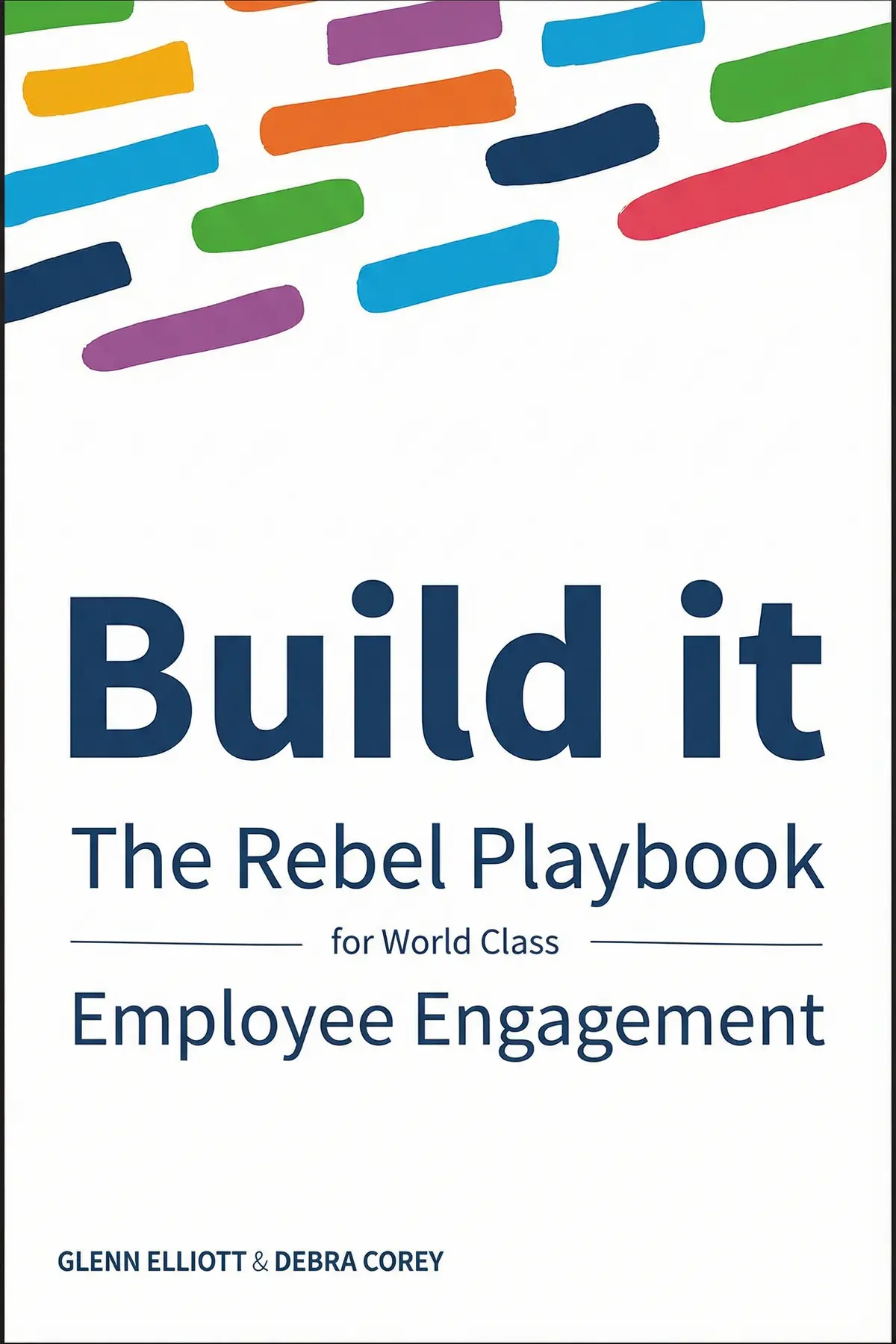
If you lead people, you may be paying for perks while your team still watches the clock. In Build It, Glenn Elliott, founder of the benefits company Reward Gateway, and HR veteran Debra Corey argue that the cause is rarely pay or perks. It is disengagement, and it can be fixed by design.
Drawing on more than ten years of research across 2,000 companies, they picture engagement as a bridge with ten parts: seven beams that create it and three supporting rocks that keep it standing. Their case is that engagement grows when people trust the company, see where it is heading, do work that stretches them and feel treated fairly. Almost every part comes down to telling the truth, playing fair and asking employees what they think.
Along the way there is a software firm that publishes every salary, an office inside a castle and a jealous monkey holding a cucumber. By the end, you can inspect your own workplace part by part and pick the first plank to lay this month.
1 min 23 sec
Generous pay and a pleasant office can leave people perfectly content and still indifferent to the work. The authors give three tests that reveal the difference, and a retailer’s own stores show what it costs.
1 min 31 sec
Fewer than half of ordinary employees trust the company they work for, while most executives do. One software firm closed that gap with a step most leaders would find frightening, and applications jumped.
1 min 30 sec
Most company values sound alike and vanish from memory by lunchtime. An Australian telecoms firm wrote its values the way its people actually talk, and a Wharton professor found purpose changes far more than morale.
1 min 44 sec
A company that talked about trusting its people handed them a contract that said the opposite. The authors show how that gap breaks engagement, and how Gap Inc. and a British charity closed it.
1 min 43 sec
Most jobs are still organized on a plan drawn up in the eighteenth century, and the people designing them rarely feel its effects. A game studio and a software firm show what changes when that plan goes.
1 min 41 sec
Billions go into recognition schemes each year, and most bosses believe their staff feel appreciated. The employees tell a very different story, and the fix they ask for costs almost nothing.
1 min 27 sec
A monkey that had happily worked for cucumber tossed it aside and rattled its cage. What changed had nothing to do with the cucumber, and it explains why raises alone rarely buy commitment.
1 min 46 sec
Workers take only a handful of sick days a year, which looks like good news. Count the days they show up too drained to think, and the real cost becomes far larger.
1 min 13 sec
Underneath the beams and rocks, Build It rests on rules most of us learned as children: tell the truth, be kind, play fair. Elliott and Corey’s complaint is that these rules rarely make it from the playground into the office, and companies pay for that in absences, distrust and good people walking out. Engagement, in their account, is constructed on purpose, plank by plank, and a bridge can carry weight before all ten parts are in place.
Because every organization differs, the authors want you to decide first what your company should be. Netflix and Amazon describe their aims in very different language, and each description tells them which parts to build. Then check your own workplace against the ten parts and choose one where change can begin now, since inertia is the enemy here.
The cheapest move in the book is also the most useful: ask your people what they think about their contracts, their values, their pay and their space. And this week, thank someone in person for something specific they did. The monkey with the cucumber never cared how big the reward was, only whether it was fair.
Many companies say they want committed, energetic staff, then hand them confusing contracts, rigid jobs and recognition that arrives a year late. Glenn Elliott and Debra Corey argue that this gap is why so many workers count the minutes until payday, and why the businesses that employ them struggle to keep up with fast change. Their answer is the Engagement Bridge, a model drawn from more than a decade of research across 2,000 companies. Seven beams create engagement: open communication, purpose and values, leadership, management, job design, learning and recognition. Three supporting rocks keep it standing: pay and benefits, workspace and wellbeing. Each part comes with cases from organizations such as Buffer, Gap Inc., HubSpot, KFC Australia, Homeserve and Basecamp. Readers get a way to inspect their own workplace part by part, see where trust or fairness is leaking, and choose the first practical change. The book's spirit is simple: tell the truth, be kind, play fair, and ask your people before you decide for them.
Founders and CEOs whose teams seem content but not committed.
HR professionals rethinking reviews, recognition, pay and benefits.
Managers who want practical, low-cost ways to build trust and energy in their teams.
Glenn Elliott trained as a software engineer and, after several failed businesses, founded Reward Gateway in 2006, rethinking employee perks and benefits. He led it as CEO before stepping down to share what he learned about culture and engagement. Debra Corey has spent about 30 years in HR and workplace communication at Gap Inc., Honeywell, Merlin Entertainments and Reward Gateway. She founded her own company in 2019, has written six books on people and culture, and has been named among the top 101 global employee engagement influencers.

Listeners find this book offers excellent perspectives on developing successful employee engagement. They value how easy it is to read and its inspiring quality, with one listener highlighting that it results in higher productivity levels.
Finally got around to reading "Build It" and the "Engagement Bridge" model is exactly what my startup needed. It avoids the fluff you usually find in these HR guides. Instead of just shouting about vague concepts like culture, it breaks down exactly how to bridge the gap between where you are and where you want to be. The real-world stories from actual companies give it a lot of weight, making the strategies feel achievable rather than just theoretical. I appreciated the emphasis on productivity as a natural byproduct of genuine employee engagement. My only slight gripe is that the physical book feels a bit heavy, like a textbook, which makes it hard to read on a crowded commute. Still, the content is top-notch and highly actionable for any leader.
Show moreWow, this wasn't what I expected at all from a business management book. Most titles in this genre are dry and filled with meaningless graphs, but this one actually has personality. I loved the quirky touches, especially the adorable stickers that came with it, which really helped lighten the mood. The authors argue that we've forgotten how to treat people like human beings at work, and they offer a practical manual to fix that. It’s incredibly motivational and makes you want to overhaul your entire office culture immediately. Every chapter provides a new hint or tip that you can implement by Monday morning. If you want a more productive workforce, this is your blueprint for success.
Show moreI’ve read a lot of business books, but this one is remarkably different because of its visual nature. The authors use the "Engagement Bridge" as a literal framework to help you visualize all the moving parts of a company culture. It's jammed with insights that feel modern and relevant to the 21st-century workplace. I found the stories about innovative companies particularly inspiring, as they prove that these "rebel" ideas actually lead to better business outcomes. The tone is encouraging and avoids the silly platitudes you find in lesser HR books. Even if you only implement a few of these tips, your team will likely see a massive improvement. It's a manual for the masses that truly lives up to its hype.
Show moreThis book acts like a literal map for culture building, guiding you through the messy process of engaging a diverse workforce. Elliott and Corey provide a very clear guide that is both entertaining and deeply informative. I found myself particularly drawn to the chapters on how progressive organizations are paving the way for a more human-centric office. It’s not just about the "what," but the "how" and the "why," which is where most business books fall short. The productivity gains described are realistic and backed by real-world examples rather than just abstract facts and figures. It’s a highly recommended read for anyone wanting to look at alternative ideas for team management.
Show moreAs someone who works in HR, I found the layout of this book quite refreshing, even if it does look a bit like a college textbook. The glossy pages and high-quality photos make the information digestible for those of us who are constantly on the go. Elliott and Corey have a way of explaining complex organizational psychology in a way that feels like a conversation over coffee. They tackle the common mistake of confusing employee happiness with true engagement, which is a distinction many managers fail to grasp. While I loved the case studies, I think some of the "rebel" ideas might be too radical for traditional corporate environments. It’s a great resource for getting the most out of your staff without falling back on tired old platitudes.
Show moreDoes your team actually enjoy their work, or are they just showing up for the paycheck? This is the core question that "Build It" tries to answer through its well-structured bridge model. The writing is incredibly clear and lacks the usual corporate jargon, which I personally found very helpful. I particularly liked the section on how to close the engagement gap to drive higher productivity. It isn't just about throwing parties; it's about challenge, excitement, and mutual respect between the company and the worker. Some of the methods described are definitely a bit "out there," but they offer plenty of food for thought. It’s a very interesting read that I’d recommend to any business owner looking for a fresh perspective.
Show moreThe concept of the 'Engagement Bridge' is a game-changer for anyone struggling with team morale and output. I appreciated how the authors differentiate between making employees "happy" and making them "engaged," which are two very different things. The book is very readable, with a conversational style that keeps you turning the pages even during the more analytical sections. Truth be told, I wasn't a huge fan of the textbook style with the glossy paper because it felt a bit too formal for the "rebel" theme. However, the sheer amount of practical, usable strategies makes up for the design choices. It’s an essential tool for any leader who wants to build a culture where people thrive in their jobs.
Show moreGotta say, the practical nature of these strategies is what sets the book apart from the usual management fluff. The authors have managed to create something that feels both cutting edge and deeply rooted in common sense. I enjoyed the variety of scenarios presented, showing how companies of all sizes can benefit from these engagement tips. While the book is very informative, I did find some sections to be a bit repetitive regarding the core model. Still, the "Build It" framework is robust and offers a great way to audit your current company culture. It’s a very clear guide that will likely become a must-read for anyone in a leadership position.
Show morePicked this up on a recommendation and found myself highlighting almost every page for future reference. The way it breaks down every element of engagement into succinct pieces makes it very easy to implement changes in small steps. I loved the stories about novel ways companies are engaging their staff, even if some of the advice felt slightly recycled from older management theories. The book is definitely visually heavy, with plenty of photos and graphs, which might not appeal to everyone. In my experience, the most valuable part was the focus on building a journey where hard-working people can truly thrive. It’s a very solid manual for improving the way we work today.
Show moreTo be fair, I had high hopes for this based on the "Rebel Playbook" branding, but I found some of the advice to be fairly standard stuff. Many of the strategies for building effective teams are things we've seen in prescribed management practices for years. It’s a very pretty book, almost too pretty, with so many glossy photos and charts that it starts to feel a bit distracting. I struggled with the textbook-like format because it felt less like a narrative and more like a reference manual. That said, the real-life scenarios from well-known companies are quite fascinating to read through. It's a solid 3-star read that offers some interesting ideas, though it might not work for every type of organization out there.
Show moreThe authors argue that employee engagement differs from happiness and has to be built deliberately. Their Engagement Bridge has seven beams that create engagement, namely open communication, purpose and values, leadership, management, job design, learning and recognition, plus three supporting rocks: pay and benefits, workspace and wellbeing. Most of it rests on simple principles like honesty, fairness and asking employees what they think.
An engaged employee meets three tests. They understand and believe in the direction the organization is moving, they can see how their own role contributes to that goal, and they are genuinely invested in the employer’s success. Good pay and a nice office can make someone happy without making them engaged. Marks and Spencer found its most engaged stores were twice as likely to earn the top service rating.
The authors say most recognition money is misspent. In the United States about 46 billion dollars a year goes to recognition, and a Bersin and Associates study found 87 percent of it rewards long service. Yet 72 percent of employees surveyed said a simple thank you would make them feel valued. Homeserve’s four-tier program, with peer e-cards and awards, shows how frequent, visible thanks works better.
Start by assessing your organization against the ten parts of the bridge and choose the area where you can change something right away, instead of trying to build everything at once. Ask employees to review contracts and policies for anything that makes them uneasy, involve them in values and office plans, check that pay is fair at each level, and make thanks frequent and timely.
It is written for CEOs, entrepreneurs, HR professionals and managers. It suits leaders whose staff seem disengaged despite decent pay, HR teams redesigning reviews, recognition or benefits, and managers who want concrete examples from companies such as Buffer, Gap Inc., HubSpot, KFC Australia and Basecamp to adapt to their own workplace.
Margaret Heffernan





Joseph A. Maciariello




AUDIO SUMMARY AVAILABLE
Get the key ideas from Build It by Glenn Elliott, plus 5,000+ more nonfiction titles.









